
Understanding the current situation
Students at Ōtorohanga Primary School had a dream: to grow kai—lots of it—and share it with their local community. At the same time, they recognised an issue: the school generated a significant amount of food waste, which was being taken home by a parent to feed pigs. While appreciated, the school believed there had to be a better solution.
Enviroschools facilitator Anna met with lead teacher Jenny Whitehead to explore these two issues. Together, they found the solution in the problem itself: compost the school’s food waste to grow food for the community.
A small garden bed had been started the previous year, but the school wanted to expand the garden area and improve the soil quality. The school needed money to make this happen, and luckily the Enviroschools Grant Fund was about to open.
Exploring Alternatives
Before completing the grant application, lead facilitator Adrienne Grant worked with the student Enviro leaders on a visioning session. The students were excited by the idea of growing food at school. Several had experience growing kai at home and were keen to extend this knowledge into a shared community space.
Based on the work and passion of the students, Ōtorohanga Primary was successful in securing funding from the Enviroschools Grant Fund. The money was used to purchase materials for a sheet mulch garden (woodchip, compost and pea straw), along with worm farms to help turn lunch scraps into valuable nutrients for the garden.
In October 2024, a group of Enviro leaders—Whaea Jenny, Serenity, Bruce, and Kylee — presented their project to the Ōtorohanga District Council. Their presentation was warmly received by the Councillors, who encouraged them to apply for additional community funding to support the addition of beehives.
Taking Action
Once funding was confirmed, Adrienne and Anna ran a series of three hands-on sessions with the school to establish the māra kai before the end of the school year.
- Session 1 – Planning (1 November 2024)
The enviro leaders explored gardening books and photos, discussing the key elements of a māra kai. They learned about sheet mulching, the method they would use to build new garden beds.
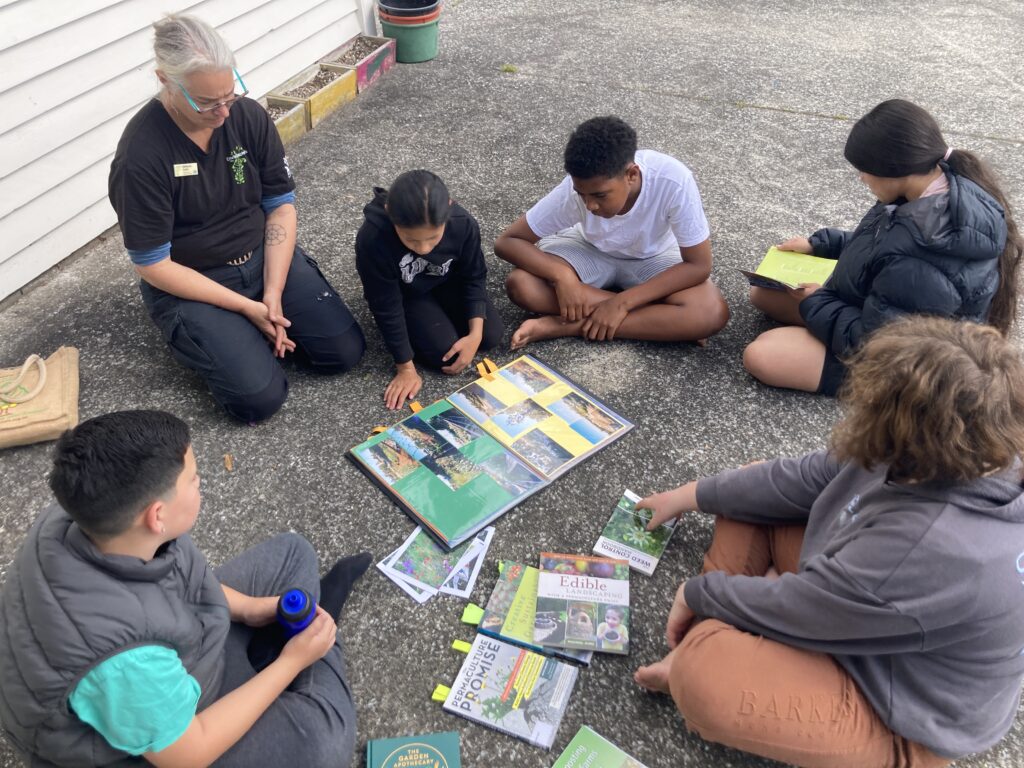
Planning the māra kai
- Session 2 – Garden Build Day (29 November 2024)
Students measured out the space and got to work building the sheet mulch beds. Layers of cardboard were laid down to suppress weeds, followed by rich compost and a topping of pea straw. Pathways were covered in woodchip, and the beds were designed to allow even small children to reach the centre without stepping into the garden.
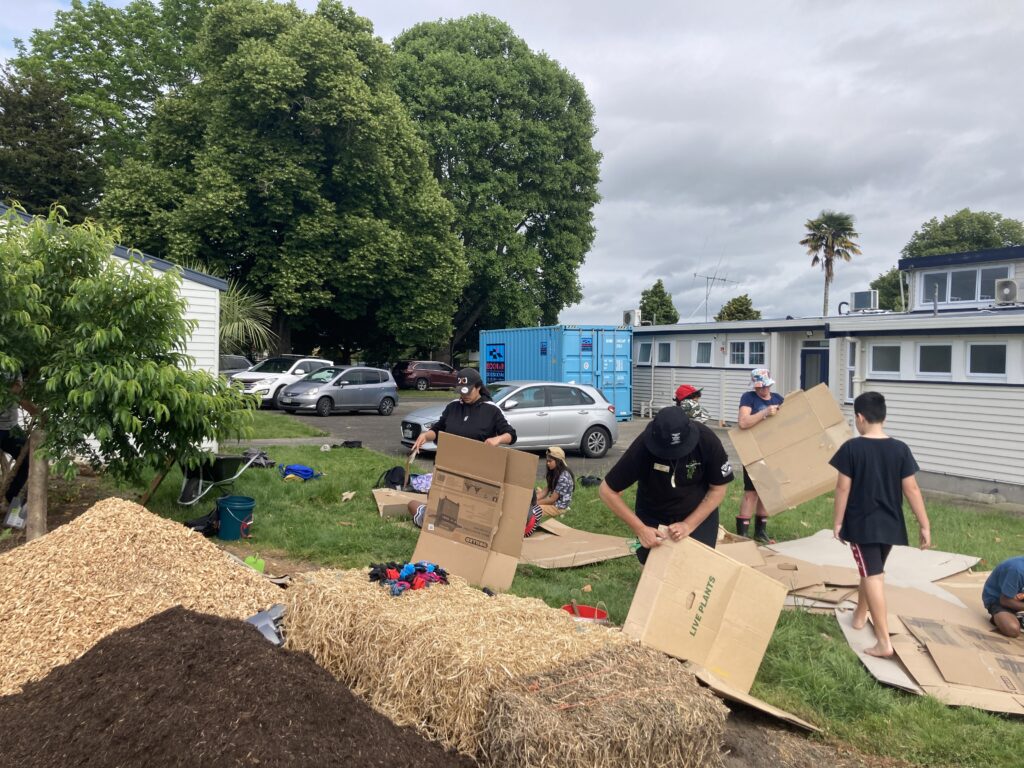
Flattening boxes for the sheet mulch beds
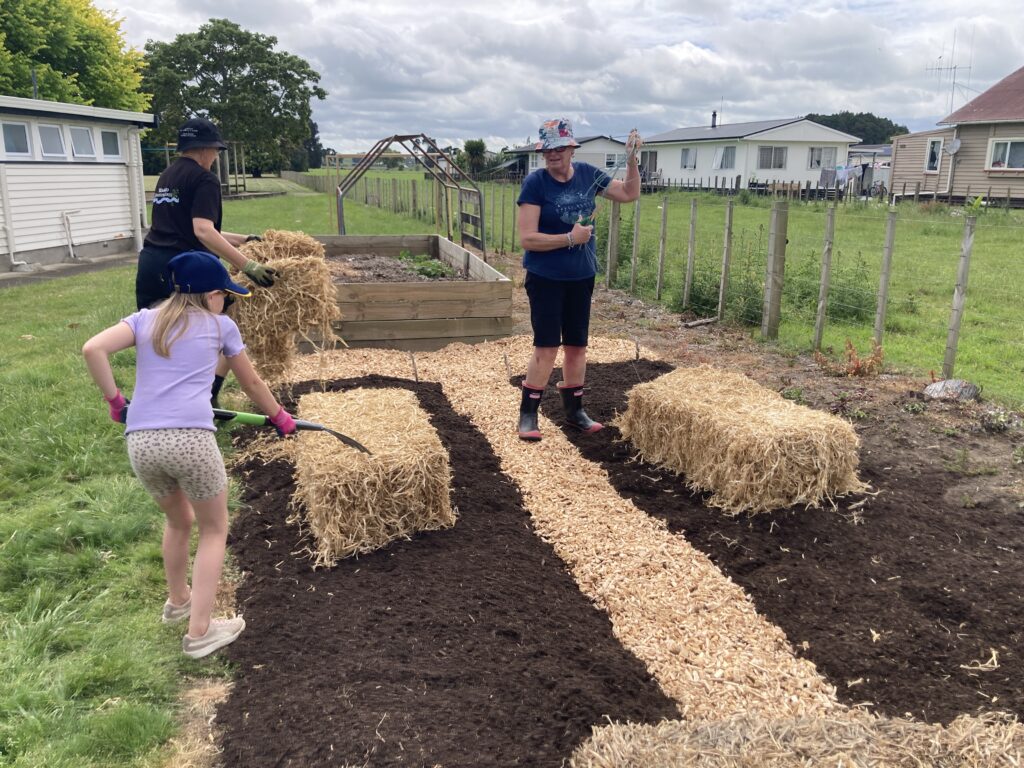
Placing pea straw over the compost and cardboard for the sheet mulch beds
- Session 3 – Planting Day (5 December 2024)
Throughout the term, each class had been growing kūmara tipu on their windowsills. These were planted into the new garden beds, with one bed allocated to junior classes and another to seniors. The Enviro leaders were a pleasure to work with — enthusiastic, engaged, and excellent mentors to the younger students during the kūmara planting session. They also planted pumpkins, Māori potatoes, and companion plants in the existing raised bed.
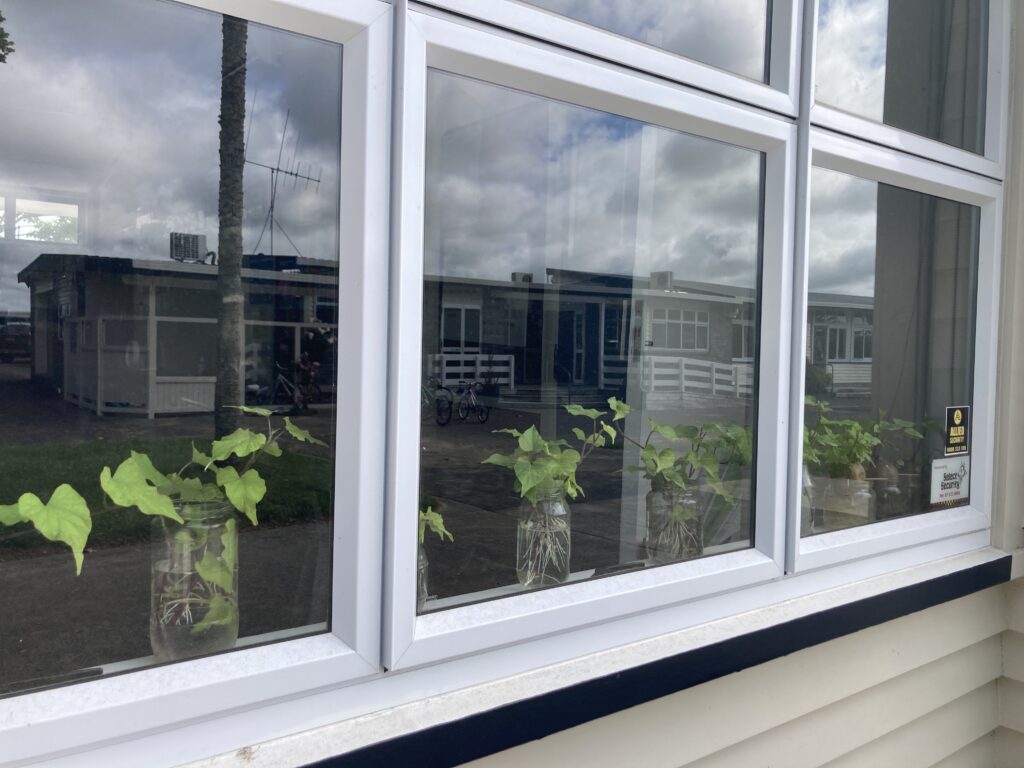
Growing kūmara tipu on a classroom windowsill
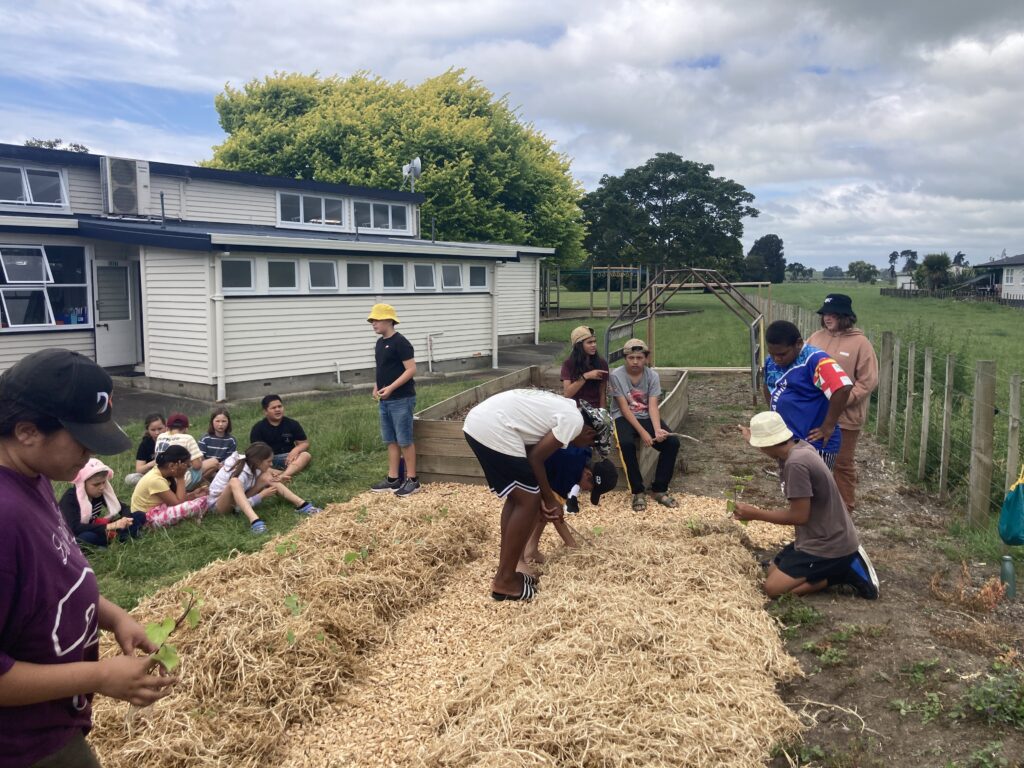
Planting day! Everyone had a chance to plant their kūmara tipu
Due to the up-coming summer break, the garden was intentionally planted with low-maintenance crops. If all went well, the students were expecting a delicious kūmara harvest by the end of Term 1!
From the outset, the Enviro leaders were passionate about sharing the garden’s produce with the wider community. With plenty of space available, the vision is for the māra kai to eventually yield enough to give back in meaningful ways. A local parent and keen gardener volunteered to support the school in maintaining the māra kai, and generously offered to water the beds during the holidays. The hope is that more whānau and community members will get involved in the future.
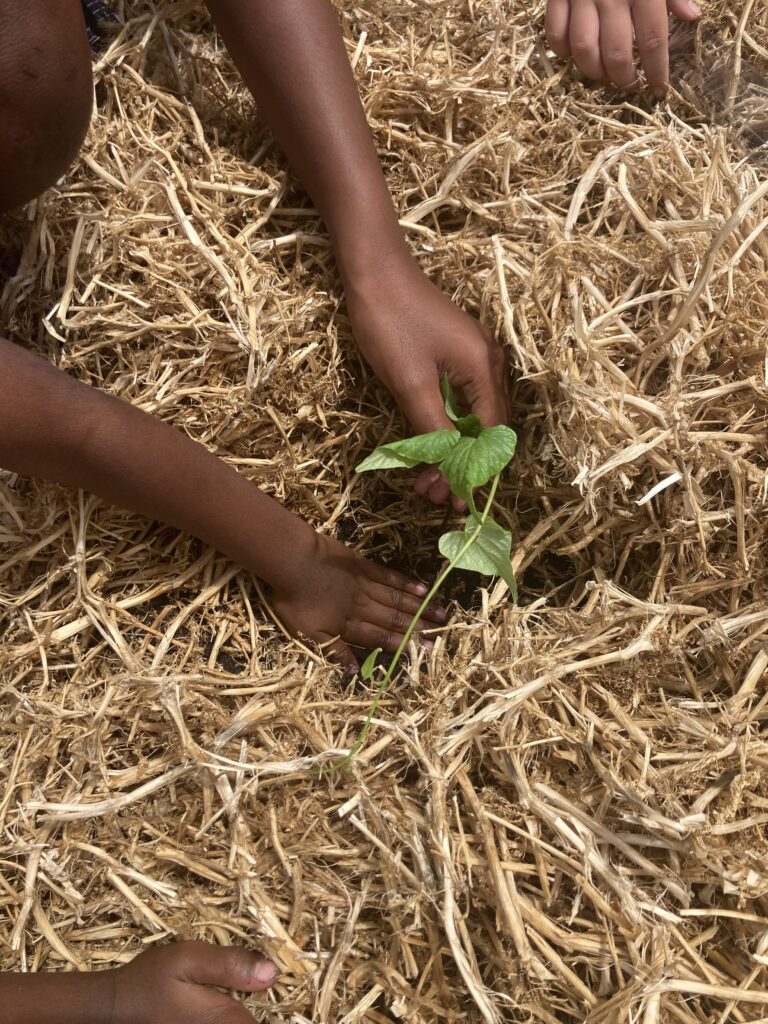
Planting kūmara tipu
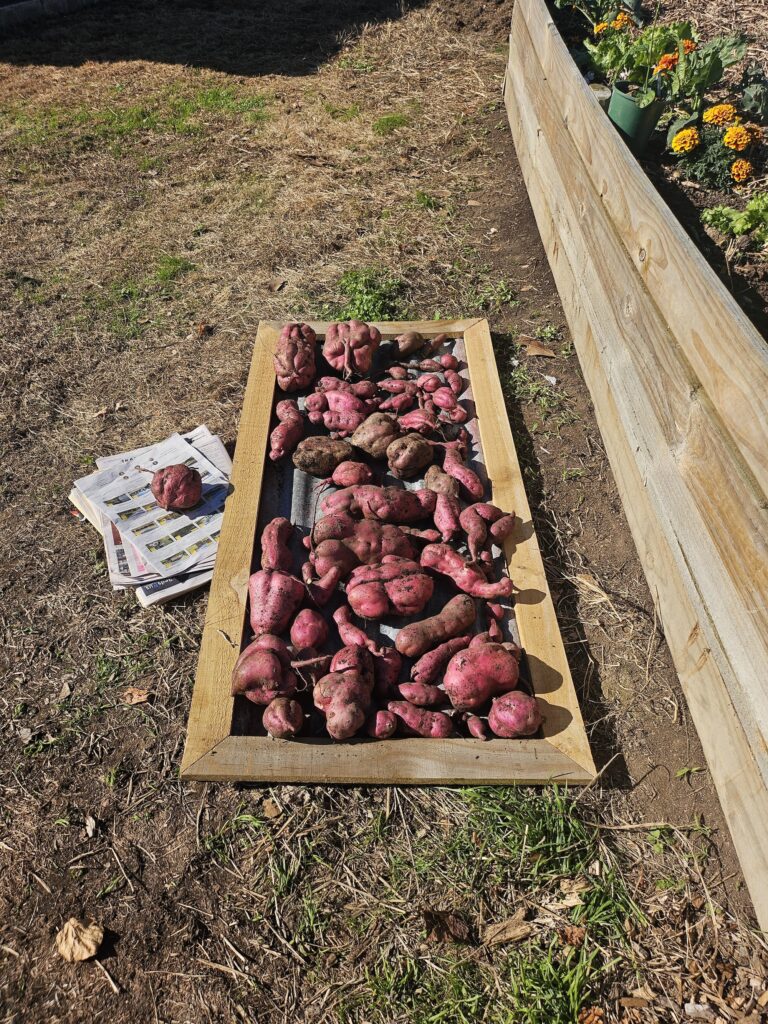
Some of the kūmara harvest
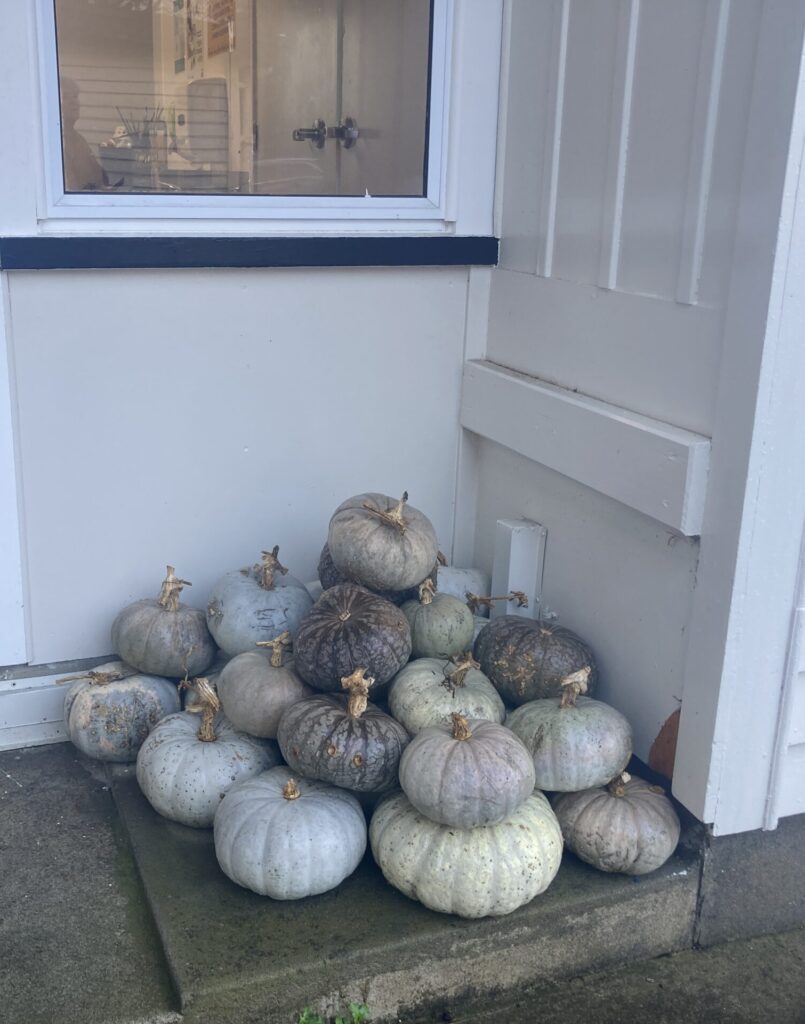
Pumpkin harvest
The Garden Continues to Grow!
As of June 2025, the māra kai at Ōtorohanga Primary has evolved into a thriving community project! Teacher Jenny Whitehead has been a driving force—sourcing donated materials and rallying community support. She’s been joined by knowledgeable parents Whit and Nat, who have played key roles in the garden’s development.
The school has received a tunnel house donation, while the local Men’s Shed built planter boxes from timber donated by Goldpine. WINTEC has contributed additional planter boxes and is currently building a Pātaka Kai to store surplus produce — including the bumper harvest of kūmara and pumpkins (see above). Some of this kai was used for the school’s Matariki celebrations, while the rest has been sold to fund seeds and garden mix.
Thanks to funding from the Ōtorohanga Charitable Trust, the garden now has a shed, a hose, and a wheelbarrow. Community generosity continues, with donations of seeds, seedlings, and fruit trees. The beehive is now on site, and managed by Nat, which has provided wonderful learning opportunities for students. A class of Year 4–6 students works in the garden every Tuesday afternoon.
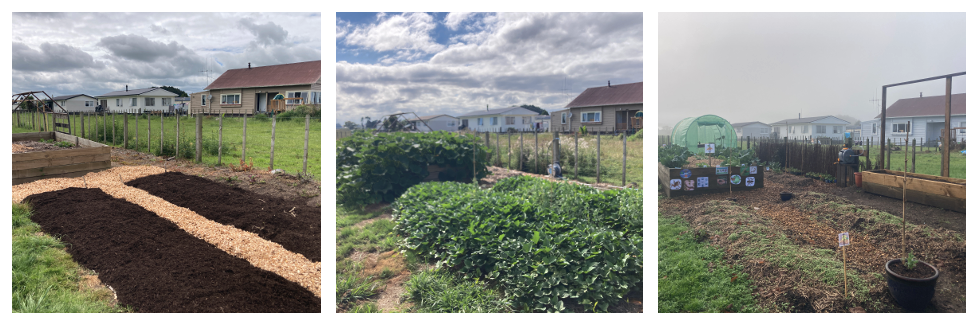
Evolution of a garden. Photos from the same location Nov 2024, Feb 2025, June 2025
Next steps
Each class has adopted a planter box and chosen a winter vegetable to grow. This is a process of trial and error for everyone, and the teachers have recognised the learning potential for this space. Fruit trees continue to be planted along the fence line, with dreams of children one day being able to harvest and preserve the abundance.
The school has identified two issues. First, the worm farms aren’t quite keeping up with the amount of food waste produced by the school (mainly fruit waste from the free fruit in schools programme). Second, the biggest cost for the garden is purchasing compost and garden mix. To solve both these problems at the same time, the school is working with both Para Kore and Enviroschools to design and implement a hot composting system. Funding is being sourced for one of the popular CarbonCycle units, with the potential of creating a community compost hub. This will allow the school to turn both food and garden waste into nutrient-rich compost on site, in order to grow even more kai for the community.
*Banner photo: School garden thriving June 2025
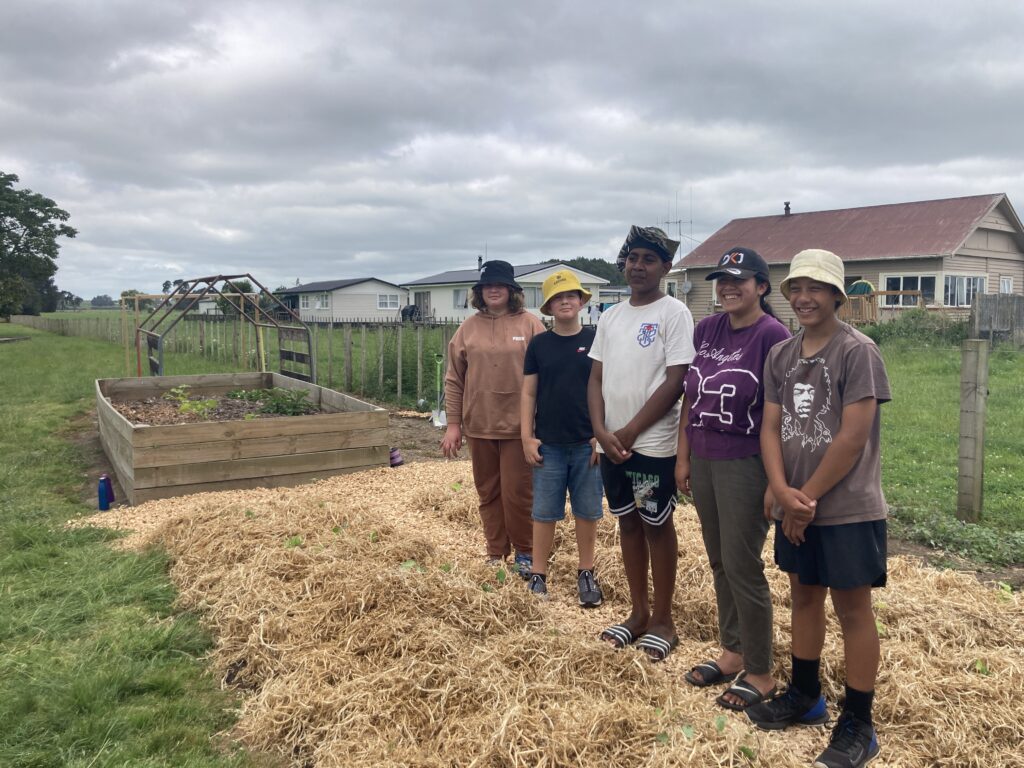
The Enviroleaders led the planting day and continue to work in the garden each week
 Print
Print