Twenty years ago, “thinking like a forest” at Millennium Reserve would have been impossible. Thanks to years of dedication from a passionate community, this once-unused space in the heart of Masterton is now a thriving forest ecosystem.
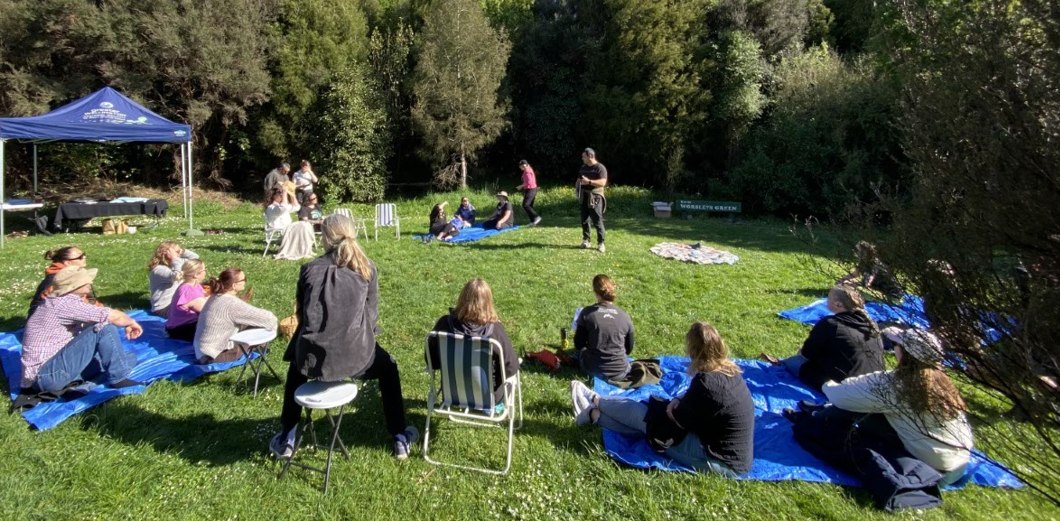
Millennium Reserve was the beautiful setting for this event
On a vibrant spring day, with kōwhai in bloom and tūī calling overhead, local teachers and environmental educators gathered at the Reserve for the Earth Dreamers Gathering. The event offered a chance to reconnect with nature, restore personal wellbeing, and explore the Earth Dreamers – Growing Hope in a Climate Crisis inquiry resource.
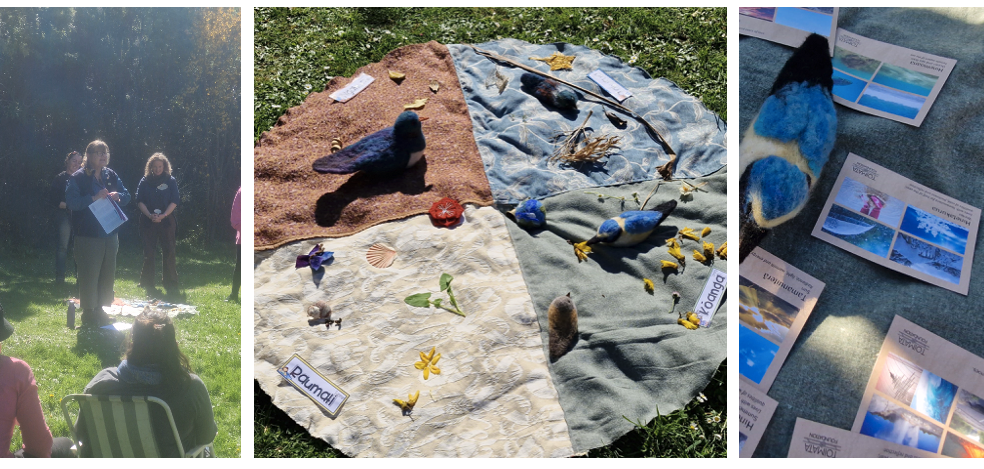
A focus on kōanga helped us to reflect on maramataka and how you might invite ākonga to notice the seasons throughout the year.
Thinking like a forest means celebrating diversity, collaboration, and interconnection. Participants explored these ideas by observing the Reserve’s ecosystems, connecting with each other, and learning through a te ao Māori lens. Tangata whenua shared insights into whakapapa, reminding us that humans are the younger siblings of nature — not its masters. This worldview encourages living within natural systems rather than exploiting them.
Facilitators guided creative expression through writing and visual art, helping participants, and in the future their students, slow down and notice the interdependent relationships within a ngahere, a native forest. A game of Jenga illustrated ecosystem fragility and resilience, while a close encounter with endangered native geckos inspired a reason to support actions such as planting and trapping in schools and the wider community. We can put those blocks back in to help restore the balance.
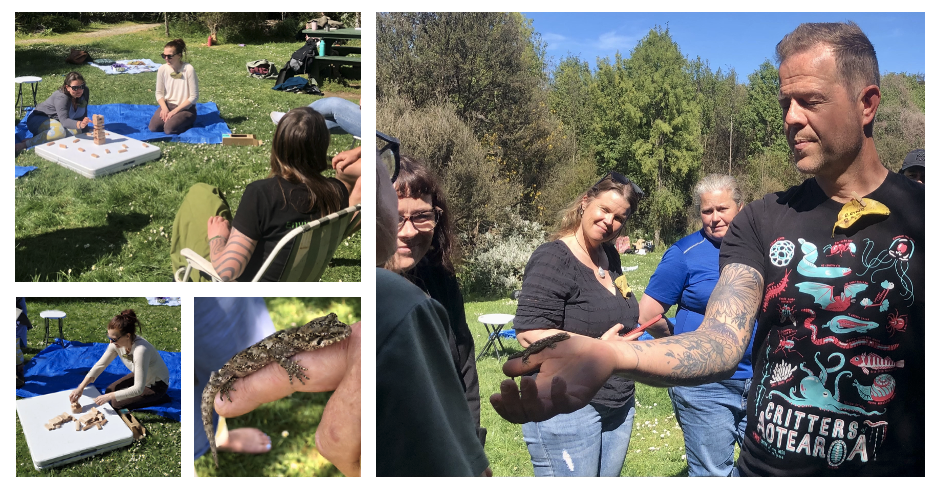
Learning through hands-on experiences and games
Sarah Hopkinson, lead author of Earth Dreamers, introduced the other themes in the resource such as the impact of consumerism, the importance of circular systems, climate justice for Pacific nations, and the value of local food networks. Each inquiry leads to meaningful action, empowering young people to feel hopeful and capable of making a difference.
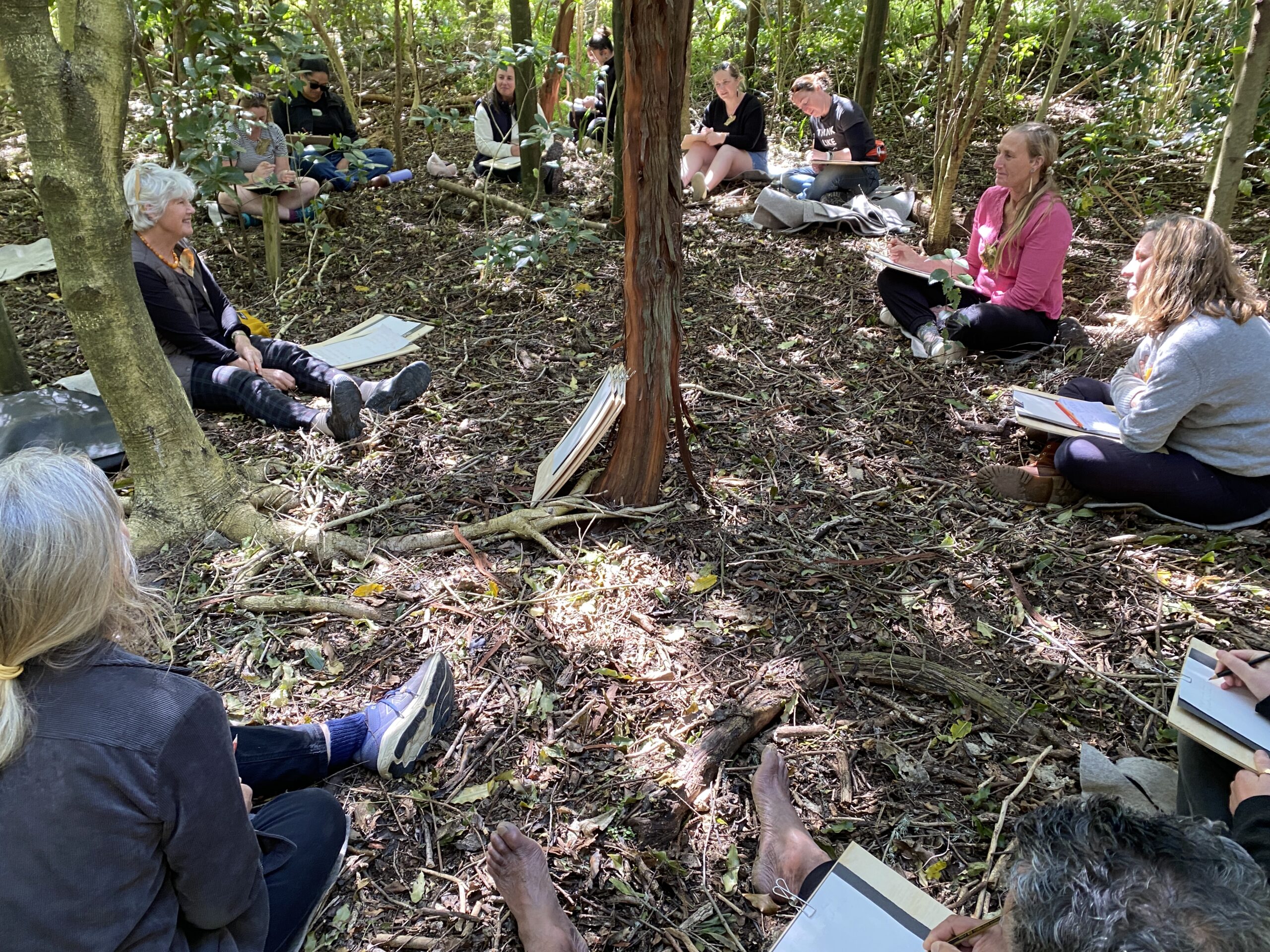
Using words to create an expression of our noticing of nature and the systems in the ngahere
Enviroschools and the New Zealand Association for Environmental Education organised this gathering as part of their ongoing mahi to nurture a generation that instinctively understands how to restore balance with the natural world. Thinking like a forest is central to this vision — it encourages long-term thinking, collective action, and a commitment to caring for future generations in Aotearoa.
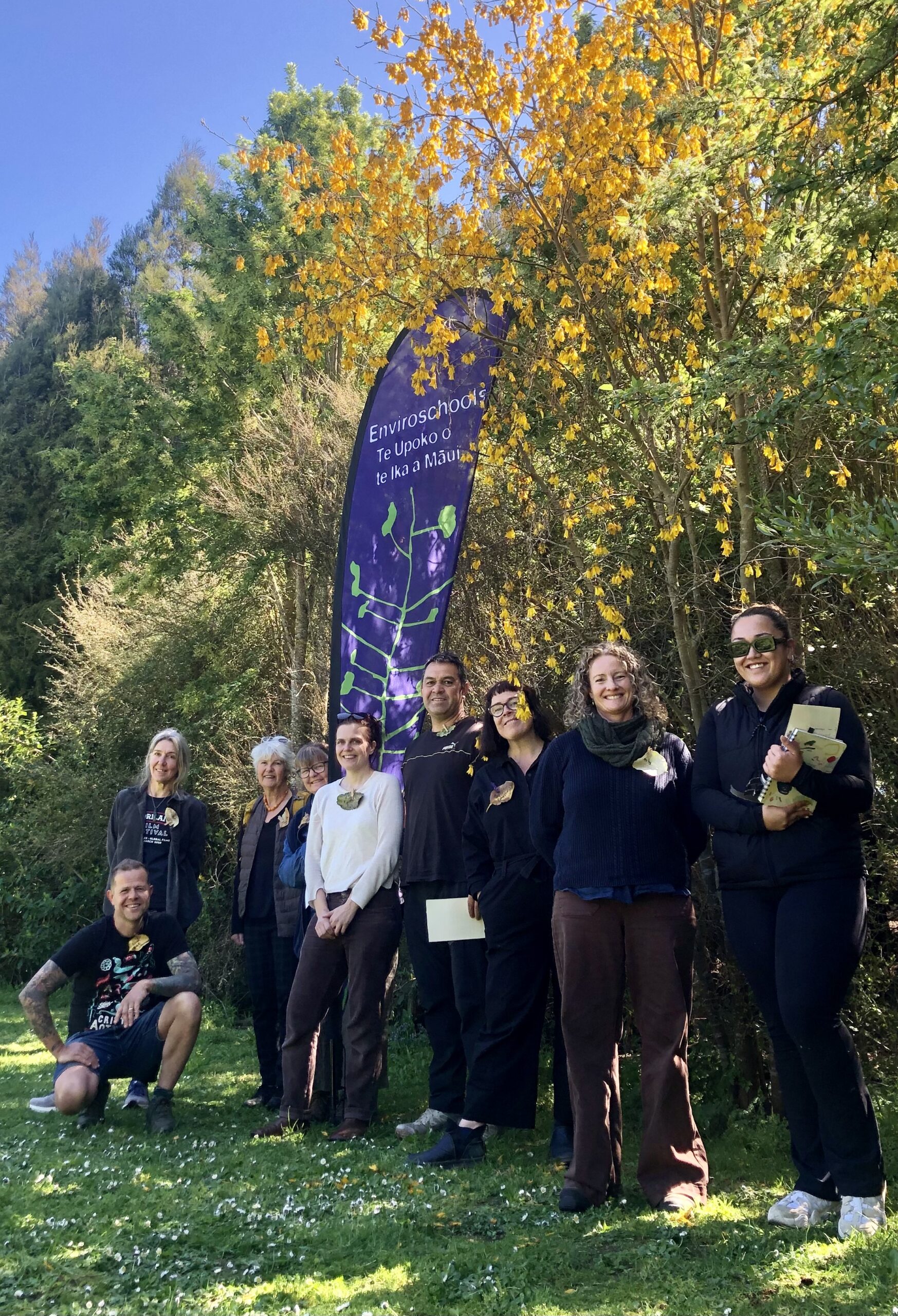
Facilitators including Sarah Hopkinson, 3rd from the right, lead author of Earth Dreamers
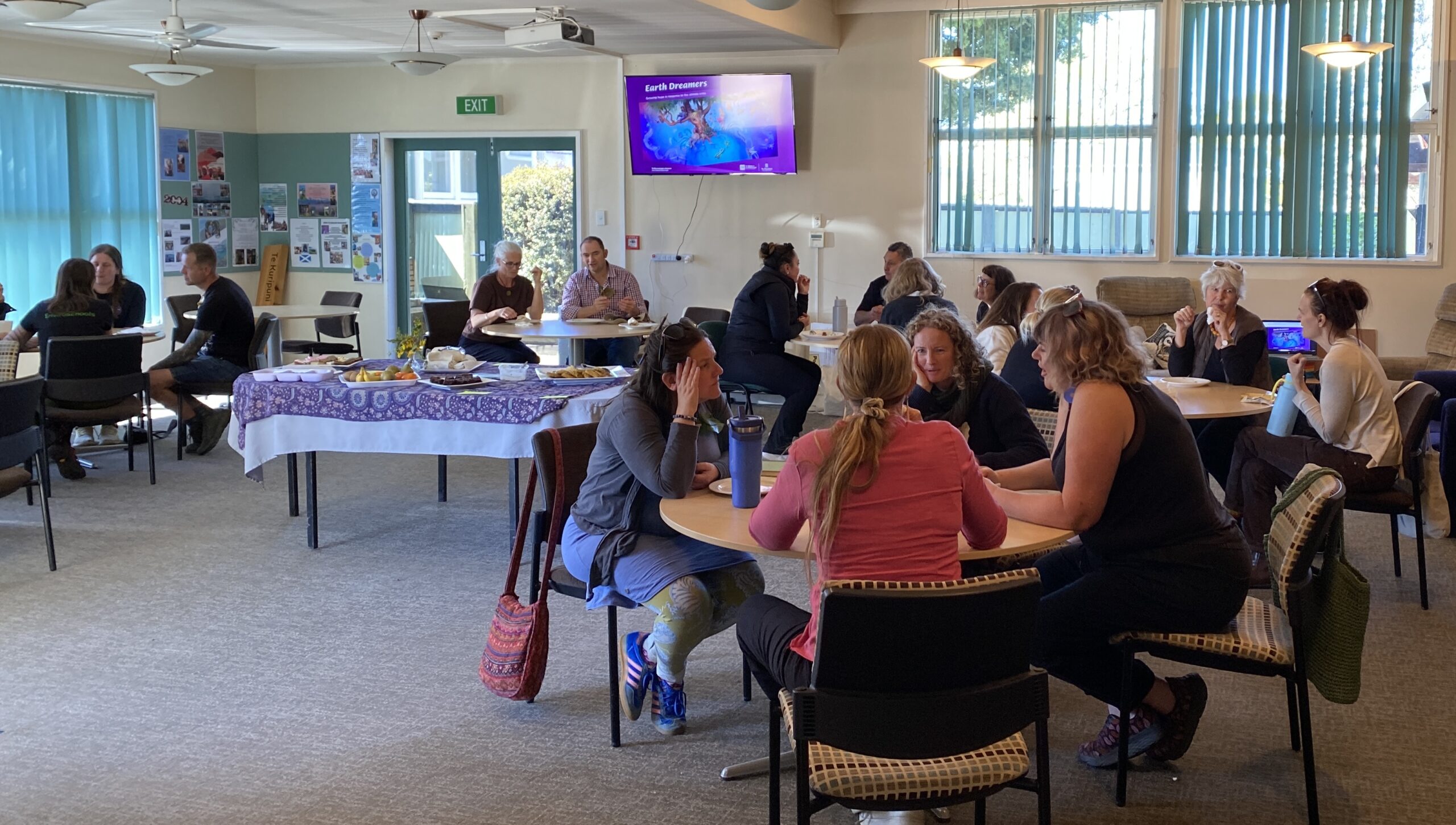
Reflections of the morning over kai
Thanks to facilitators Reino Grundling from R&R Conservation, Adi Riseley and Jane Riddiford from Ruamāhanaga Farm Foundation, Karin Stillberg from Ruamahanga Restoration Trust, Joe Potangaroa from Potangaroa Education, and Sarah Hopkinson, Head of Learning at Te Papa.
Gill Stewart – Wairarapa Enviroschools