 A well-designed staff meeting flowed on to flood questions and actions that has lead Netherton School students in many different directions all in the name of looking after our wai/ water. In Term 2 Enviroschools facilitator Jo Buchan ran a staff meeting at Netherton School unpacking the Enviroschools Water of Life Theme Area. The session was designed to give an overview on the different directions each class could choose to take while on an inquiry into wai, and have a go practicing a few different activities and also learn about resources/programmes that Waikato Regional Council and Enviroschools have as extra support and education.
The meeting was productive, and teachers were excited about the different directions their class may go, and how well supported with resources they were to follow that line of inquiry. Jo kept in touch with some of the teachers and continued with follow up support and facilitation and was blown away by where this inquiry has lead the classes.
Room 1–2 (ages 5–6) explored the wonders of the water cycle and the stories of the different atua connected to wai. Through art, hands-on model making, and shared discussions, they been showing their understanding of how water moves through our world. Along the way, they learnt exciting new words like evaporation and precipitation — and even got to experience these first-hand when a sudden shower had everyone rushing outside to dance in the rain, seeing it now with fresh eyes and a deeper connection.
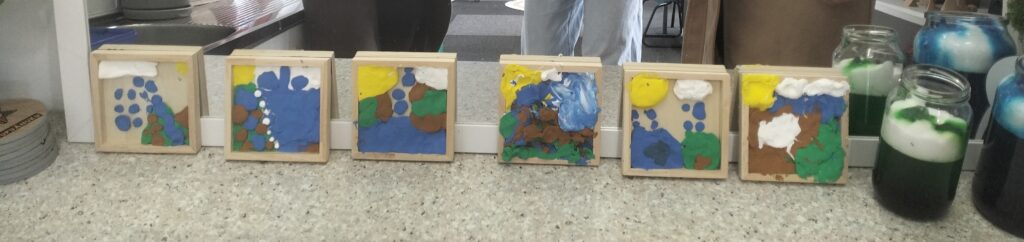
Room 1 experimented with evaporation and learnt about the water cycle.
Their learning has also taken them to the moana, where they’ve discovered Tangaroa, guardian of the sea, and reflected on their own role as kaitiaki (guardians). This sparked an inquiry into how they can protect the ocean — from collecting rubbish so it doesn’t end up in the sea, to imagining what life is like underwater through stories, art, and play. Next, they are taking their learning out into the world with a field trip to Kelly Tarlton’s Aquarium, where they will get up close with sea creatures and explore even more ways to care for them.
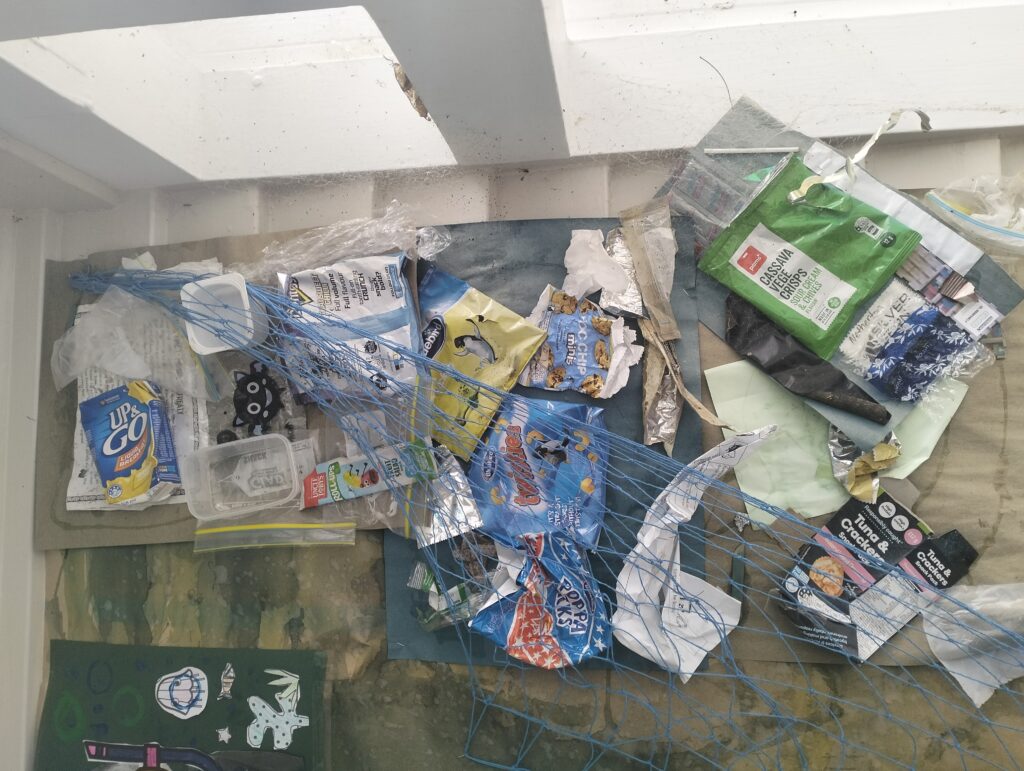
Room 1 and 2 Developing un understanding of the effect rubbish ending up in our water ways and the moana has.
Rooms 3–4 have been on an exciting inquiry journey, exploring how to protect the moana and all the amazing life that lives within it. As part of this, they’ve been building their literacy skills by writing descriptive poems and imaginative stories about what it might be like to live under the ocean and how we can help keep it safe. They’ve also been busy researching the Māui dolphin and the life cycle of frogs, learning how to find, understand, and share information from different sources. Their curiosity took them into the water cycle too, which inspired reports, explanations, and some creative writing. By linking these environmental topics with reading, writing, and talking activities, students are growing their vocabulary, improving their comprehension, and learning how to express their ideas clearly — all while discovering more about how we can care for our planet.
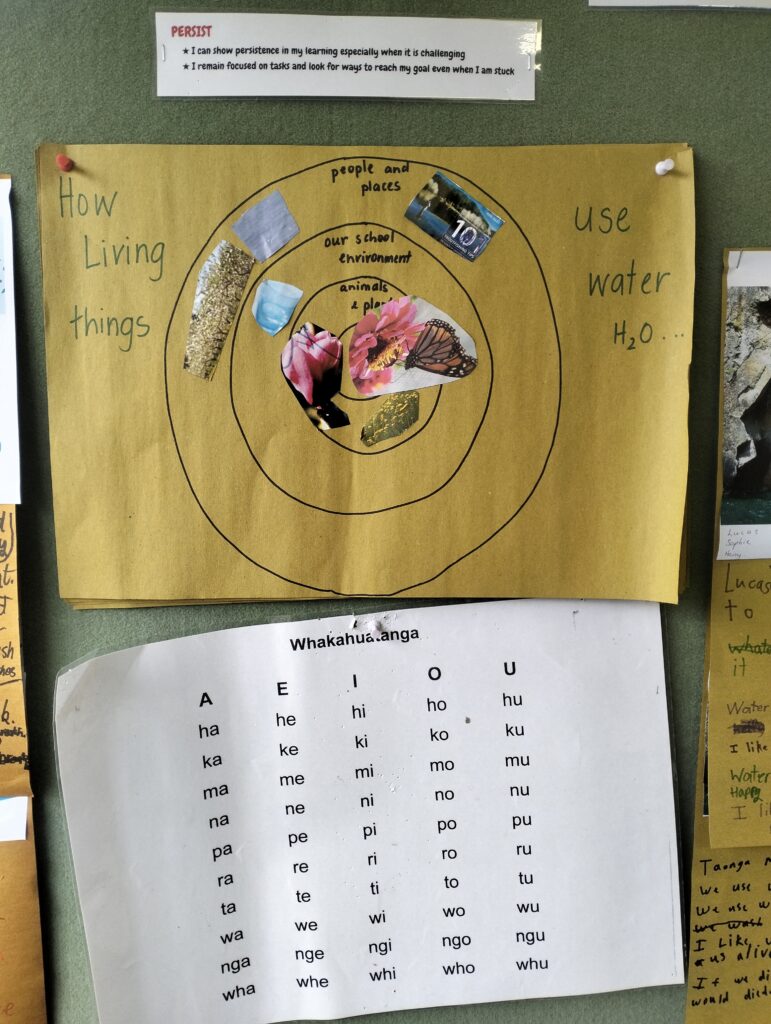
Students using the ‘how living things use water’ activity to develop an understanding of ‘what can we learn about water’.
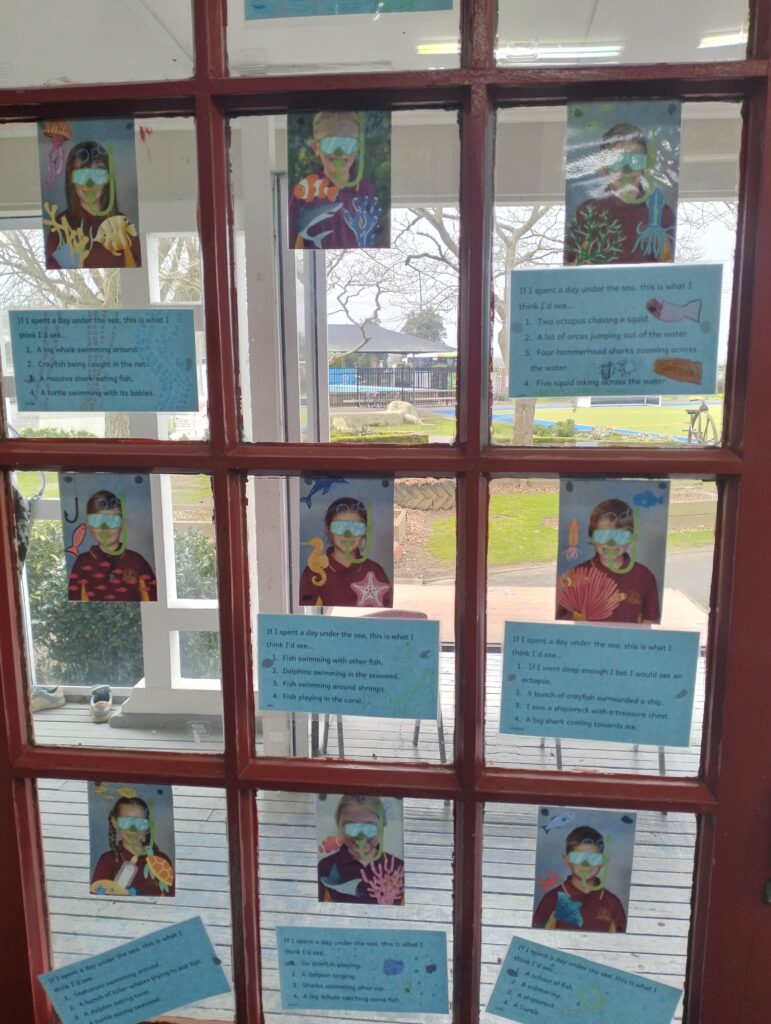
Teachers using creative writing to express ‘our connection with water around us’.
Room 5–6 have been exploring how water shapes our world and why it’s precious. Using science and maths, they experimented with evaporation and absorption, and in the “How Much is Fresh?” activity, they used fractions and percentages to discover how little of Earth’s water is drinkable. They researched how people and their Enviroschool community use water and discussed ways to protect it. Using the Smart Water resource, they learned about water as a taonga, practised descriptive writing, strengthened research skills, and began planning actions to care for their community’s water.
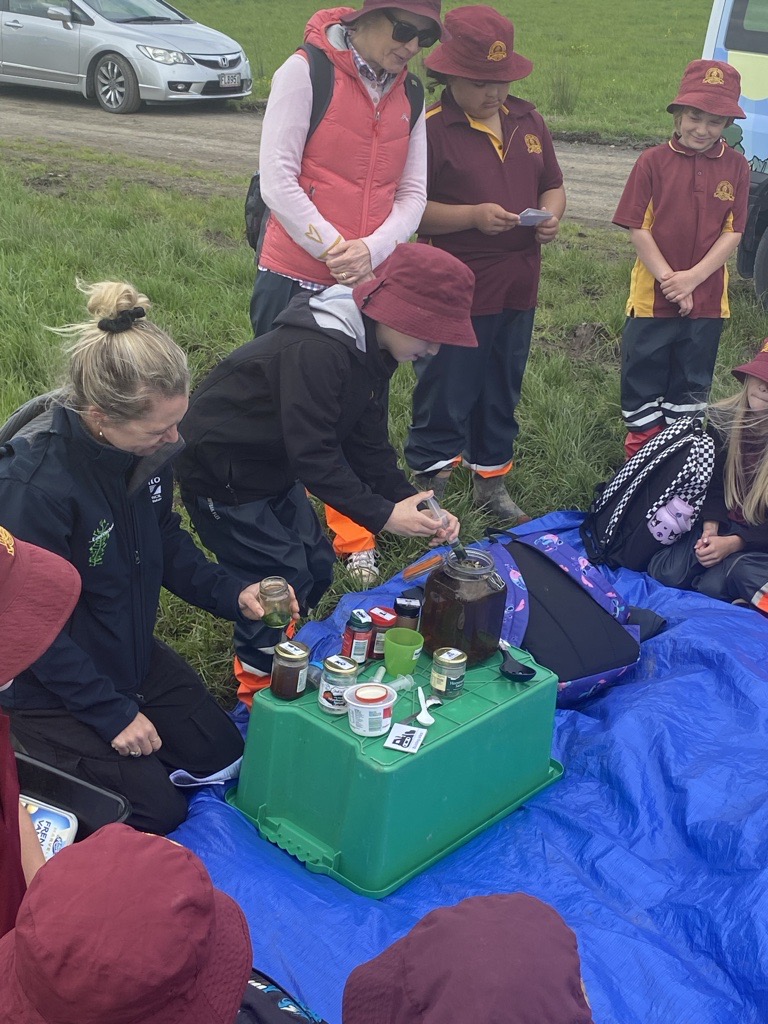
Facilitator Jo on a field trip with students experimenting with the ‘how did the water get dirty’ activity before doing a healthy water assessment.
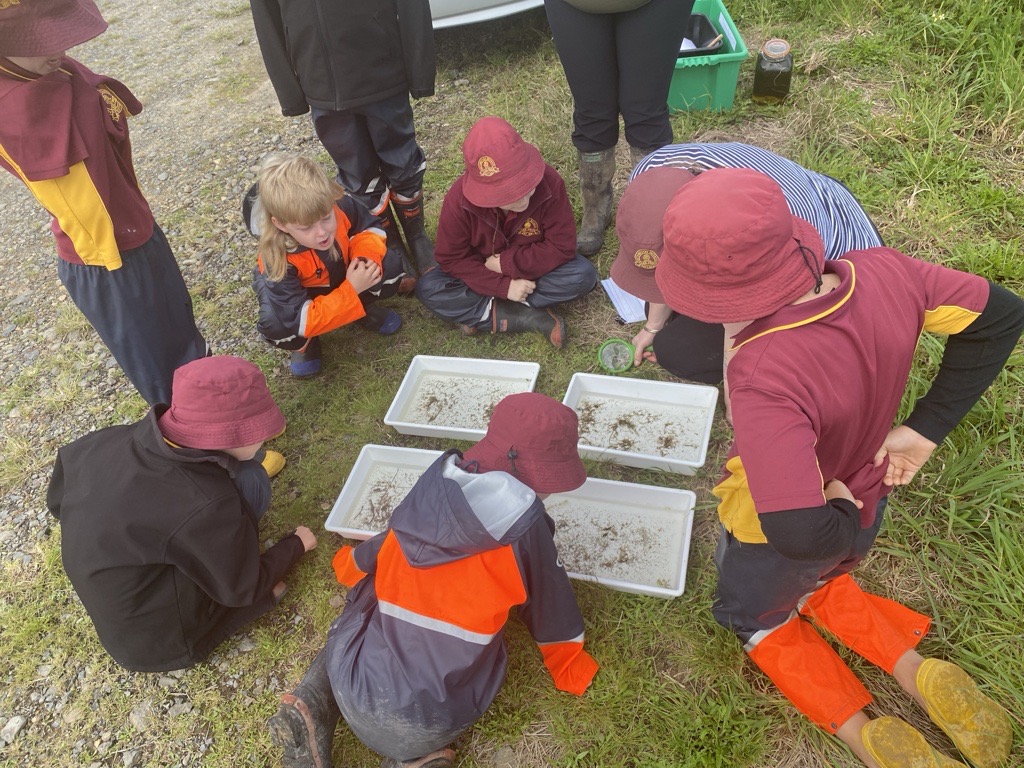
Students testing the health of the fresh water in their local area.
Room 7–8 have been working with the Waikato Regional Council’s Freshwater Biosecurity resource learning about koi carp and the serious threat they pose to our native fish. This has helped the class understand the importance of protecting our waterways and the role we can all play in keeping them healthy.
Banner pic: Koi carp project poster from students as they learnt about fresh water Biosecurity.
Classes are on an exciting journey of discovery and action.
Room 1-2 are planning a trip to Kelly Tarlton’s to connect firsthand with sea creatures and deepen their understanding of why protecting our moana is so important.
Rooms 4–5 are having a stream study with Jo as they investigate the health of their local waterway and explore ways to help protect it.
In Term 4, Rooms 7–8 are gearing up to hold a koi carp fishing competition in the Waihou River, putting their learning into action to support freshwater biosecurity.
Students are actively engaging with their environment, fostering a strong sense of stewardship that benefits the whole community. Through their trip to Kelly Tarlton’s, Room 1 will deepen their connection to marine life and inspire greater care for our oceans. Rooms 4–5’s upcoming stream study will raise awareness about local waterway health and encourage practical ways to protect it.  Meanwhile, Rooms 7–8’s koi carp fishing competition will help control an invasive species, supporting the wellbeing of native freshwater ecosystems. Together, these experiences empower students to take meaningful action that positively impacts our community and environment.
 Print
Print