For many years, the Enviroschools Programme has supported schools across the Waikato Region to weave sustainability into everyday learning and school culture. While this work has long been strong in primary schools, a new question began to emerge:
How do we keep this learning alive for rangatahi as they move into secondary school?
Over the past five years, Waikato Enviroschools facilitators have been exploring how sustainability education can genuinely flourish in secondary settings. Teachers have increasingly reached out for support with hands-on, place-based learning that connects meaningfully to curriculum expectations and NCEA assessments.
What has followed is a growing collection of field trips, curriculum collaborations, leadership opportunities and innovative programmes that bring sustainability learning to life for students.
Learning in the Field
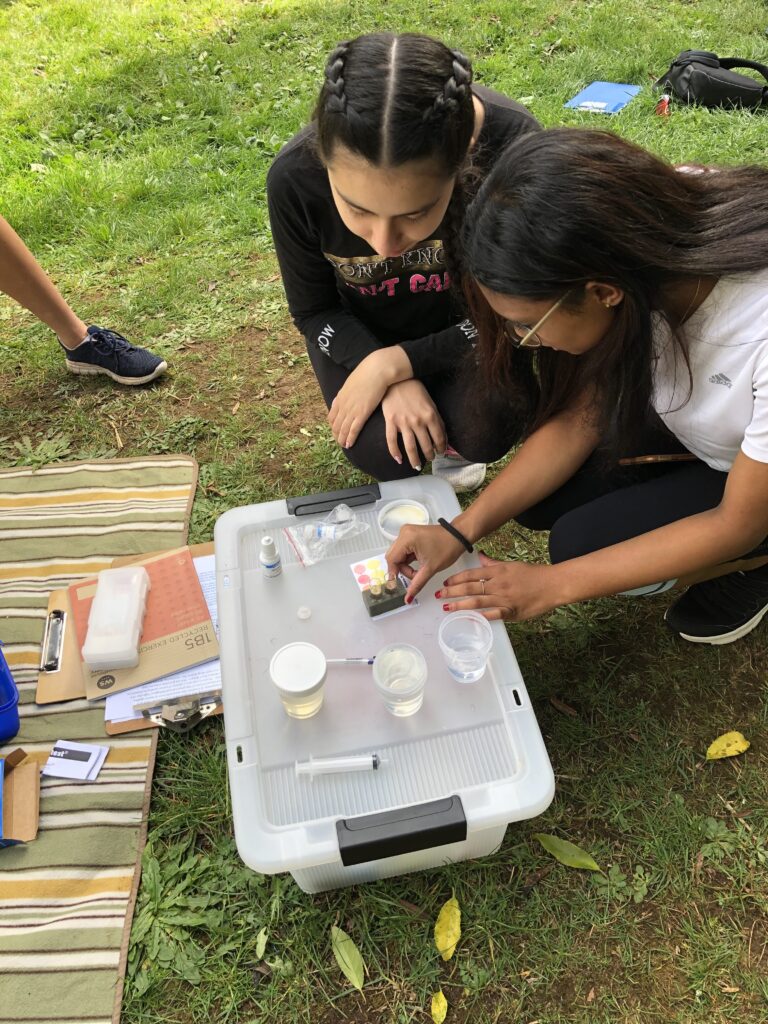
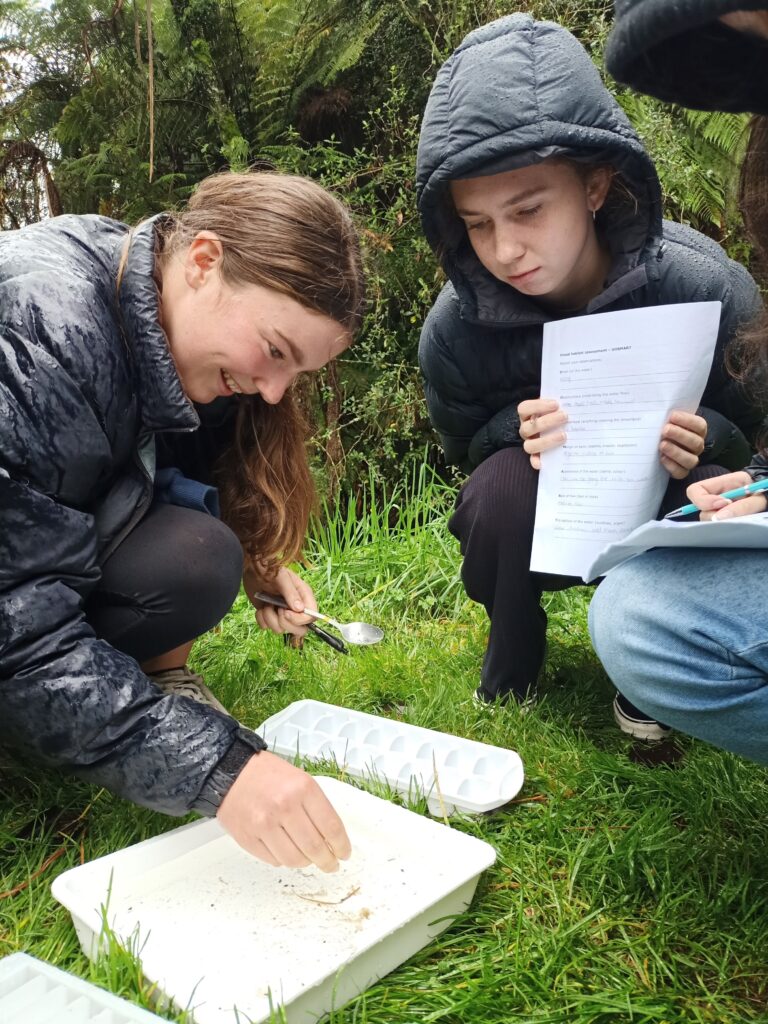
Rototuna Senior High School, stream health assessment (looking at niotrates) at Kaniwhaniwha Reserve
One of the most influential approaches has been the partnership between schools and scientists from Waikato Regional Council. Together with classroom teachers and Enviroschools facilitators, science experts help design authentic field experiences tailored to learning and assessment goals.
Each programme begins with planning meetings to clarify outcomes and co-design a field trip workbook that fits the needs of the class. Locations are carefully selected, bookings made, and health and safety details shared. Introductory class visits often take place before students head out into the field.
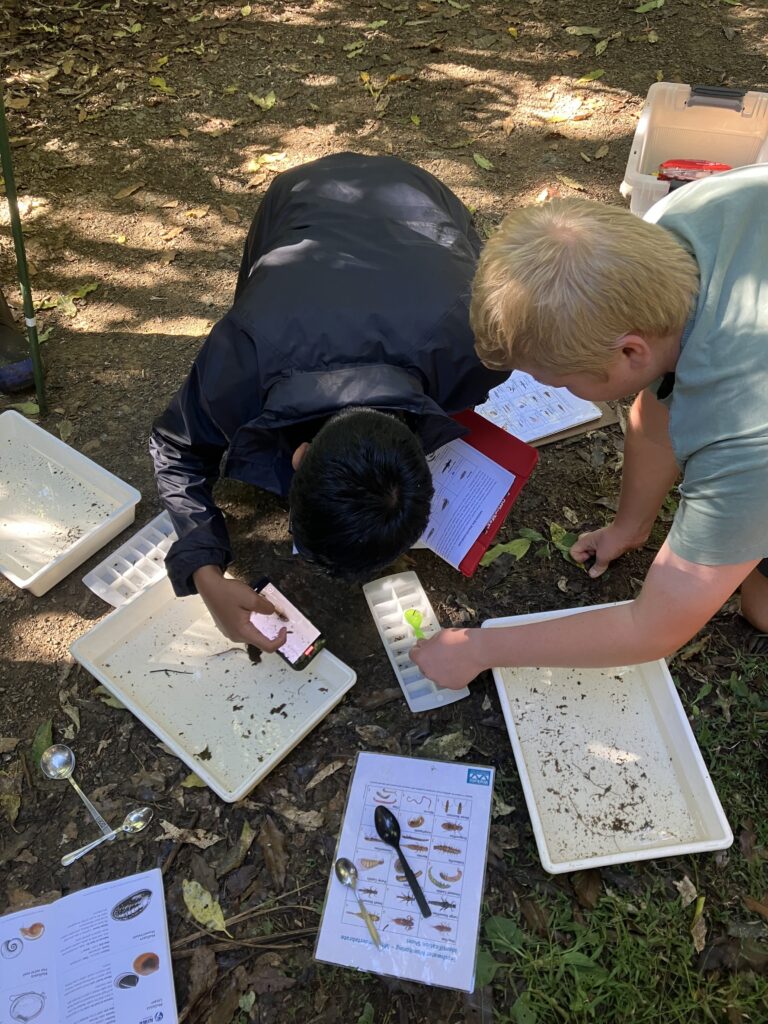
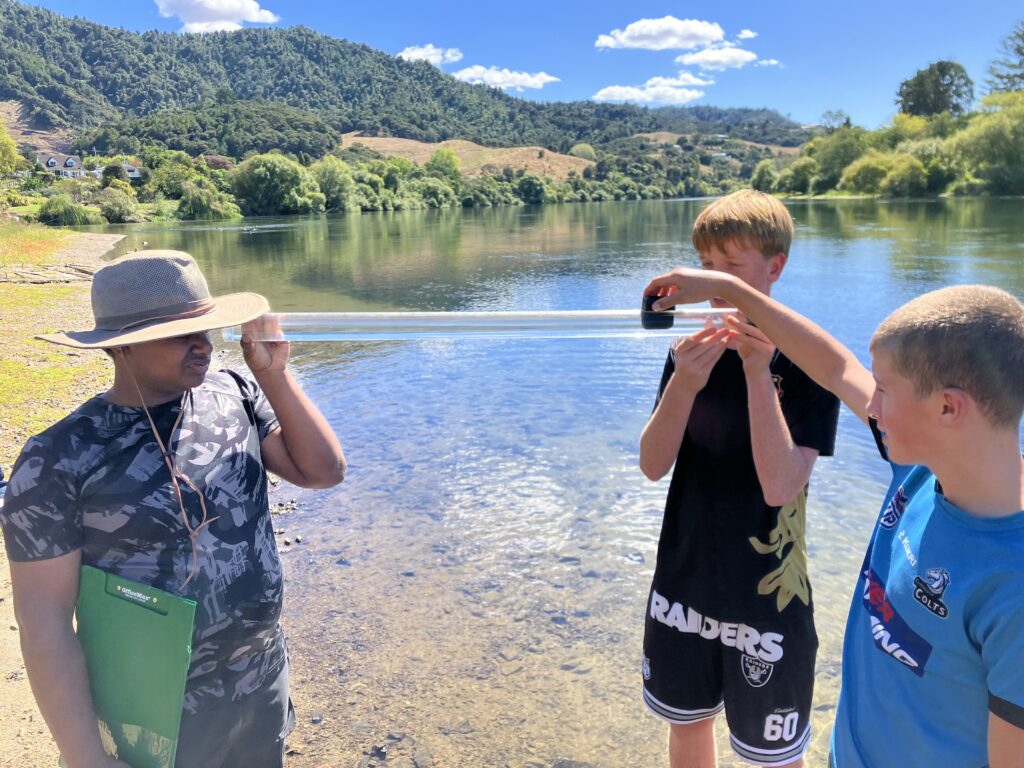
Classes have been supported get to their local streams to conduct real environmental investigations. Using testing kits and sampling gear, they:
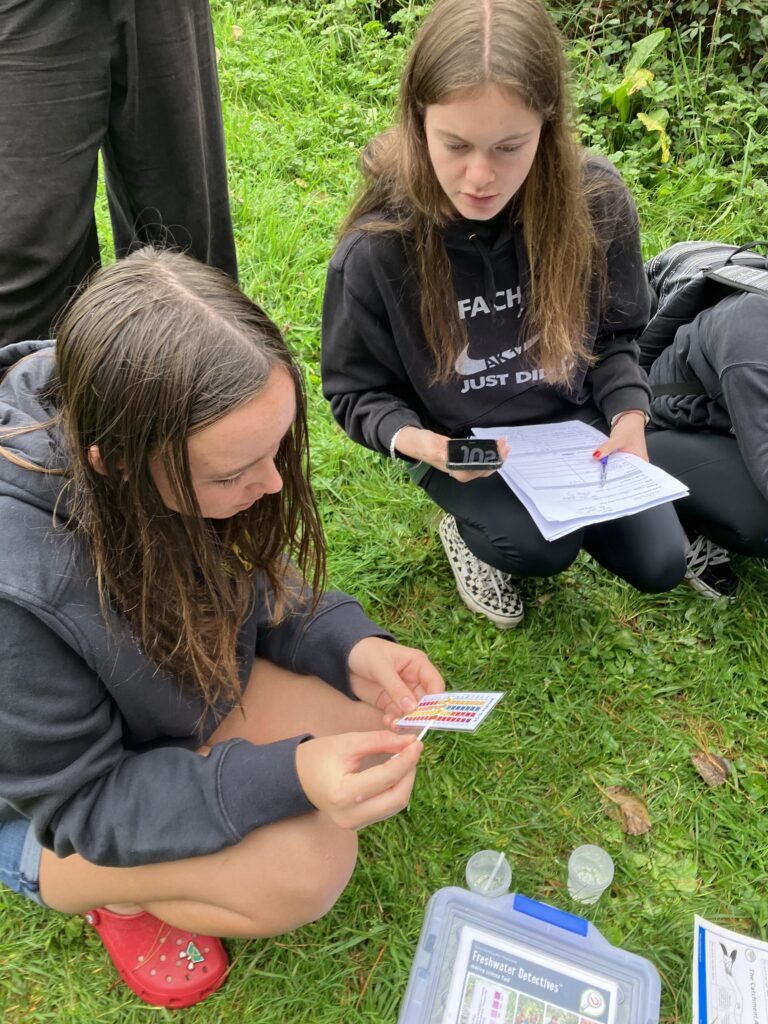
- measure clarity, turbidity, pH and temperature
- assess stream habitat
- collect macroinvertebrates as indicators of ecosystem health
While they work, conversations naturally rise around waterway challenges — such as sediment runoff and nutrient loading — and how communities, farmers and councils are working to restore stream ecosystems. Students also explore the role of biodiversity, including local native species and the wider links between healthy ecosystems and human wellbeing.
These field experiences support NCEA learning across Science, Geography, Earth and Space Science and Environmental Studies. Schools such as St John’s College, Rototuna Senior High School, Hamilton Boys’ High School, Fairfield College, Morrinsville College and St Peter’s Cambridge have set these trips into their senior programmes. Teachers consistently report that students are more motivated when their learning connects to real data from places they know.
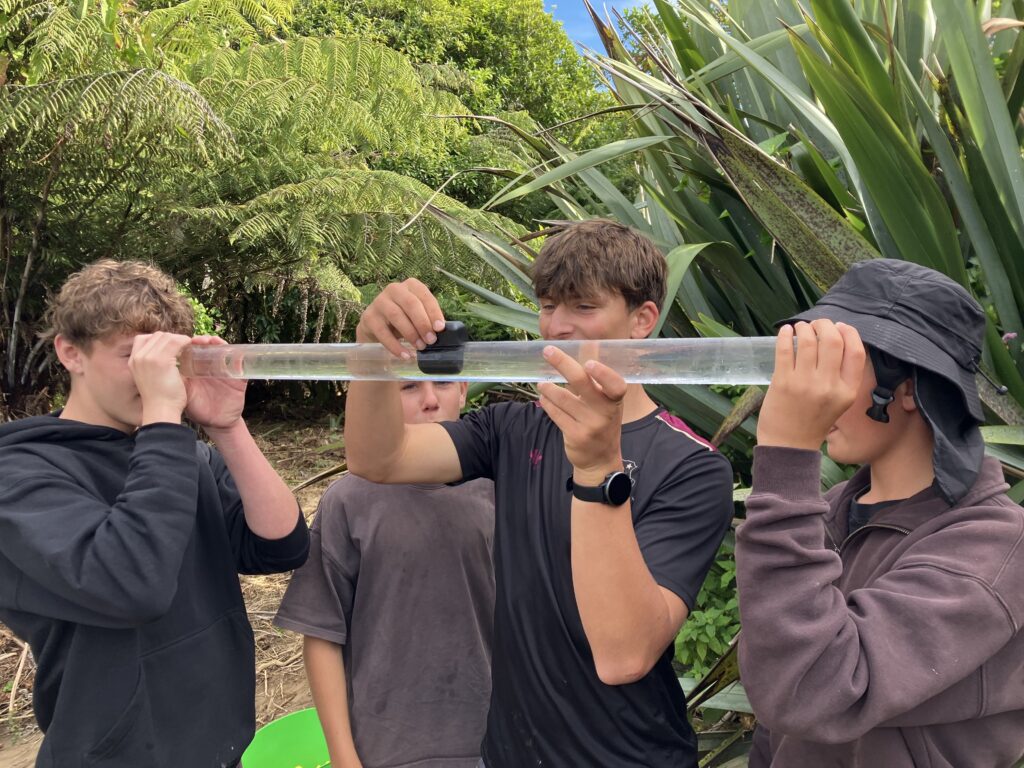
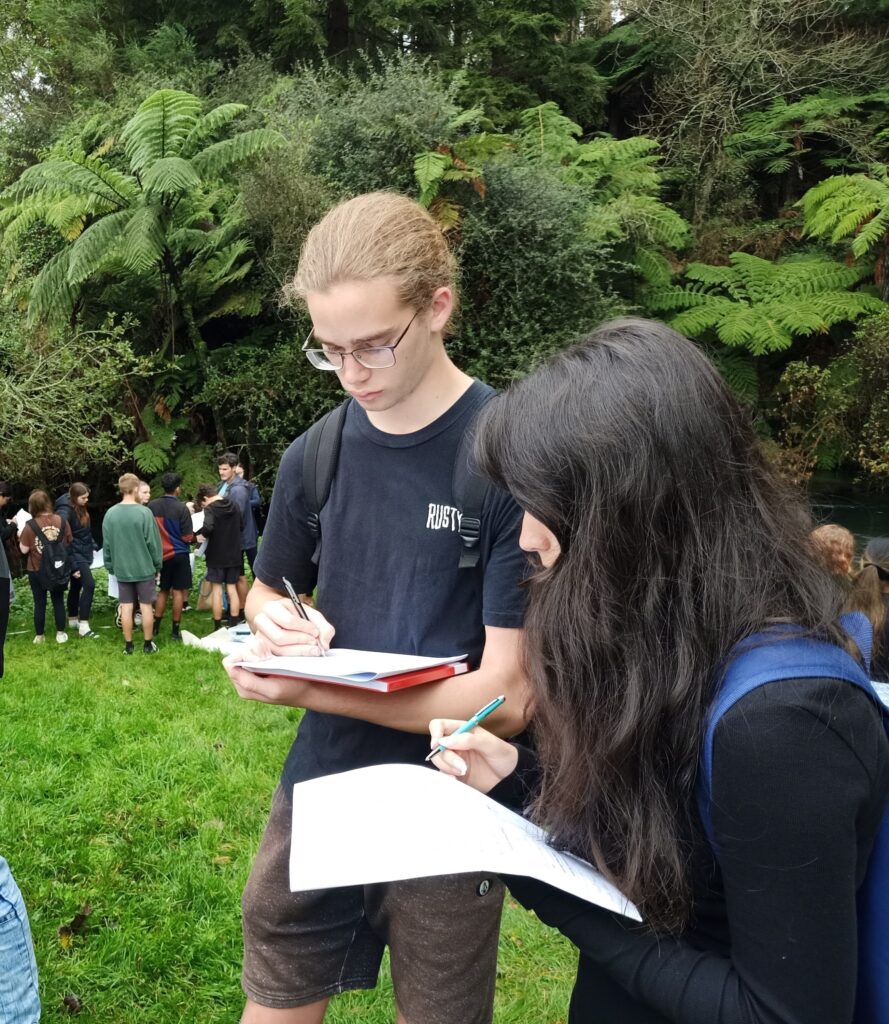
Hamilton Boys High School students, stream health assessment (water clarity) at Kaniwhaniwha Reserve
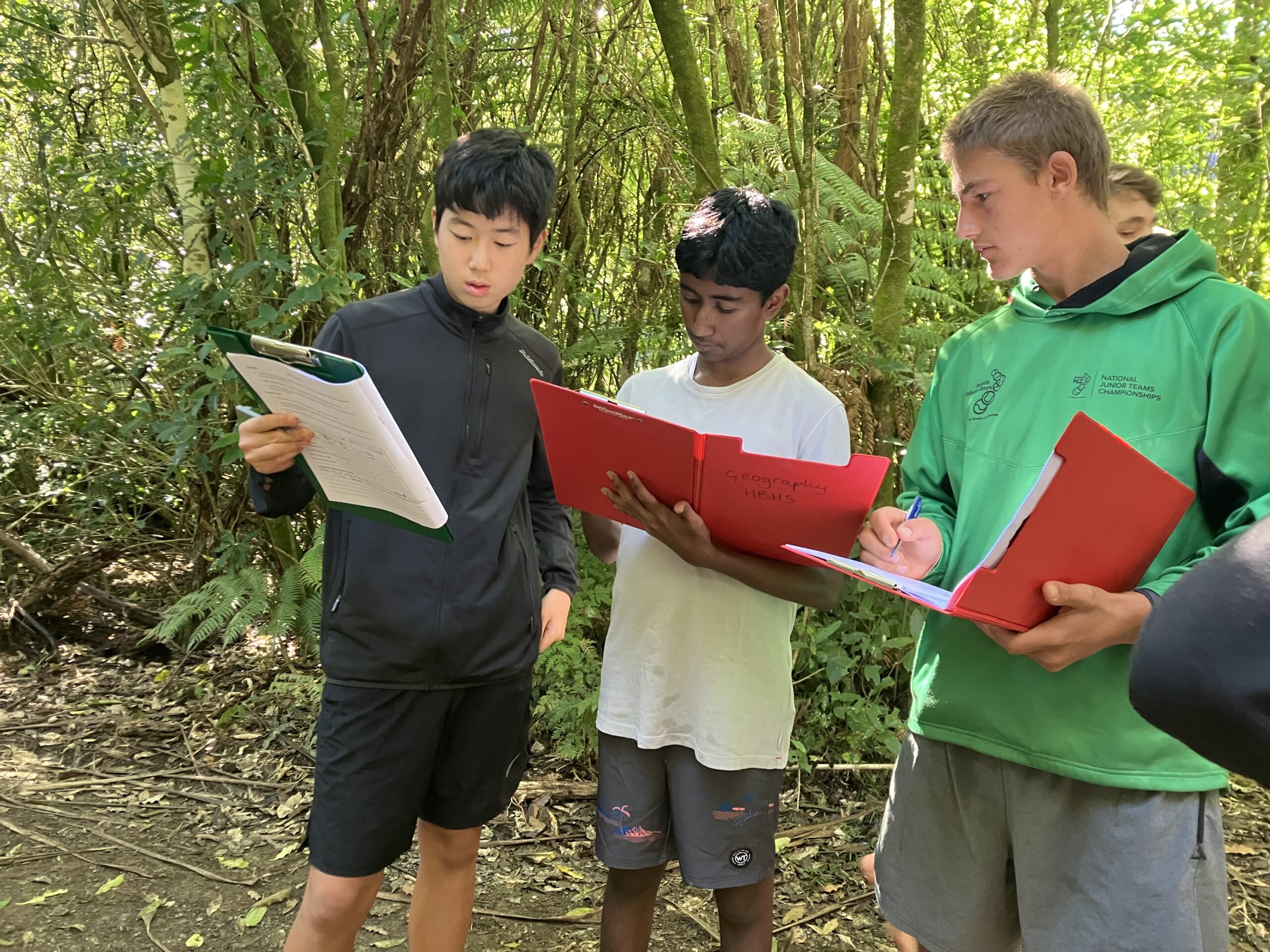
Hamilton Boys High School yr 11 Geography stream habitat assessment at Kaniwhaniwha Reserve
Exploring Land, Soil and Catchments
Freshwater is only part of the picture. Working alongside regional soil scientists, yr 13 Science students at Hamilton Boys High School also investigated erosion processes and catchment health. Through practical activities, they explored soil structure, erosion risks and the impact of land use on sediment entering waterways. This field trip happened to occur just after regional flooding and students were able to discuss in depth the extreme weather events – looking at Climate Change as a part of future risk and mitigation strategies.
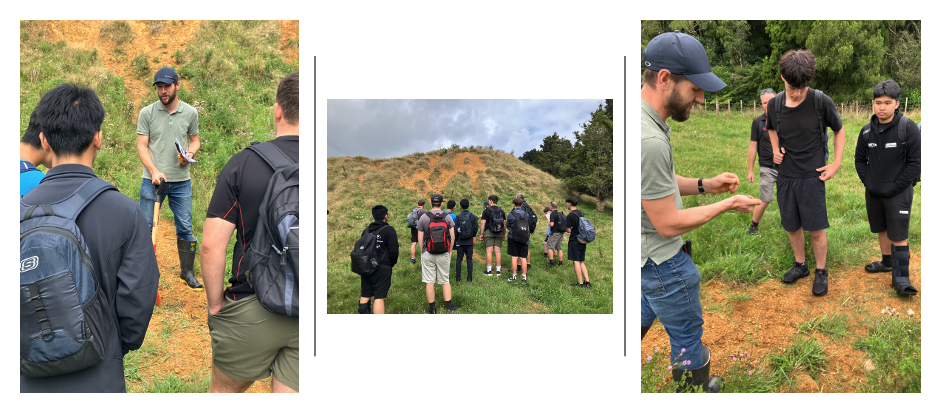
Waikato Regional Council Soil Scientist, Tim Norris, with Hamilton Boys High School yr 13 Science class, exploring Erosion at Karamu
These experiences help students grasp the interconnected systems that shape the Waikato environment and support assessments within NCEA Earth and Space Science.
Sustainability Across the Curriculum
Sustainability learning isn’t limited to senior fieldwork. Junior programmes are growing too.
At Waikato Diocesan School for Girls, Enviroschools helped coordinate a full-day sustainability experience for all Year 9 students. Educators from Hamilton City Council, Waikato Regional Council and community conservation groups created hands-on learning stations, including:
- zero-waste challenges
- biodiversity and pest management workshops
- freshwater testing
- carbon footprint investigations
- food system explorations
The day acts as a foundation for further inquiry, with students later developing their own projects and proposing solutions to real sustainability challenges.
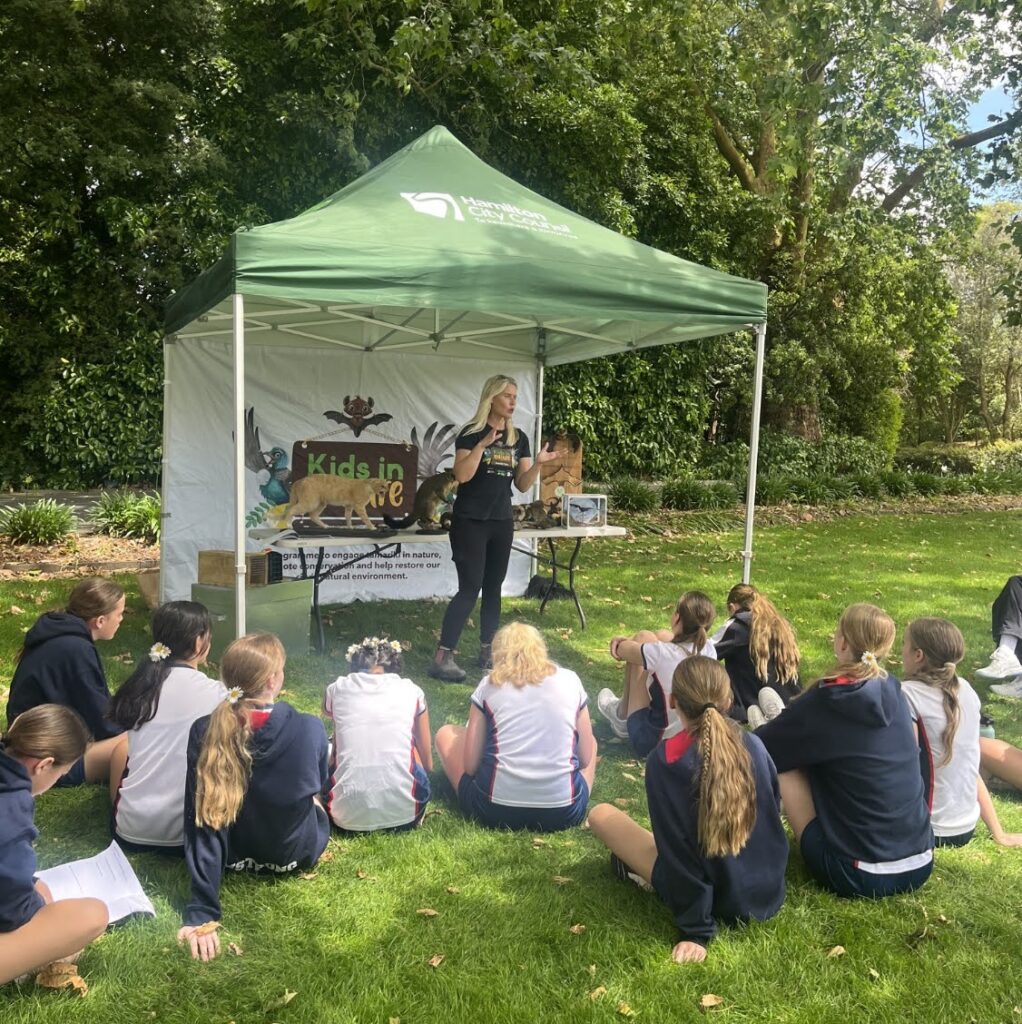
Waikato Diocesan Schools for Girls, yr 9 Sustainability Day, with Hamilton City Council Biodiversity Educator Shelley Urlich, exploring pests and predators
Learning From the Local Landscape
In another initiative, Year 9 science students explore a nearby gully to see ecology in action. They carry out bird counts, monitor pest activity, identify invertebrates and learn key native plant species. These activities help them build a practical understanding of ecosystem function and biodiversity.
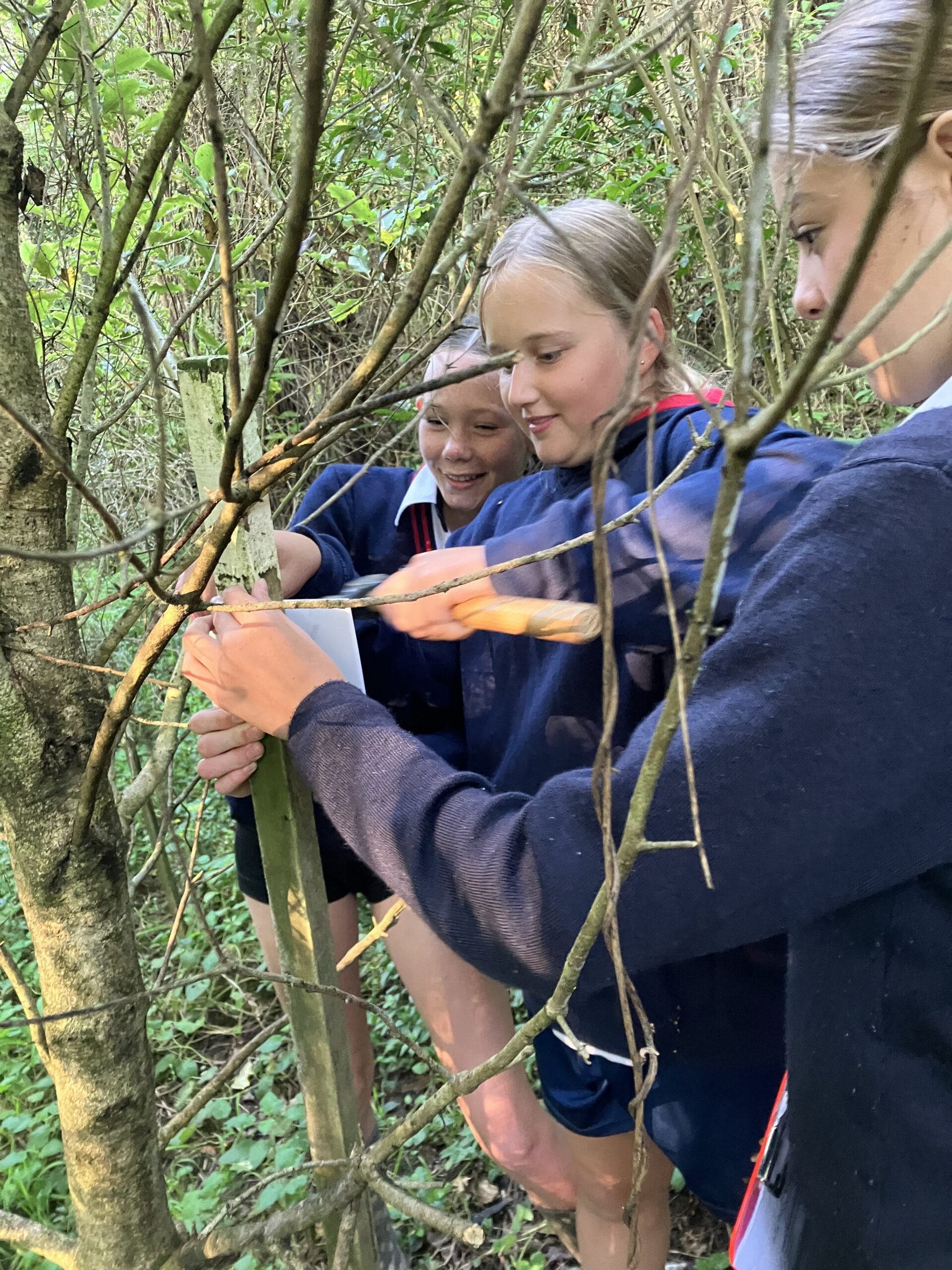
Waikato Diocesan Schools for Girls, yr 9 Science, Ecology in the Kukutaaruhe gully
The same site also supports Social Studies learning. Students map significant locations, explore the history of the area, investigate place names and pūrākau (traditional Māori stories), and consider how land use has shifted over time — from traditional food gathering routes to modern urban development. This helps students connect past changes to the environment they see today.
Growing Student Environmental Leaders
Enviroschools is also helping build a regional network of youth environmental leaders through annual Climate Summits. These gatherings bring together students from across the Waikato to strengthen their understanding of climate issues and build leadership confidence.
During these summits, students have:
- travelled the Waikato River on traditional waka with Te Toki Voyaging Trust
- explored local restoration projects
- learned together at marae and conservation lodges
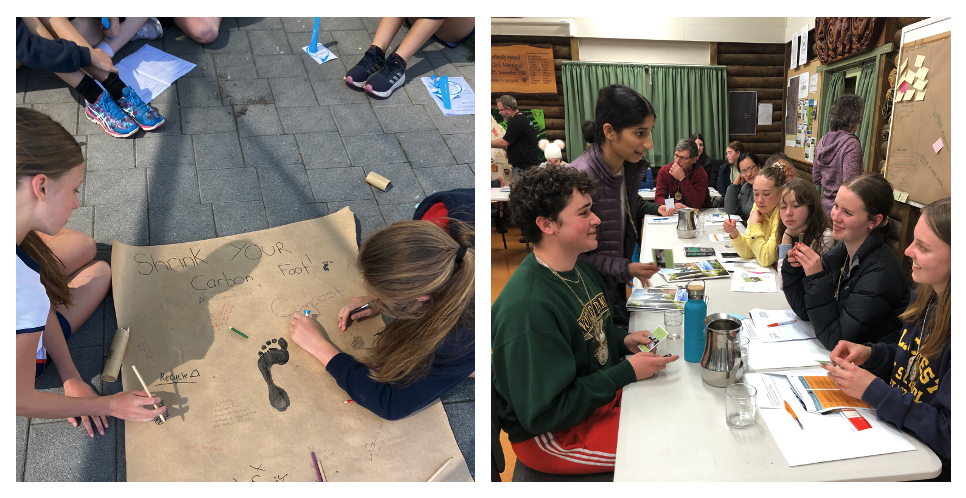
left: Waikato Diocesan Schools for Girls, yr 9 Sustainability Day, Carbon Footprint Activity; right: Waikato Enviroschools Secondary Leaders Summit, Pirongia Forest Park Lodge
Workshops focus on student voice, local climate challenges and actions schools can take to reduce their footprint. For many, the experience marks the beginning of a leadership journey. Some students have been part of Rangatahi Voices, a youth advisory group set up by Waikato Regional Council. Facilitators have also worked alongside student environmental leaders groups to help problem solve and provide support with projects such as setting up food waste systems and applying for funding.
Reducing Food Waste in Food Tech Classes
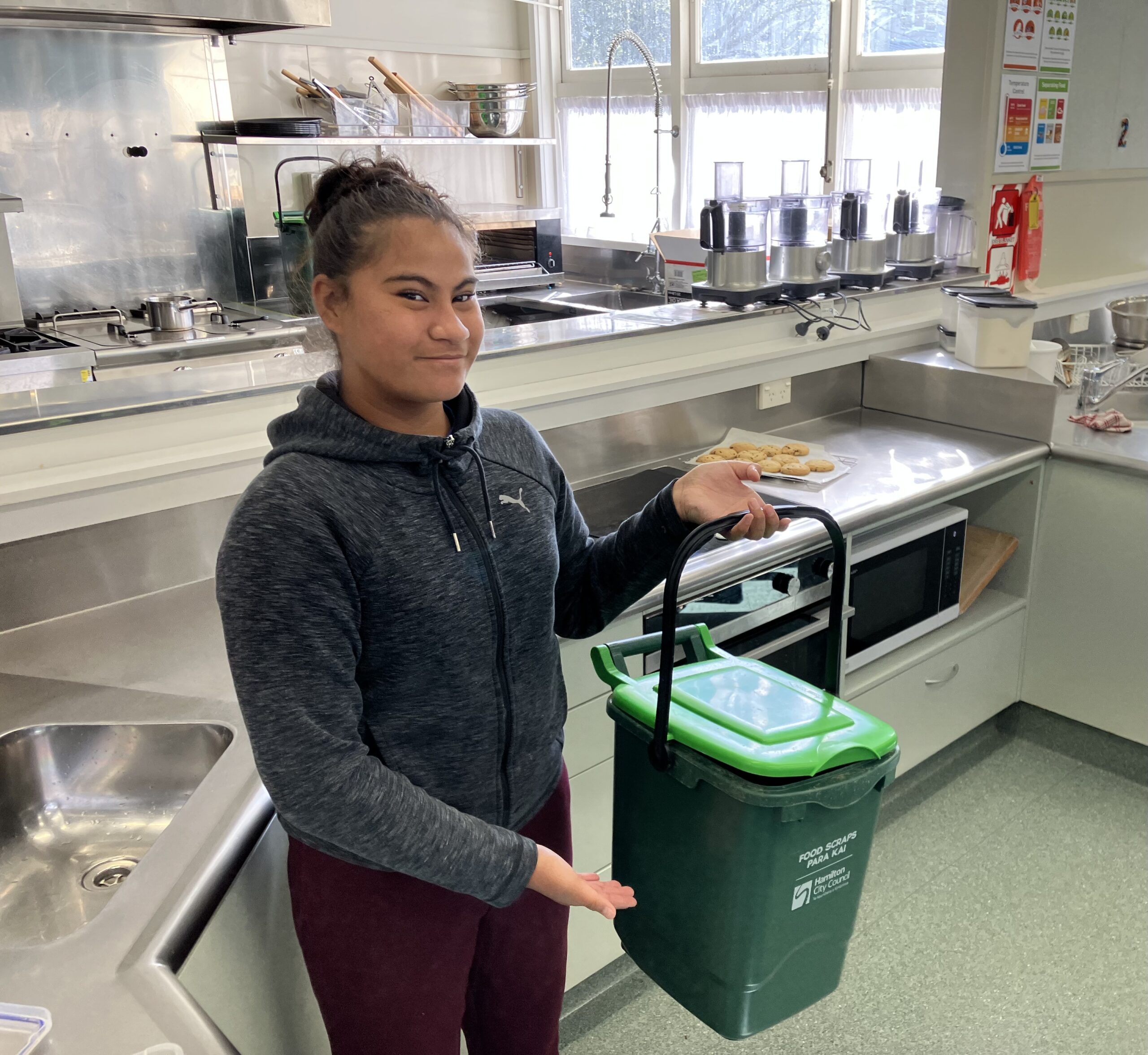
Fairfield College food tech class with their new food waste bins
A new development is the Waste-Wise Food Technology pilot, created with Food Technology teachers. The programme aims to reduce food waste in school teaching kitchens while supporting students to understand sustainable food systems.
Schools involved receive guidance to:
- conduct food waste audits
- introduce sorting and resource recovery systems
- integrate composting and worm farms
- use seasonal and locally sourced ingredients
Stronger links with community gardens and local food educators help extend the learning beyond the kitchen.
Looking Ahead
Across the Waikato, these initiatives are creating a stronger pathway for sustainability learning in secondary schools. Students are gaining deeper understanding through real-world experiences. Teachers are building confidence to bring sustainability into their subjects. Schools are strengthening partnerships with scientists, council staff and community groups.
Enviroschools plans to continue expanding partnerships with secondary schools, embedding field trips as regular curriculum experiences, and developing programmes such as the Waste-Wise Food Technology initiative into whole-school strategies.
Field investigations, sustainability days and regional leadership events will keep offering students chances to connect with their environment—and with each other—growing their understanding, their sense of place and their ability to be part of meaningful change.
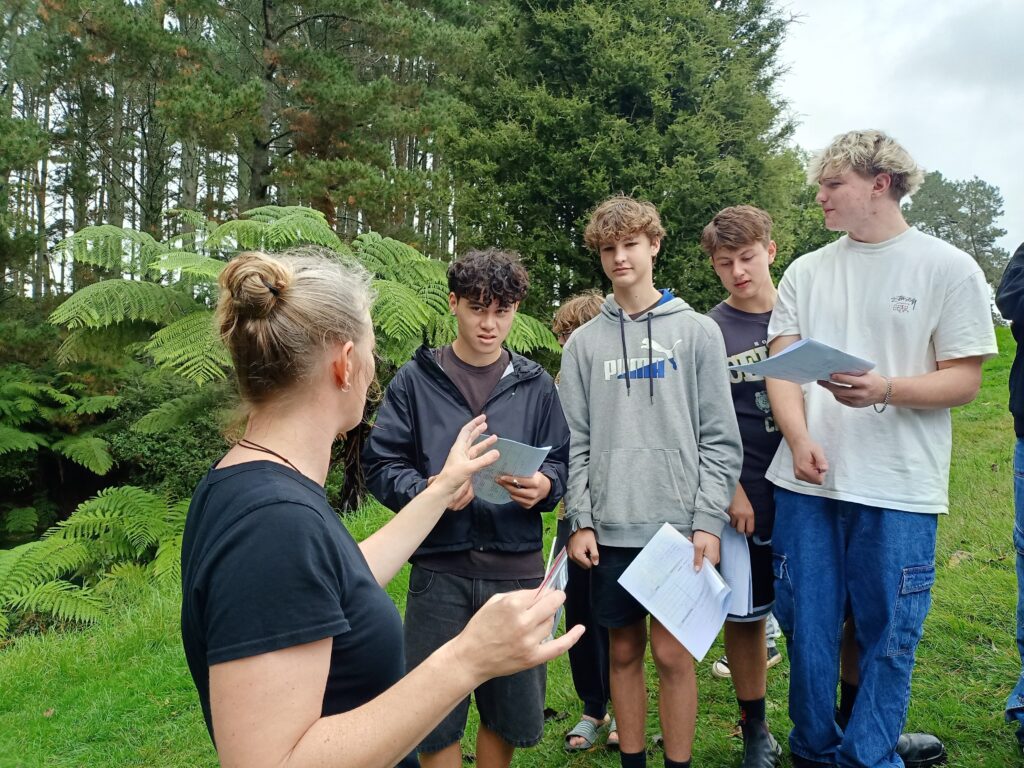
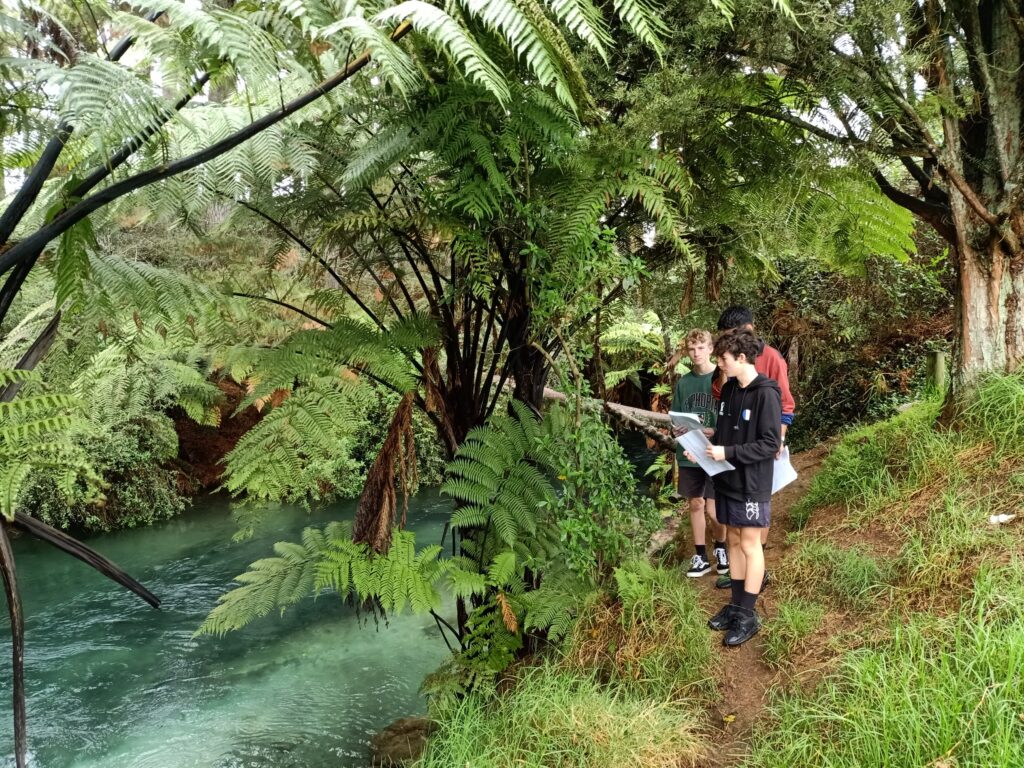
Morrinsville College students with Enviroschools facilitator Alex at Te Waihou Blue Springs, exploring impacts of land use change
 Print
Print