Forest Lake School, Hamilton | 18 March 2026
“If we want children to truly flourish, to become truly empowered, let us allow them to love the earth before we ask them to save it.”
— David Sobel, Place-based Educator
These words were shared during the opening gathering circle, setting the tone for a day of professional development grounded in the kaupapa of nature connection.
Teachers from across Waikato Enviroschools came together for the Teacher Re-Energiser: Nature Connection PLD, hosted at Forest Lake School. Lead Kura Taiao teacher Whaea Nat, whose humble and inspiring leadership reflected a “see it as it is” approach, ensured the day was practical, authentic, and immersive.
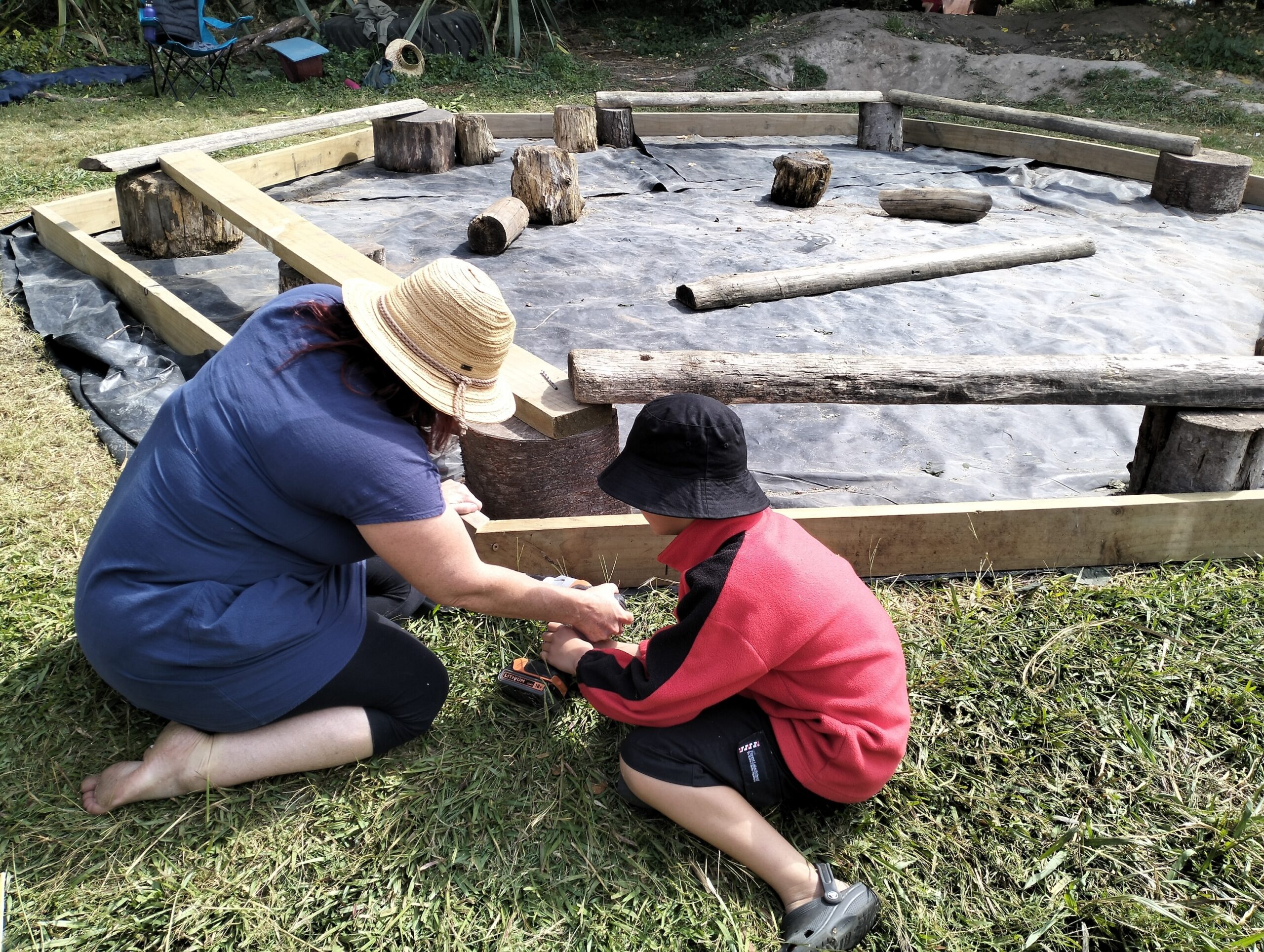
Lead Kura Taiao teacher, Whaea Nat, supports hands-on upskilling at every opportunity
The day gave teachers space to slow down, step outside, and deepen their connection with nature — with the intention of taking ideas back into their own school contexts.
Observing Roto Ngahere Kura Taiao
A highlight of the day was observing Roto Ngahere Kura Taiao, Forest Lake School’s outdoor learning programme in action. The programme offers students diverse learning experiences in a natural setting, supporting resilience, communication, social skills, and problem solving through exploration and free play.
Teachers were introduced to the programme’s license system, a safe and structured way for students to explore the ngahere. The ngahere is divided into five zones, each based on risk level, activity type, and challenge. As students build skills and confidence, they gain access to more zones — developing independence, responsibility, and self-management along the way.
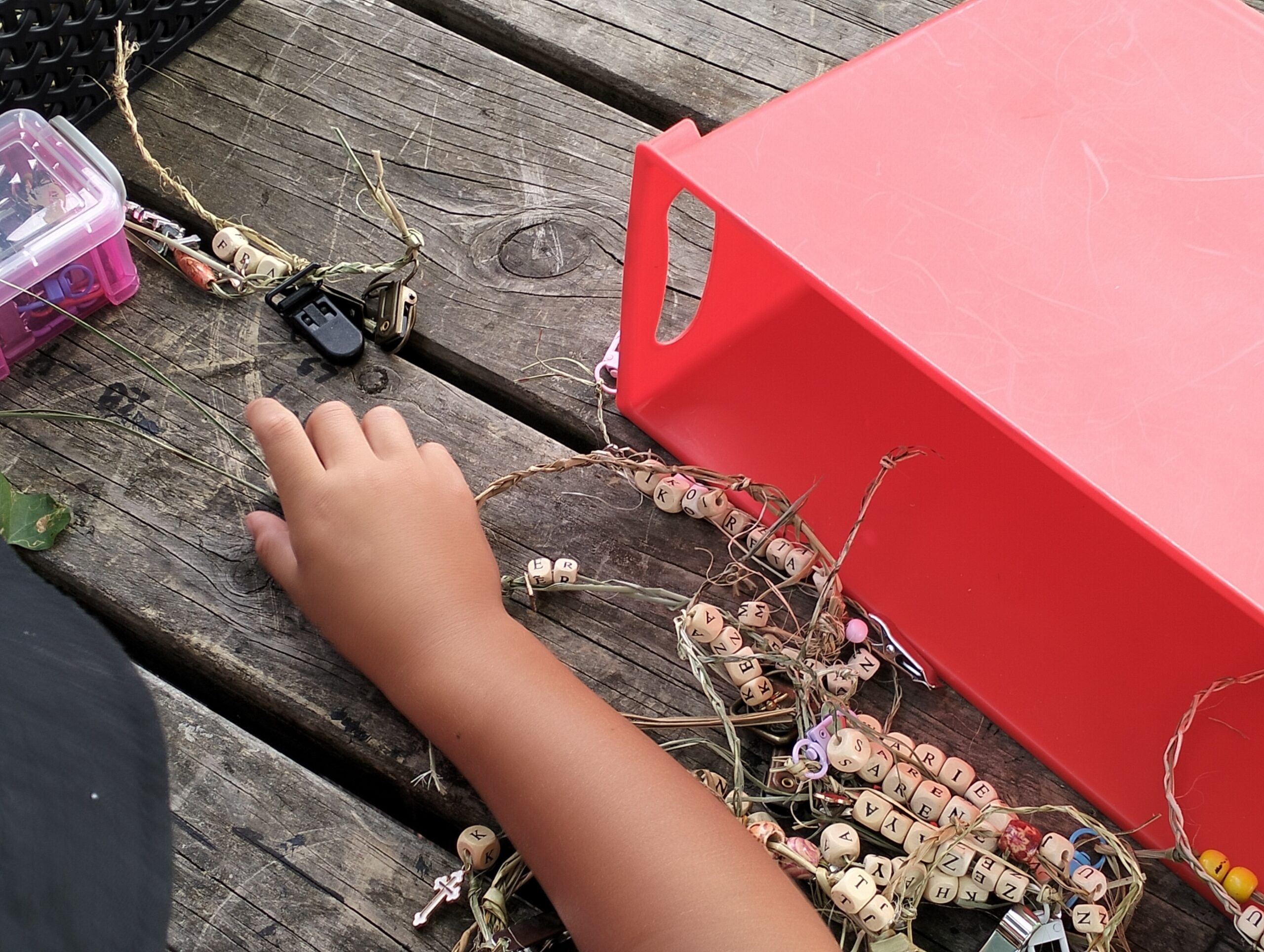
A Kura Taiao license under construction
“It felt like being a child again.”
Teachers observed students immersed in free play — building huts, engaging in imaginary games, negotiating, and problem solving. Teachers also had the opportunity to participate in and experience both sensory and active nature connection activities including mindfulness, writing collaborative poems after silent reflection, sound mapping, camouflage and observation activities and making cordage.
During a hut-building activity, one teacher expressed: “It’s like being a child again.”
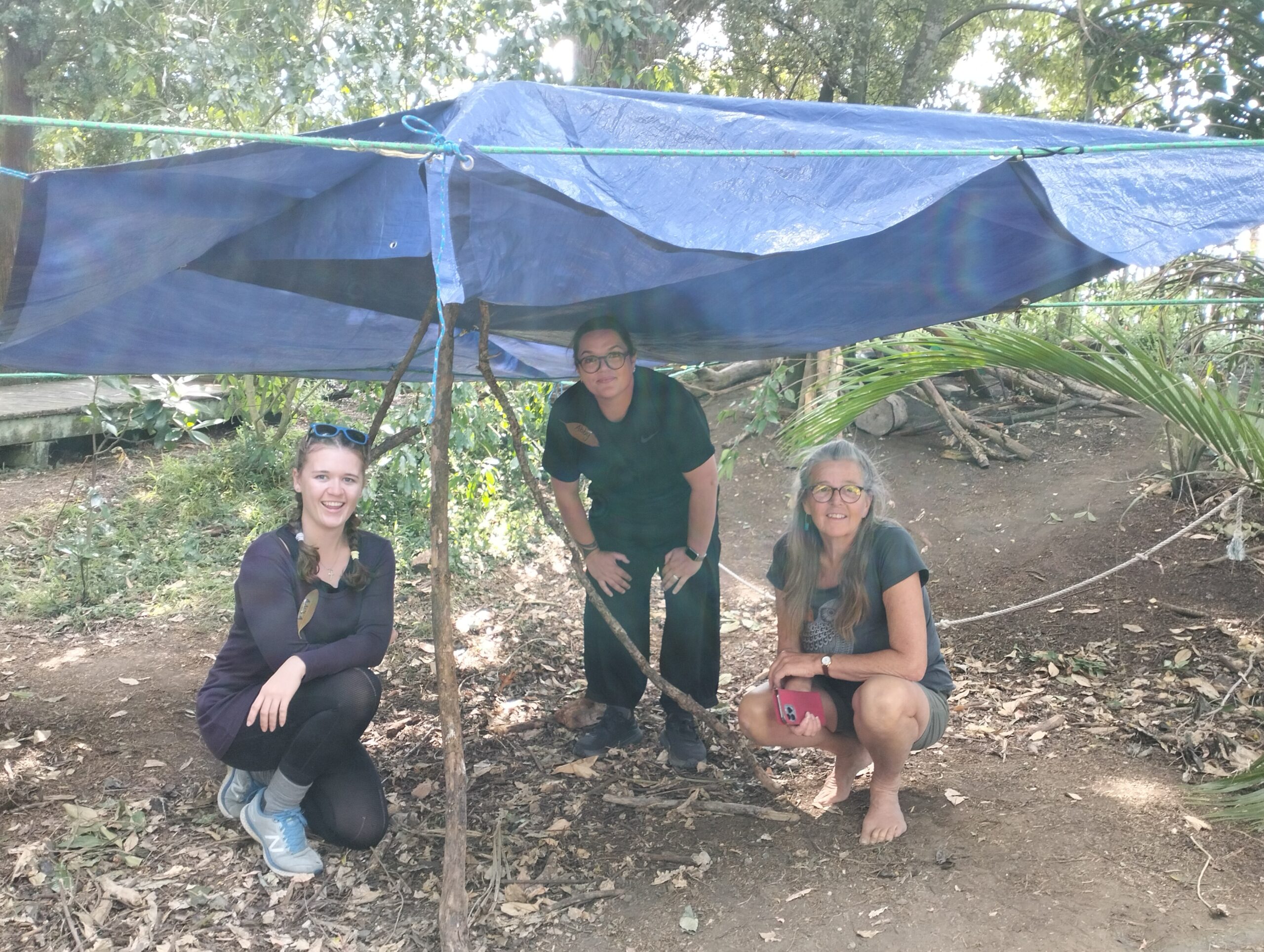
Teachers Liv Scott, Amy Han, and Beccy Dove are pleased with the hut they constructed
Experiences like these cultivate empathy, reminding us how good it feels when we are given time and space to explore naturally. It also highlighted the value of allowing children to be children, and trust that learning happens through play.
Key takeaway: start with what you have
Forest Lake School’s Kura Taiao programme is an inspiring example of what is possible. However, one of the most empowering learnings for teachers was that you don’t need a full bush school programme to create meaningful nature connection.
As Margaret Brier, teacher from Te Pahu school, reflected:
“Try to make better use of what I have available. Think big but start small.”
Teachers learnt that nature connection can be brought into learning environments in many ways — through gardens, local parks, small outdoor spaces, a single tree outside the classroom, or a nature connection table.
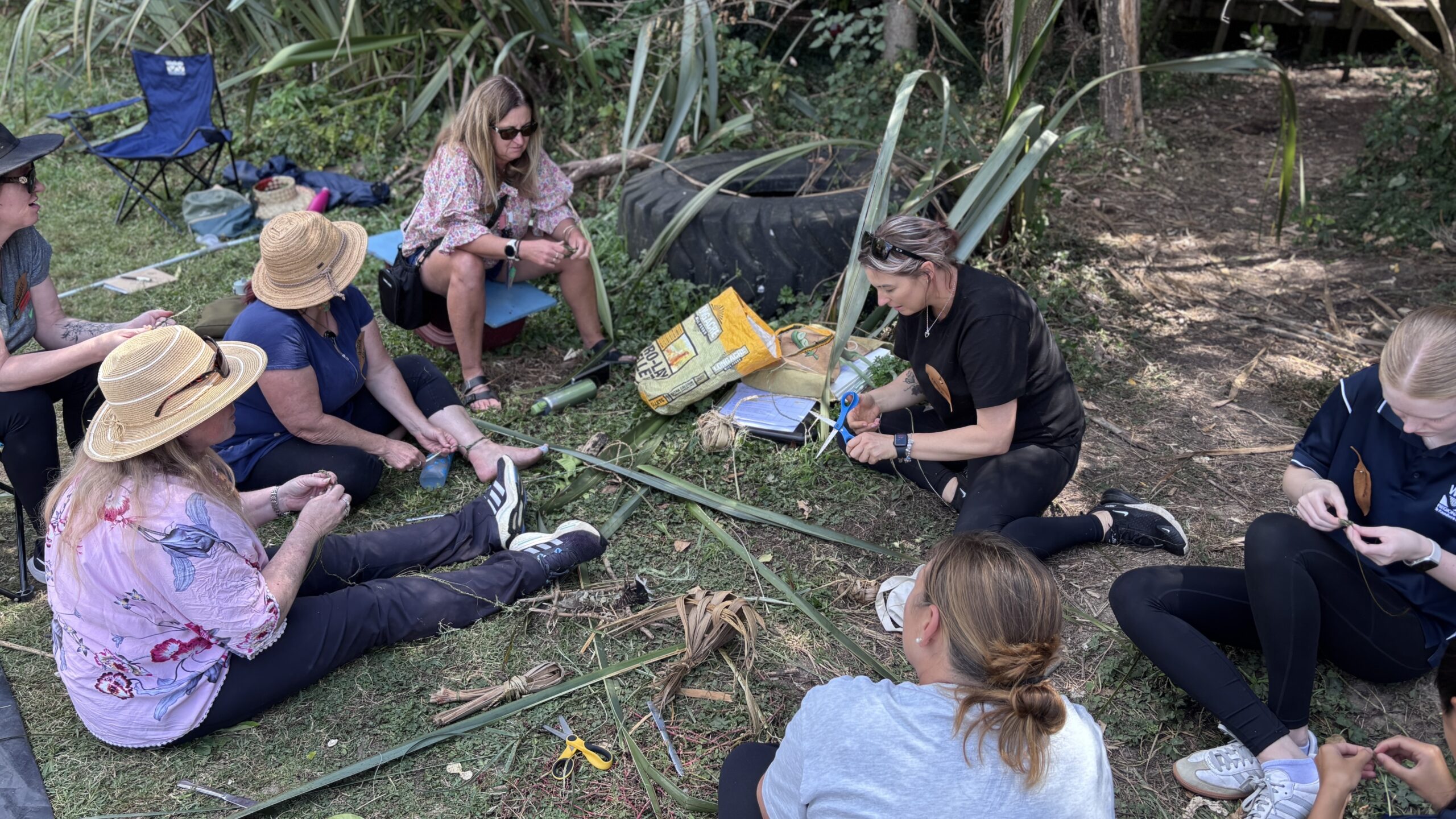
Teachers learning traditional cordage techniques with harakeke
A simple idea with big impact: the Nature Table
One practical takeaway was the Nature Table. After lunch, teachers explored a nature table set up by the facilitators, selecting items that reflected the season, a feeling, or a memory, and shared these with the group. The activity reconnected teachers to the day’s kaupapa and sparked ideas for their own classrooms.
Participating teacher, Abby Han from St Paul’s Catholic School, Ngaruawahia is working with the schools Envirogroup to set up a nature table for each classroom that will change with the seasons. A nature table can include leaves, bark, feathers, stones, seeds, shells, flowers, or other natural taonga/treasures respectfully gathered.
Nature tables are accessible for any school and create a daily reminder that nature enhances learning spaces — supporting curiosity, observation, creativity, and wellbeing.
A re-energising experience
This professional learning session wasn’t only about new strategies or programme design — it was about reconnecting. Reconnecting with nature, curiosity, and the experience of being a learner again. For teachers, observing children play freely in the ngahere reinforced what learning can look like when students feel safe, trusted, and inspired. Beccy Dove from Paeroa Central School plans to: “Try some free play in nature with zones or rotations next term in our Enviro sessions.”
Padlet QR code
It reminded everyone that nature connection doesn’t require a perfect setting — it requires intention. Sometimes the most powerful shift begins by noticing what is already around us and giving ourselves and students permission to explore it.
The Waikato Enviroschools team have created this Nature Connection Padlet to support teachers and facilitators with nature connection opportunities.
Banner image: Spontaneous free play at Roto Ngahere Kura Taiao
 Print
Print