 Background
Over the past year and a half, Hauraki Plains College (HPC) has been working to deepen its understanding and practices around waste minimisation, exploring how changing school waste streams can create meaningful environmental and social impact. During this time, the school made significant progress — not only in managing waste more effectively, but also in engaging students who are passionate about the environment and actively contributing through the Enviro-council. This website story shares more about their waste minimisation journey.
With growing interest from other secondary schools across the Hauraki and Coromandel area, a three-hour workshop was organised at HPC to bring like-minded students together, share success stories, and support schools in developing their own environmental initiatives.
The Workshop
Four schools attended, with group sizes ranging from 1–15 students. The day began with a welcome and whakawhanaungatanga, helping students to connect and share their reasons for being part of an Enviro-council. HPC students then presented a slideshow detailing their waste minimisation journey, taking ownership of their mahi and demonstrating pride in their achievements.
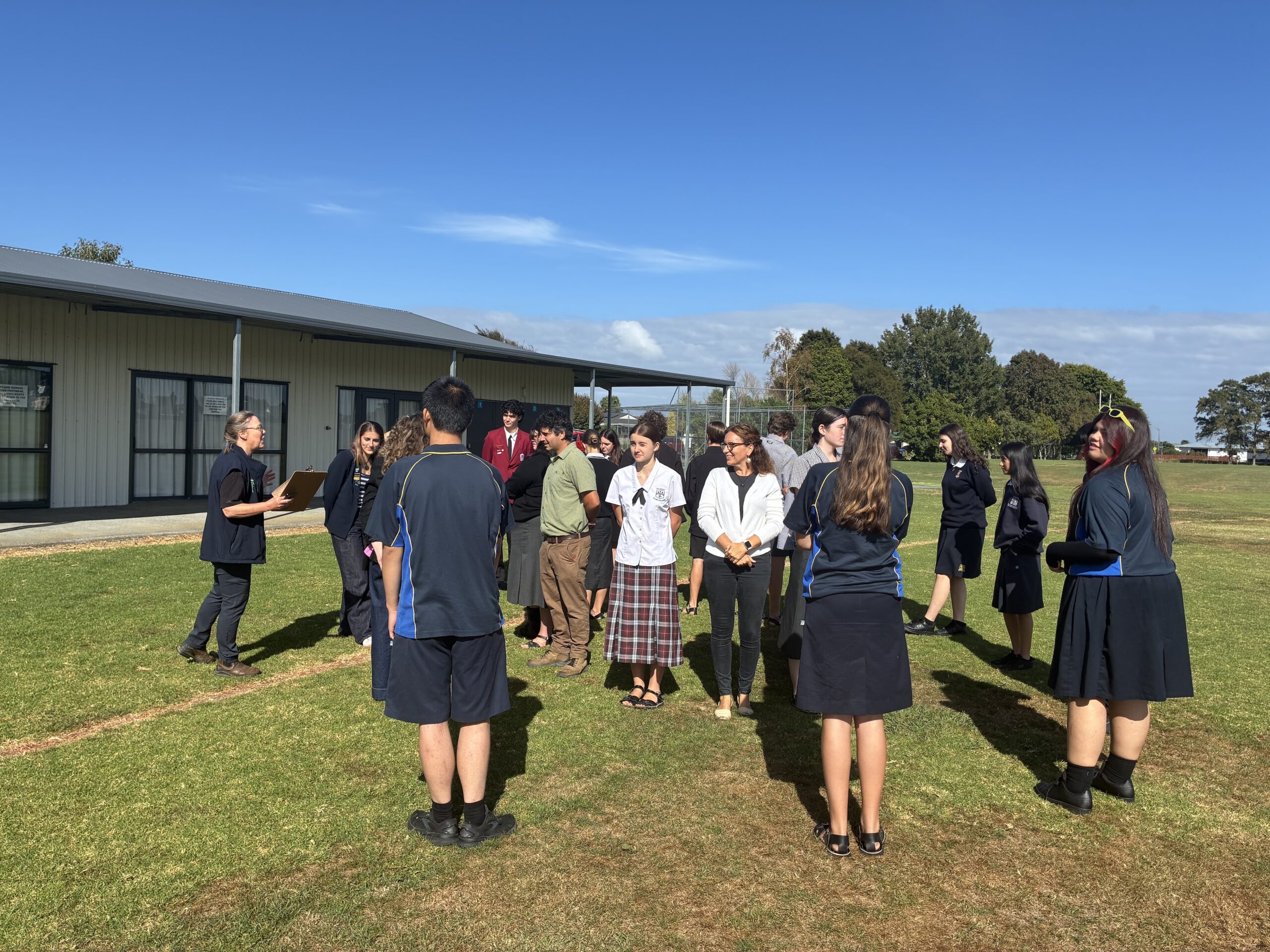
Whakawhanaungatanga allowed students to connect and share their reasons for being part of an Enviro-council
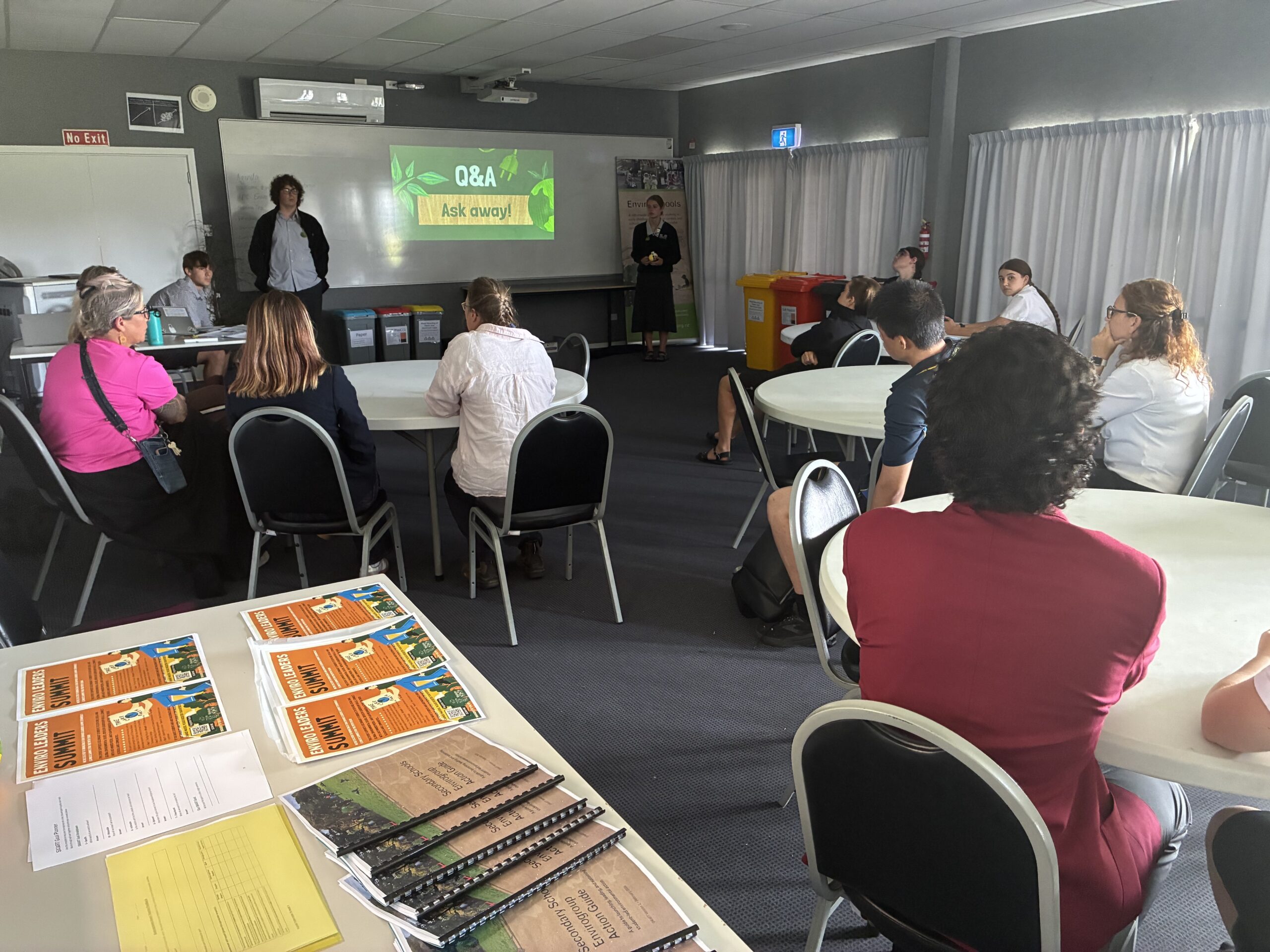
HPC students presented a slideshow detailing their waste minimisation journey
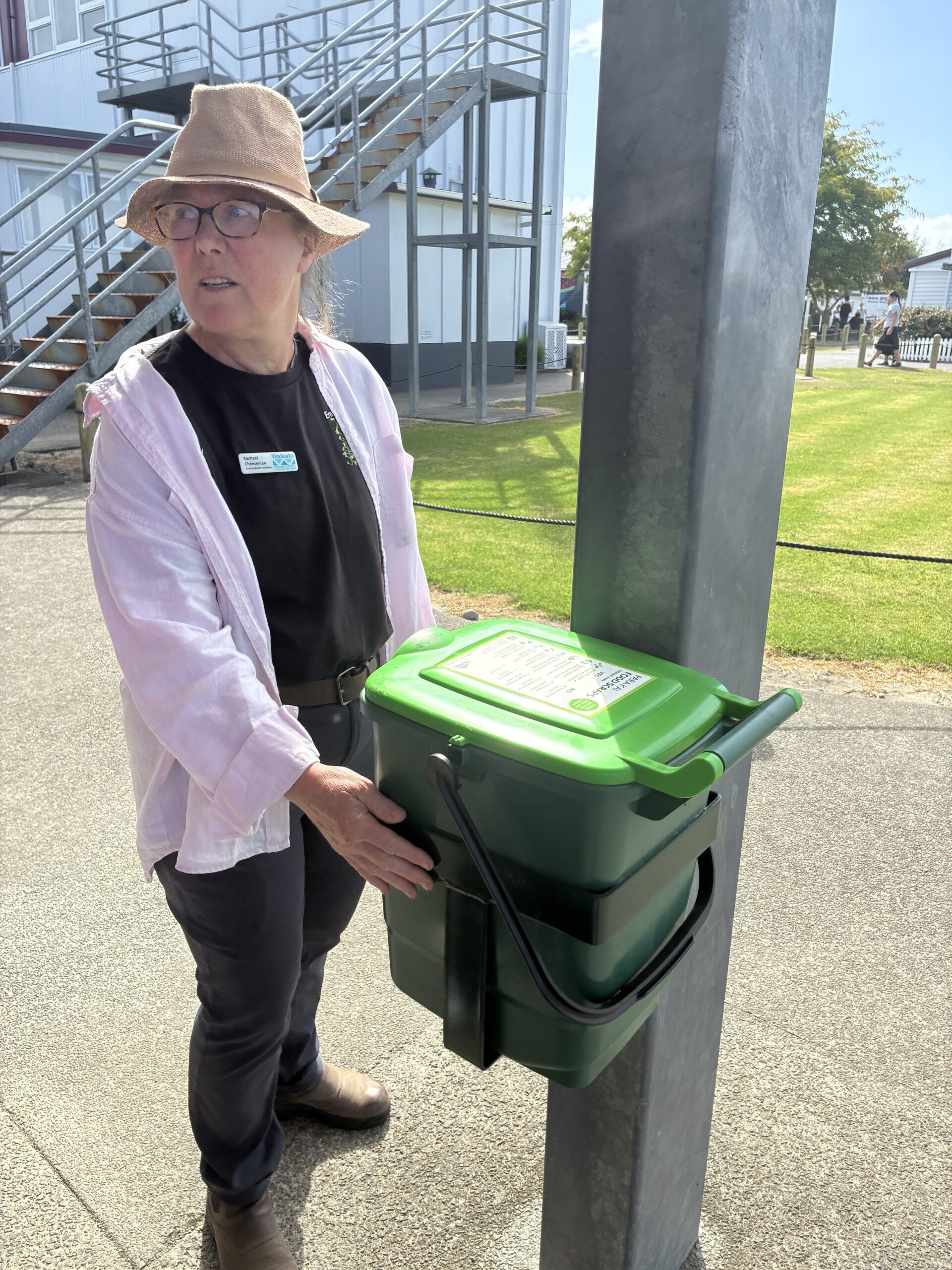
New food scrap bins
Following the presentation, students toured key areas of the school, including the hot composting system, new food scrap bins, and the paper recycling skip. This showcased the practical systems HPC had implemented and the significant increase in materials being diverted from landfill. Visiting students expressed inspiration and curiosity about replicating similar initiatives at their own schools.
The second half of the workshop introduced the Secondary Schools Envirogroup Action Guide, a handbook designed to help students launch their own Enviro-councils, rally like-minded peers and school leadership, and develop a clear focus. In school groups, students and supporting teachers participated in facilitated activities to define their group’s purpose and focus areas. This allowed them to transform their ideas into practical plans with real potential for action.
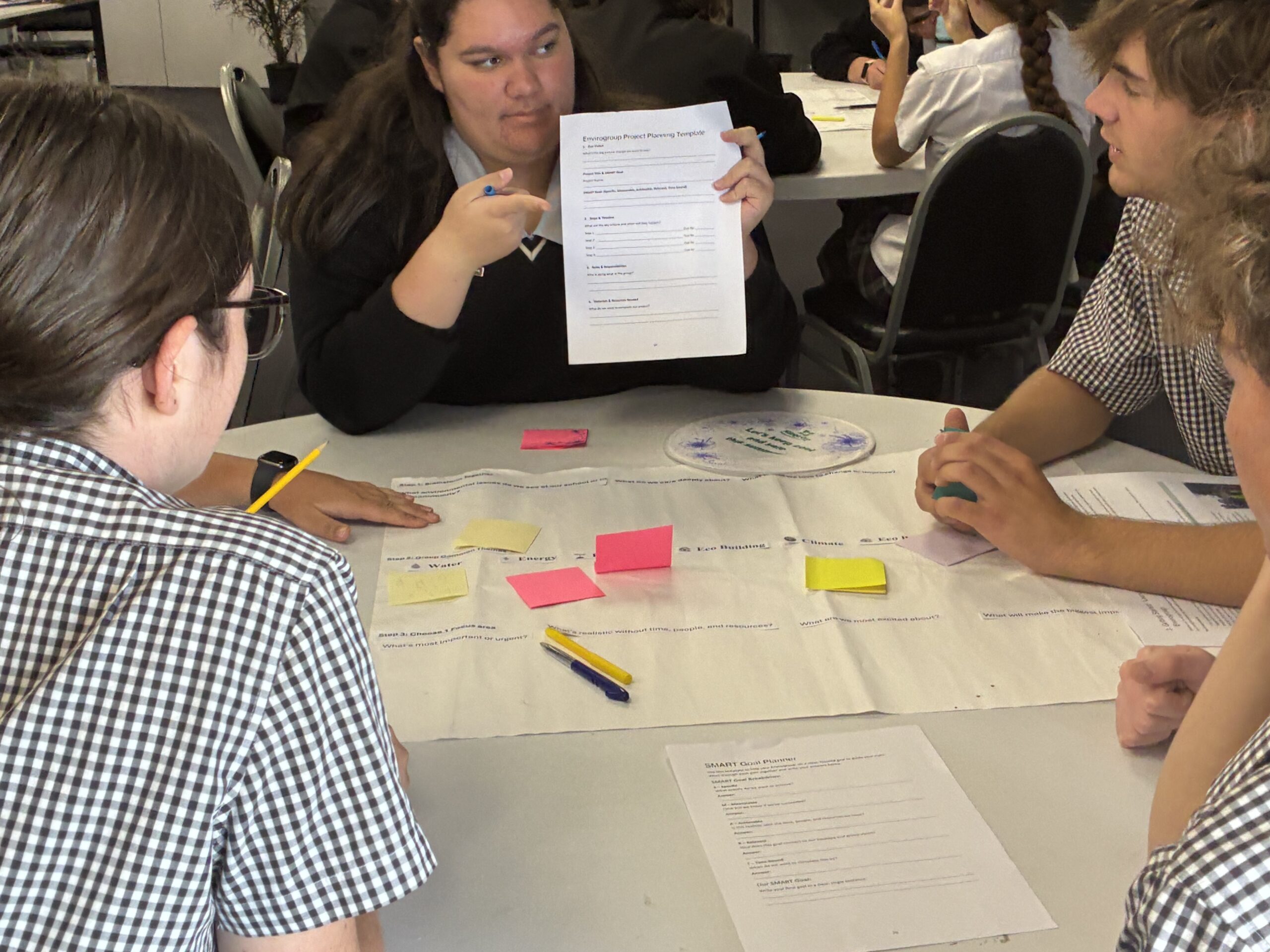
Schools participated in facilitated activities using the Enviroschools Secondary Action Guide
Outcomes and Next Steps
The workshop successfully empowered students to take ownership of their environmental initiatives. Several schools have already begun implementing their ideas: one school is developing a nature space for students to connect with the environment, while another will conduct a waste audit as the first step of their focus on waste minimisation.
Enviroschools Facilitators, Jo and Rachael, will continue to support attending schools in establishing Envirogroups and implementing their plans, providing guidance, resources, and ongoing mentoring.
Community Impact
The workshop had wide-reaching benefits for the community. It increased awareness of environmental action and demonstrated the tangible outcomes that student-led initiatives can achieve. Students developed leadership and planning skills, strengthened connections with peers from other schools, and gained the confidence to engage their school communities in sustainability projects. Equipped with practical tools and action plans, schools are now positioned to create measurable environmental improvements, while also fostering a long-term cultural shift towards sustainability and stewardship.
Outcomes for schools since the event
Mercury Bay Area school have a newly established Envirogroup, the focus for next term is going to be a full secondary school waste audit run by the Envirogroup, this will serve as a starting point to find out what their next steps will be in terms of waste minimisation.
Waihi College is also establishing an Enviro-council. Its current focus is on helping students connect with te taiao by creating access to a native area on the school grounds that has previously been off limits. The group believes that building this connection with the environment will encourage students to value it more deeply and take an active role in protecting it.
Thames High School is continuing to build momentum in waste minimisation by educating students about correct waste separation. Since the workshop, the Envirogroup has supported the school’s International Food Day by promoting waste separation and has been meeting regularly with the caretaker to monitor progress. The group has also grown in size and now has the support of a lead teacher. Several new members were selected to attend the EnviroLeaders Summit, further strengthening the group’s knowledge and commitment to sustainability. Thames High School remains focused on improving its waste practices and identifying new opportunities for action.
Hauraki Plains College is making strong progress with the implementation of new waste hubs donated by the Hauraki District Council. The Enviro-council is removing old bins from around the school and installing three main waste hubs. These are being promoted across the school through assemblies, newsletters, and online platforms. The group is also organising a friendly student-versus-teachers competition to encourage greater participation in waste minimisation and correct waste separation.
Secondary school teachers who attended the Secondary Schools Teachers’ Professional Development day were shown a video featuring HPC students sharing their enthusiasm, ideas, and next steps. The video (see below) highlighted the value of student empowerment and student-led projects, and encouraged teachers to support similar initiatives in their own schools.
 Print
Print