At KINZ Mission Heights, an ECE setting, connecting with nature and finding inspiration for engagement and learning happens naturally. The massive natural spaces that extends beyond the Centre’s fence line is our natural catalyst for learning. The Enviroschool kaupapa weaves in naturally in the space.
The scenarios below celebrate some of those many learning moments.
Wasp Nest learning
Recently we have been learning about different insects in our taiao. As part of this, tamariki discovered that wasps build their nests using wood pulp, created by mixing fibres and saliva. We also learnt that a queen starts the nest and lays one egg in each cell, similar to bees.
Tamariki had the opportunity to closely observe an unhabituated wasp nest that we had removed from our fruit orchard. We noticed that the cells were similar in size and that each cell had six sides, forming a hexagonal shape. Tamariki deepened their learning by creating their own wasp nests using playdough with guidance from kaiako. They carefully shaped each side and placed the pieces together to form hexagonal cells. Some children even added playdough sphered shapes as eggs for each shell. One child suggested covering the nest to protect the eggs.
This learning also created opportunities for us to let ngā tamariki know that wasps are foes in our spaces, hence, why we destroyed the hive built in our fruit māra/garden.
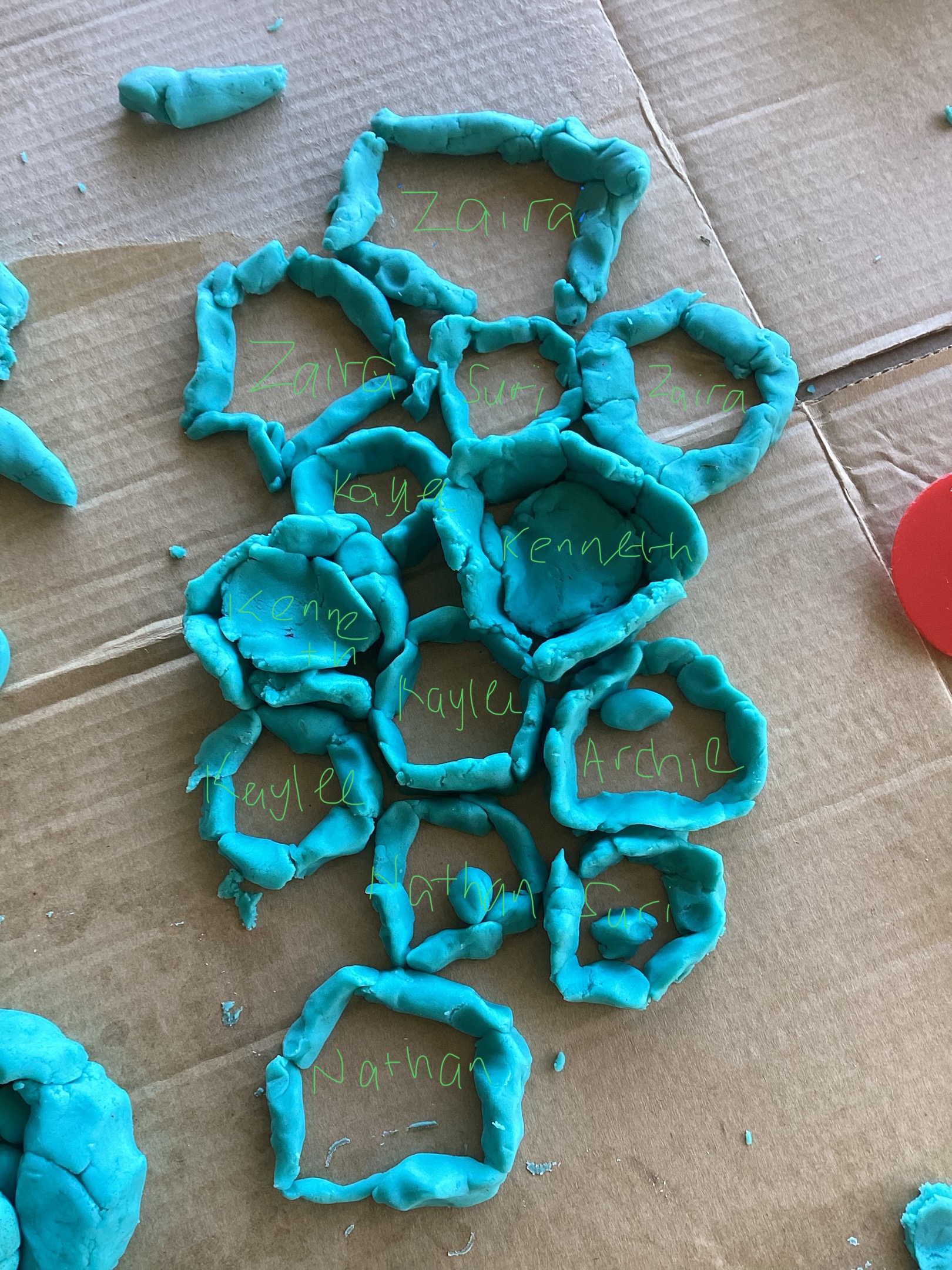
Playdough representation of a wasp’s hive.
Native vs Invasive varieties of Praying Mantis
Looking closely in our Exploration Garden, we discovered many habitants, such as praying mantis, wasps, bees, ants, green caterpillars, snails, slugs and many more. Through close observation, we identified two different types of praying mantis. Teachers supported tamariki in recognising the difference between the New Zealand native praying mantis and the invasive South African praying mantis. After learning how to identify the nest of the invasive species, four-year old Mason Su’a took responsibility for removing one from our deck area, explaining that it destroys the native praying mantis.
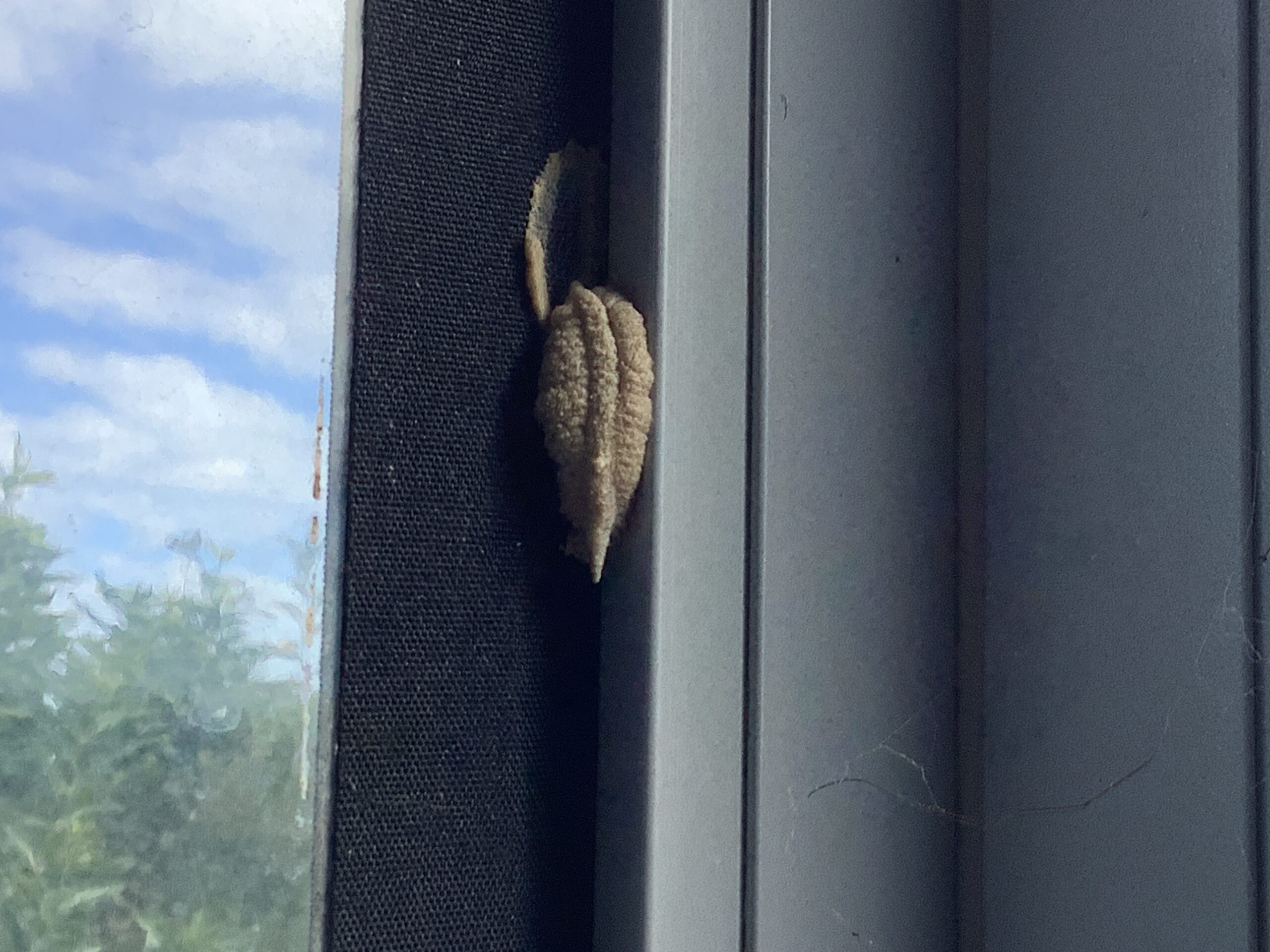
The invasive Praying Mantis hive spotted on the deck by the native garden. Mason Su’a was proactive in removing the nest after his learning.
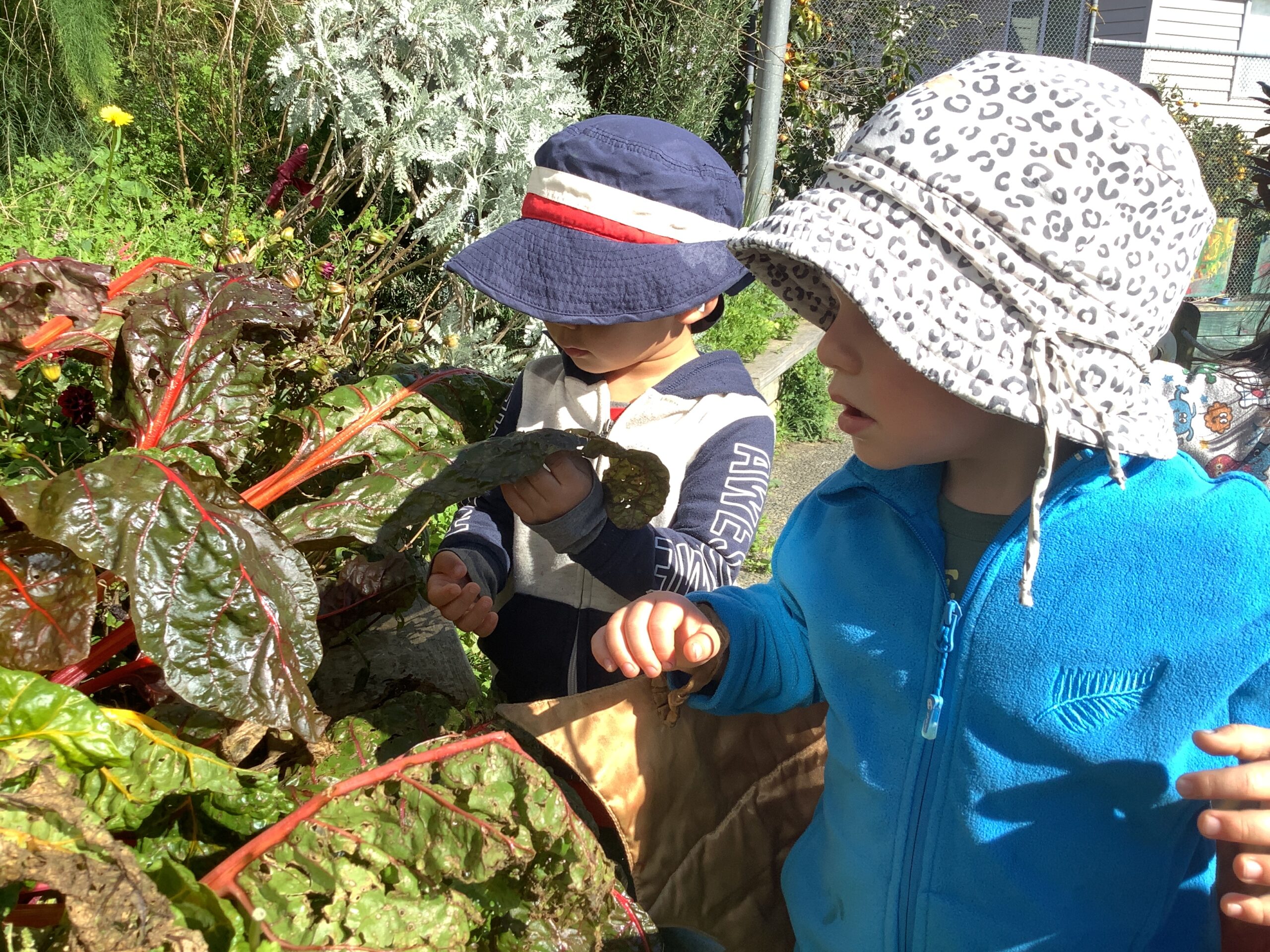
Empowered learners looking for green caterpillars and snails to remove them from the māra kai/edible garden.
Lizards and Skinks in our spaces
Recently, the discovery of a dead skink sparked several days of learning and curiosity about lizards and skinks. Through close observation, children noticed diamond shapes on its head, and one of the teachers shared that it was a native skink. Teachers created pictorial posters for ngā tamariki to examine, which inspired them to draw their own versions of native skinks. Children also developed working theories, including the idea that skinks with shorter tails might be babies.
Through co-research, children learnt that skinks can shed their tails to protect themselves from predators, and although the tail regenerates, it does not grow back to its original size.
Kenneth Zhou represented this learning by drawing two skinks – one with a long tail and one with a shorter tail.

Kenneth Zhou’s working theories about the size of the skinks’ tails.
Moth Pod Competition
The moth pod competition further enriched our learning experience during whāriki time, as children explored the impact of invasive weeds on our native plants and animals.
Some co-created working theories included: “The native plant feels very tight and it won’t grow anymore.”
A parent shared this feedback on Storypark:
“Thank you for teaching the children about such important topics. Last night, Aveer was talking about moth plants and even pointed some out at our home. I was amazed by how much he knew, especially since we’ve never discussed this at home before.
Then he said, “We need to call the teachers at KINZ to take this out,” which made me smile. After reading this morning’s story, I now understand exactly what he meant. It’s wonderful to see how engaged and aware the children are becoming. I’d be happy to join you next week, and we’d also love to welcome you to our home so the children can gain more hands-on experience while helping protect plants in our local area.”
In another instance, while one parent was collecting moth pods in a local reserve, her son Jack Granger stood nearby cheering her on, singing a song, “Moth pods! Moth pods! We don’t want…”, created by one of our learners who has transitioned to school. Counting moth pods created many opportunities for ngā tamariki to develop number knowledge as they counted in tens, grouped in fifties, estimated weekly collections, and recorded data.
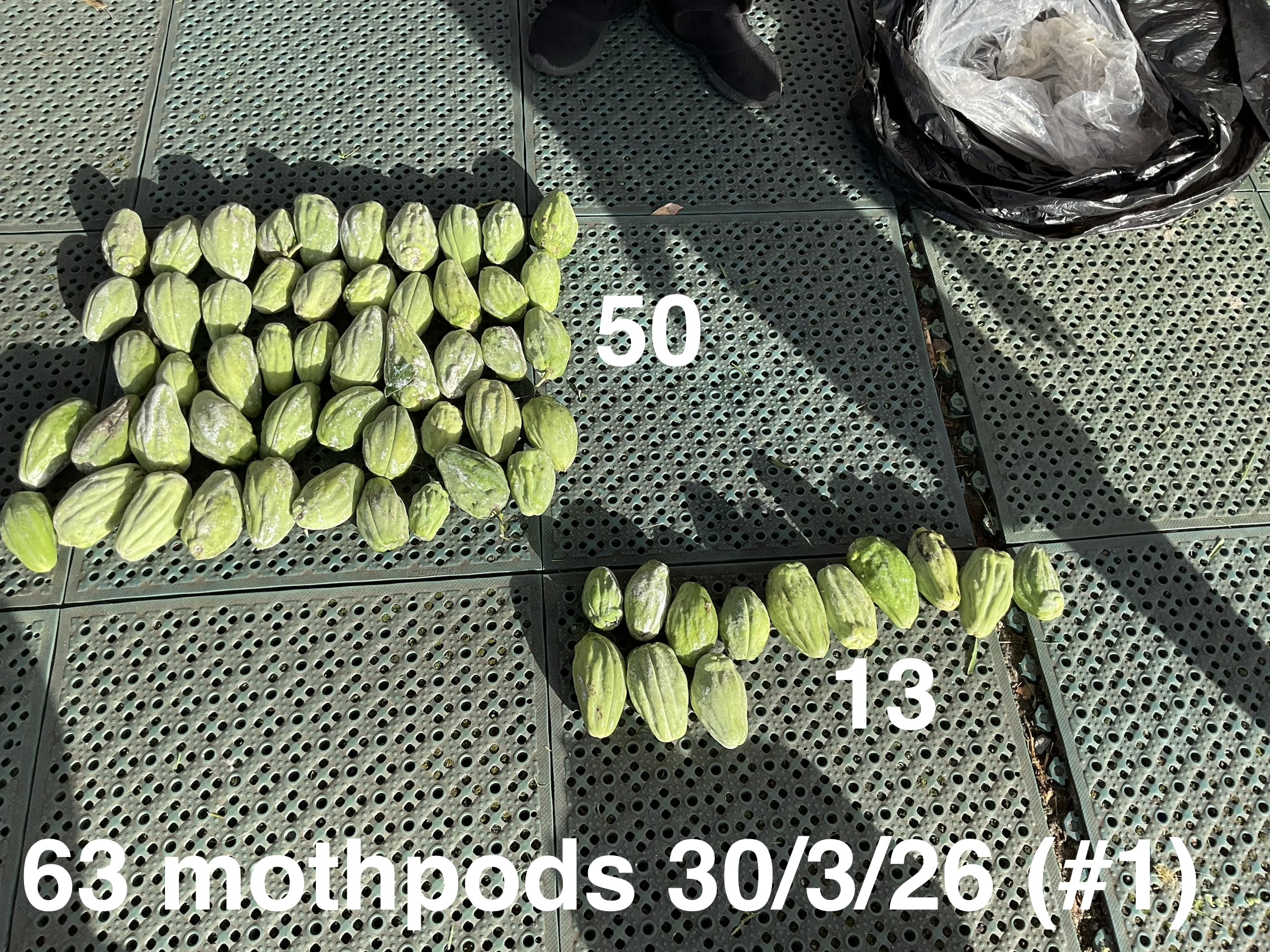
Counting, grouping, and recording moth pods (invasive pest plants).
These examples offer just small glimpses of empowered learners engaging in meaningful, hands-on experiences that create rich opportunities for learning for sustainability, as we take responsibility for nurturing our immediate taiao/environment while fostering future leaders/rangatahi.
 Print
Print