Across Te Tai o Poutini, we have been working alongside kaiako in a range of different ways – some planned, some information, and much of it still taking shape.
What we see happening isn’t always easy to point to. In many kura and centres, there aren’t obvious or tangible shifts yet. A lot of the mahi sits elsewhere – in conversations that continue, in relationships that are building, in small changes in how people are thinking or noticing.
The haerenga shared here are one part of that wider kaupapa. They are moments where we’ve come together, stepping outside of our usual spaces, and offering PLD alongside each other and with te taiao.
What comes from those moments is not always clear. We don’t always see where things land. Often, it feels like things are still forming.
Awa Arahura – Learning to listen again
At Arahura, kaiako gathered at the marae and alongside the awa – not simply to learn about the river, but to experience it.
Held by the flow of water and the stories of the place, learning began not with instruction, but with presence:
listening to kōrero.
listening to taiao.
listening inward.
At times it felt simple. At times uncertain.
As facilitators, we were conscious of holding the space lightly – not needing to direct where it went, or what people should take from it.
What people left with was different.
Some spoke about ideas they wanted to try.
Some were still working through questions.
Some didn’t say much at all – and we’re not always sure what stayed with them, or what might return later.
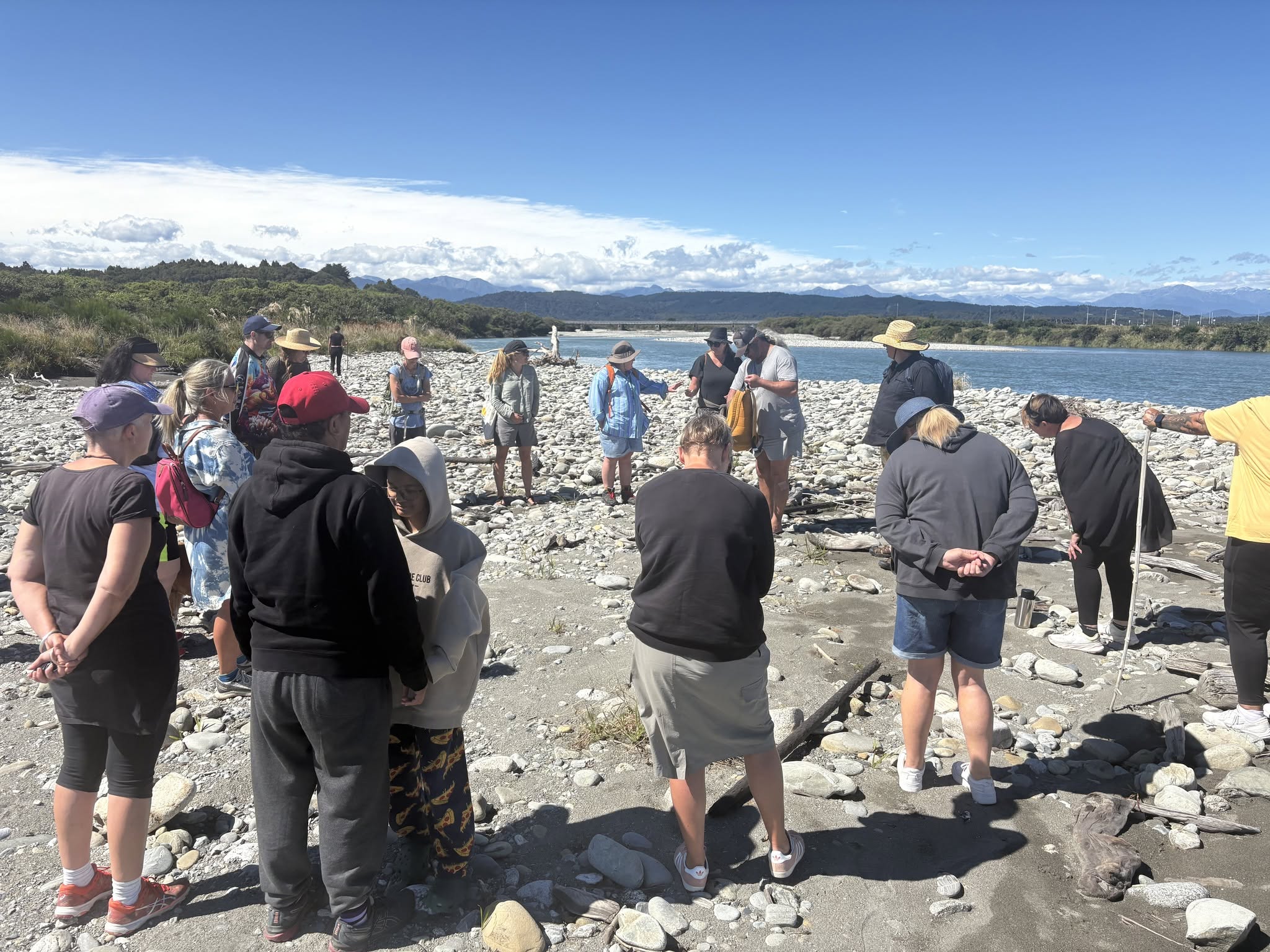
Participants gather on the banks of the Arahura Awa, learning from the landscape and deepening connections with te taiao through place-based education.
Growing ideas in Kawatiri – Reimagining practice together
In Kawatiri, we spent time moving between local Enviroschools, community māra kai and the stories held within the landscape.
Learning was practical, grounded and shared. Conversations unfolding over garden beds, picking up again between visits.
We found ourselves wondering alongside kaiako about what learning could look like if it loosened a little:
if ākonga had more agency.
if curiosity was given more space.
Some ideas seemed to gain energy quickly. Others were shared and left open.
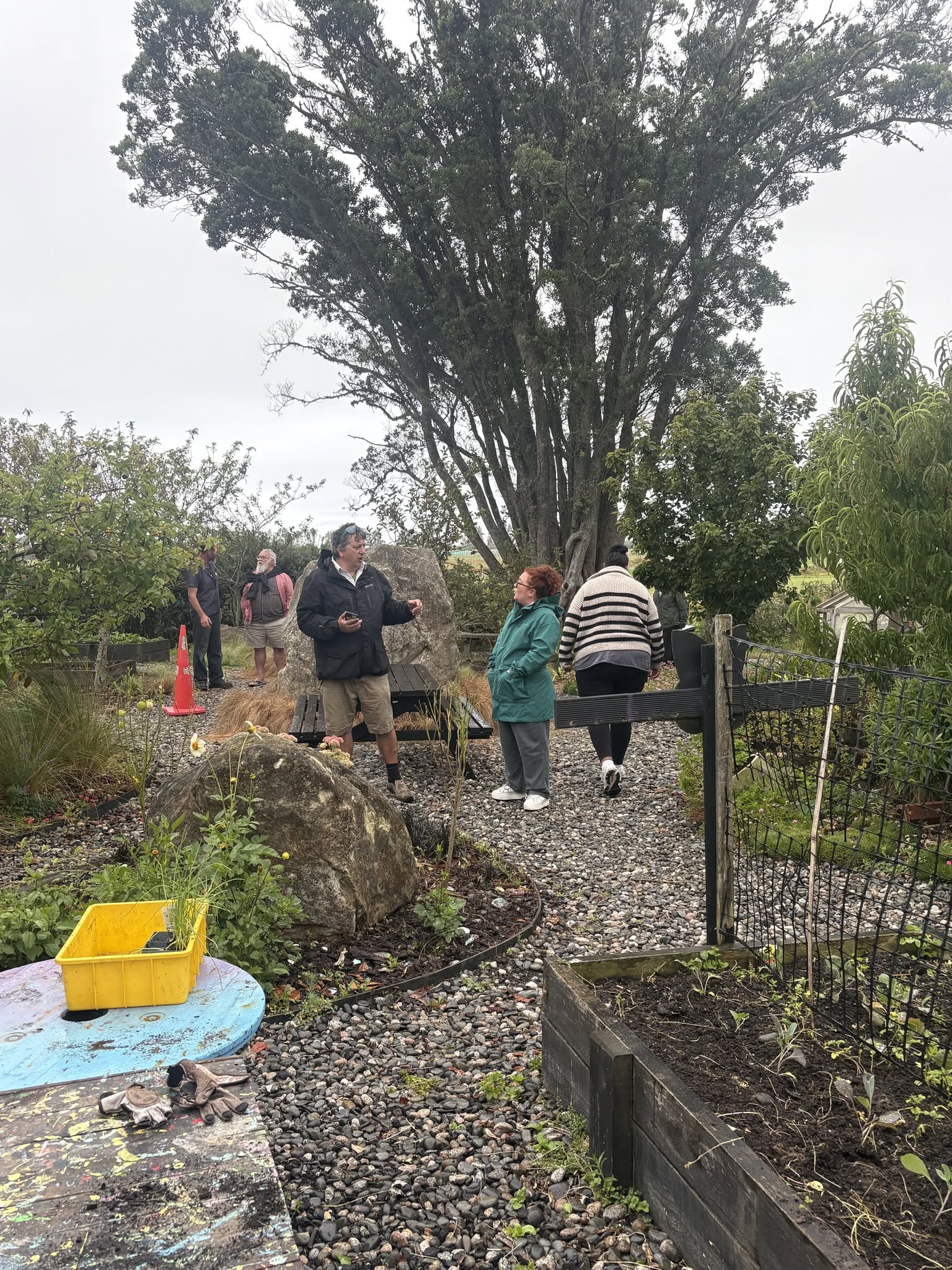
Sharing knowledge and practical sustainability approaches.
Kaupapa Hinewai – The practice of slowing down
At Hinewai, we spent time with kaiako as we embarked on a two-day haerenga immersed in native forest restoration and learning. The pace there shifted things.
Walking alongside kaitiaki Hugh Wilson, we were reminded how different long-term change can look – gradual, layered, not always visible in the moment.
There was no pressure to leave with something concrete. Instead, there was time to notice, reflect, and sit with things that weren’t yet clear.
As facilitators, it asked something of us too – to resist filling the space, to allow for uncertainty, to trust that not everything needed to resolve.
What people took from that was varied. For some, it seemed to affirm ways of working they were already exploring. For others, it may have simply been a chance to pause.
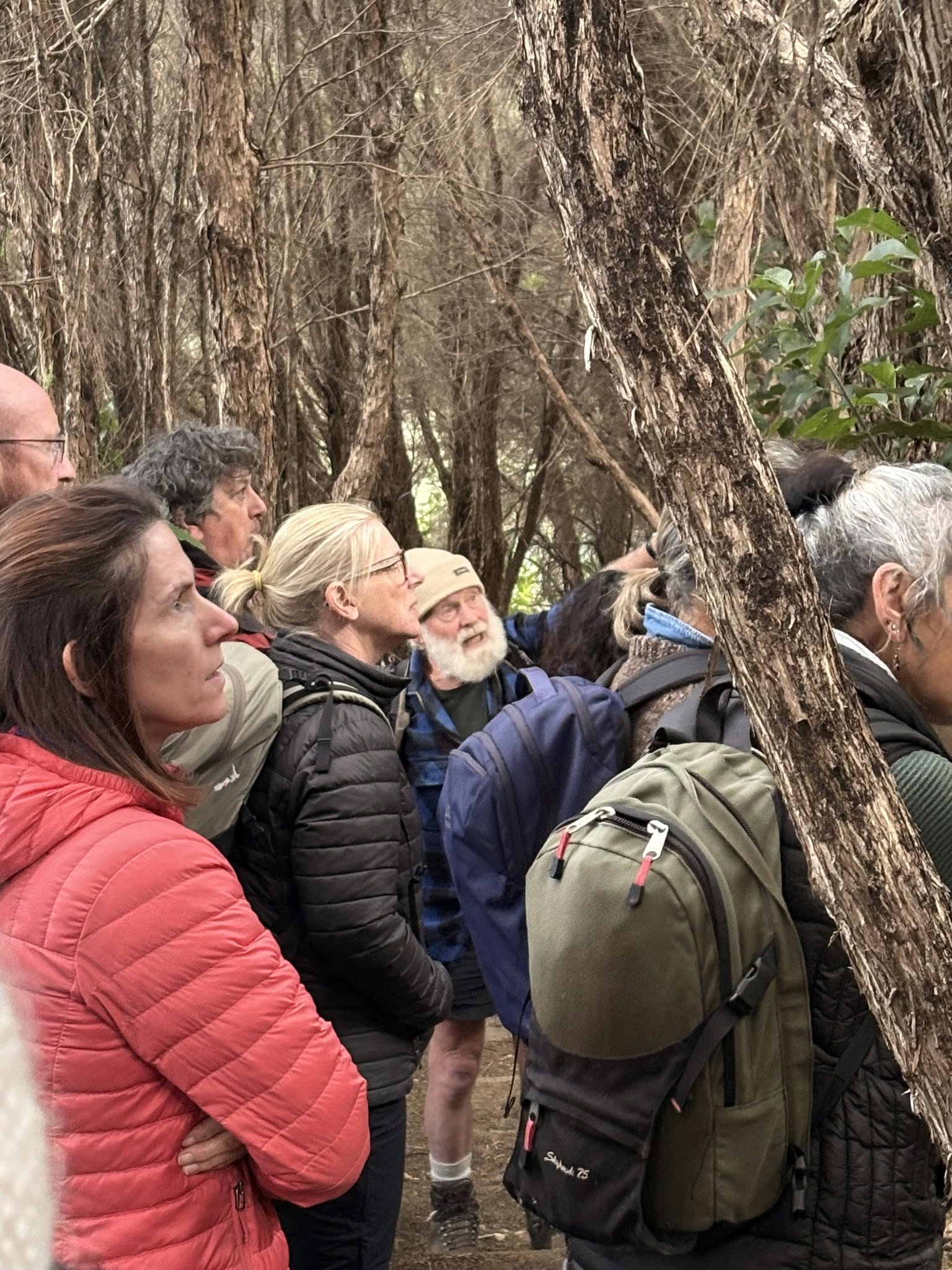
Exploring the ecological richness of the ngahere through guided observation and discussion.
The Teacher Remains
These haerenga are only a part of what is happening in Te Tai o Poutini.
A lot of the time, the impact of this mahi is hard to see. In many places, it hasn’t yet shown up as visible change within kura and centres. Instead, it sits in quieter places – in ongoing conversations, in relationships, in small shifts that are easy to miss.
We often talk about things “simmering” and that feels true.
At times, it can be hard to know what is taking hold and what isn’t. We don’t always see the outcomes. We don’t always know what will come from the spaces that have been created.
But we do see that kaiako leave with something.
Sometimes it’s an idea they’re keen to try.
Sometimes it’s a question they keep returning to.
Sometimes it’s a shift in how they notice or think about their teaching.
Not everything translates into action straight away. Some things take time. Some resurface later. Some may never become visible in obvious ways.
Like the ngahere, growth happens at different paces, and not always where you expect it.
As facilitators, this asks us to sit with a level of not knowing – to keep creating space, to keep building relationships, and to trust that something is taking place, even when we can’t yet see it clearly.
We don’t know exactly what will come from this work.
But we hold hope in those small shifts, those returning conversations, those moments that seem to stay with people.
And through it all, one thing continues to ground us.
Ko te taiao tonu te kaiako – the environment remains the teacher.
 Print
Print