Over the last eight months, Woodlands School students have been on a remarkable Enviroschools journey, transforming a fallen tree with deep sentimental value into a legacy for their school community.
For many years, the tree had provided a place for play, shade, learning, and connection. When it fell, students felt strongly that it should continue to have a purpose within the school environment. Guided by the Enviroschools Kaupapa of creating healthy, peaceful, sustainable communities, they began exploring how the tree could be repurposed in a meaningful way.
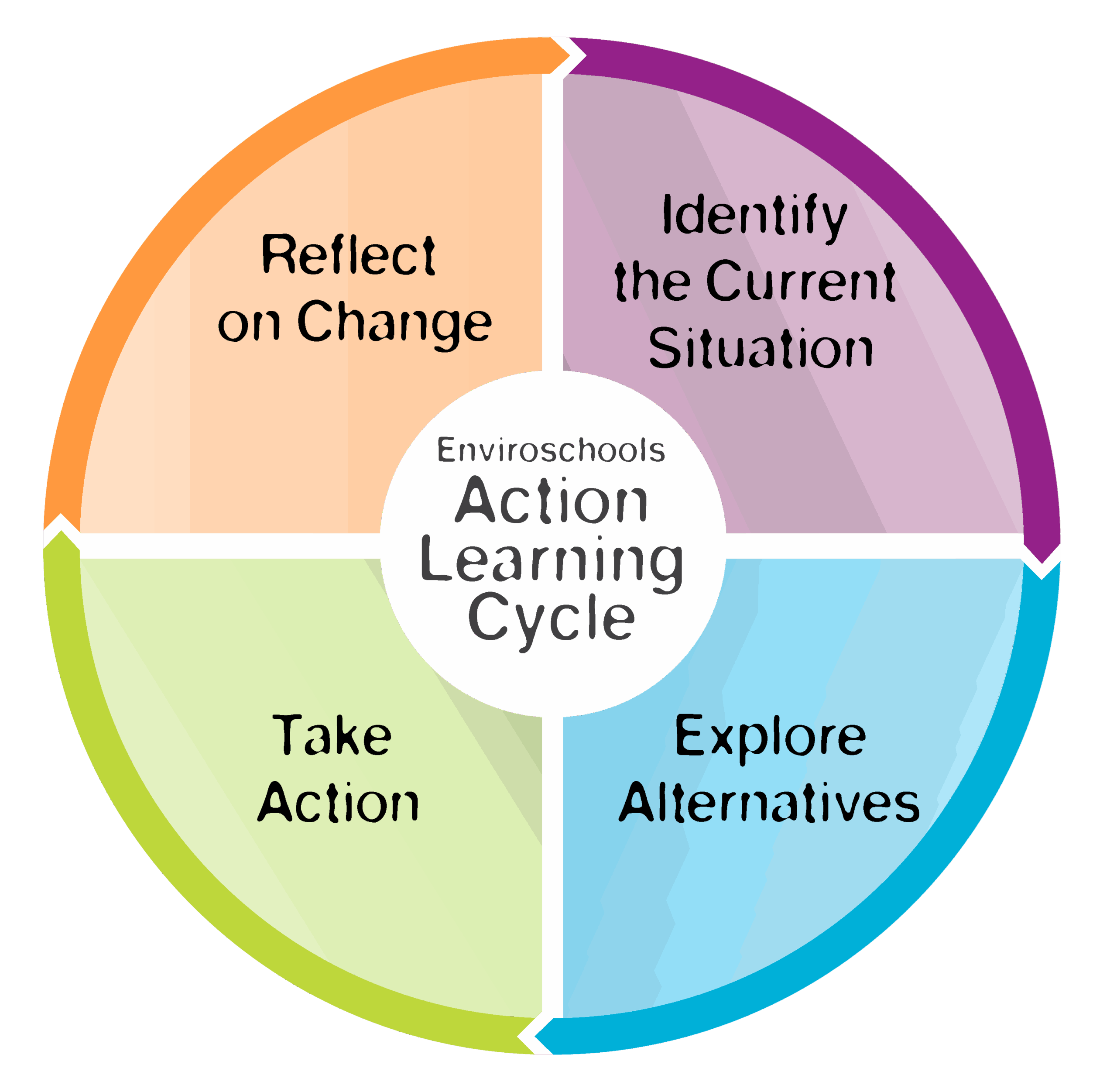 Using the Enviroschools Action Learning Cycle, students investigated possibilities and developed a plan for the tree’s future. Demonstrating the Guiding Principle of Empowered Learners, the Enviro leaders led the decision-making process, designing and distributing a questionnaire to gather ideas from their wider school community. Students listened carefully to the voices of others, recognising the diversity of people and culture within their community and valuing the perspectives shared. The overwhelming response was that the tree should become a seat that current and future students could enjoy throughout their time at Woodlands School.
Once the consultation period was complete and a shared vision had been established, students presented their proposal to the Board of Trustees, seeking support and funding for the project. This experience gave students an authentic opportunity to advocate for their ideas, collaborate with decision-makers, and see how positive change can happen when people work together towards a common goal.
As wood carving was an entirely new area of learning for the Enviro leaders, students embraced the opportunity to develop their knowledge and skills. With support from their teacher, they organised a visit to the Invercargill Woodworkers Guild. During the visit, students built their own toolboxes, learned carving techniques from experienced craftspeople, and received practical advice on how the remaining tree trunk could be transformed into a functional and enduring seat.
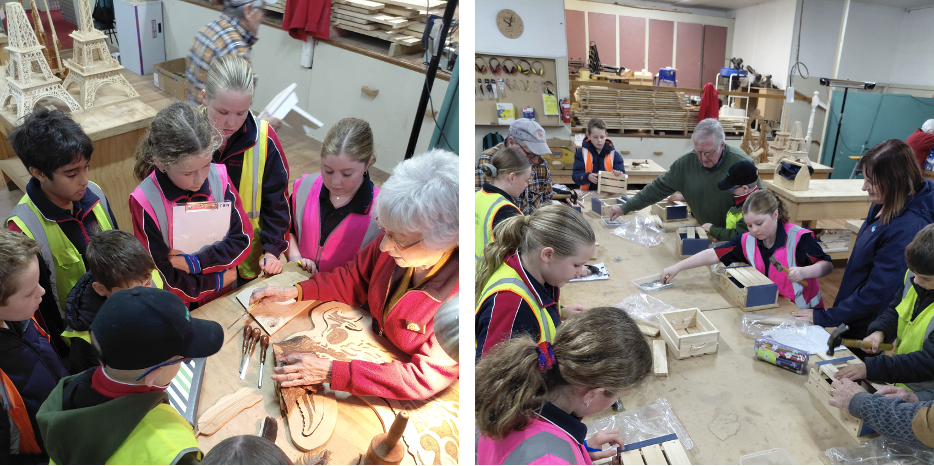
A visit to the Invercargill Woodworkers Guild was a great learning experience for the students
This stage of the project embodied Learning for Sustainability, as students gained hands-on experience in reusing natural resources rather than replacing them. They learned that sustainability is not only about reducing waste, but also about recognising the value in what already exists and finding ways to honour and care for resources.
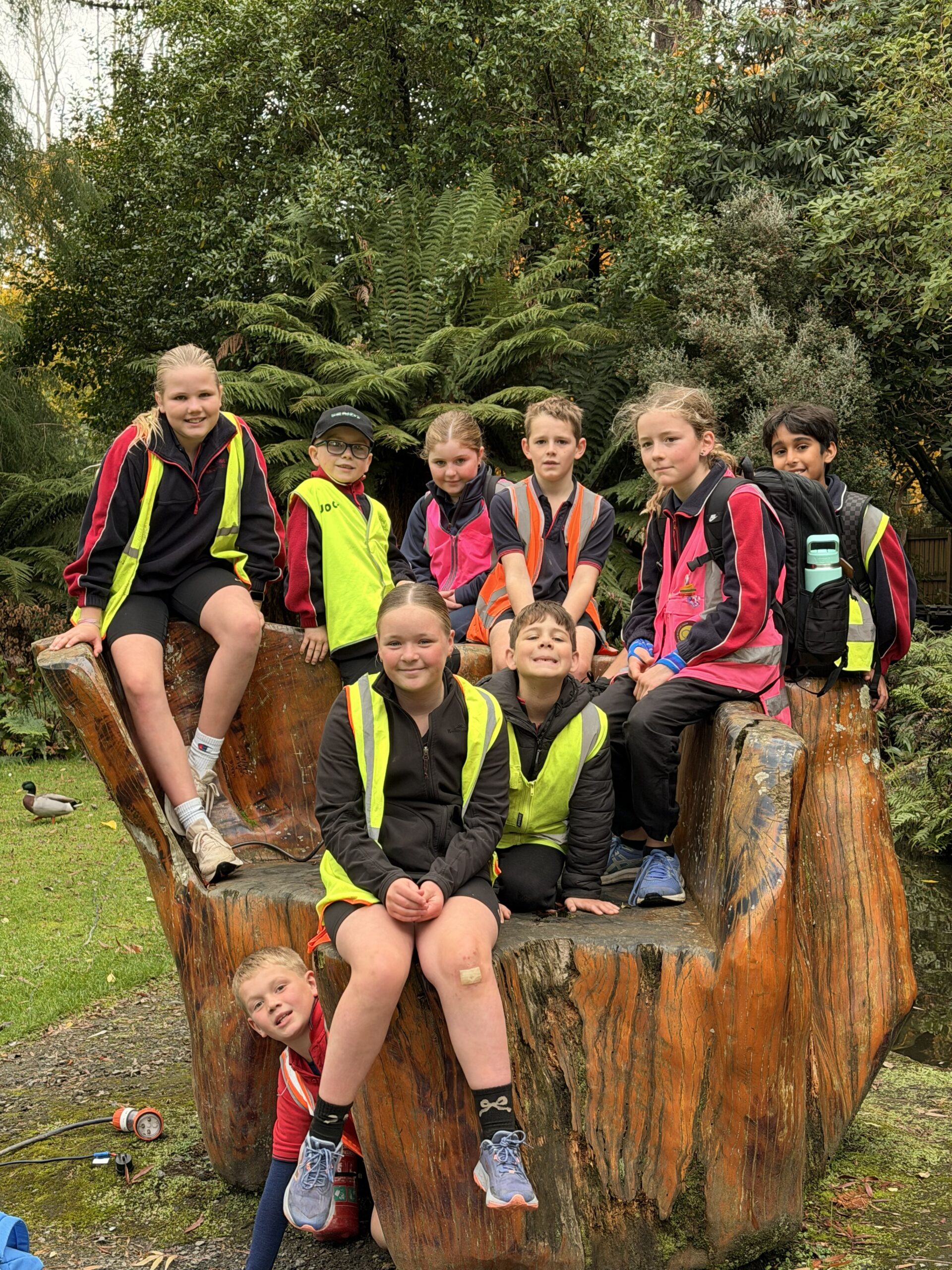
Testing out one of the large-scale wooden carvings at Queen’s Park
The project also highlighted the principle of Sustainable Communities. Students connected with local experts, learned from community members, and benefited from the knowledge, skills, and generosity of others.
To further develop their ideas, the students explored wooden structures and furniture around Invercargill and visited Queens Park to observe examples of large-scale wooden carvings and community spaces. Through these experiences, they gained a deeper appreciation for how thoughtful design can create places that bring people together.
Once students had finalised a design, they were proud of, they approached a local arborist who generously offered technical support to help bring their vision to life. The arborist worked alongside the students, ensuring the project remained student-led while providing expert guidance. Throughout the carving process, students actively contributed ideas and feedback to ensure the finished seat would be welcoming and comfortable for everyone.
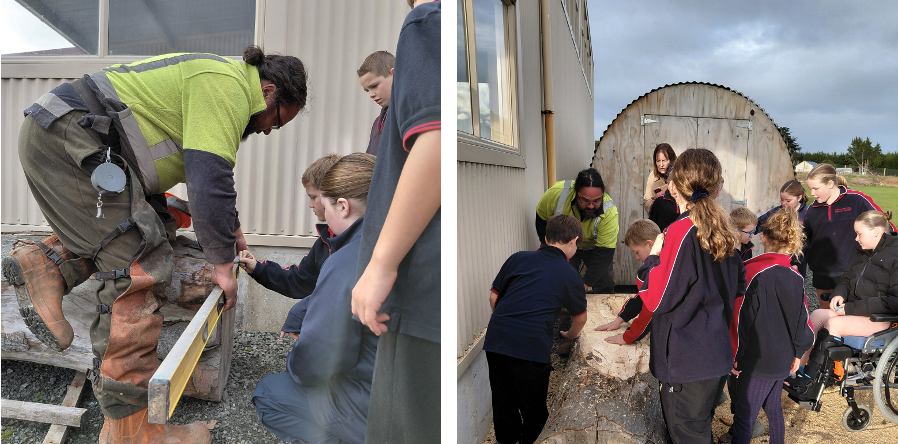
Working with a local arborist to bring their vision to life
When the carving was complete, students wanted to personalise the seat and create something meaningful for future generations. They worked alongside skilled wood carvers who supported students to design and engrave artwork into the timber. This collaboration reflected both the Enviroschools principles of Sustainable Communities and Respect for Diversity, as knowledge, skills, and creativity were shared across generations. The process became a powerful example of people learning from one another and contributing their unique strengths to a shared project.
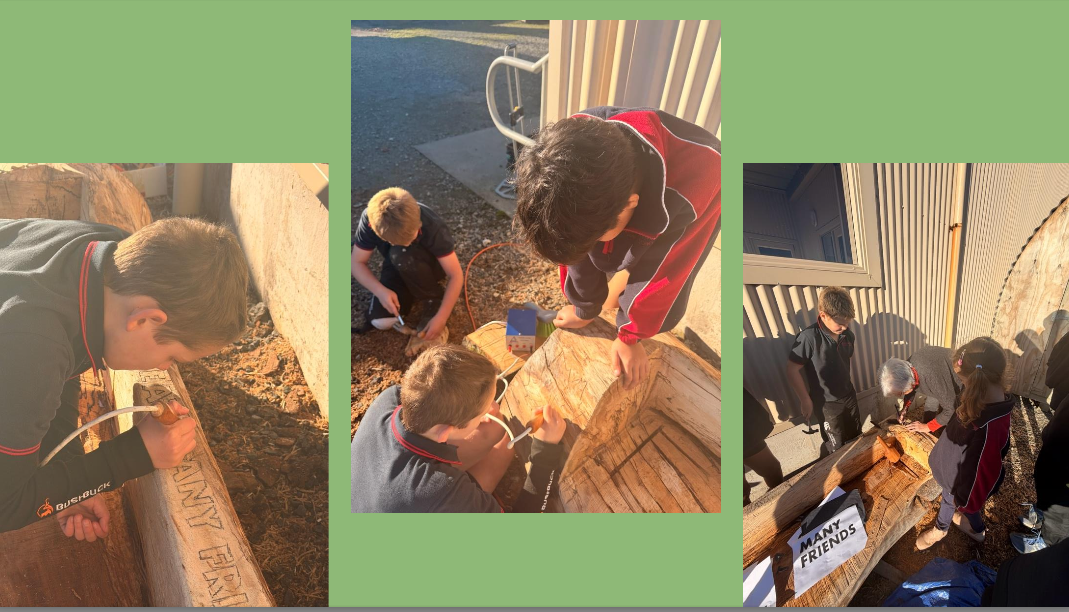
Carefully engraving artwork into the timber
The project also provided opportunities to acknowledge mātauranga Māori principles, recognising the connection between people and the natural world. Students reflected on the importance of kaitiakitanga, caring for and protecting the environment, by ensuring the tree’s life and story continued rather than ending when it fell. Through repurposing the timber, students demonstrated respect for the mauri of the tree and their relationship with the place it had occupied within the school grounds.
The final stage of the project was to transform the area surrounding the seat into a thriving native space. Students wanted the site to continue growing and evolving over time, so they planned to plant native trees around it. To support this goal, they visited the Southland Community Nursery to learn which native species would be best suited to their school environment. Students also learned how to collect, propagate, and grow native plants from seed.
This experience deepened their understanding of local biodiversity and reinforced the Enviroschools vision of people living in harmony with the natural world. Students gained practical skills while learning how native plants contribute to healthy ecosystems and provide habitats for wildlife.
After months of planning, consultation, learning, collaboration, and action, the completed seat now sits proudly within the Woodlands School grounds. Used daily by students for rest, reflection, connection, and learning, it stands as more than a piece of furniture. It is a symbol of what can be achieved when young people are empowered to lead, when communities come together to share knowledge, and when sustainability is placed at the heart of decision-making.
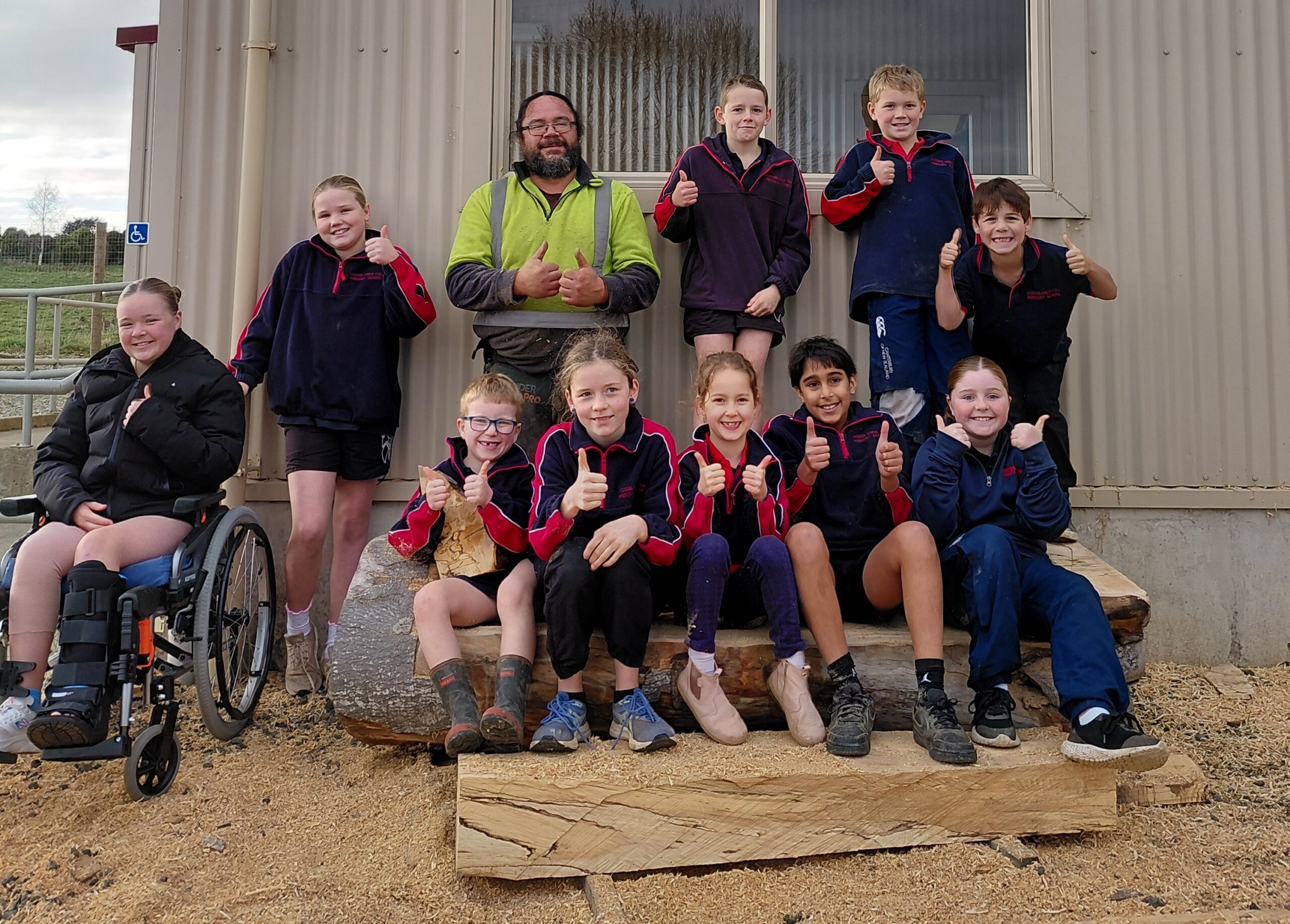
Everyone is proud of the completed seat
Most importantly, it is a lasting reminder that through the Enviroschools Kaupapa, students can create meaningful change, honour the stories of the past, and leave a legacy for future generations.
 Print
Print