
Rongomātāne - Cultivation, provision, peacefulness and order
A Space Waiting for Purpose
A few years ago, St Teresa’s School recognised that part of its grounds wasn’t being used for learning or play. It was simply “a kind of wasted space in our school,” as Liz, former lead Enviroschools teacher and now Principal, explained. Existing gardens were scattered behind buildings and along fences, making everything feel disconnected.
Staff and students began wondering what this unused space could become and how it might bring their gardens and their learners together.
This simple noticing began a much bigger journey. With support from the Enviroschools Process, the whole school community came together to imagine what the space could be.
Vision Mapping: Shaping Purpose and Possibilities
Through vision mapping, students and teachers identified what mattered most. Children highlighted the need for sensory experiences, calm outdoor areas, and opportunities to grow more food for sharing. Teachers contributed practical ideas based on experience and insight.
Vision mapping helped the school refine its direction and clarify purpose. As Liz reflected:
“It helped us refine what it was that we wanted to develop in that area and what the purpose behind that was.”
Enviroschools Community Facilitator Gill Stewart used the Enviroschools process (identifying the current situation, learning what could happen, and then taking action) to guide the school from early questions to thoughtful, purposeful change that involved all of the school.
Guiding Principles Alive in the Garden
Empowered Learners
Each class took responsibility for part of the project. Dana’s Year 5/6 class researched sensory gardens. Alison’s Year 3/4 students investigated worm farms, composting, and life cycles. Other classes looked into global fairness and abundance, which inspired the idea of a community food pantry, and explored how to make use of muddier, less accessible areas.
Students now explore the garden daily — discovering insects, checking when fruit is ripe, and taking proud ownership of the space.
“I love the picking and eating.”
“I love the scents in the sensory garden and seeing all the pretty colours.”
Their contributions reflect genuine empowerment and shared responsibility.
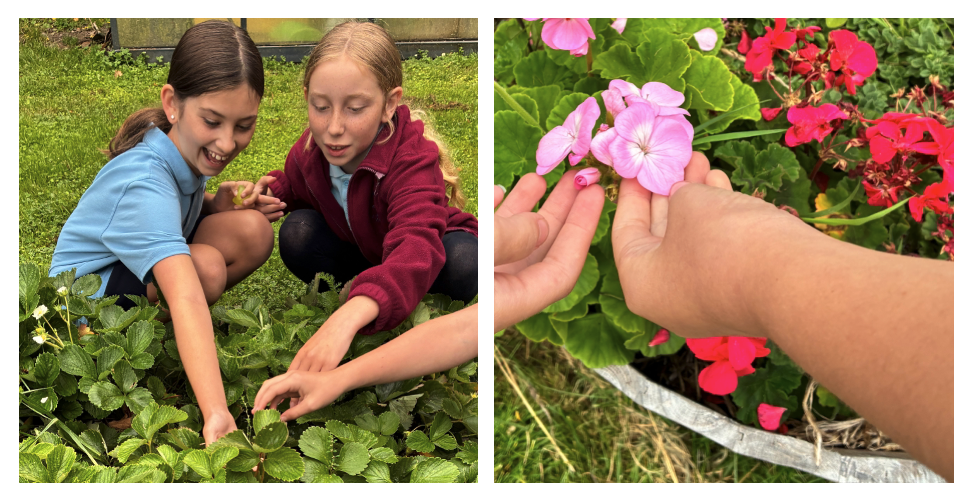
Students exploring the gardens
Learning for Sustainability
The garden is a long-term, evolving project. Each year, developing new systems will give more opportunities for learning to happen. Students now can experience ecosystem processes first-hand by watching bees pollinate plants, observing caterpillars, and noticing how mulch protects roots.
“We love finding the caterpillars.”
“We put peastraw in the garden to help keep the bugs out of the roots.”
Getting their worm farming and composting systems up and running will further grow students’ understanding of soil health and food production.
Honouring Te Ao Māori
Respect for nature and guardianship sits comfortably alongside the school’s Catholic identity. As Liz noted, te ao Māori and Catholic teaching “don’t sit side by side — they’re very much enmeshed and work together.”
A student described the garden as a place of deep connection:
“When I am in the garden I feel connected to the earth — I can see nature working.” Year 7 student
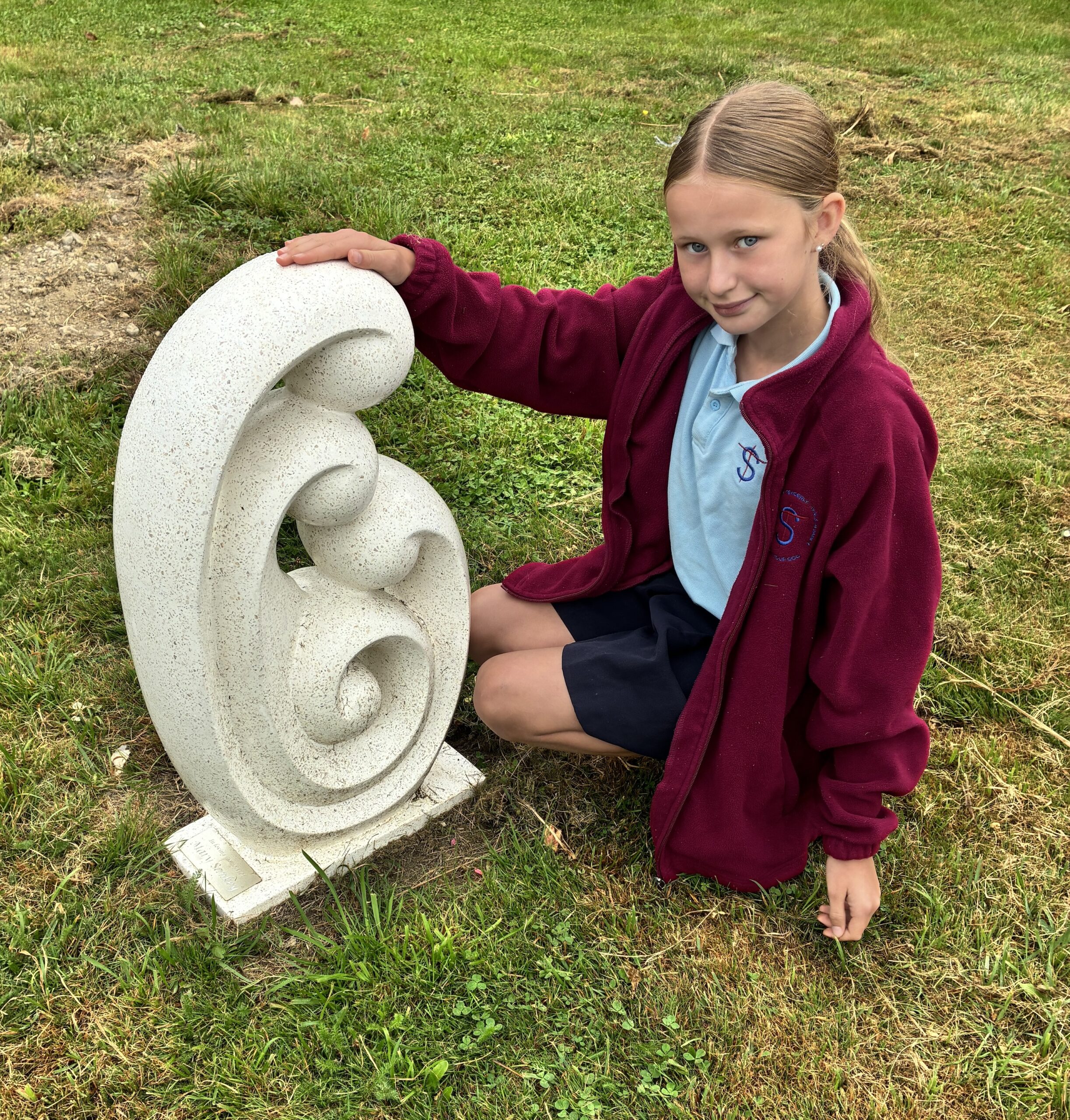
Memorial to a loved former teacher.
Respect for Diversity
The garden supports many types of learners. Some students find calm and comfort there; others thrive with hands‑on, movement-based tasks. Teacher aide Louise works with small groups in the garden, giving a wide range of students a chance to build skills, confidence, and knowledge about growing food. Louise is key in keeping the gardens overflowing with produce. Senior students support these groups at times – being tuakana to the younger students.
Sustainable Communities
Growing food to share is central to the garden’s purpose. Parents have helped build raised beds, contributed plant knowledge, and some have begun collecting vegetables. The planned food pantry will deepen these connections and help families access fresh produce.
As Liz shared:
“It’s being the hands of Christ in our community… giving back and working towards doing good things.”
Community members have also responded with enthusiasm. One passer-by admired the abundant rhubarb patch and offered a recipe for roasting rhubarb. They were excited to see that young people were learning about how to grow food.
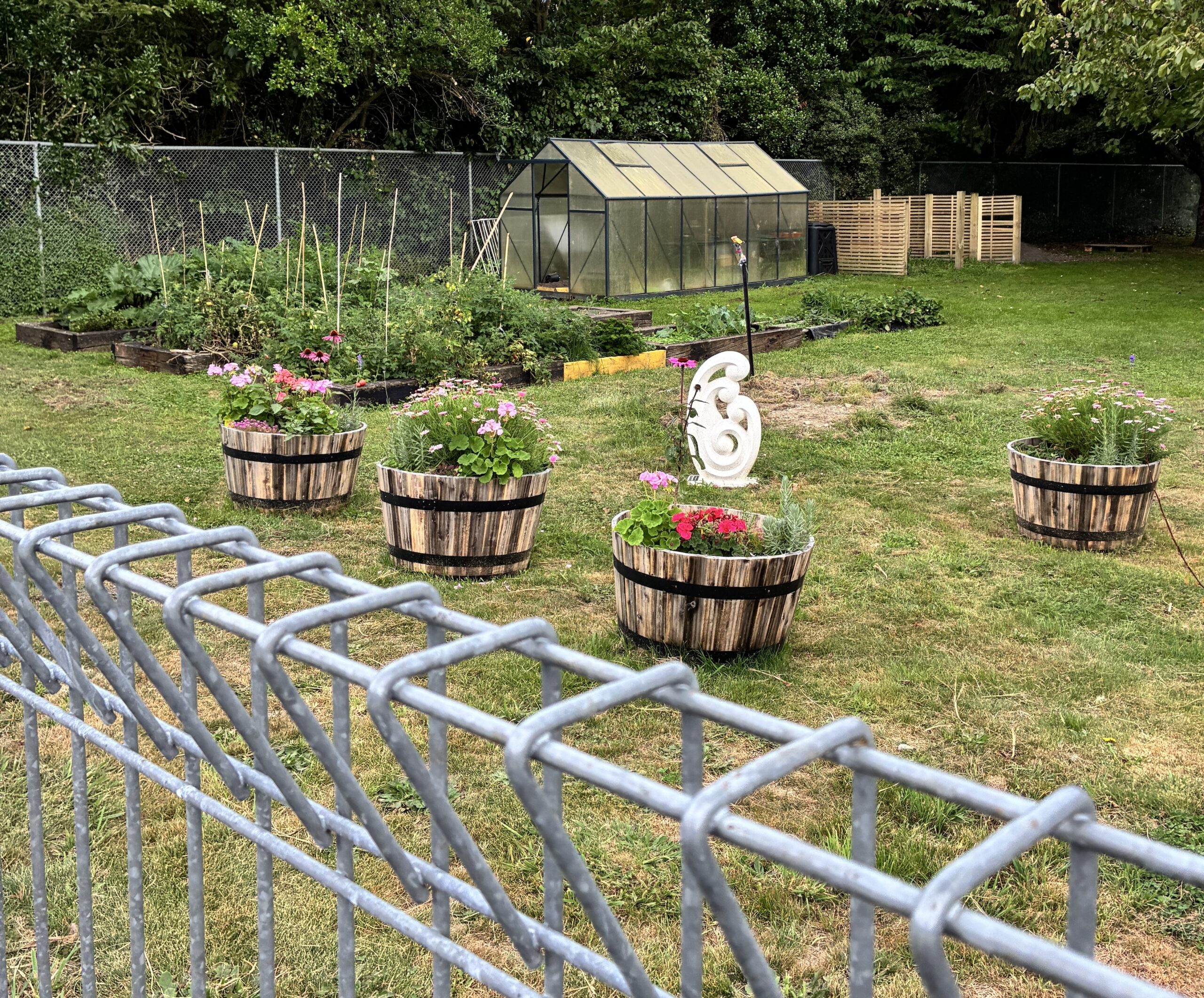
Community view of the garden area with the sensory gardens in the barrels.
A Garden Changing School Life
The garden has shifted the feel of the school. It is calmer, more connected, and more natural. Students belong there, and the space gives teachers flexible opportunities for learning, wellbeing, and relationship building.
As one student said:
“You can eat, you can sit, you can talk, it is there for everyone.” Year 8 student.
Looking Ahead
With the support of Enviroschools, St Teresa’s future goals include developing more sustainable practices, forming a strong Envirogroup, exploring rewilding, creating a prayer space, and developing a permanent hāngī pit to strengthen cultural and community events.
Students hope to add a bench to sit on, a table to gather at, and possibly form a gardening club “that anyone could join”.
St Teresa’s hopes the garden will continue to grow as a place where learning, faith, nature, and community come together “gently, naturally, and with hope for what will grow next”.
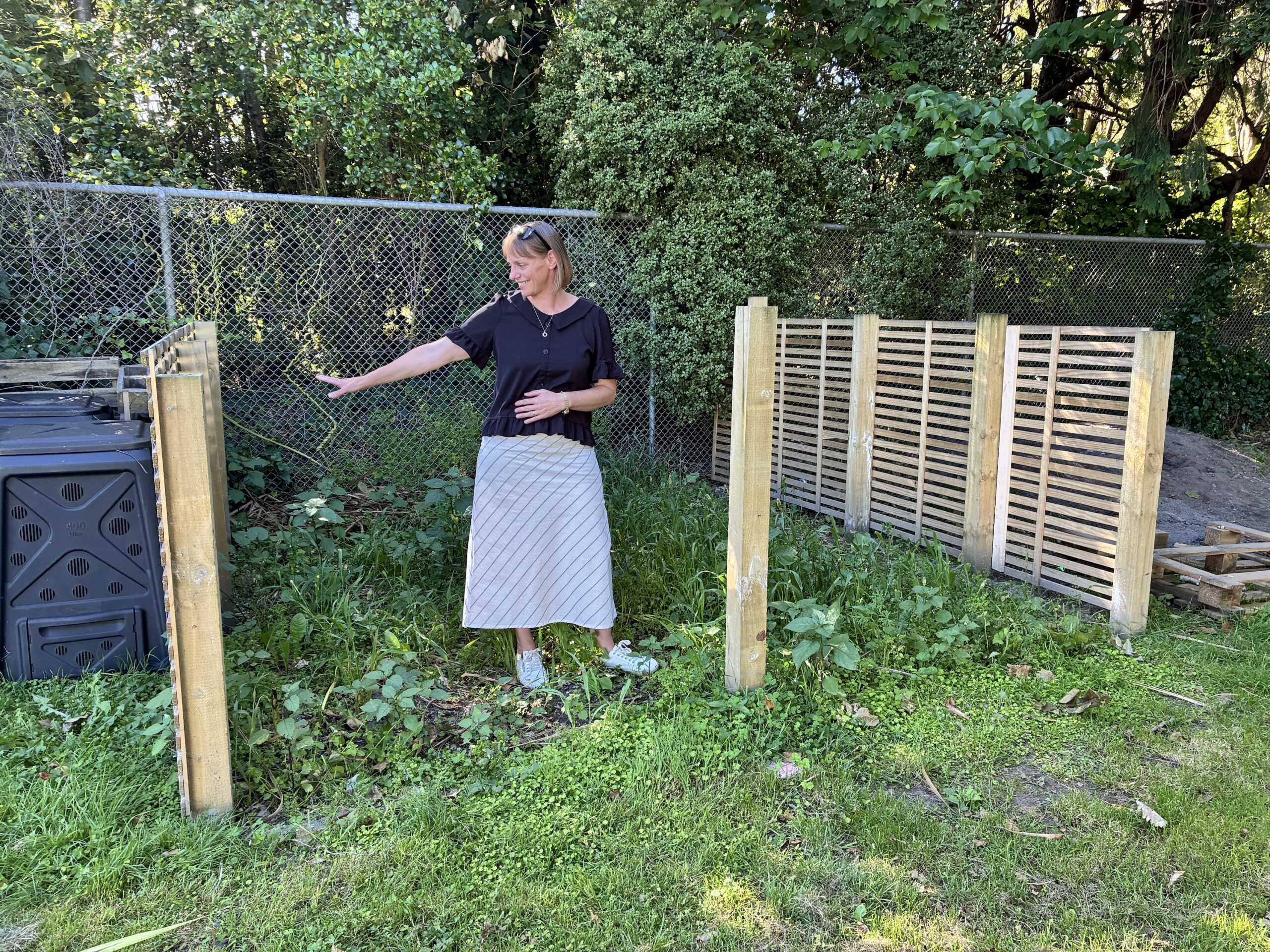
Next steps – this area is going to be developed into a prayer space.
 Print
Print