
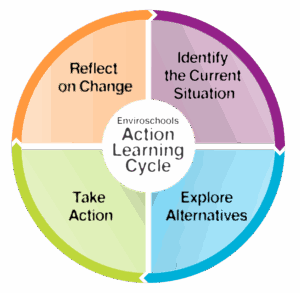
 The current situation plants the seed for a project
The busy rhythm of school life meant Maramarua School hadn’t fully engaged with the Enviroschools Kaupapa recently. However, this changed at the start of the 2025 school year, when Maramarua School staff met to reconnect with the Enviroschools Kaupapa alongside their Enviroschools facilitator. During this hui, staff identified key values and practices evident within their school that reflected the Enviroschools Guiding Principles. Recognising some of their strengths provided momentum for a year-long, student-led project that brought these values to life, strengthened the school’s sustainability journey, and enhanced the school’s traditional Calf and Lamb Day. A wider outcome of this project was the emergence of an Envirogroup.
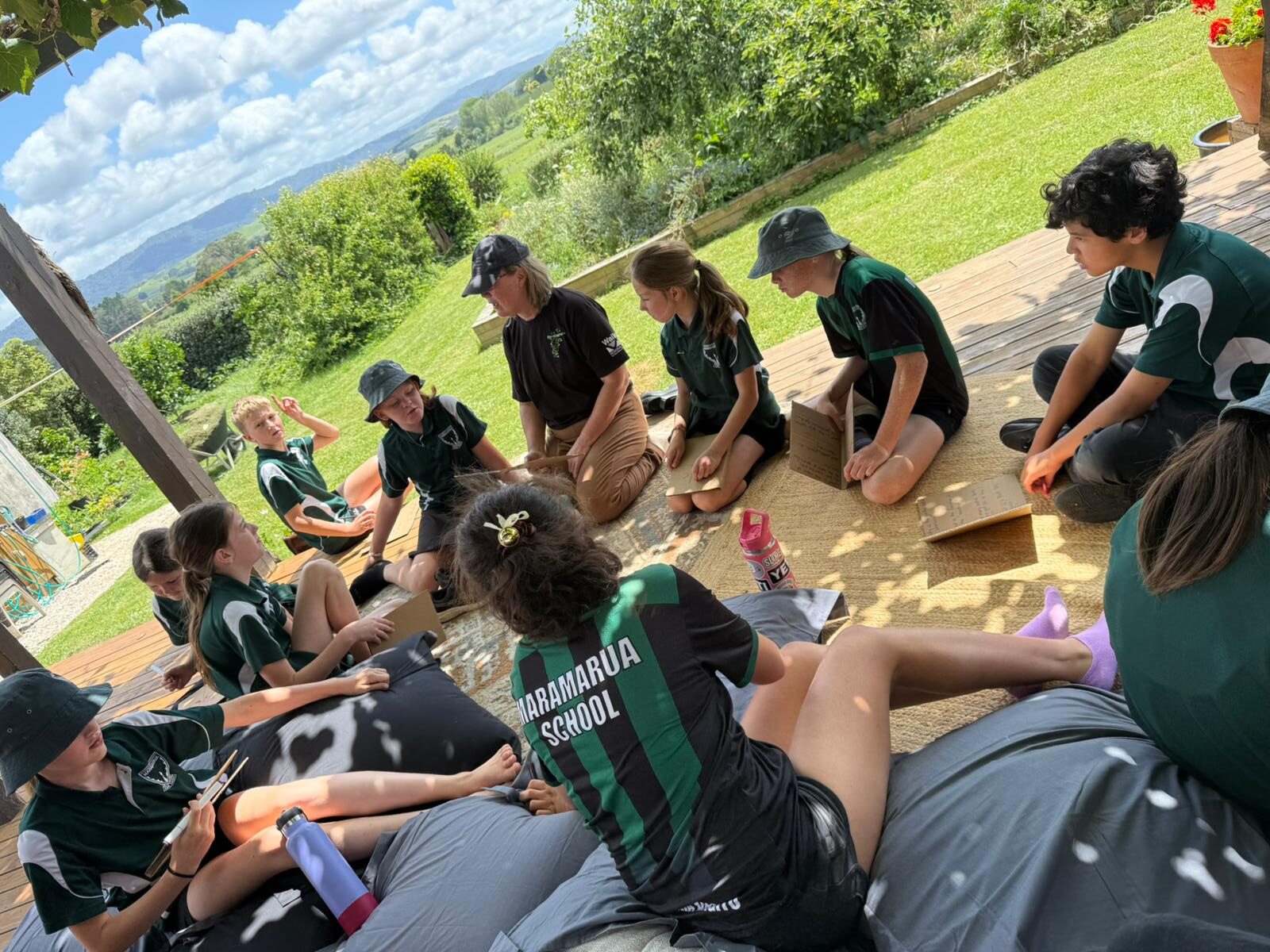
Maramarua School Envirogroup Garden Tour

A school Envirogroup can take many forms, but at its heart it is a group of students with a shared purpose: to care for and improve their school environment while learning how to create a healthy, sustainable future. These groups are usually supported by a passionate teacher, school staff member, or parent helper.
Exploring ideas allows the project to grow
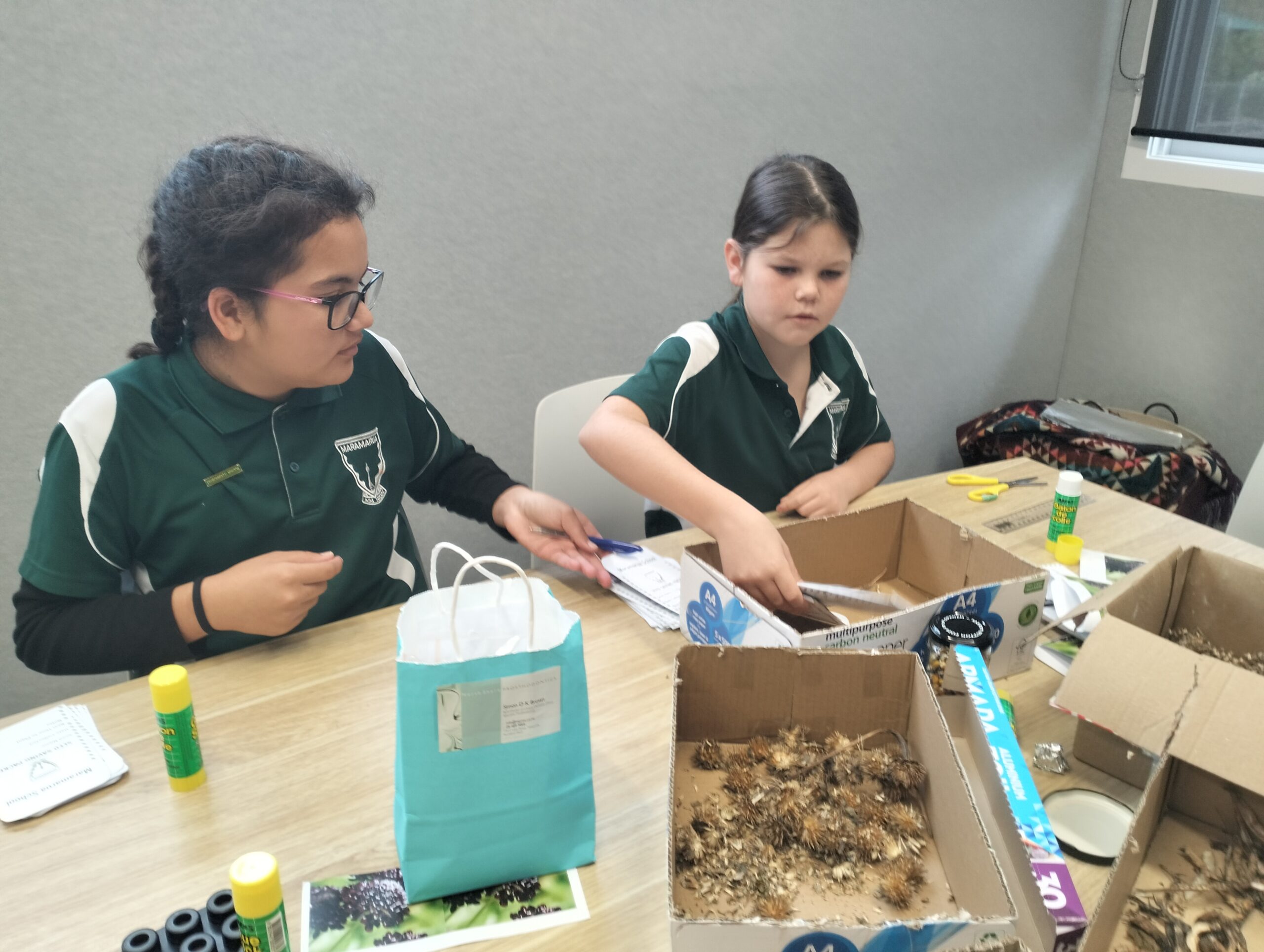
Lavina Rose and Phoenix packing seeds before school
Keen gardener and lead enviroschools teacher Shana Russell was keen to engage students in learning about growing plants and caring for gardens. Environment Monitors Elise, Lavina-Rose, and Jade were interested in raising funds and were curious about herbs and edible plants. From these interests, a shared purpose began to form, and a hands-on, student-led social enterprise project took shape for the group, grounded in practical gardening skills and environmental knowledge.
Shana and the students decided to run a stall selling plants and seeds, prepared and grown in a supportive learning environment. Seed packets were prepared for sale before school, while later in the year seedlings were nurtured in the school shade house.
The project’s mahi began with learning about seeds and plant life cycles. Seeds were collected from school gardens, home gardens, and grandparents’ gardens, then shared, discussed, and packaged throughout Term 1 and Term 2. These early morning sessions, held before school were filled with laughter, collaboration, and a strong sense of shared purpose. As word spread, more students joined in — everyone who was interested was always welcome to lend a hand. There were many tasks for many hands: cutting out and labelling seed packets, measuring and wrapping seeds, to carefully filling and sealing the seeds packets.
Taking action enables the project to bloom
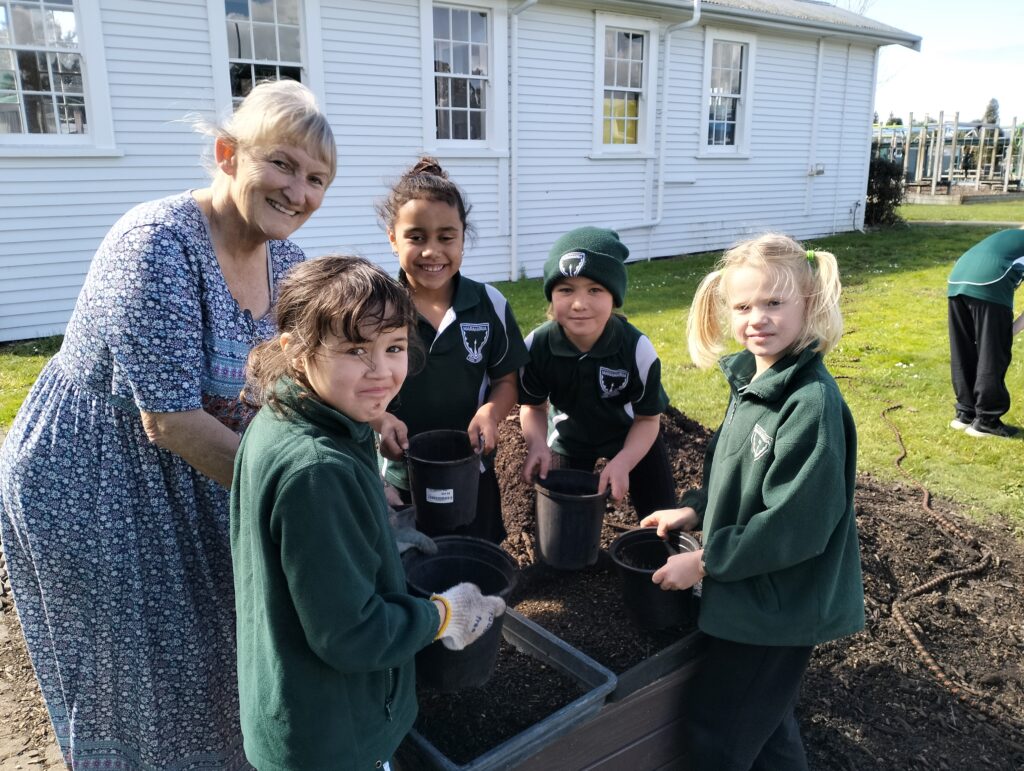
Shana Russell and students making potting mix
During this period students from different year levels became involved in the project and Shana retired from teaching. Shana continued to support the project, but parent helper and teacher-in-training Kristen Duin stepped in to guide the group. Kristen brought renewed energy and enthusiasm, and different students became engaged in the project.
At the start of Term 3, it was time to plant seeds. Because temperatures were still low, the students created mini hot houses using large plastic containers. Everyone was surprised at how well the seeds germinated in the containers, especially in comparison to trays on shelves in the shade house. The students learnt for successful seed germination and growth it’s important to get timing and temperature right.

Preparing signs and moving plants to set up the plant stall
After weeks of tending the young seedlings finally, the much-anticipated week of Calf and Lamb Day arrived. The focus shifted from plant rearing to stall operations. The students decided on the stall’s name, pricing for plants and seeds, and how the shop would be run. They decided that everyone would take turns and share responsibilities for all the tasks.
Calf and Lamb Day was blessed with sunshine, and the plant stall looked beautiful. The students were kept very busy, thanks to the enthusiastic support of grandparents purchasing boxes of plants. The stall was a great way to connect with the community and for school activities to help cultivate a sustainable community.

Elise makes finishing touches to the seed and seedling stall
Reflecting and celebrating pollinates new ideas and deeper learning
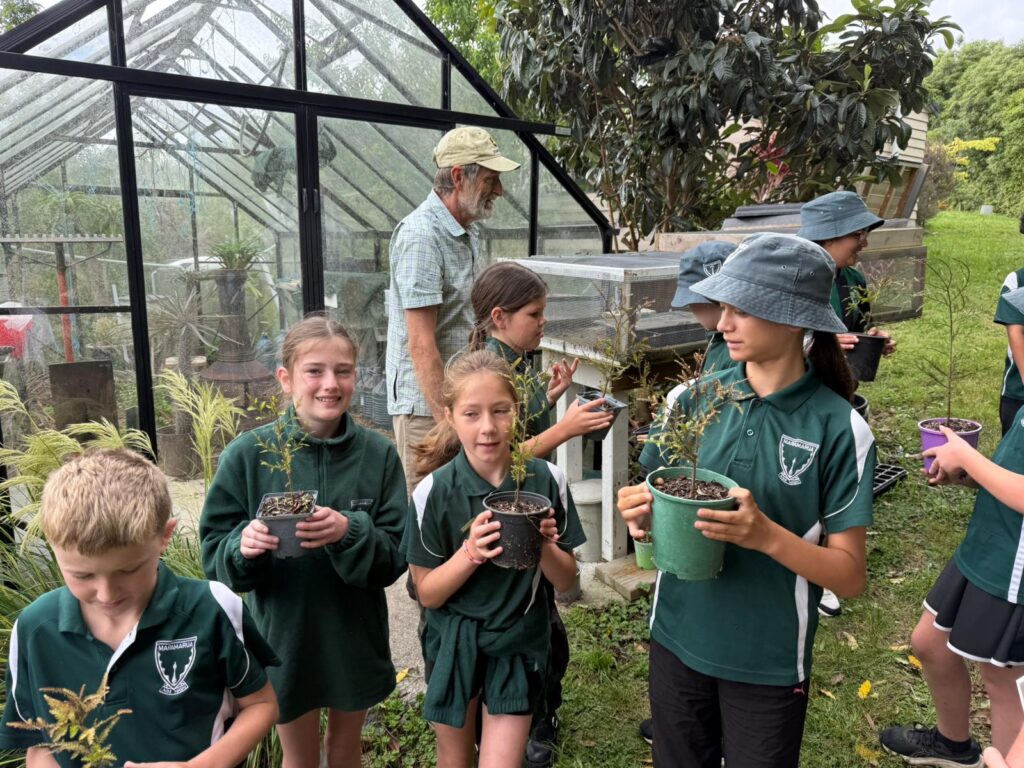
Richard Galea gifts each student a kahukatea seedling
To acknowledge and celebrate the success of the project, students involved in the plant stall and students passionate about nature spent a morning together being inspired by two local gardens, gardeners and each other. There was plenty of time to be wowed by what is possible to grow, to share their gardening knowledge and create shared learning experiences.
Meadowbush Garden, created by Richard and Vicky Galea, is a place of abundance and enchanting surprises. A particular favourite with students was the pineapple house. The garden tour was a delight and fostered a strong sense of community reciprocity, exemplified when Richard gifted the student’s kahikatea seedlings. Much to his surprise, each student promptly named their sapling. At the end of the tour, students proudly gifted Richard and Vicky a sample of their own seed collection.
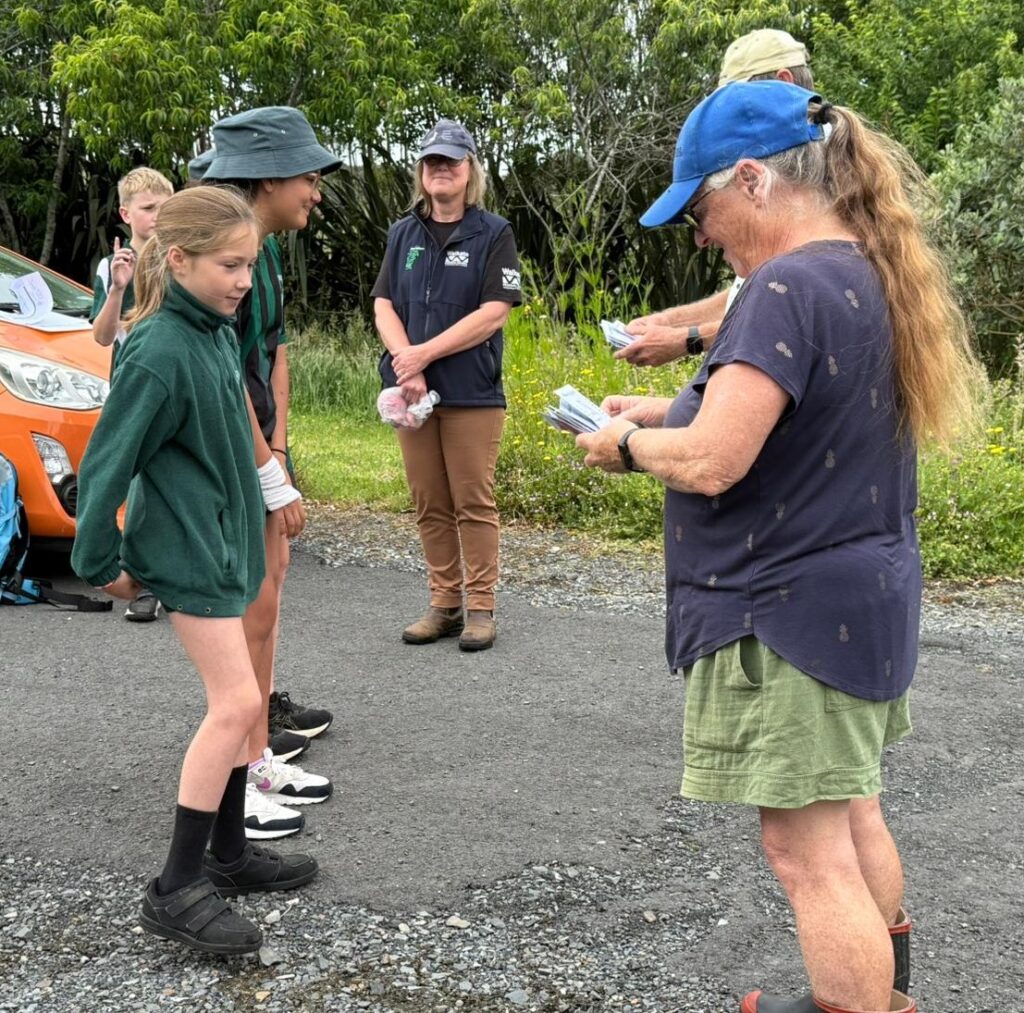
Students gift their seed packets to Vicky and Richard Galea
At Whatārua Garden students explored a garden developed on the principles of permaculture. There were questions to answer, animals to interact with and most importantly time for this group of curious learners to reflect on what they like and enjoy in the garden, what’s gone well for them and what they would like to do next.

The fruits of the project are greater than the sum of its parts
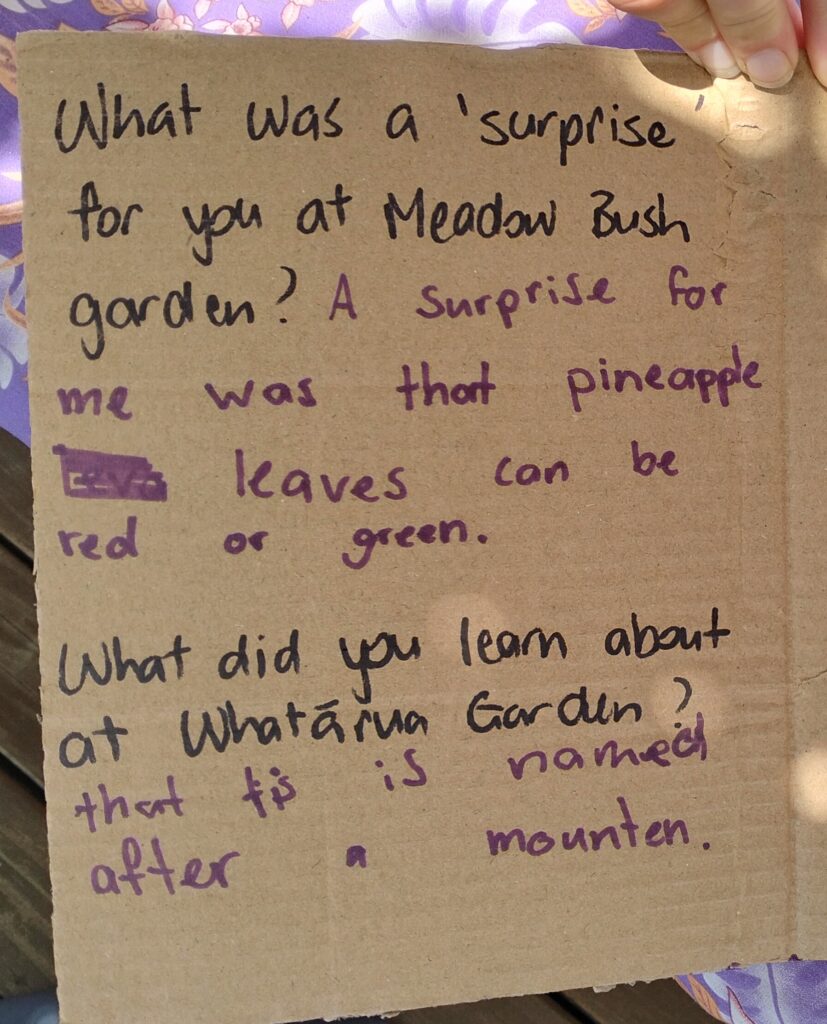
Student garden tour workbook
The garden tour provided inspiration and sparked ideas for future projects at Maramarua School, while the Calf and Lamb Day project created space for students to develop a shared purpose, achieve meaningful outcomes, and experience the rewards of teamwork. The time spent working collaboratively on the plant stall has initiated a budding Envirogroup.
Envirogroups reflect the diversity of mother nature, coming in all shapes and sizes. The shape of the Maramarua School Envirogroup is developing nicely. This Envirogroup reflects the school’s culture of intergenerational learning, a living curriculum, solutions-focused thinking combined with practical action and last but not least caring. Thanks to proactive school leadership and the commitment of remarkable parent support, the seed is sown for growth in 2026!
This case study demonstrates how supporting students in an authentic, hands-on project can cultivate confidence and capability, build connection and shared purpose, and help sustainable communities to bloom.
Banner photo: Gardener Richard Galea and the Maramarua Envirogroup exploring the Pineapple House
 Print
Print