It all began with a spark of curiosity — the discovery of a pekapeka house that had been gifted to the Netherton School Envirogroup in a previous year. This small moment inspired a Year Four class to embark on an inquiry into these tiny native bats, igniting a journey of discovery, environmental connection, and hands-on learning in two different locations. (Gerald Hill Reserve, a short drive from Netherton, and in their own school grounds).
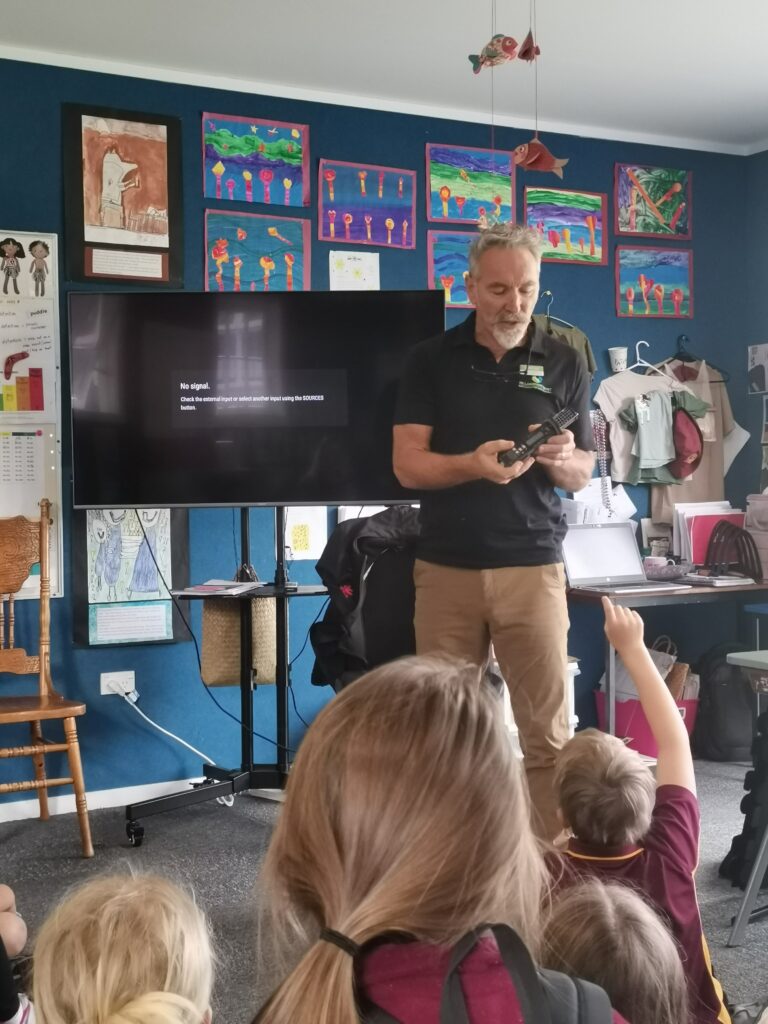
Rick from Landcare Trust shared his pekapeka knowledge with students
Through this inquiry, I supported lead Enviroschools teacher Alicia to connect with Rick from Landcare Trust. Rick had been monitoring the nearby kahikatea stand (Gerald Hill Reserve) and shared his knowledge with the students, explaining the rarity of the pekapeka, how they roost in bat houses, and why caring for their habitat matters. Inspired by his visit, the class got the chance to install the school’s own bat roost at the local kahikatea stand, deepening their connection to the land and its native species.
Initially the plan was to have just one visit to the ngahere. After discussing the potential benefits, the idea of regular ngahere trips began to take shape. I suggested weekly, fortnightly, or monthly visits, and while initially apprehensive about venturing into unfamiliar territory, Alicia soon became keen to explore the possibilities.
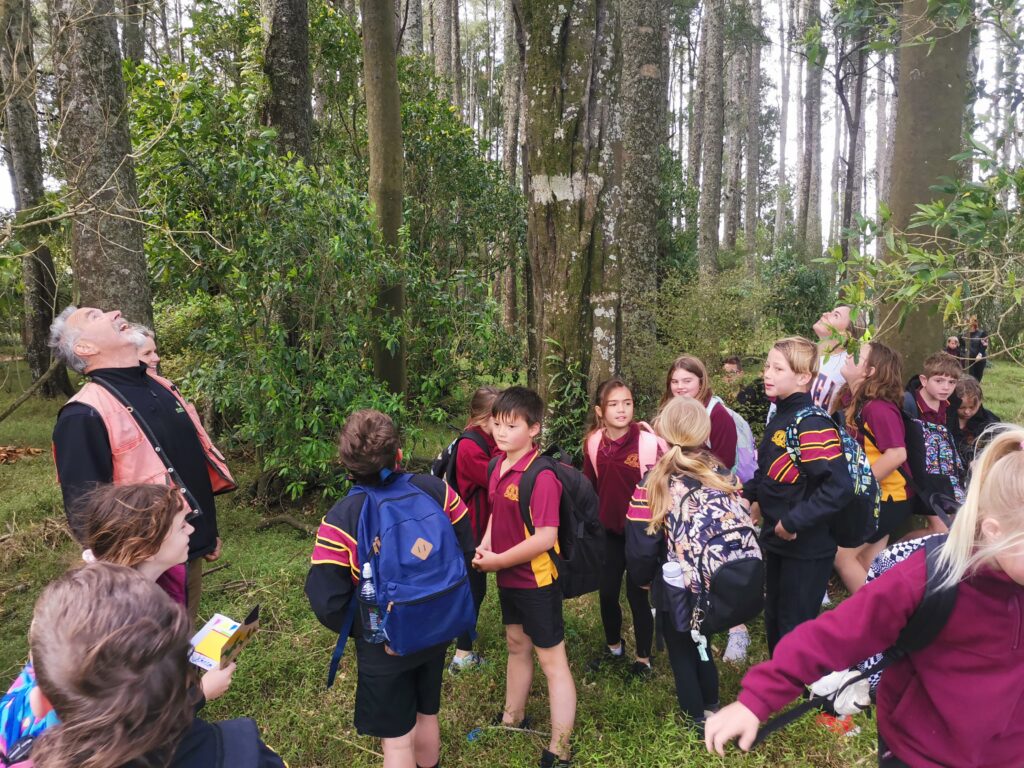
Learning about bat habitats at Gerald Hill Reserve
To support her, I connected her with a local kindergarten that already ran successful bush school sessions for their four-year-olds. Visiting their programme together provided practical ideas, inspiration, and valuable connections with experienced educators. I also encouraged her to attend a Celia Hogan professional development workshop focused on creating and supporting bush schools. This equipped her with the knowledge and confidence to manage logistics, policies, health and safety, and other important details, ensuring the programme would run smoothly
Following the bat study, Alicia worked with Larn Wilkinson, the Hauraki Māori Iwi Liaison Officer, who granted permission for the school to “adopt” Gerald Hill Reserve. In the first year of the programme, further support also came from Predator Free Coromandel, who ran an educating and fun session with the class on pest trapping and then assisted with installing an auto trap.
As the programme developed, practical considerations needed attention:
- Deciding on timing: Choosing days and frequency while balancing the wider school curriculum.
- Navigating logistics: Managing permissions from BOT and Parents, risk assessments, equipment, transport, ratios and routines.
- Clarifying purpose: Reflecting on priorities and how nature-based learning could support children’s wellbeing. She also noticed a strong connection between existing Te Whare Tapa Whā practices and trauma-informed approaches — children spending time in nature naturally supported co-regulation, emotional well-being, and holistic development.
Practical details were planned for and gradually refined: sessions now run every Wednesday morning, transport is organised through a mix of parent help and the school van, and expectations are shaped by each year group’s interests and needs.
Alicia was successful in her application to Waikato Regional Council for the Enviroschools grant, which provided funding for equipment, resources, and wet weather gear to fully support her vision. This has further strengthened the programme, ensuring children and educators have what they need to make the most of their time in the ngahere.
At first, Alicia imagined squeezing literacy and maths into the bush visits in order to keep meeting curriculum goals. She thought the visits would require a lot of structure. Quite quickly she realised the children were most engaged when they could play, explore, and connect with nature freely and that became the real priority.
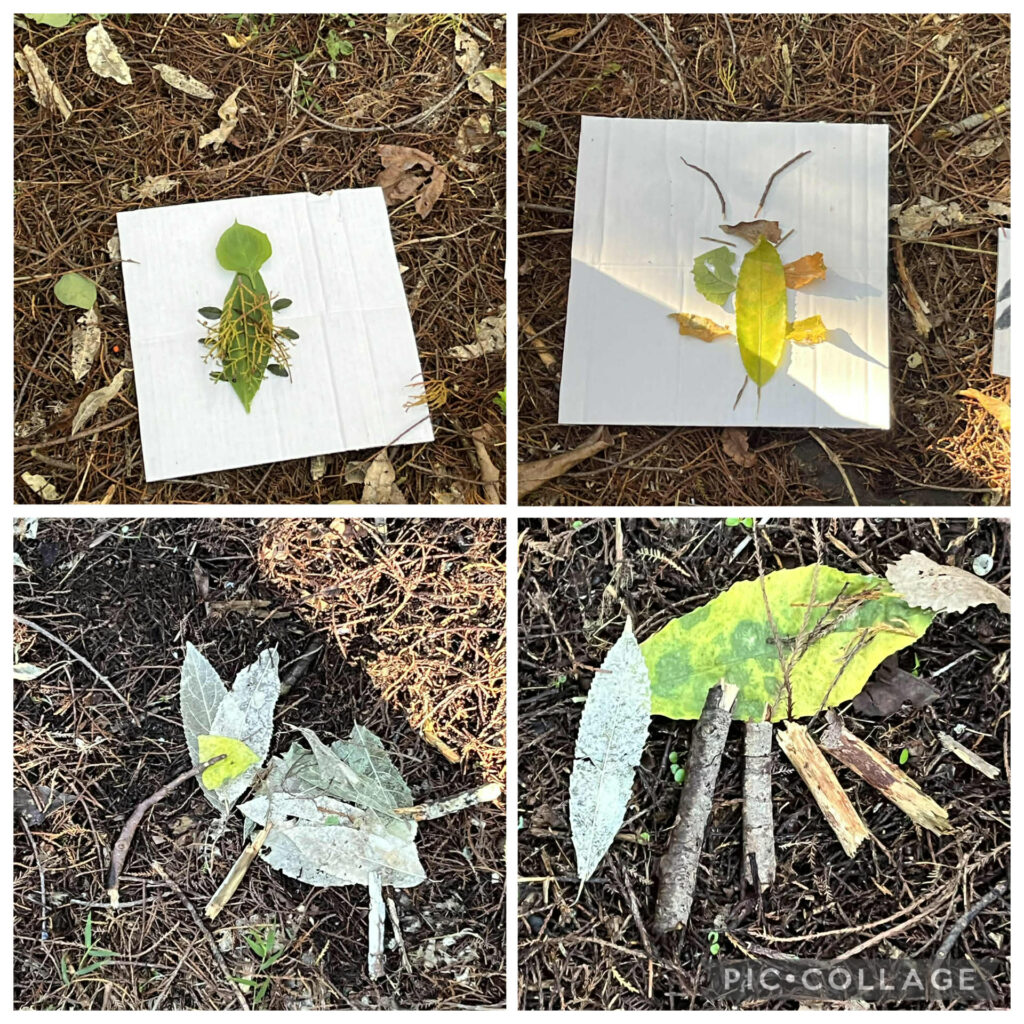
Over time, Alicia grew more comfortable in the space. I supported her during initial visits with activities to help the children connect with nature, then gradually encouraged more free play. This shift proved deeply beneficial for the children’s engagement, curiosity, and wellbeing.
Alicia also noticed that she didn’t need to constantly search for teachable moments — the children were guiding their own learning through exploration, wonder, and play.
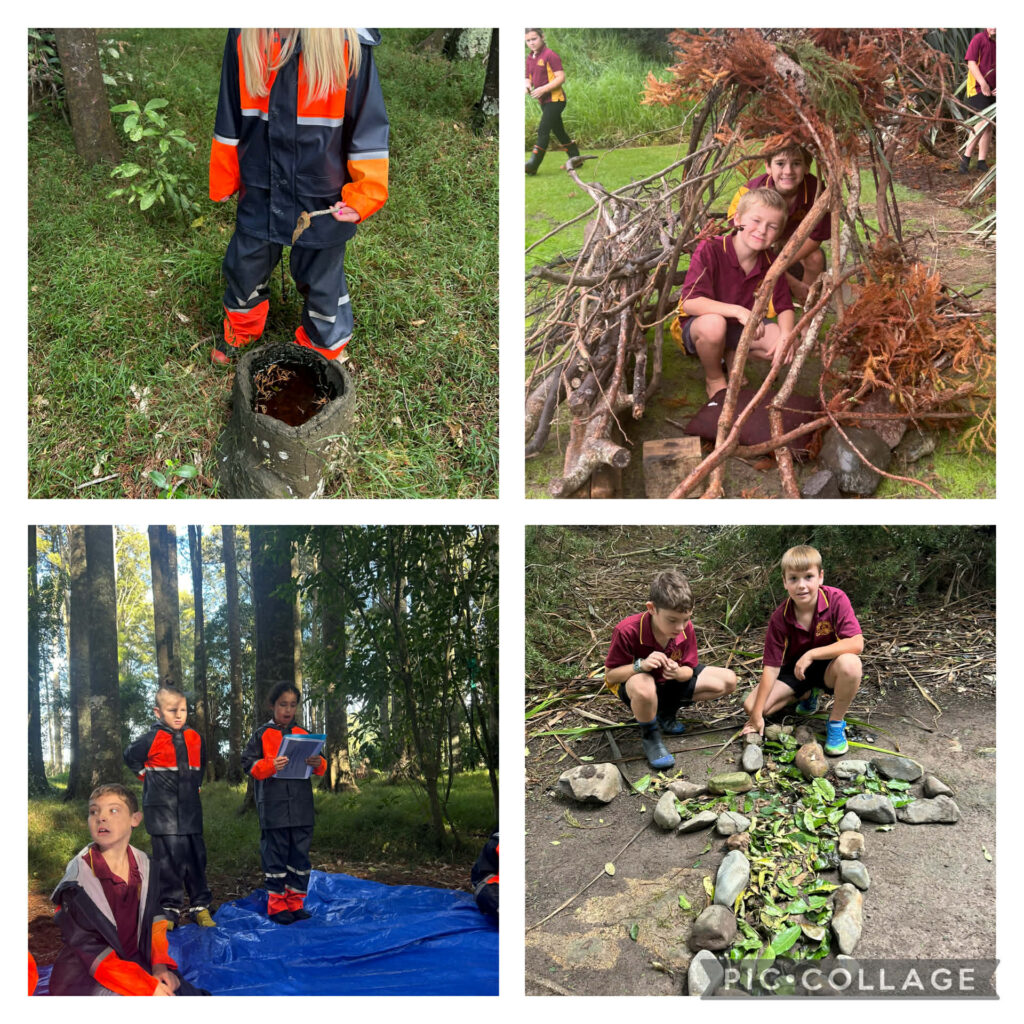
Students at Gerald Hill reserve (left) and at school (right) guiding their own learning and connecting to place.
Now, a successful regular ngahere programme runs throughout the year. Children are connecting with nature and enjoying a space of their own to play and explore. Some children are drawn to pest tracking and trapping, others to hut building, bug hunting, or bird watching, while some engage with the activities offered by the teacher. Each session begins with breath work and time connecting to the space, followed by karakia to start and end the visit. It was very important to Alicia that Te Ao Maori practices were embedded in the weekly visits. Alicia has noticed a visible shift in the children — they can articulate their experiences clearly back in the classroom and the regular, shared experience makes way for a more confident sense of self after their visits. They have developed kaitiakitanga skills and are also responsible for caring for their wet weather gear and other resources used during visits.
What started as a small spark — a bat house in a storage shed — has grown into a journey of curiosity, connection, and change. Now a successful regular ngahere programme is about to get started for the third year running. Alicia is looking forward to tailoring the ngahere programme to the needs of her new cohort of Year 4s.
See below for a snippet of sharing that was communicated to parents around the experiences and opportunities tamariki had during the ngahere programme last year:
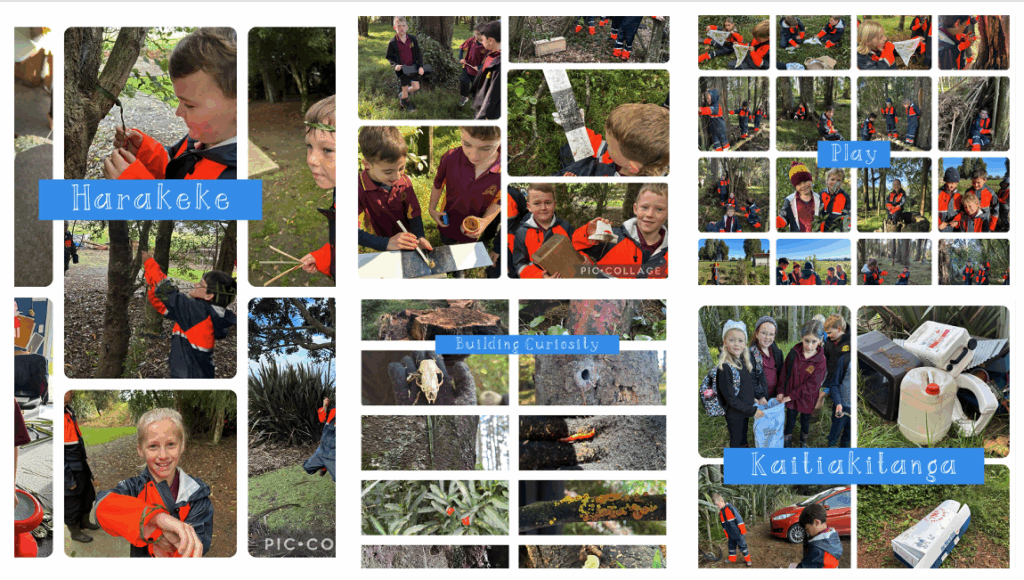
- Kaitiakitanga = being a public reserve or a school, we often see rubbish. The children opt into the practice of cleaning up and being kind to Papatūānuku (the land).
- Tracking & Trapping = we lay down tracking tunnels so we can see which predators are present in the ngahere. We put the lure of peanut butter in the middle of an ink sheet so predators walk right to the middle. We get left with little paw prints and use identification sheets to figure out which pests have walked through the tunnel. Children opt in to checking our rat traps, sometimes we catch mice! The rat trap holders were made by last year’s Ruma Wha class with students from Paeroa College.
- Harakeke = some children opted into flax weaving, we are very much learning this together….so if you know any experts, please let me know!
- Curiosity = children point out lots of very interesting shapes, patterns, insects/bugs/spiders and we have a few resources to help with identification. Being committed to spend time in nature builds curiosity and inquisitive minds.
- Play = child led nature play, building resilience and improving mental health and wellbeing through connection with nature.
This ngahere programme reflects the Enviroschools Kaupapa in action — authentic, place-based learning that strengthens students connection to te taiao, builds wellbeing, and grows confident, capable kaitiaki through meaningful relationships. It places tamariki at the centre, trusting them as capable decision-makers and learners. Tamariki are given agency over how they engage with the ngahere, which builds confidence, self-regulation, and ownership of learning. Te Ao Māori guided the programme, with tikanga, te reo, and iwi partnerships shaping how tamariki connected with and cared for the ngahere in meaningful ways.
Their learning happens in context, grounded in a real local environment. Tamariki are not learning about sustainability — they are practising it through repeated, hands-on experiences. The ngahere provides an inclusive learning environment that respects diversity, and allows tamariki to engage in ways that meets their individual needs. Strong community partnerships strengthen learning and demonstrate how collective action supports sustainable outcomes for people and place.
 Print
Print