
Building whole-school engagement in sustainability can be challenging within an already crowded curriculum. At Vardon Primary in Hamilton, Lead Enviro Teacher and Literacy Lead, Arista Eslin, developed a practical approach to integrate sustainability learning across all 16 classrooms. Her strategy centred on aligning teaching resources with key environmental events each term, such as Sea Week (Term 1), Save the Frogs Day (Term 2), Plastic Free July, Conservation Week and Bird of the Year (Term 3), and Save the Kiwi (Term 4).
Each term, Arista curated a resource pack to spark ideas and discussions. Teachers were encouraged to adapt these resources flexibly rather than adhere to event dates. At the end of each term, teachers contributed a brief summary and photos to a shared “Enviro Learning” document, showcasing classroom activities and outcomes.
The cumulative impact was significant. Examples include:
- Term 1: Room 2 investigated local waterways and storm drains, and why there were fish on the school drains, while Room 6 explored ocean pollution through the story Na wai enei? and created Sea Week art. Room 16 used the School Journal story Banana Skins to launch recycling research. They looked beyond the text and wrote our school recycling rules. Students also wrote individual recycling goals for the whanau to reach at home”.
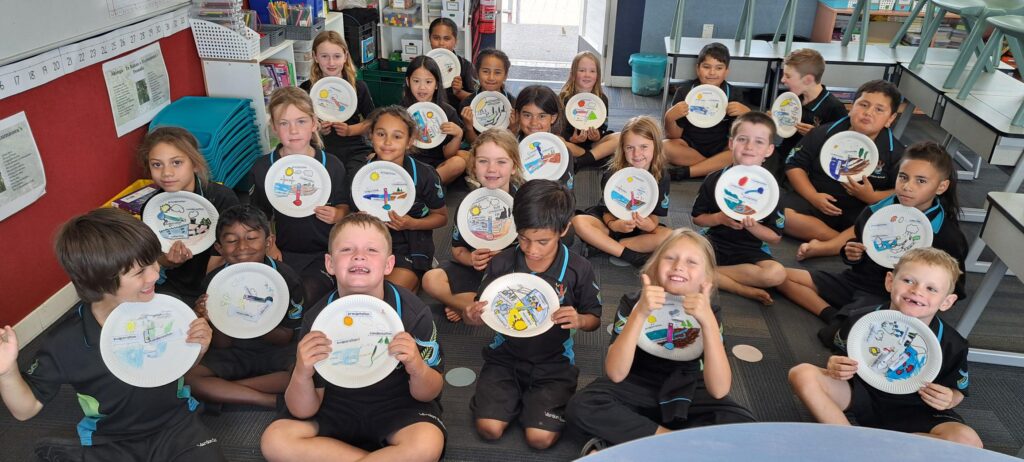
Room 9 sharing Water Cycle models
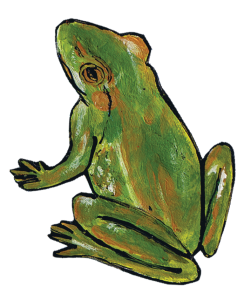
- Term 2: Classes researched native frogs using Pepeketua of Aotearoa booklets, wrote information reports. The frogs caught the attention of so many classes that a special “Save the Frogs” themed assembly was organised to share learning and the whole school performed a song about metamorphosis. Room 16
 created presentations on Waikato’s awa, maunga, and whenua, deepening understanding of kaitiakitanga. Matariki also provided opportunity for Rooms 4 and 5 to connect and celebrate together by making a special Matariki soup. Children brought in vegetables to create a shared soup that celebrated Tupuanuku, the star that connects with food that’s grown in the ground.
-
Term 3: Activities focused on being Plastic Free and Conservation Week. Room 1 enjoyed getting involved in the NZ Bird of the Year competition.
“We revisited our native bird unit from Term 2 to discuss what environment was or wasn’t suitable for each bird. We discussed Hotumauea, a paramount Ngati Wairere chief, and discussed how the environment was different to now. We learnt about the importance of the Waikato River and how to care for it. We continued to sort our rubbish into paper and not paper. We tried to minimise paper waste by reusing old paper. We had daily reminders about plastic rubbish and rubbish in the Junior quad area”.
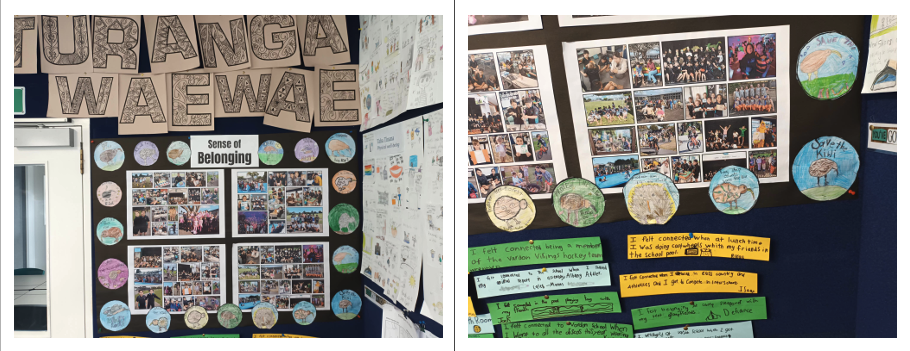
Class 9 Turangawaewae Display
The middle school had a term focus on Life Cycles and explored the life cycles of a chickens (banner photo), frogs, beans and bees, using hands-on experience, books, videos, conversations, art, storytelling and a visit from a local beekeeper. A chicken incubator in class, created much interest. Unfortunately, the eggs did not hatch because the incubator was not warm enough — a valuable lesson about how eggs require consistent heat to develop properly. All of these experiences were integrated through literacy, maths and oral language as students shared their knowledge and understanding.
- Term 4: Class 8 studied monarch butterflies, planted swan plants, and began creating a butterfly garden to support pollinators.
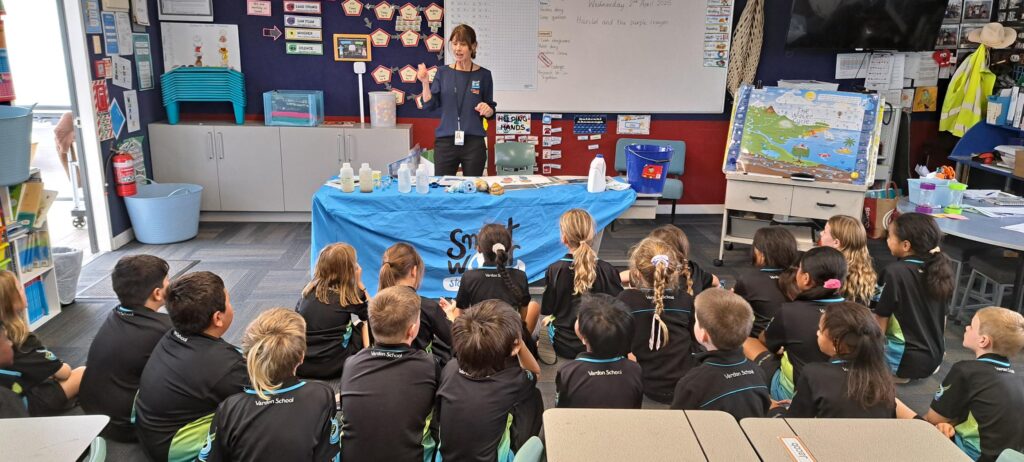
Sharing Kiwi learning at a whole school assembly
This approach demonstrates how simple, well-timed resources and collaborative reflection can embed sustainability meaningfully across the curriculum.
 Print
Print