A flooded tennis court might not seem like a big deal, but for one Pinehurst School student, it revealed a much bigger environmental problem and inspired a project to help stop litter from reaching our waterways.
The project began after Annie was selected to take part in the Youth for Seas (Y4S) Leadership Programme, which encourages young people to take action on environmental issues affecting marine environments. As part of the programme, students were asked to identify a real issue in their community and work towards a practical solution. Annie observed that rubbish was often present on and around the school courts, particularly after periods of heavy rain, and realised how easily everyday litter can be washed into stormwater systems and eventually end up in streams and oceans.
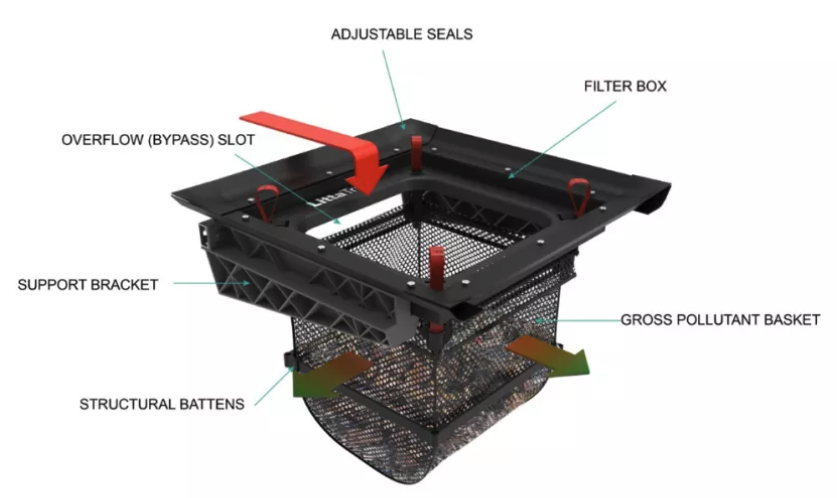 After researching different ways to reduce stormwater pollution, Annie discovered the LittaTrap. A LittaTrap is a filter that is installed inside a stormwater drain to capture litter, plastics, and other debris before they can flow into waterways. As rainwater enters the drain, the LittaTrap catches solid waste in a basket while still allowing water to pass through freely. The collected litter can then be easily removed by hand for disposal and analysis. LittaTraps are designed to fit existing stormwater systems, are easy to maintain, and have been used in many communities to reduce pollution entering streams and oceans.
The LittaTrap was installed at Pinehurst School in 2025. Since then, Annie has been monitoring and analysing the material collected in the trap. From the initial collection, most of the material was organic debris such as leaves and soil, making up the majority of the total mass. However, the trap also captured human-made litter including packaging plastics, soft plastics, hard plastics, paper, and other small debris that would otherwise have entered the stormwater system.
Although most of the material collected was natural debris, the trap still captured dozens of pieces of human-made litter, showing how easily everyday waste can enter stormwater systems during rainfall events.
Annie noted that even small pieces of litter can quickly travel through stormwater systems and end up in waterways, making early intervention important.
The LittaTrap will continue to be monitored over time, and there are plans to involve more students so the project can continue as a long-term, student-led initiative.
Once the project is well established at Pinehurst School, it is hoped that it can be shared as a model for other schools across Aotearoa. By demonstrating how student-led initiatives can combine practical action with data collection, the project aims to encourage more schools to take simple, effective steps to protect waterways and reduce marine pollution.