Northland Regional Council’s Climate Action, Education (Enviroschools), and Te Tiriti Partnerships teams joined forces for a one-day workshop in Kerikeri on Wednesday 3 December to share tools and knowledge for teaching climate change with Te Taitokerau educators.
The workshop, Te Ao Hurihuri, brought together 30 kaiako from Enviroschools from all sectors – early childhood centres, primary and secondary schools – as well as educators from organisations ranging from EcoSolutions to Mountains to Sea and Garden to Table.
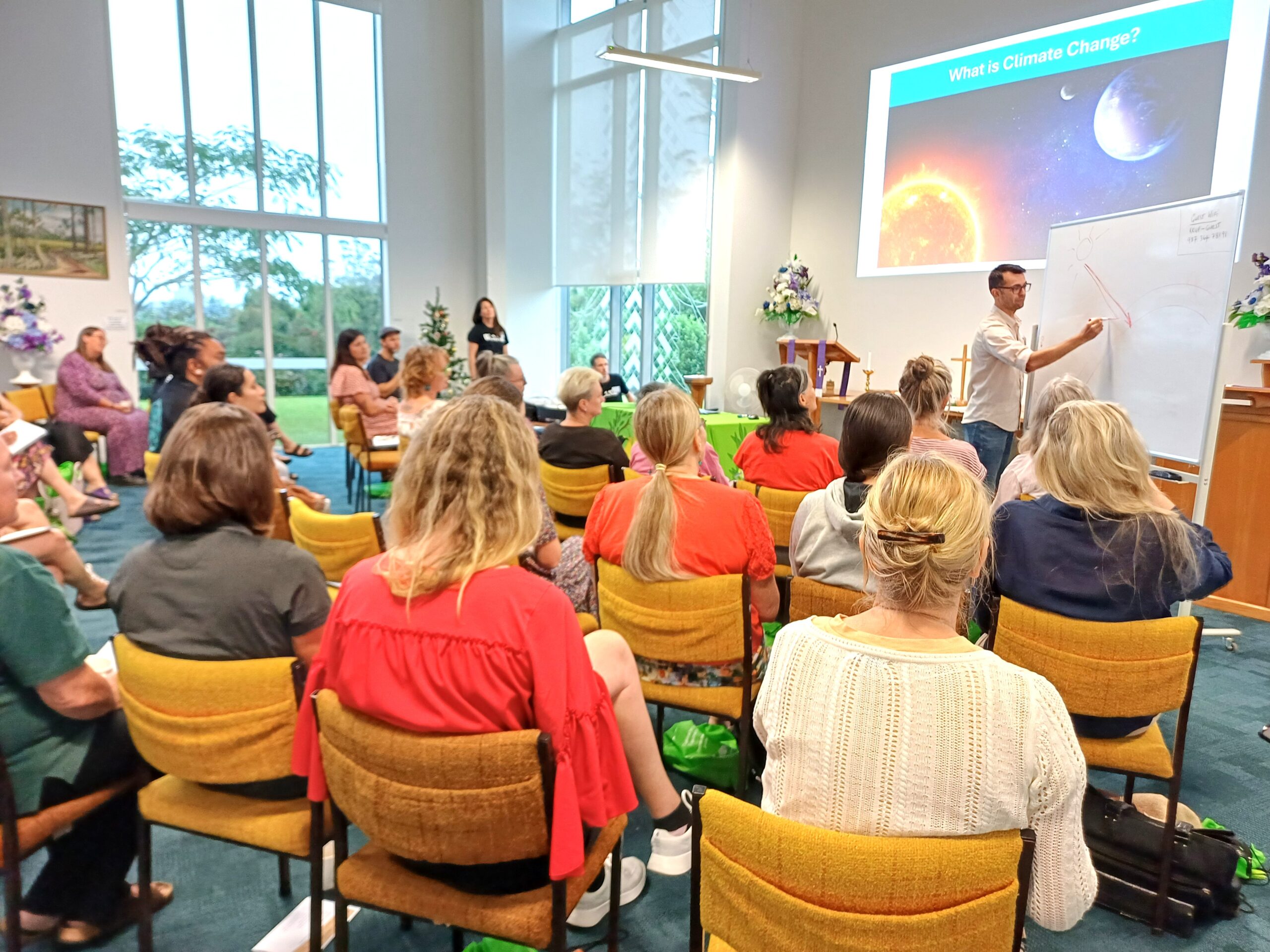
Rakesh Pinao explains climate change and its impacts in Te Taitokerau
Participants learned about what climate change is and its impacts, experienced a groundbreaking virtual reality environmental teaching programme, and participated in focused breakout sessions.
These sessions included matauranga Māori, the Climate Change Learning Programme, Climate Club’s Ripple workshop, and the ‘Serious Games’ Earth Sciences NZ has developed to gamify learning about climate change and natural hazards.
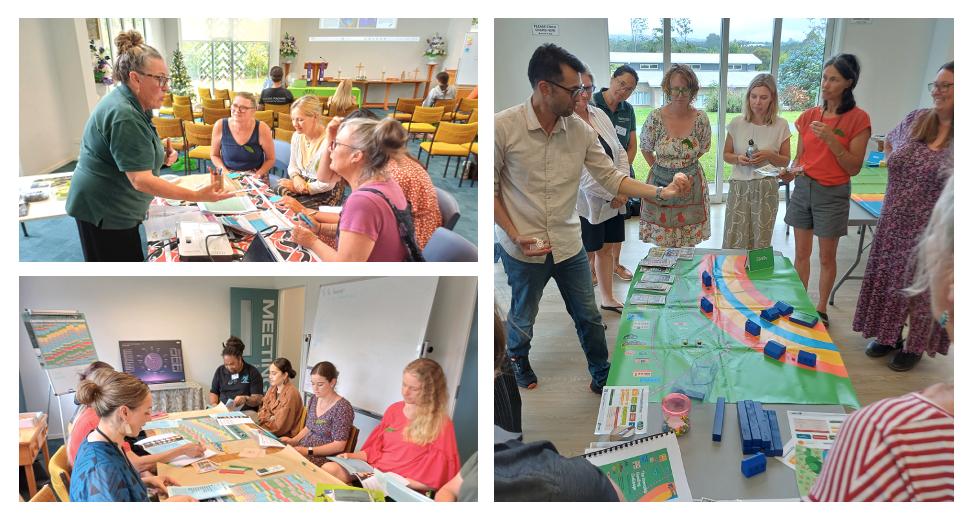
Breakout sessions included ECE climate resources, mātauranga Māori and Earth Sciences NZ’s ‘Serious Games’
Participants loved the learning and the opportunity to network and exchange ideas with colleagues from across Te Taitokerau.
“The amount that we’ve learnt in a short amount of time today has been huge,” says JoAnne Morningstar, deputy principal of Riverview School. “We’re coming away with ideas that are practical, things we can implement straight away, things we can put in our long-term plan.”
“We’ve made contact with Maia from the Climate Club, so she’s going to come up to Whangārei Girls’ High School and work with our Switch students on the Ripple programme, so that’s really exciting for our students,” says WGHS Head of Technology and Switch, Rebecca Maunder.
For council’s Education and Enviroschools Manager, Susan Karels, the workshop provided an opportunity to collaborate with colleagues across council and external specialists, to share climate expertise that will inform future teaching and learning.
“We’ve been able to draw on the resources of the Enviroschools Programme and work with experts throughout the realms of climate change knowledge,” – Susan Karels, Enviroschools Regional Coordinator.
Altogether, Te Ao Hurihuri has the potential to reach over 5,000 ākonga through the schools of teachers who attended the workshop.
Ka nui te mihi – thanks to Toimata Foundation for funding this project, made possible through their partnership with Ministry for the Environment.
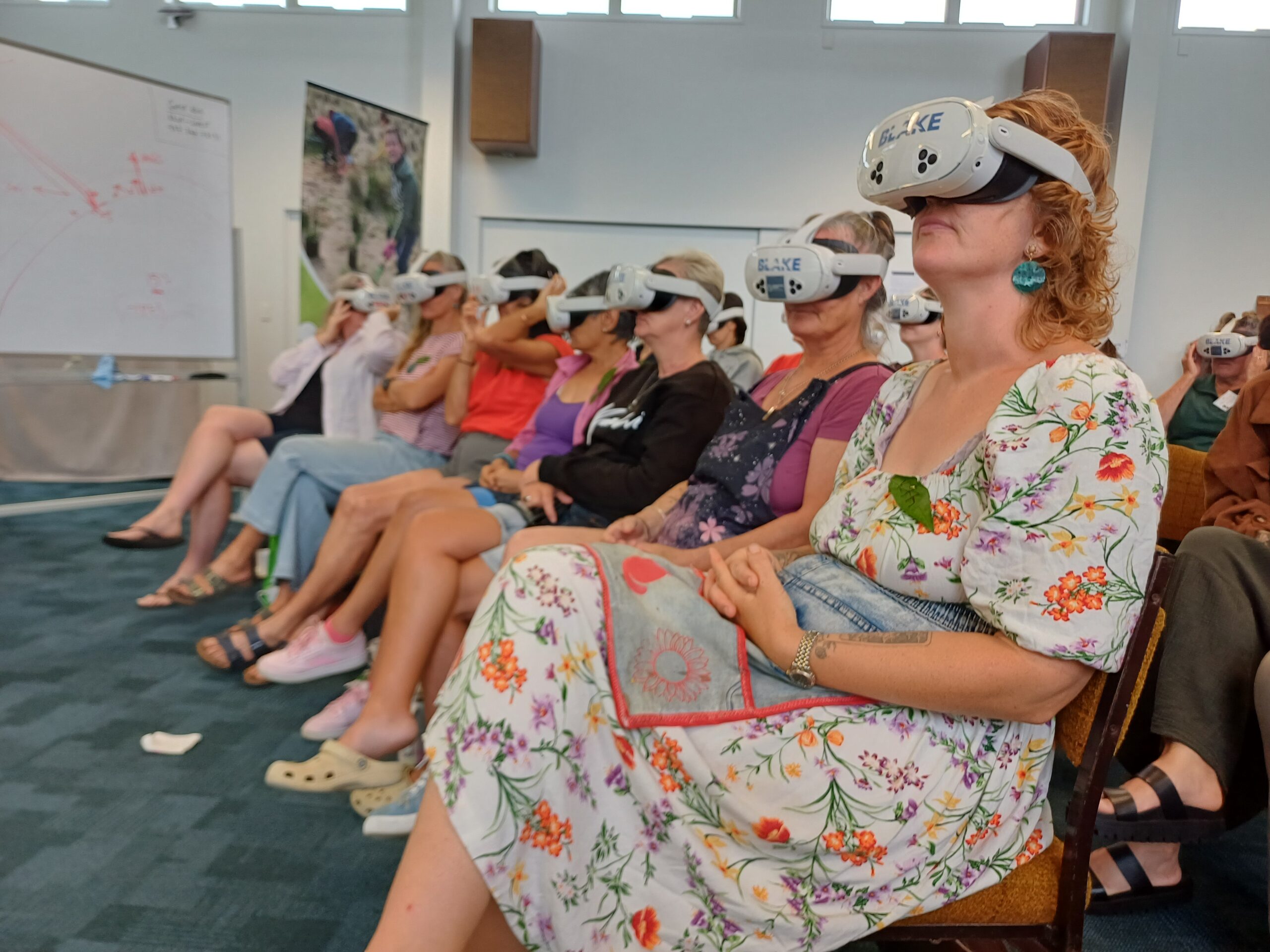
Kaiako experienced Blake NZ-VR’s groundbreaking virtual reality climate change lesson