“We have bats in Kawakawa Bay!”
What began as a simple discovery quickly grew into a rich learning journey at Kawakawa Bay Kindergarten, sparking curiosity, wonder, and a deeper connection with the natural world on their doorstep.
As tamariki learned that pekapeka-tou-roa (long-tailed bats), one of Aotearoa’s only native land mammals, live within their local area, questions emerged. Where do they sleep? What do they eat? How do they find their food in the dark? Together, tamariki, kaiako, whānau and community members set out to explore the answers.
Learning through curiosity and exploration
Through play, storytelling and investigation, tamariki explored the lives of pekapeka. They dressed up as bats, participated in a puppet show led by whānau, and shared their ideas through artwork and kōrero.
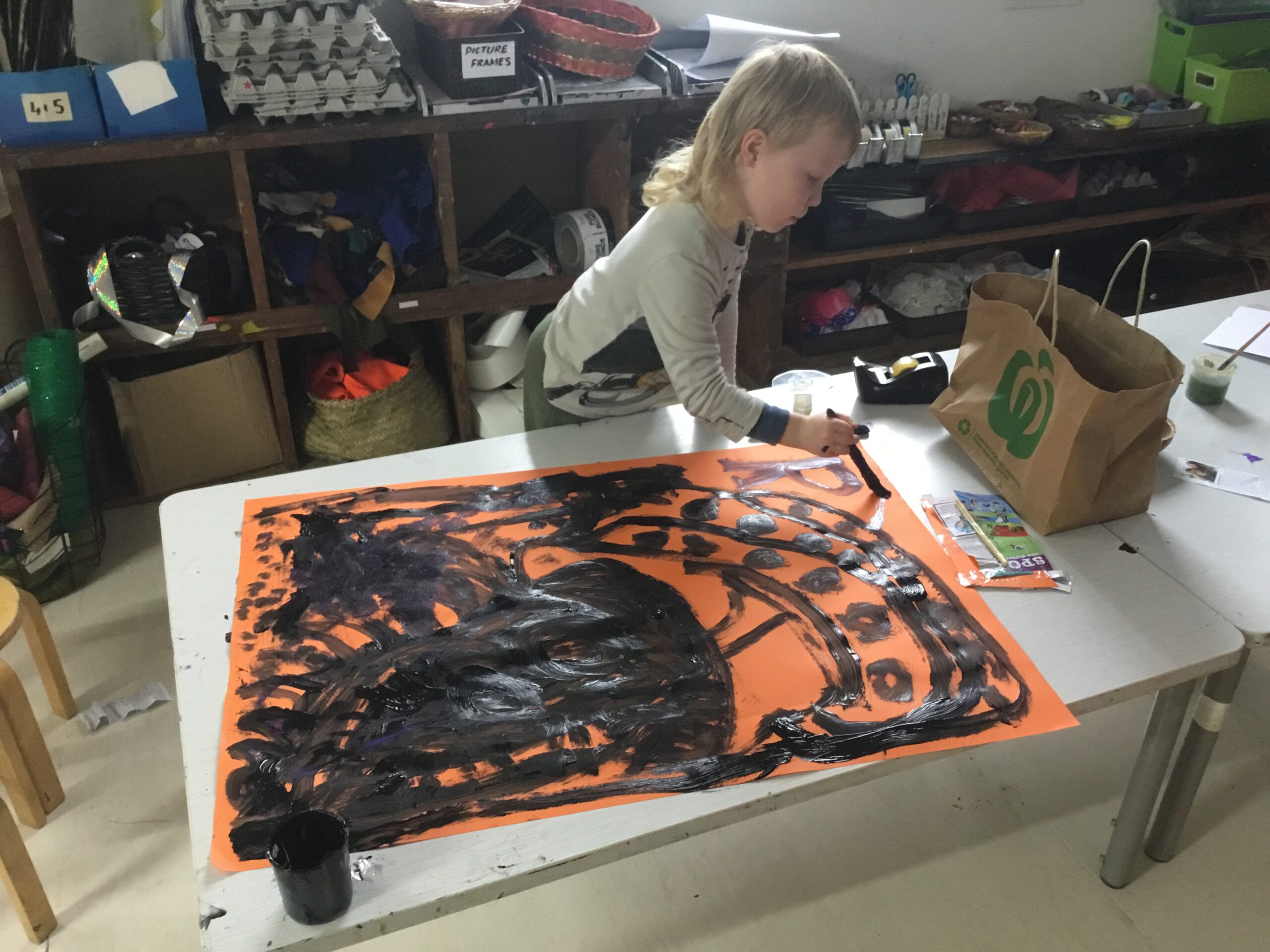
Through art, tamariki expressed their learning about pekapeka-tou-roa.
Their understandings reflect curiosity, imagination and insight:
- “They have sharp teeth and they fly in the dark.”
- “They eat apples”
- “They are scared of cats and rats.”
- “They play at night and sleep in the day.”
- “They are the size of a chicken nugget.”
- “They use echolocation to find food.”
- “They sleep in trees.”
- “We have bats in Kawakawa Bay.”
This reflects the Enviroschools kaupapa of empowered learners, where tamariki actively construct knowledge, express their thinking, and build confidence in their ideas.
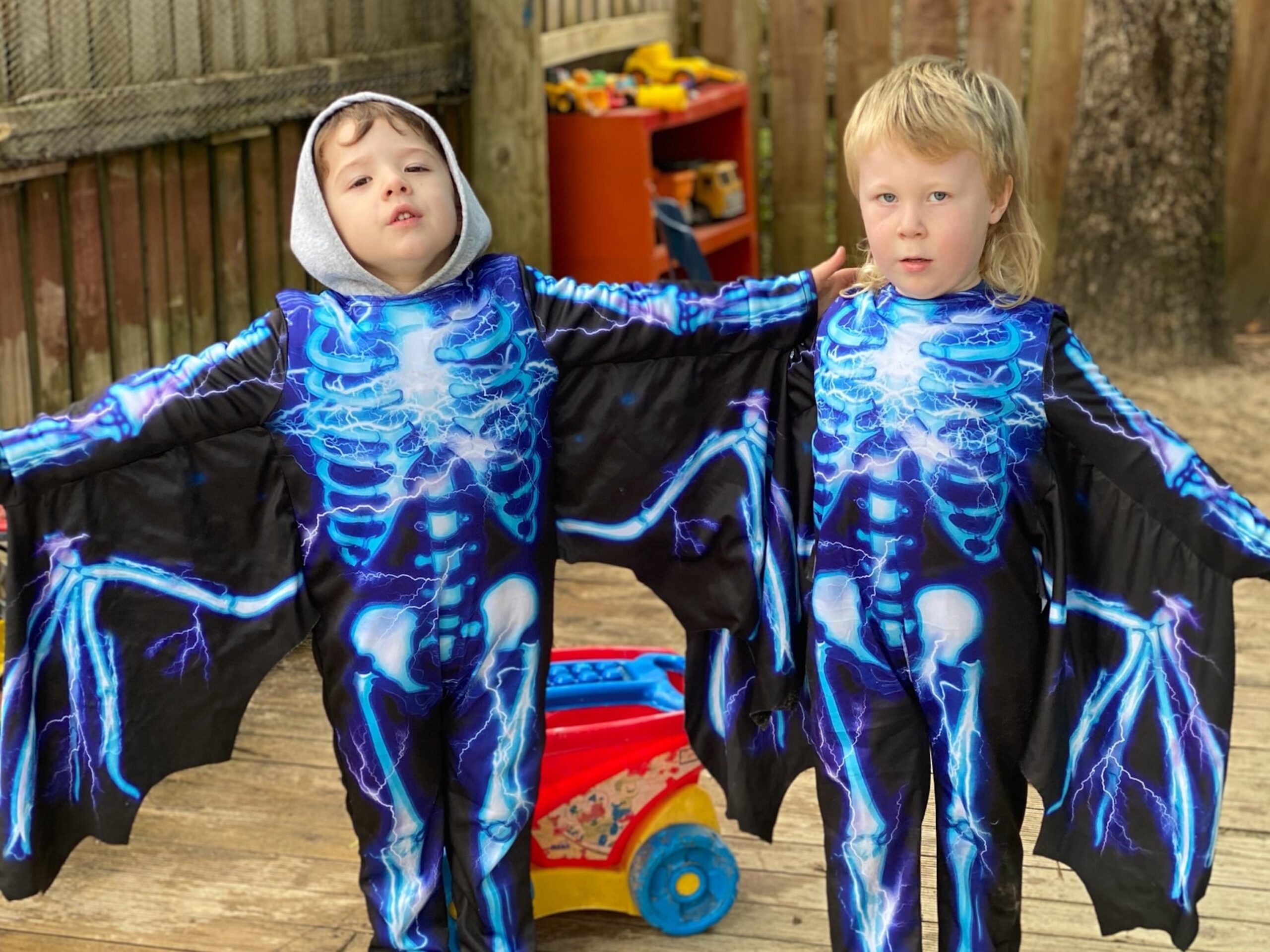
Dressing up as pekapeka-tou-roa – Wings out and ready for take off!
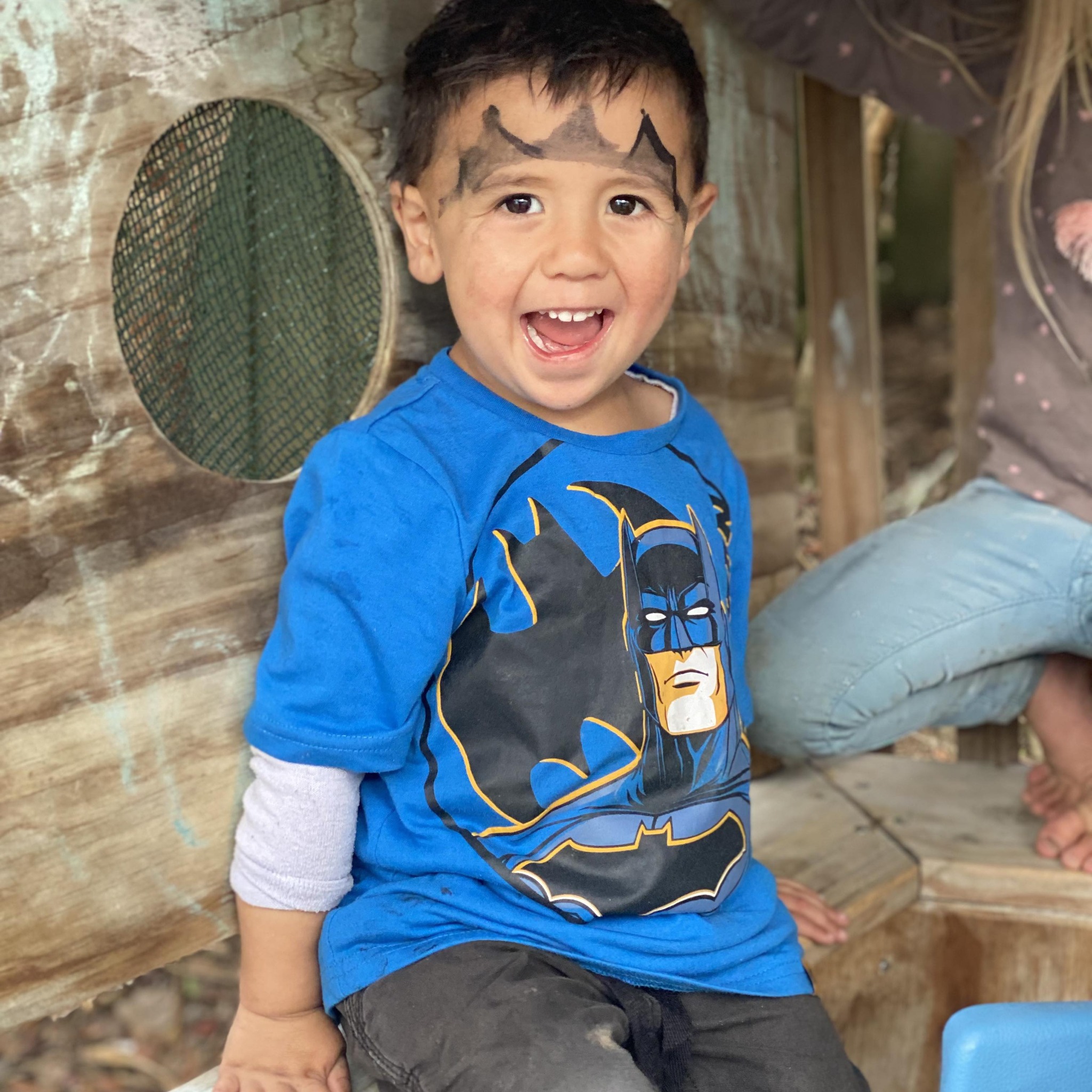
Becoming a pekapeka-tou-roa for the day! Tamariki used face painting and imaginative play to explore the features of their local long-tailed bats.
Connecting with community and place
Learning extended beyond the kindergarten gates. In July, over 30 community members attended a hui hosted by kaiako, supported by Auckland Council Sustainable Schools. Conservation experts from EcoQuest, Finding Franklin Bats, Te Ara Hikoi and Auckland Regional Parks shared their knowledge, highlighting the importance of protecting pekapeka and their habitats.
These partnerships supported the Enviroschools kaupapa of sustainable communities, where learning is enriched through relationships with whānau, local experts and the wider community.
Kaupapa grounded in Māori perspectives
Through this project, tamariki developed an understanding of kaitiakitanga – caring for the natural world and the taonga within it.
They learned that pekapeka-tou-roa:
- roost in mature trees
- give birth to only one offspring each year
- rely on healthy ecosystems to survive
- fly up to 60km/h
- and did you know, a group of bats is called a cauldron!
As their learning deepened, so too did their connection to place. The discovery that an endangered taonga species lives within their own rohe transformed pekapeka from something distant and unfamiliar into neighbour’s worthy of care and protection and helped tamariki understand their role as kaitiaki of their local environment.
Growing care for the environment
The pekapeka project shows how even the youngest learners can engage meaningfully with sustainability. By connecting learning to their local place and recognising the interdependence of living things, tamariki are developing a sense of responsibility and care for the natural world.
This is Enviroschools in action, where learning for sustainability is woven through everyday experiences, and tamariki are empowered to care for people, place and nature.
Banner Photo: Pekapeka tou roa/long-tailed bat. Photo credit: Grant Maslowski
 Print
Print