Marion Catholic School Enviroschools lead teacher Olivia Scott wanted to engage the whole school in celebrating Arbor Day together through meaningful mahi in the school’s gully. The gully has been planted with many native trees over a number of years, but still contains some large, older non-native trees.
A Gully with a Strong Restoration Story
The gully restoration journey began decades ago under the leadership of former school caretaker Greg Jordan, whose vision helped transform the area into a thriving outdoor learning space and habitat for native biodiversity. This longstanding commitment to environmental stewardship continues to provide rich learning opportunities for students today. Click here to read more on their Gully restoration and how it began.
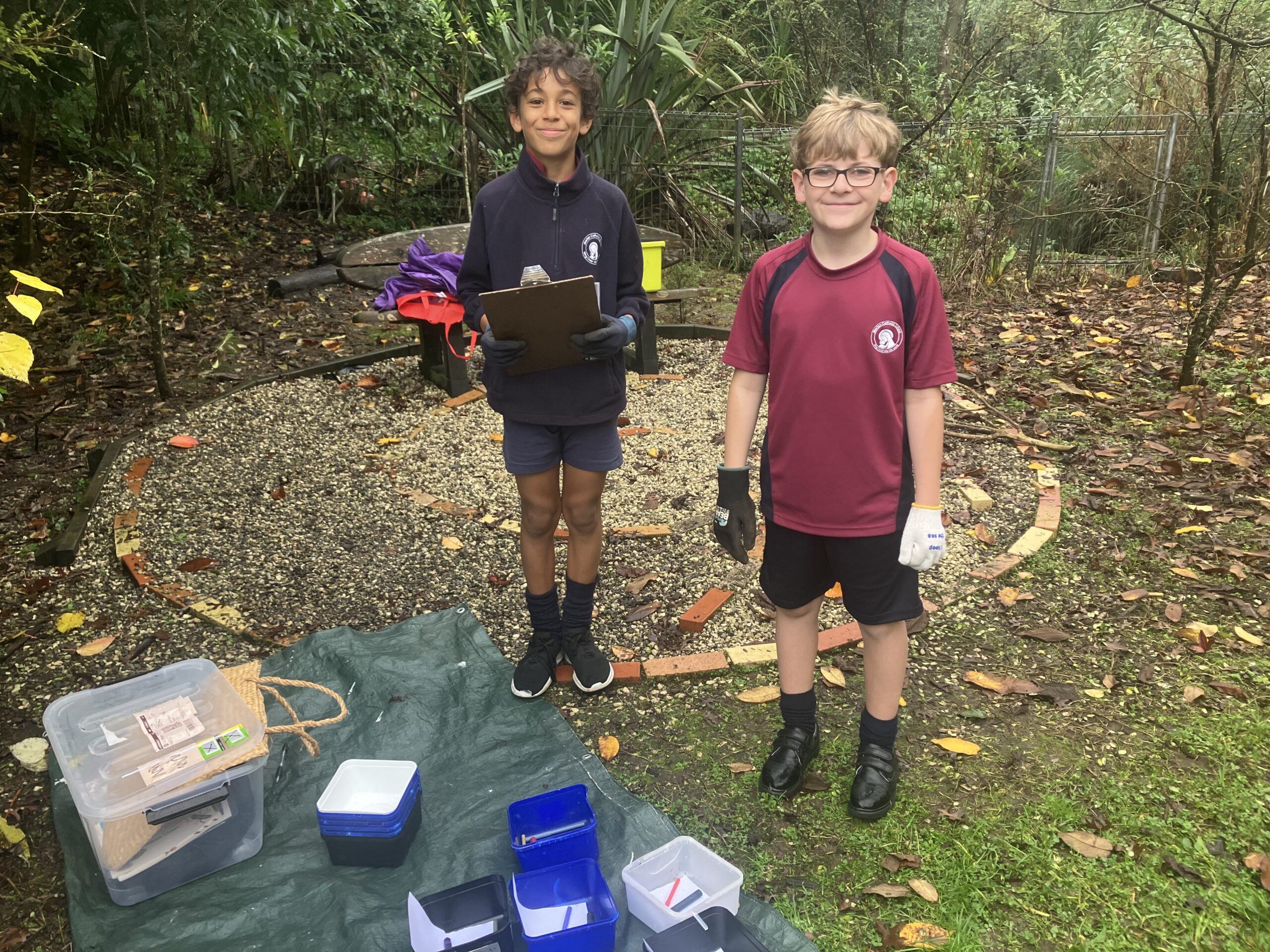
Exploring, recording, and learning. Environmental monitoring helps students understanding the importance of protecting native ecosystems.
Releasing Native Biodiversity
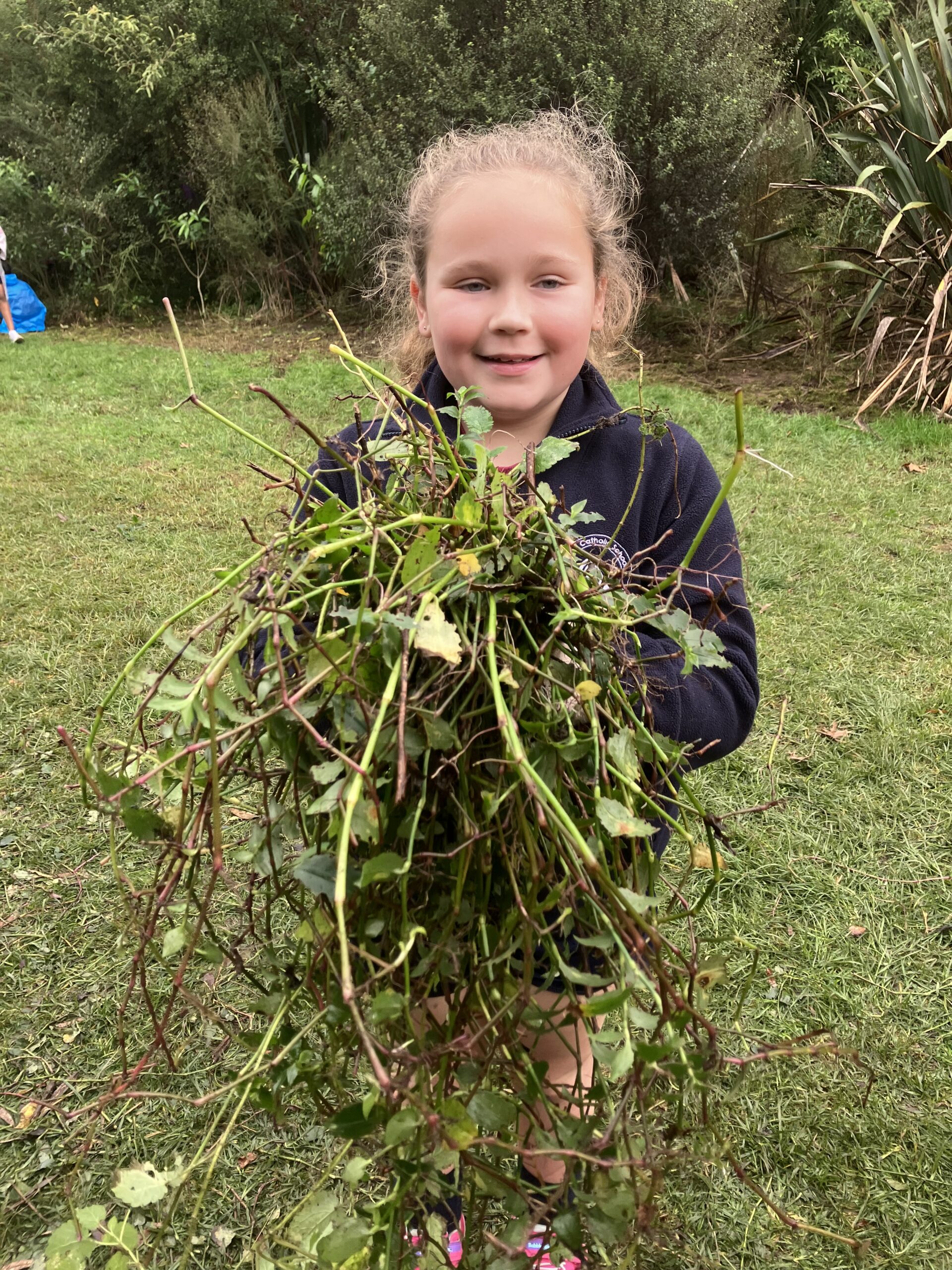
Learning how restoring natural areas create space for native plants and wildlife to flourish.
Following a major storm the previous year, one the large trees fell, creating a gap in the canopy. While the additional light created opportunities for growth, it also led to an increase in weed species. Rathan than focusing on planting more trees, the school chose to direct its energy towards weed control – releasing existing native trees from competition and creating conditions for new native seedlings to emerge.
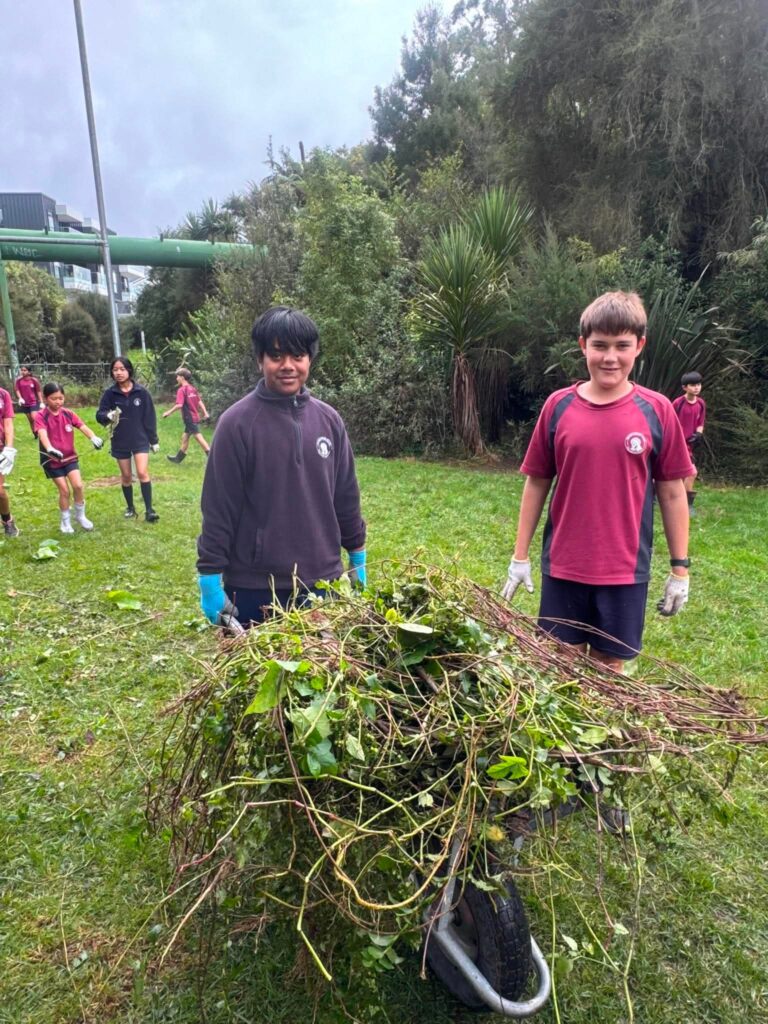
In true Enviroschools fashion, students were encouraged to take action for the environment through hands-on learning. The day was planned across three sessions, with around 200 students at a time working in the gully clearing weeds.
Student Leadership in Action
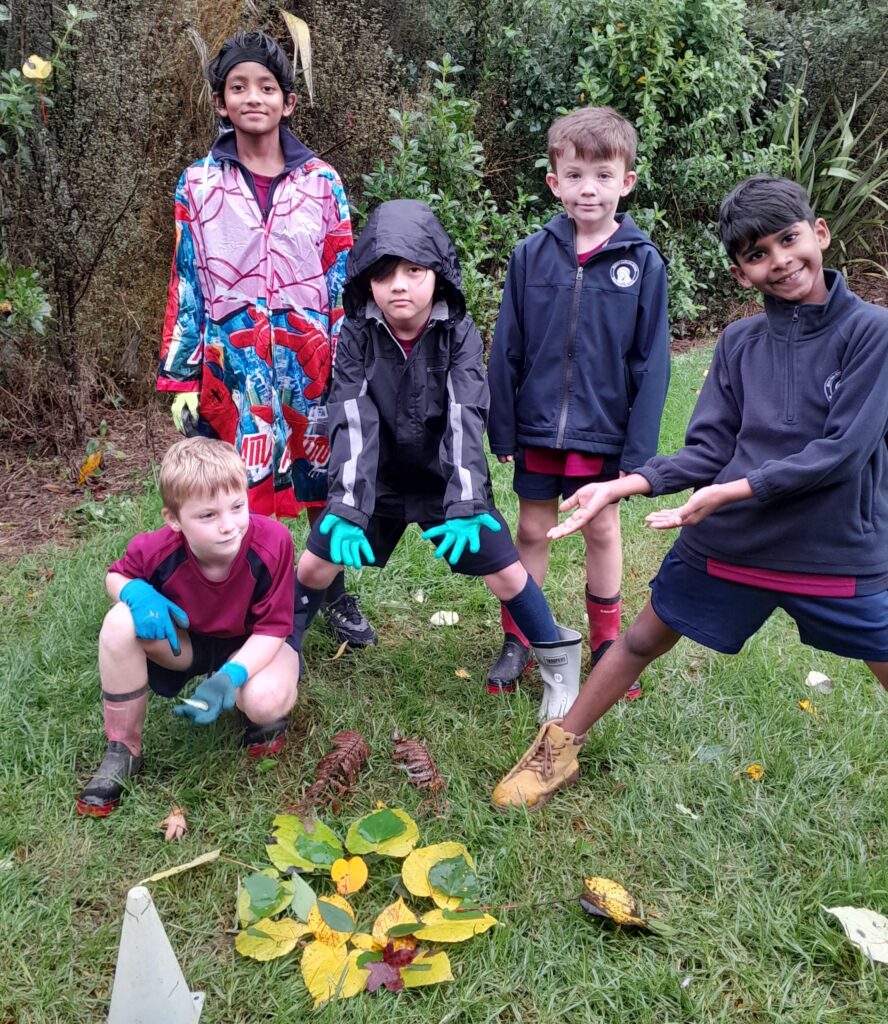
Part of each session included 15 minute activity rotations, where student enviro leaders guided groups of around 50 students through nature connection activities. These included the Nature Circle activity (an art in nature mandala activity) and Forest Colours from the new Nature Connection Observation Kit, as well as a nature scavenger hunt.
This was an incredible empowering opportunity for the student leaders. Alongside the hard mahi of showing aroha for their gully, students engaged in creative outdoor learning that strengthened their connection to nature and place.
Learning about Biosecurity Through Action
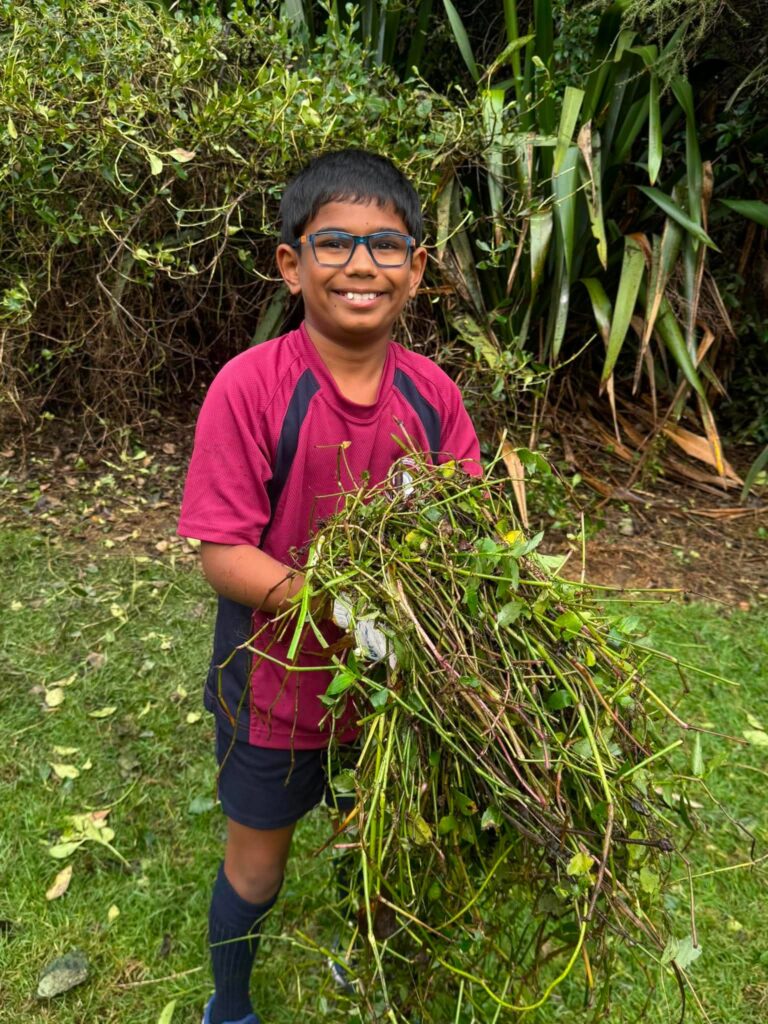
The weeding programme was woven through important leaning about biosecurity and the role people play in protecting native eco systems. Students learned to identify three of the most problematic weed species in the gully – Woolly Nightshade, Black Nightshade, and Tradescantia – and were shown how to safely (with health and safety a key priority) and effectively remove them from the roots.
They then set to work on an epic weed-removal mission.
As a result, all students in the school are now able to correctly identify and safely remove three problematic pest plant species and understand the threat pest plants pose to native biodiversity. Woolly Nightshade, the primary target species, has now been eradicated from the gully, with students confident they can continue monitoring the area and removing any new seedlings that emerge.
This pest plant is particularly problematic for both biodiversity and human health. It releases toxins into the soil that inhibit the growth of other plants, outcompetes native species, and has tiny hairs that can irritate the skin and respiratory system.
Wow, this one is huge!!!
This was the reaction from students when they discovered a tree-sized Woolly Nightshade. Working alongside an adult, they carefully dug it out and removed it from the roots. The plant stood well over three metres tall.
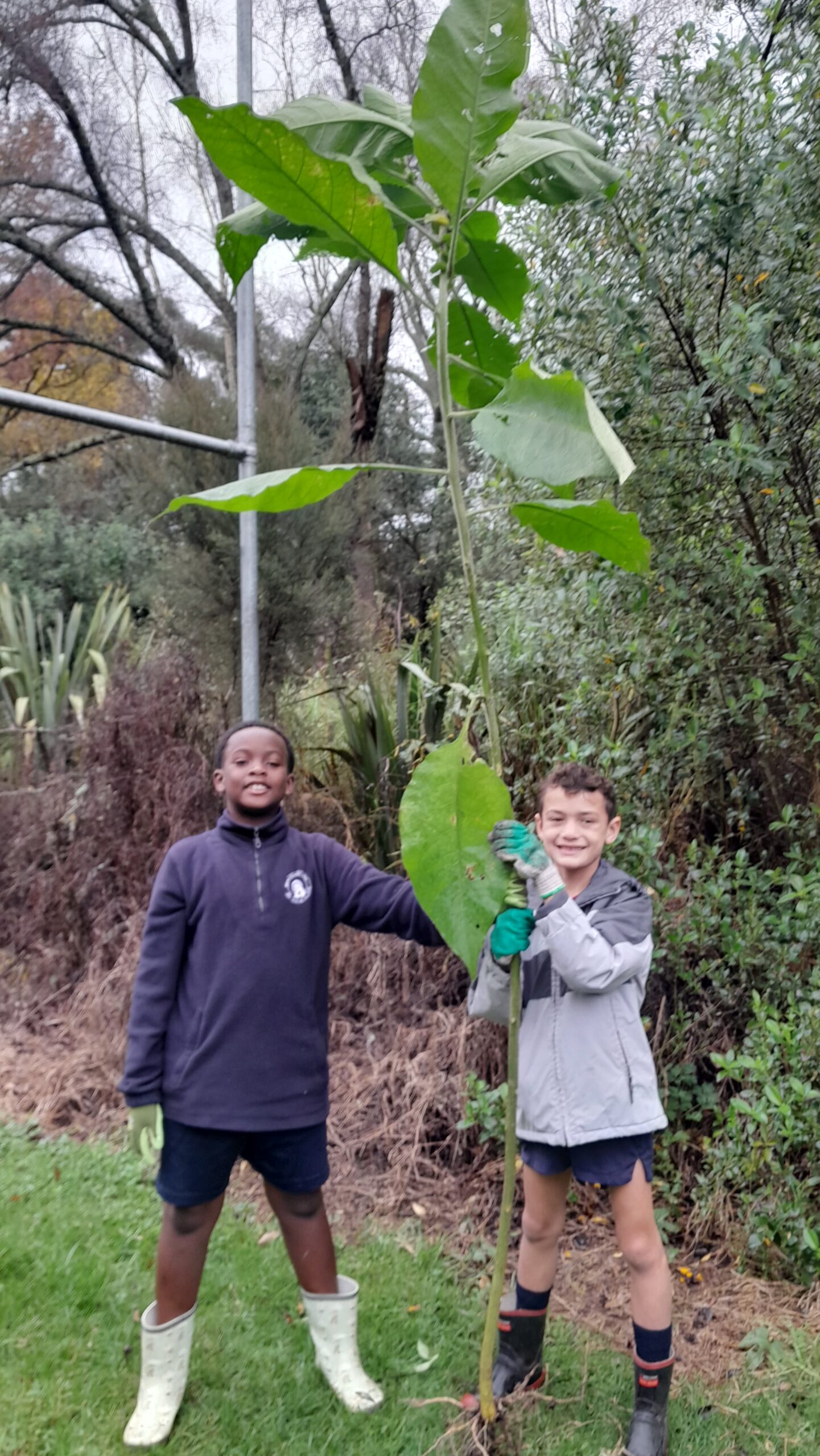
Sometimes the biggest weeds make the biggest impact! Students worked together to remove this towering invastive plant and create more space for native plants to thrive.
Looking Ahead
The Arbor Day event is just one step in an ongoing restoration journey. Later in the term, a smaller group of students and their families will participate in a planting day with support from Kids in Nature at Hamilton City Council. The planting can now take place because the weed removal mahi has created the conditions for native species to thrive.
Through action, learning, student leadership and community involvement, Marian Catholic School continues to bring the Enviroschools kaupapa to life – caring for nature, building environmental knowledge, and creating positive change in their local environment.
 Print
Print