On the 6th May 2026 Northland Regional Council Coastcare and Enviroschools teamed up with Parua Bay School to support their Envirogroup in a hands-on day of dune restoration and kaitiakitanga at Ocean Beach.
This experience brought classroom learning into the real world, giving ākonga the opportunity to actively care for their local coastal environment while building knowledge, practical skills, and a strong sense of guardianship.
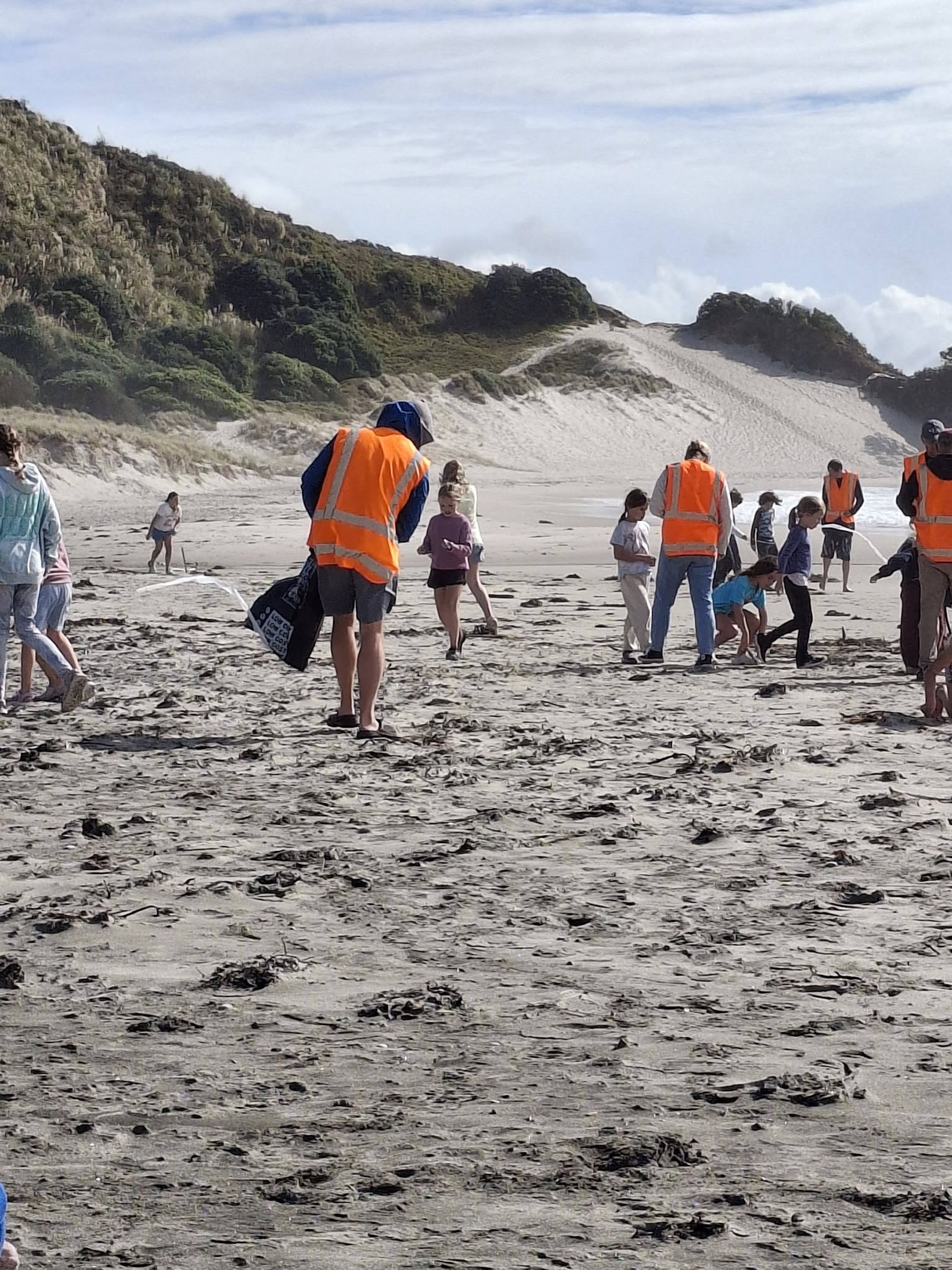
Caring for the coastline starts with action. Hands-on beach clean up helped students learn about the impacts of marine debris on coastal environments and wildlife.
Learning through action
Students took part in a series of engaging, hands-on activities:
Native and exotic dune plant scavenger hunt – By identifying and comparing plant species, students learned how native vegetation supports dune stability and contributes to a healthy coastal ecosystem.
Spinifex planting – Ākonga got their hands in the sand, planting spinifex to help restore and stabilise the dunes – an important Coastcare restoration practice.
Discovering dune wildlife – Students explored the hidden life within the dunes, learning about the species that depend on these fragile habitats for survival.
Litter intelligence monitoring – Through a beach waste audit, students investigated what types of rubbish end up on the beach, where it comes from, and what actions can help reduce it.
The role of Envirogroups
School Envirogroups play an important role in empowering ākonga to lead environmental action within their kura and wider community. They provide opportunities for students to develop leadership skills, take ownership of sustainability initiatives, and turn learning into meaningful action.
Experiences like this help students build a stronger connection to te taiao and deepen their understanding of kaitiakitanga – showing care, respect, and responsibility for the natural world. In doing so, they grow into confident young people who care for their environment and inspire others to do the same.
“Ko au te taiao, ko te taiao ko au”
I am the environment, and the environment is me.
Extending learning beyond the beach
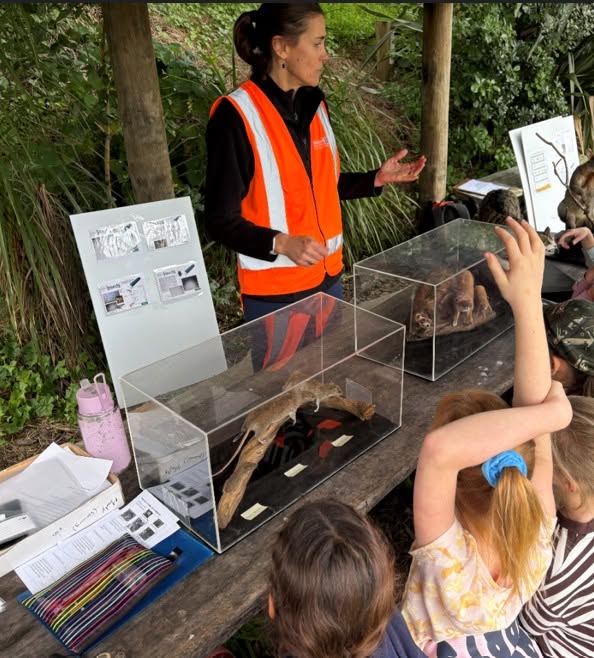
Envirogroup students exploring pest species – why they were introduced and how they impact our native environment.
The learning journey continued the following month with a visit to Bream Head Conservation Trust on 17 June. This hands-on experience deepened students’ understanding of ecological systems, conservation, and pest management.
Ākonga explored:
- Pest species, why they were introduced, and their impacts on native ecosystems
- Tracking tunnels used to detect both pests and native species
- Trap lines and how they help manage pest animals
- Seed collection and nursery planting
This experience added another dimension to student’s learning, helping them understand not only what lives within an ecosystem, but also how ecosystems are protected and restored.
Most importantly, students were eager to apply their new knowledge back at Ocean Beach. On their next visit, they plan to investigate what species are living in their adopted dune area, demonstrating how learning can be connected across different environments and applied in meaningful ways.
Bringing it all together
The day concluded with an epic sandcastle competition, celebrating teamwork, creativity, and connection to place while reinforcing a shared sense of environmental stewardship.
Key Outcomes
A key outcome of this project has been the strengthening of community connections, with students, local groups, and organisations all working towards the shared goal of protecting and restoring Ocean Beach. The visit to Bream Head Conservation Trust (BHCT), located adjacent to Ocean Beach, helped both students and conservation staff gain a better understanding of each other’s mahi and identify opportunities for future collaboration.
During their next visit, students will put their learning into action by checking pre-laid tracking tunnels in the dunes, meeting with the Ocean Beach Restoration Association (OBRA) to learn about its long-term restoration efforts, planting spinifex and pīngao and undertaking weed control after identifying exotic species during the scavenger hunt. Another potential future project involves designing educational signage to raise awareness about local wildlife, dune protection, and responsible dog ownership.
This project also provides valuable opportunities for cross-curricular learning. Students can investigate dune flora and fauna through science, analyse Litter Intelligence data using mathematics, research local species through literacy, and create awareness resources and signage through art and technology.
Student leadership has already been a standout success. Three Envirogroup students recently presented their environmental investigations and actions at a community event hosted by Northland Regional Council’s Coastcare and Climate Action teams, demonstrating the power of young people to lead, influence, and inspire environmental action within their community.
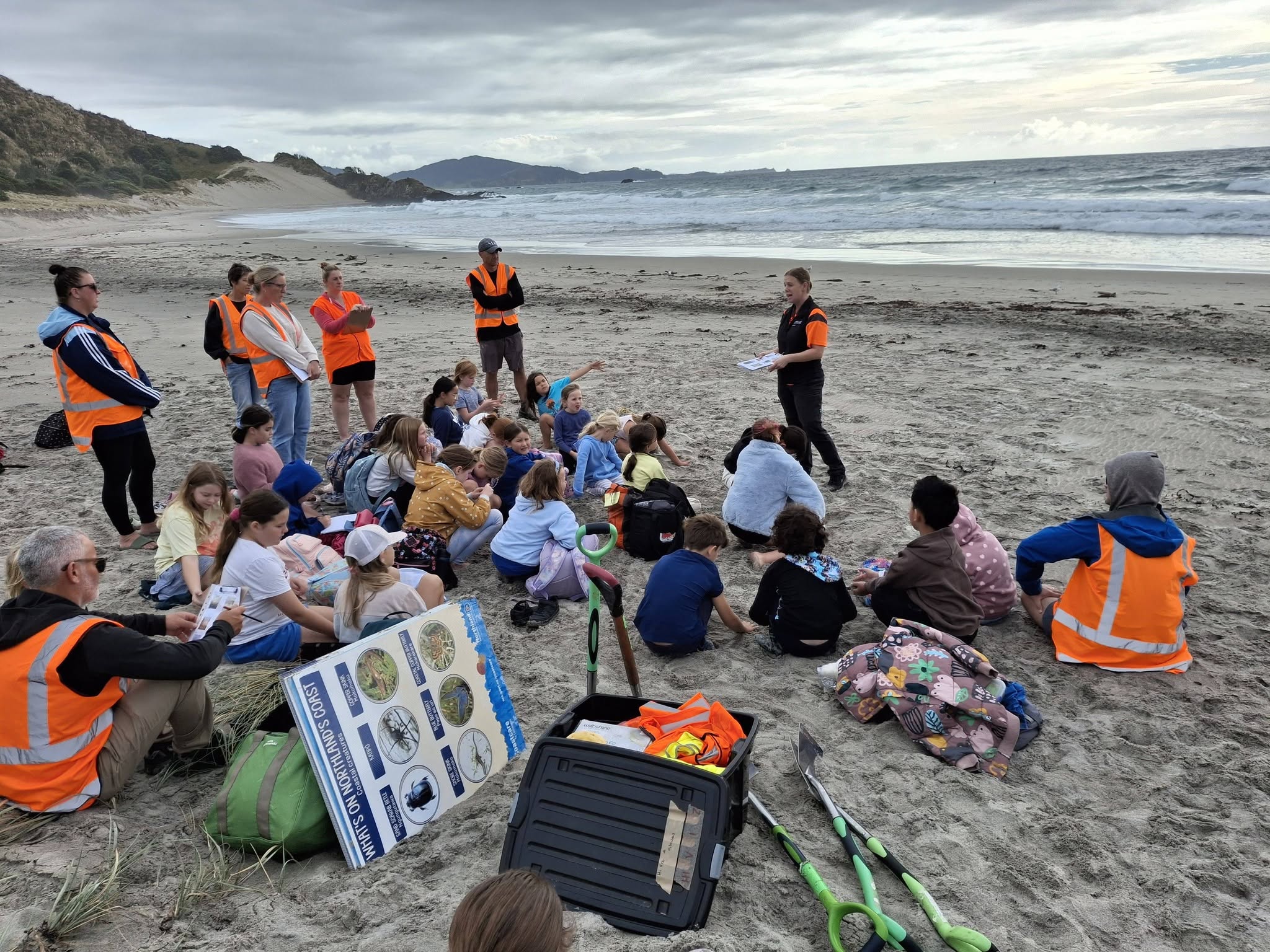
A beachside learning session introduced students to dune ecology and the actions needed to support healthy coastal environments.
Through these experiences, students have:
- Strengthened their understanding of kaitiakitanga
- Developed practical conservation and monitoring skills
- Built deeper connections to their local coastal environment
- Applied learning across different contexts, from forest to coast.
For more information on Envirogroups – Check out the Working with Envirogroups (Primary & Intermediate) resource here.
 Print
Print