Rongomatãne
Cultivated foods & the arts of peace
Peacefulness and order, provision, cultivation
He Whakatauki:
Ehara taku toa i te toa takitahi engari te toa takitini
The success is not of one but of the many contributors.
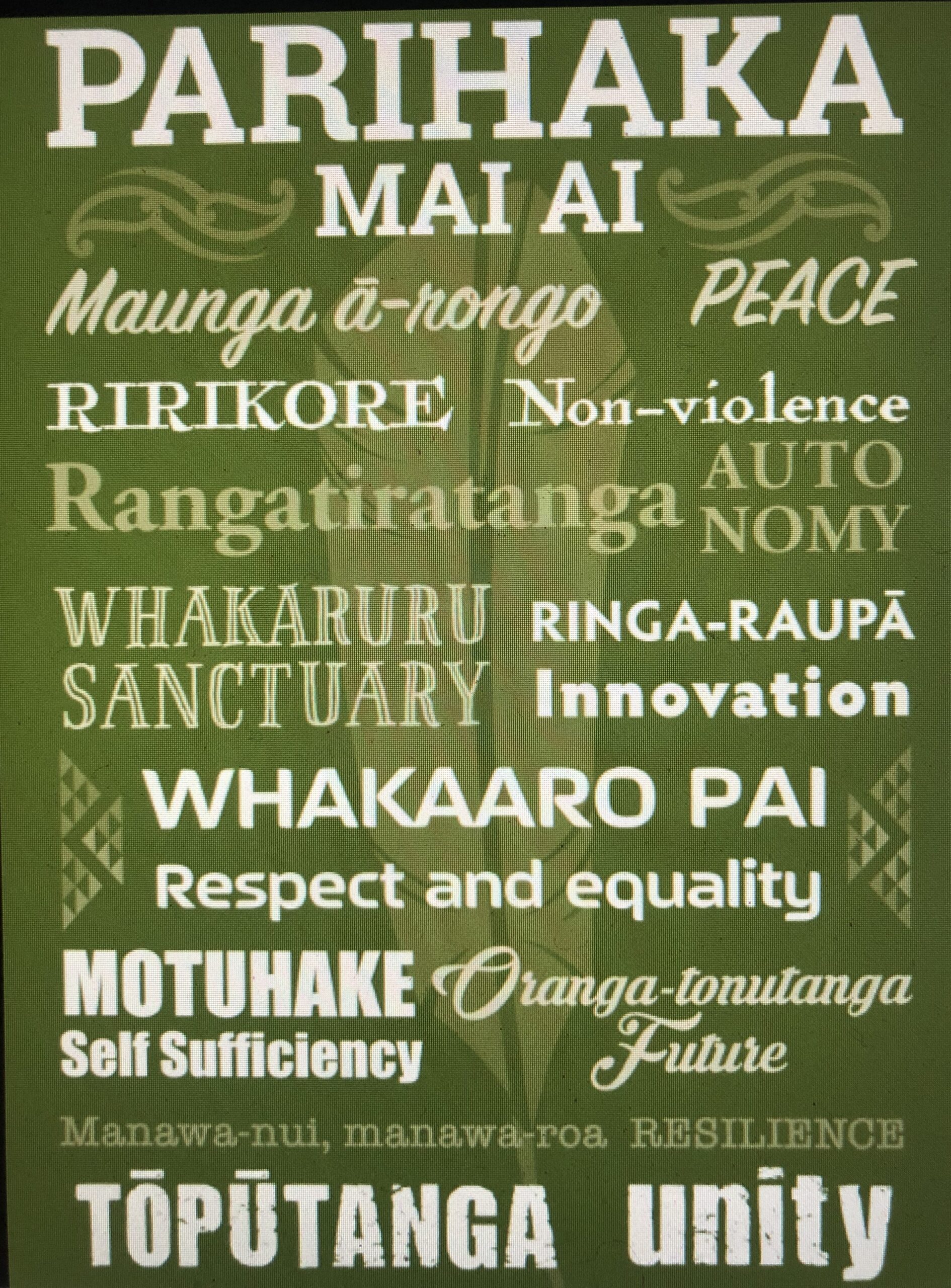
Kāpiti College is on a journey toward embedding the Parihaka Mai Ai values throughout the college curriculum
This project is a great reflection of this whakatauki. It is also a great example of the Parihaka mai ai Values of : Motuhake – Self- Sufficiency, Oranga – Toputanga – Preparing for the future, Ringa raupā – hard work and innovation, Manawanui – manawaroa- resilience.
At the end of 2023 and leading into early 2024 the Kāpiti College Eco Action Group set a goal to focus on re-establishing their ‘tired’ composting and worm farming systems in their māra kai as well as some strategies for strengthening rangatahi connection with the māra kai.
In mid-2024 an opportunity was identified to apply for a Climate Action Grant from Kāpiti Coast District Council (KCDC), which could enable a high quality composting system to be set up.
A group of keen beans began meeting to put their combined superpowers together for this project proposal:
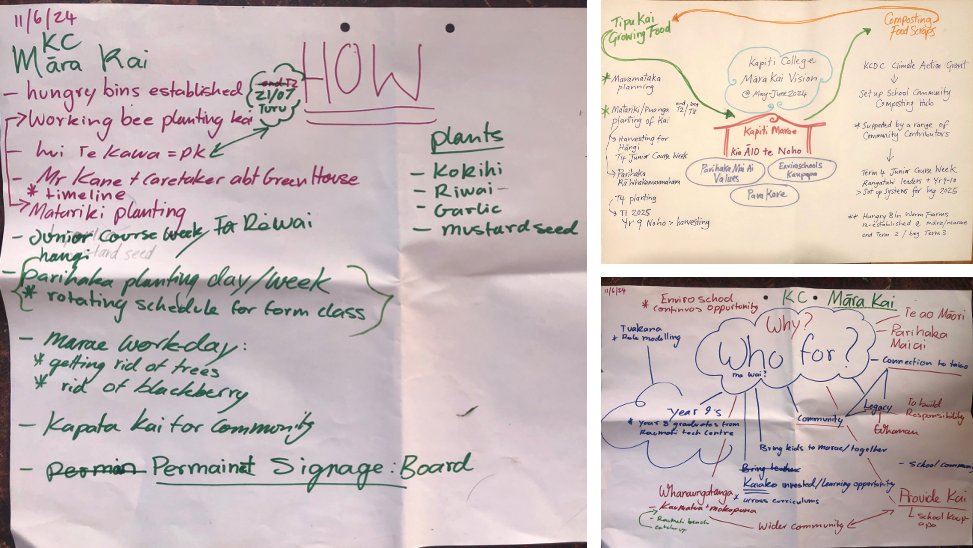
Some of the planning for the Māra Kai capturing the essence of the vision and priorities
Santino (Year 12) and Te Kaha (Year 13) tuakana of the Eco Action Group (EAG) took on the rangatahi leadership role alongside a number of green hearted adult supporters who could see the value of contributing to this project. Santino continued to lead this project through until graduation at end of 2025.
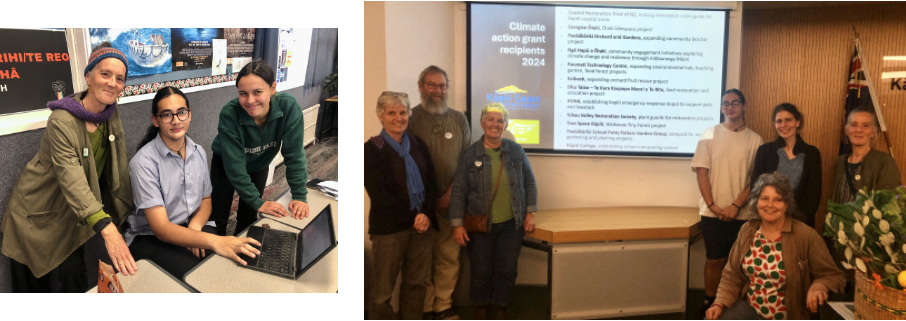
L: Amanda, Santino and Nicola, EAG Lead Kaiako, finalising the project grant application with Santino about to push send! R: Project core crew attending the KCDC presentations & acknowledgements of successful Climate Action projects across the community
Whaea Marg – kaiako, put her hand up for the critical role of overseeing the compost collection system in the college marae wharekai situated alongside the māra kai.
Cory Hope – parent and local compost guru with Food Soil Web expertise, came on board to oversee the logistics for construction of the ‘super-duper’ high level compost system, sharing knowledge at workshops with rangatahi as part of their marae based learning curriculum and overseeing the construction of the composting system.
Hannah Zwartz – parent and local gardening legend, supported with guidance for all things māra kai alongside rangatahi at working bees, liasing with Whaea Marg, Cory & John V.
John Valentine – kaiako, permaculturalist and garden tool wizard, took on a role of overseeing the māra kai planning and care of garden beds, maintaining the compost system and being a strong role model for rangatahi in the mahi māra.
Amanda in Enviroschools Community Facilitator role – took on the role of supporting logistics co-ordination to take the hard out of what can be too much extra organisation on top of Kaiako’s teaching roles and keeping a record of the project to create a presentation for reporting to funders and sharing the project with the wider school community.
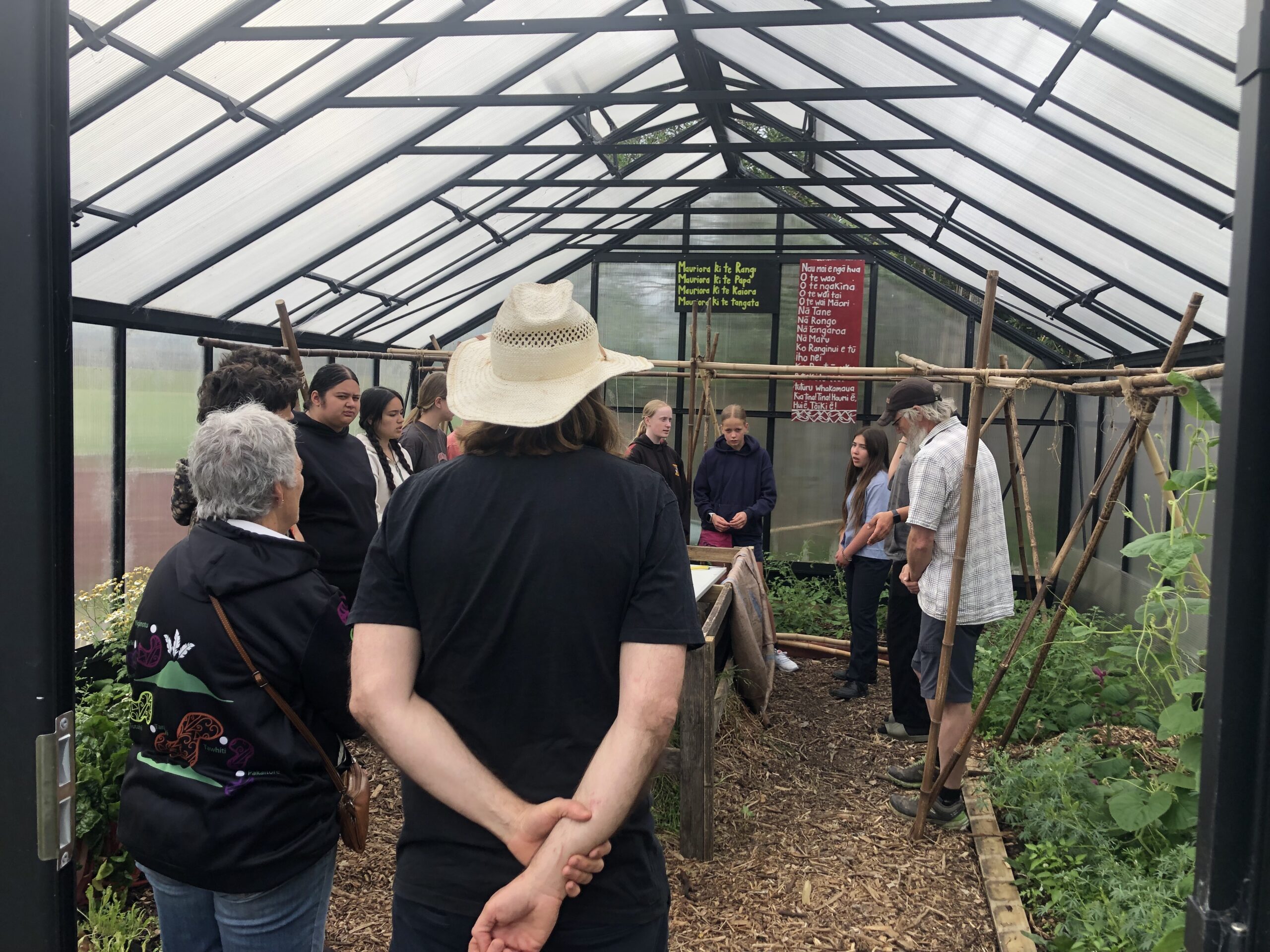
Tikanga of starting workshops with karakia to set the scene for the mahi. Rangatahi painted the māra karakia and the Enviroschools Living Landscapes Mihi hung in the greenhouse as part of the workshop working bees
The aims and goals of this project included:
- Reduced food scraps going to landfill, Reducing the production of GHG (Green House Gases), Restoring the mauri of the land in the māra
- Educating Rangatahi through doing and demonstrating
- Learn appropriate tikanga and sharing knowledge with akongā and kaiako alike, Normalising the practice of saving food scraps and composting as an everyday climate action that matters
- Integrating the project into the curriculum, eg. Social Sciences, Sciences, English, Te Ao Māori, Technologies
- Have the composting bins and systems up and running by the end of the school year
- Providing the continuity of Year 7 and 8 students and their learning at the Raumati Technology Centre Sustainability Programme
After securing the funding in Term 3 of 2024 planning to establish the new composting system was on. The first workshop was run in November with year 9 and 10 rangatahi, as well as some tuakana leaders, so there would be continuity for sustaining the leadership of the systems over time.
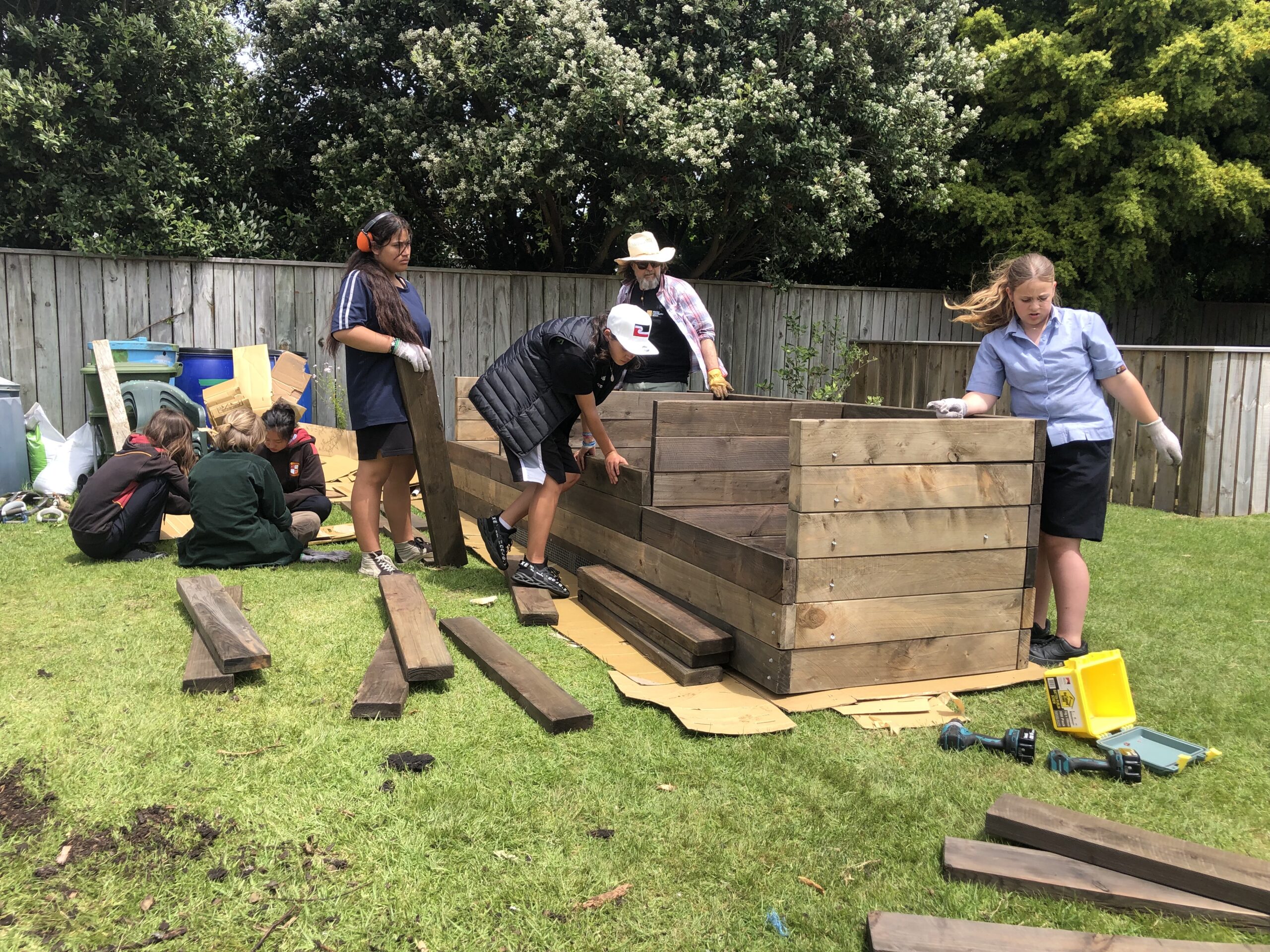
Lots of enthusiasm on the tools for constructing the compost bins
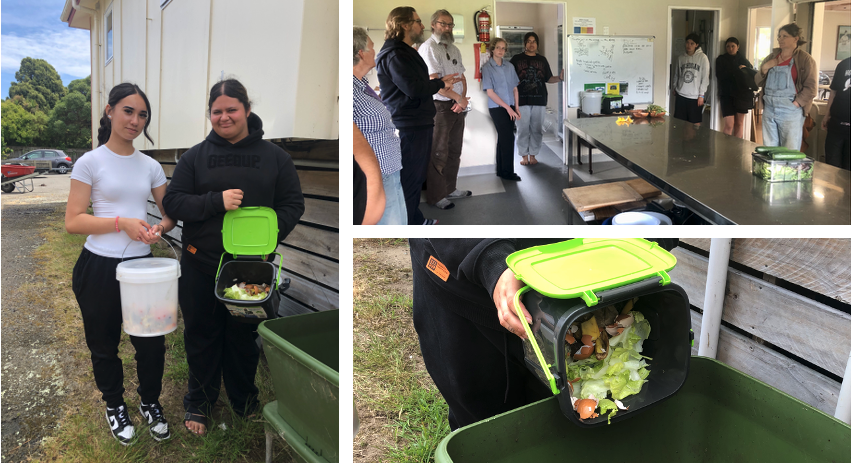
The Hungry Bin Worm Farm was re-energised again as part of the new composting practices system set up in the marae kauta/kitchen
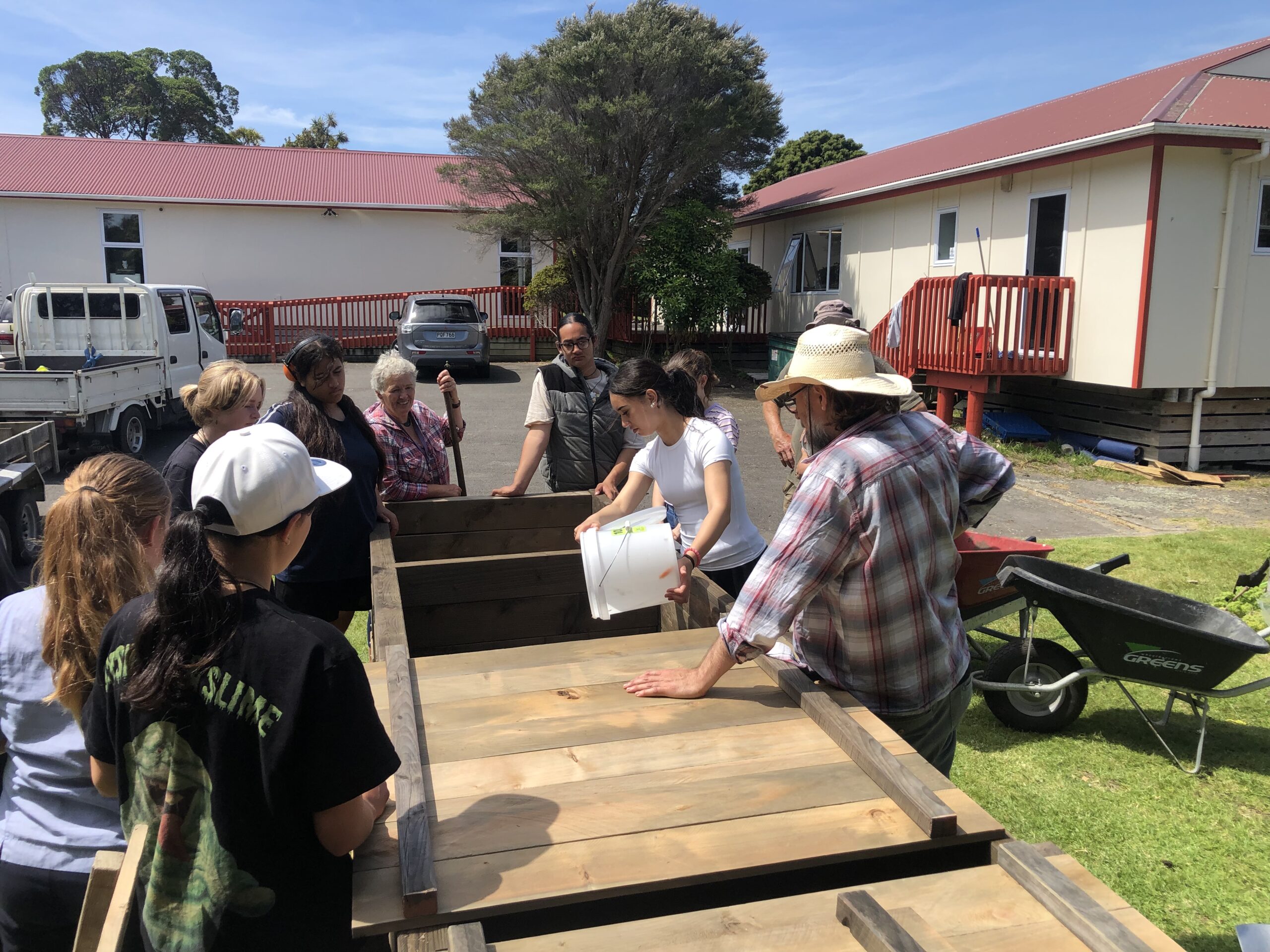
The first bin of organic scraps from the marae kauta is emptied into the newly finished compost bin
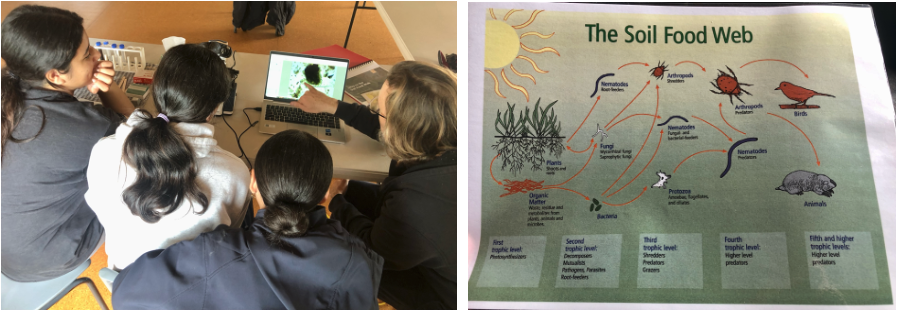
Cory demonstrated soil food web analysis with rangatahi as part of workshops, analysing the biology of the soil in the māra compost with his microscopes. *This will involve tracking improvements over time.
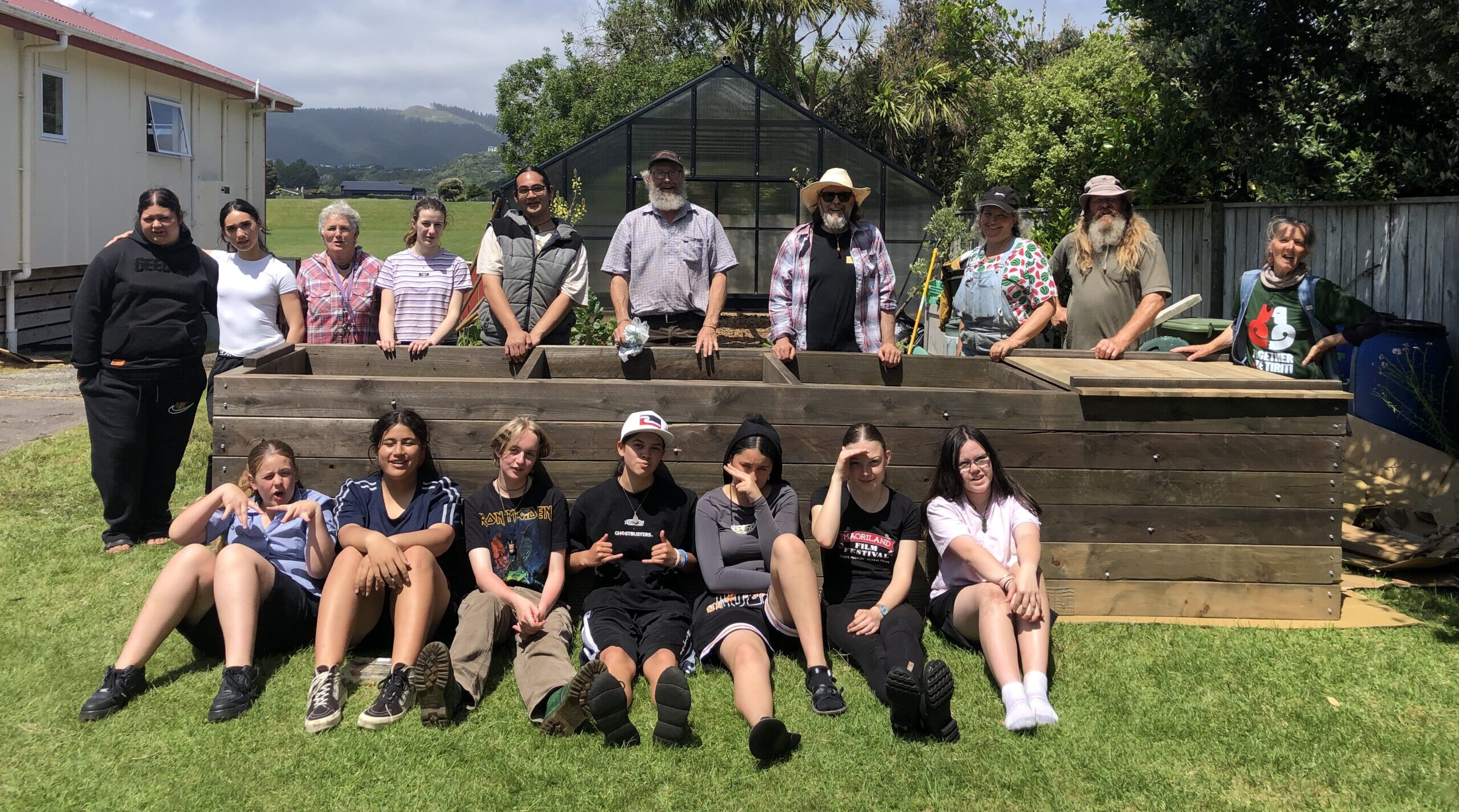
A significant milestone moment on the journey for Climate Action through composting at the end of Day 2 Māra workshops, to establish the new composting systems in the Māra Kai alongside the college campus marae
2025 – With the intention of working towards embedding food scrap collection for composting across the school over time, at the beginning of the new school year a Teacher Only Day hosted at the school marae, included a Māra Kai tour offered to all staff, to raise awareness of it and the composting practices as intentional climate action.
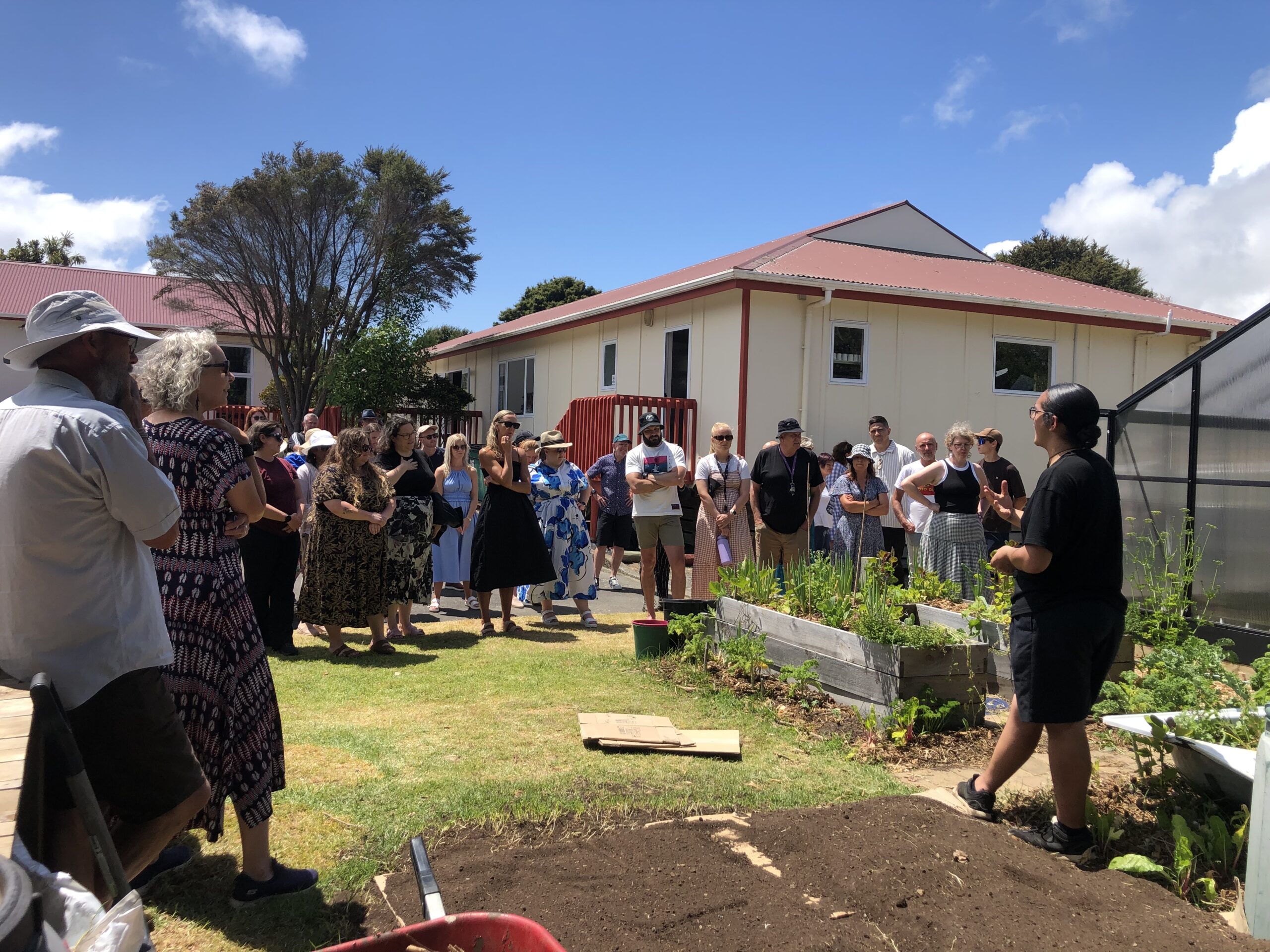
Santino as Māra tuakana rangatahi shares his passion for all things Māra Kai particularly featuring the Climate Action Grant project for establishing high level composting systems
This was followed with all the Year 9 noho marae cohorts having a guided tour and being invited, encouraged to be involved. A total of 10 rounds of classes, led by EAG tuakana Santino and Sorcha (Yr 13) and supported by Marg, John and Hannah.
Many of these Yr 9 rangatahi will have been at Raumati Technology Centre doing Sustainability classes prior in Years 7 & 8. Part of the intention of this mahi at Kāpiti College is to keep the learning pathway connected and deepening over time.
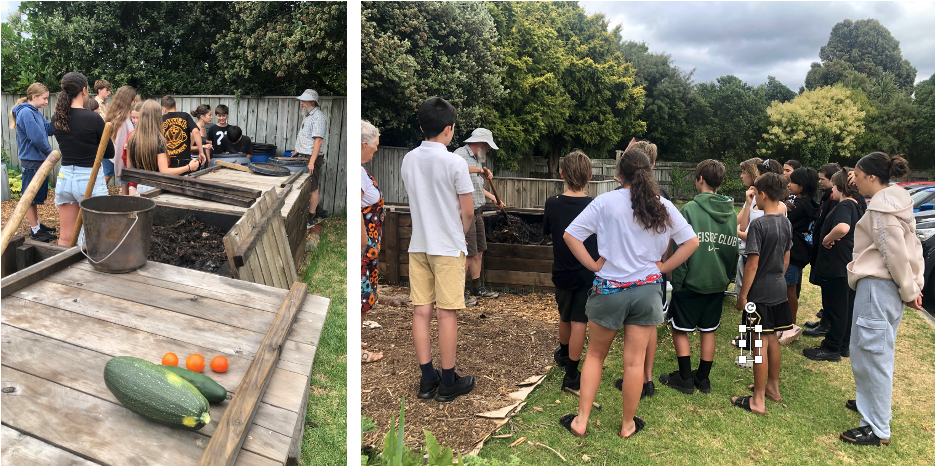
Year 9 Noho Māra kai intro sessions involved hands on working in the māra kai
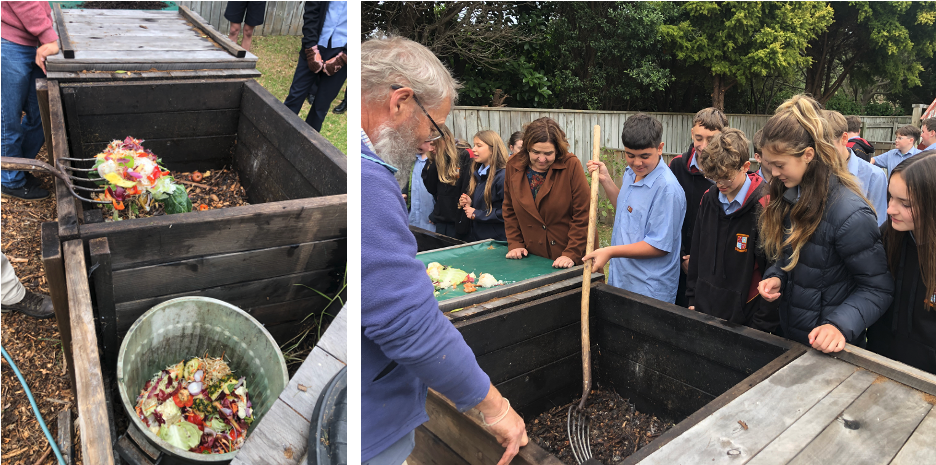
Using International Compost Awareness Week as a learning context for Yr 10 and 11 Social Sciences classes
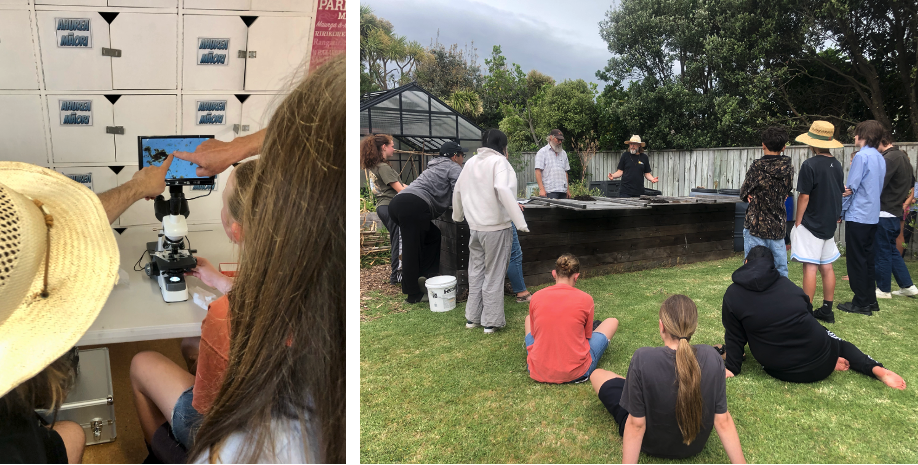
Another full day rangatahi workshop day in Māra Kai with a focus on Food soil web and composting as climate action – November 25
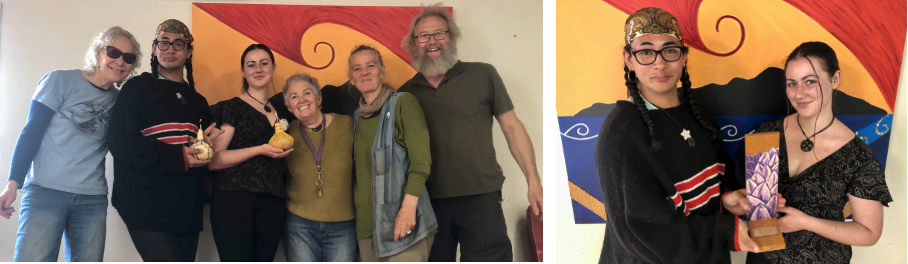
At end of 2025 Santino Morehu-Smith and Sorcha Adams were recognised for their leadership by being joint recipients of the Jan Cox Memorial Award for Environmental passion and commitment
Amanda contributed a Mihi of acknowledgements in the School Year Book :
“Santino and Sorcha have been exemplary Eco Action leaders through their years at Kāpiti College. Therefore in acknowledgement of this they are the co-recipients of the Jan Cox Memorial Award for Promoting a better Environment.
Additionally they have each been gifted a taonga Hue, embellished lovingly with raranga and Tōroa feathers by Whaea Margaret, one named Manawanui and the other Manawaroa. These taonga are a testament to their aroha and commitment to the Māra kai, in which the hue were grown. A book ‘Fierce Hope’ was also gifted to them by Ms. Easthope, as inspiration for their future journey’s.
He mihi aroha tēnei ki a kōrua, nā Whaea Margaret, Ms.Easthope, Matua John Valentine and Whaea Amanda (Enviroschools) – it’s been a gift of hope for the future for us to work alongside you both. Kia manawanui, kia manawaroa tonu ki te ao whānui.”
2025 groundwork continues to be further embedded in 2026
The actions of the previous year’s intentional mahi has set a foundation from which to continue to strengthen these practices throughout the college into the future.
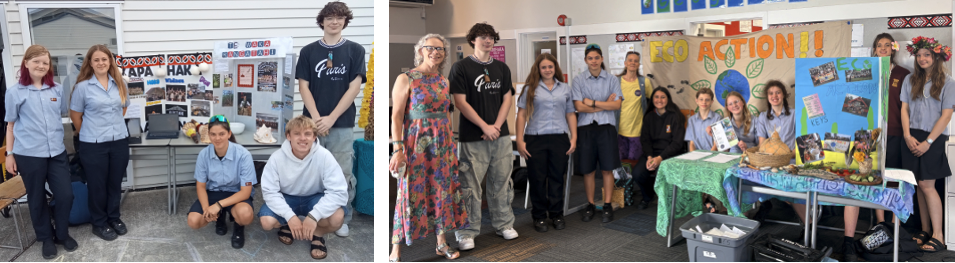
Expo Day –Both Eco Action Group and Te Waka Rangatahi Leadership groups promoting Māra Kai opportunities to new Year 9 classes
The Year 9 Noho with māra kai mahi integration at the beginning of the school year has continued to keep the learning embedded into the culture of the school. The next generation of tuakana leaders are being grown into roles of leadership from the strong role models who have passed on the baton.
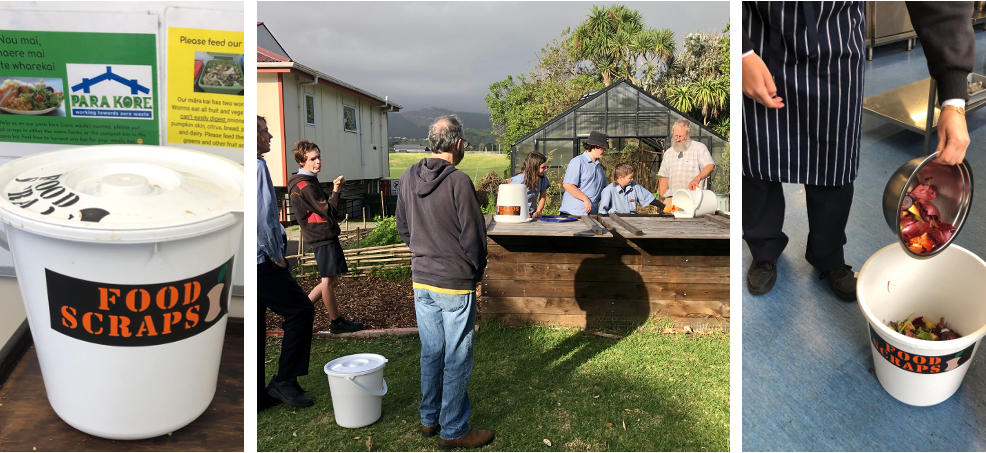
A staged approach to establishing organic scrap collection for composting, initially at the Marae kauta/kitchen; expanded to include Food Technology classes; A4 Learning Support class and a Kaiako taking responsibility for the Staff room system.
“The opportunity to apply for a Climate Action Grant to build a composting system at the Kāpiti College Marae was made possible through Amanda’s encouragement and leadership via Enviroschools. Amanda has been integral to this project from start to finish—guiding us through the funding application, connecting us with experts to construct the bins and teach the science of composting, and also co-facilitating our wānanga. She kept our rangatahi engaged with high energy, hands-on learning, and kai. Her deep knowledge, enthusiasm, and ongoing support have been truly invaluable.” – Whaea Marg, Kaiako Kāpiti College
Continuing to embed and deepen these climate conscious, active practices at Kāpiti College ensures a pathway of regenerative living for the graduates of our early childhood, primary and intermediate Enviroschools for their lifelong learning.
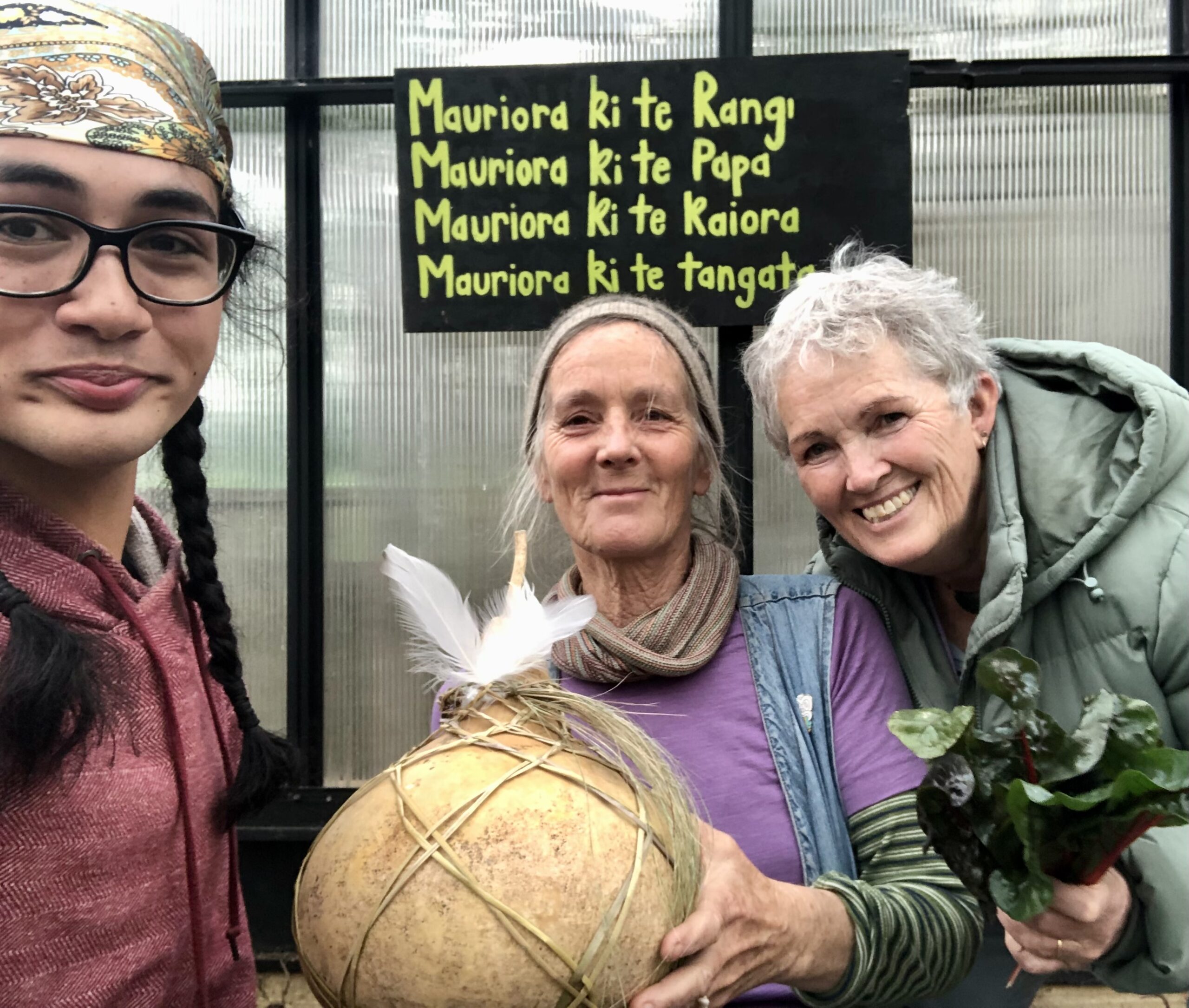
A cherished koha taonga – Hue grown in Kāpiti College Māra and embellished with raranga by Whaea Marg gifted to Amanda
Banner photo: The new gold standard compost system with construction crew at end of initial two-day māra kai workshop and working bee.
 Print
Print