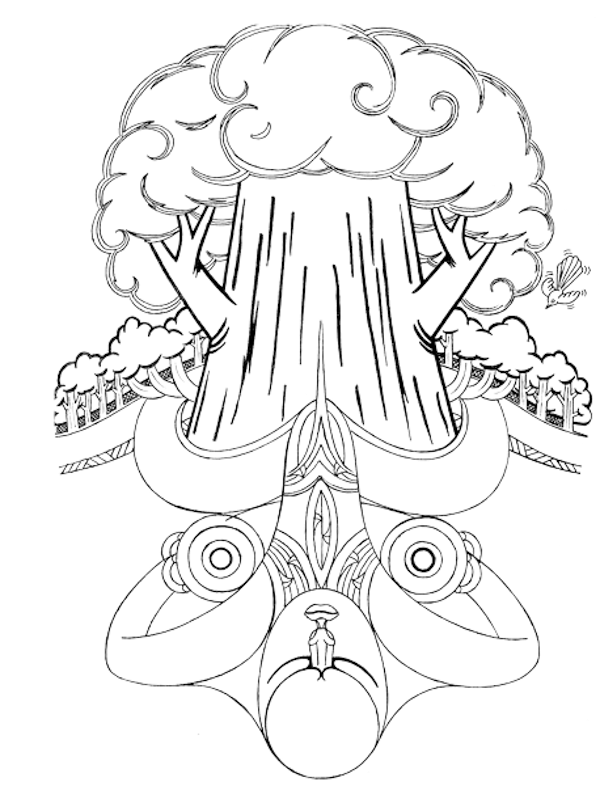
Beneath the watchful canopy of Tānemahuta,
every seed is held with care,
every root is strengthened with aroha,
and every shoot reaches for the light.
For within the smallest kākano
lies the potential of a mighty forest.
Across Whakatū|Nelson and Te Tai o Aorere|Tasman, seeds of connection, identity, and environmental care are being planted and nurtured through ‘He Kākano’ – a kaupapa grounded in te ao Māori, supporting tamariki to grow as confident and compassionate kaitiaki o te taiao.
Through two marae-based wānanga at Whakatū Marae in Nelson and Te Āwhina Marae in Motueka, 182 tamariki from 11 kura across Whakatū and Te Tai o Aorere, stepped beyond the classroom and into rich, place-based learning experiences rooted in tikanga, mātauranga Māori, and connection to taiao. Special thanks to Toimata Foundation for funding this project, made possible through their partnership with the Ministry for the Environment.
Learning Through a Whole School Approach
‘He Kākano’ brings the Enviroschools Kaupapa to life through a whole school approach, where learning is not confined to the classroom but lived through relationships, place, and experience.
- Place (Wāhi): Marae were the learning environments – living, breathing spaces where tikanga, history, and identity are embedded. The marae grounded learning in a real-world context, where tamariki could see and feel their connection to whenua.
- People (Tangata): Tamariki, whānau, kaiako, iwi, facilitators, and marae communities all played an active role. Learning was sahred, intergenerational, and relational – strengthening connections across community.
- Programme (Kaupapa Ako): Activities were hands-on, inquiry-based and rooted in mātauranga Māori, empowering tamariki to learn through doing, observing, and reflecting.
- Practices (Tikanga): Tikanga Māori guided the rhythm of each day – from pōwhiri to kai whakanoa – embedding values of respect, care, and responsibility in meaningful ways.
At its heart, ‘He Kākano’ reflects the Enviroschools Guiding Principle of Honouring Te Ao Māori – not as an add-on, but as the foundation for learning. Te ao Māori was the lens through which tamariki explored taiao, strengthening both cultural identity and environmental understanding.
Whakatū Marae – Nelson
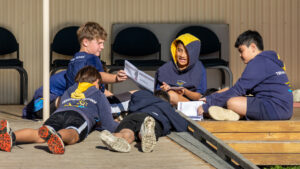
At Whakatū Marae, tamariki explored the deep connections between culture, storytelling, and the natural world.
Through a series of hands-on rotations, they:
- Explored the pōwhiri process and the history of the marae, deepening understanding of tikanga and place
- Learned about the life cycle and migration of tuna, connecting freshwater health with cultural knowledge
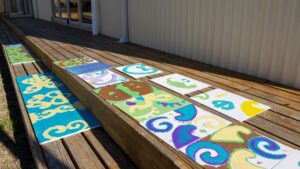
- Created kōwhaiwhai inspired by pūrākau, expressing pūrākau of the natural world through art
Here, learning was woven together – science alongside story, identity alongside environment – enabling tamariki to see themselves as part of taiao.
 .
. 
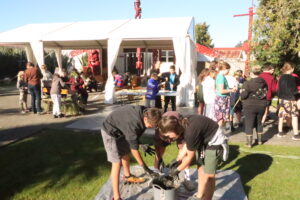
Te Āwhina Marae – Motueka
At Te Āwhina Marae, tamariki stepped further into active kaitiakitanga through hands-on environmental and cultural practice.
They:
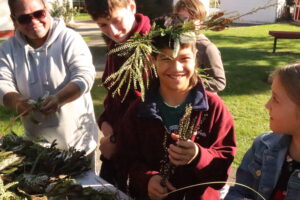
- Learned raranga, creating tīpare from natural materials and engaging with traditional knowledge
- Took part in tākaro and pūrākau, building understanding through play, storytelling, and shared kōrero
- Made kānuka tea. Each tamaiti left with seeds and native cuttings – a contribution of learning beyond the day, and a living reminder as their role as kaitiaki.
.  .
. 
Grounded in Tikanga, Growing Identity
Each wānanga began with a pōwhiri, welcoming tamariki onto the marae and setting a tone of respect, connection, and belonging. For many, this was their first time on a marae – a powerful and affirming experience that strengthened cultural identity and confidence.
Learning through tikanga created a depth of understanding that cannot be replicated in a classroom. Tamariki weren’t just hearing about kaitiakitanga – they were experiencing it, guided by local knowledge holders and supported by kaiako and whānau.
The impact was felt across all who attended:
“…not only had ‘He Kākano’ been beneficial for my son, it has helped strengthen my own cultural connection too.”
Kaiako reflected on the powerful difference of learning in this way:
“Having our rangatahi visit the marae and participate in pōwhiri, kai whakanoa, play in the field and participate in wānanga has been the most valuable, real-world experience for them at kura yet.”
And for tamariki, the joy was simple and clear:
“Today was the most amazing day.”
“I liked planting.”
“I love this place so much.”
A Collective Kaupapa
‘He Kākano’ was shaped through strong partnerships across the region, including marae communities, iwi, councils, Te Aka Pūkenga Programme Cadets, Enviroschools facilitators, kaiako, whānau and local experts who shared their time, knowledge, and aroha.
Growing Forward
There is a strong desire from across the community to see ‘He Kākano’ continue to grow as an annual wānanga – a testament to the impact it has had on tamariki, whānau, and everyone involved.
Because when learning is grounded in te ao Māori, connected to place, and shared through community, the seeds we plant today grow into something enduring – confident, connected kaitiaki for the future.
 Print
Print