Matamata Intermediate is making a deliberate shift to camp experiences that prioritise learning outcomes and not just entertainment. With support from Enviroschools and Waikato Regional Council resources, the lead Enviroschools teacher designed a camp programme to build students’ knowledge and confidence. This included pre-learning sessions, hands-on learning experiences while on camp, and keeping the learning going when classes returned home.
Matamata Intermediate’s approach focussed on making camp experiences more meaningful by linking classroom learning to what students experienced outdoors. This included PLD for staff with resource sharing and site visits. A key part of the preparation was ensuring students had the language and concepts they needed so they could get more out of the camp experience. The results included strong student engagement, positive feedback, and an Envirogroup with a desire to get involved locally.
Kauri protection
Before camp, the whole school took part in the Kauri Pou Kaitiaki, Kauri Protection learning session, where classes participated in interactive activities and an immersive Virtual Reality experience. This helped to build a sense of connection to kauri, linking to kauri protection in the local area and helping to provide context for the camp walk to see the trees in the Karangahake Gorge. Students arrived at camp with an understanding of why Kauri matters and what protection looks like in practice. It was great to get feedback on how students took the messages to heart, ensuring biosecurity measures were followed on their walk.
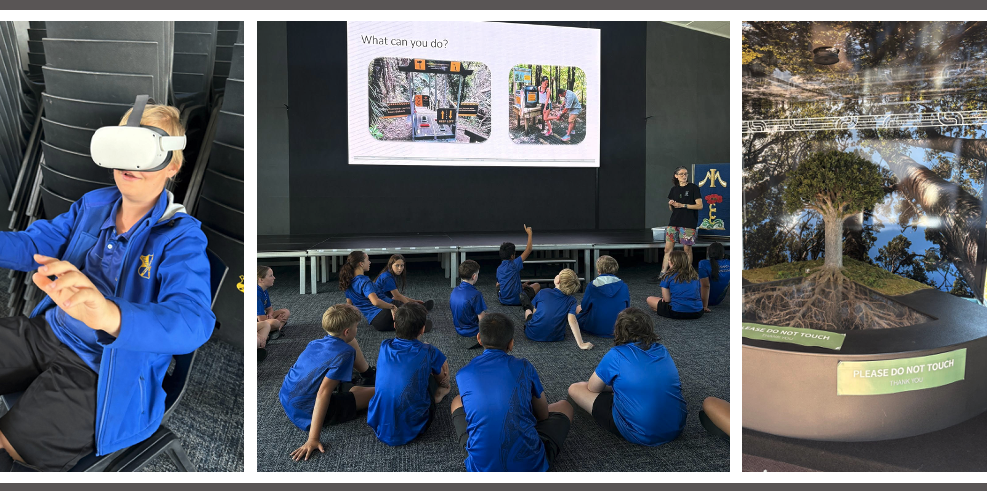
Before camp, the whole school took part in the Kauri Pou Kaitiaki, Kauri Protection learning session. (Photo credit Matamata Intermediate School)
Find out more: Kauri education programme reaching Waikato students | Waikato Regional Council
Freshwater
The Freshwater Detectives kit was used to support in-class learning prior to the camp stream study at Daly’s Clearing. This resource helped students build vocabulary and understanding around stream health, which made the later field experience more accessible and meaningful.
During camp, Matamata Intermediate borrowed Stream Study kits to provide for hands on observation and exploration. The session was focused on student curiosity, as students, supported by parents, worked through activities to discover how healthy the Waitawheta river is. Activities included discovering freshwater invertebrates and measuring water speed.
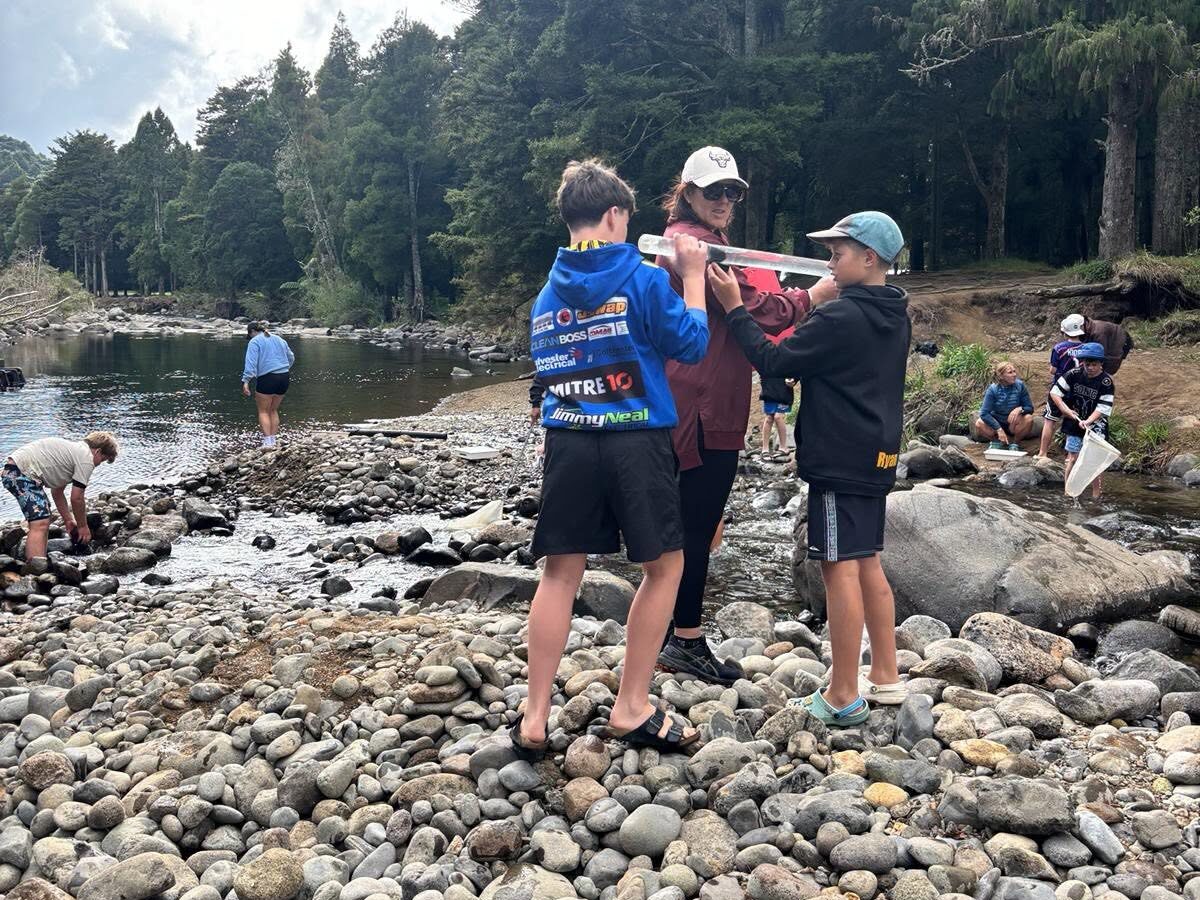
Students used Stream Study kits to provide for hands on observation and exploration. (Photo credit Matamata Intermediate School)
Marine biosecurity learning
The newly developed Marine Biosecurity kit was used both in the classroom before camp and during activities at Shelly Bay. Classroom sessions included hand-on activities such as shell observation and classification, supporting engagement with the marine biosecurity modules and helping students develop familiarity with key ideas in engaging ways.
On camp the classes visited Shelly Bay where they got to participate in a range of fun learning experiences. Students had lots of fun crab-walking their way to an understanding of animal adaptations and exploring the shoreline and snorkelling to discover marine species.
The marine metre-squared activity, where students survey a metre square of the beach was challenging due to high tide conditions and a lower number of visible species at the time. Rather than abandoning the learning, teachers adapted into a version of a scavenger hunt, which kept students actively observing and searching.
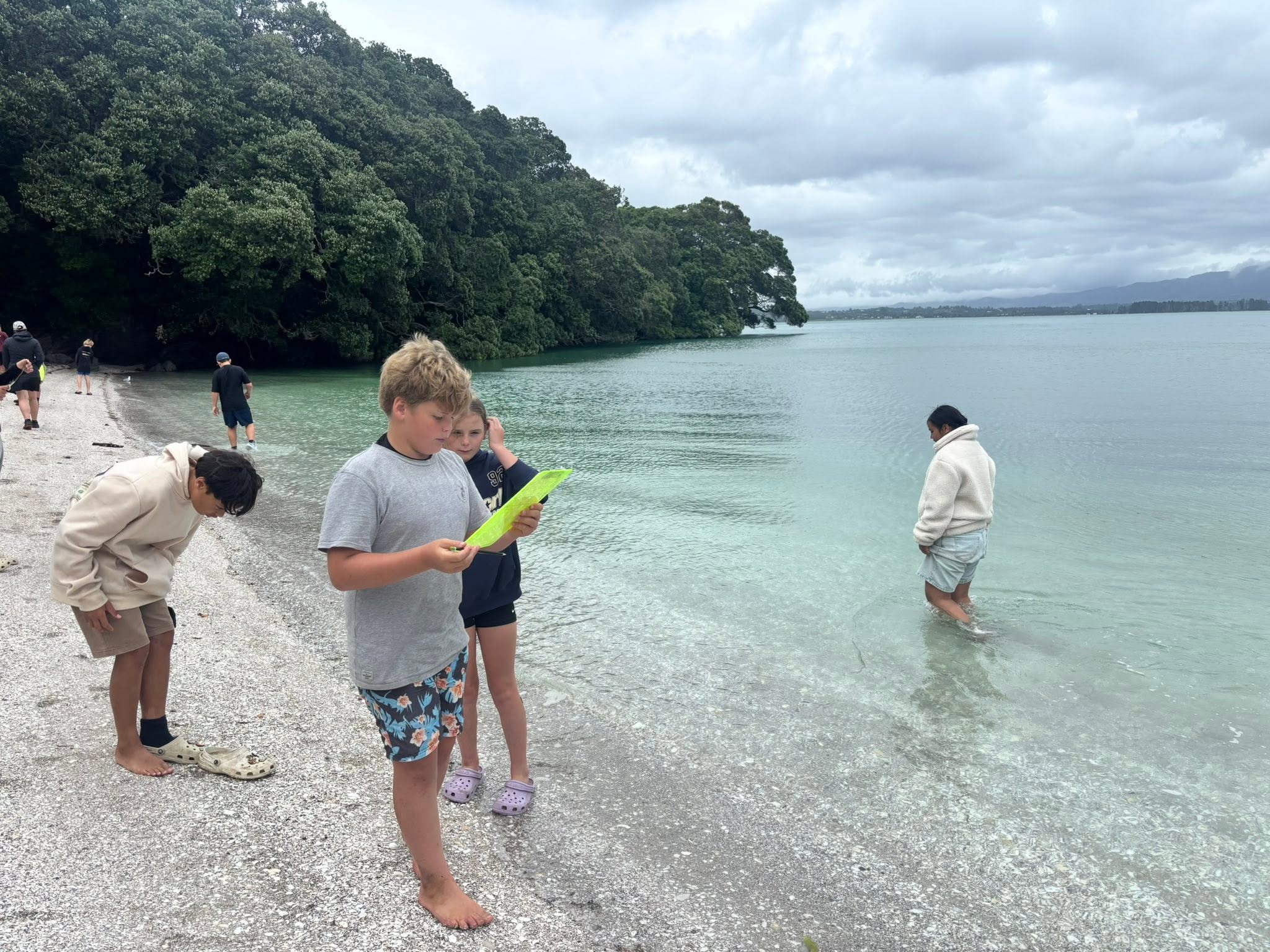
Students visited Shelly Bay where they got to participate in a range of fun learning experiences. (Photo credit Matamata Intermediate School)
After camp
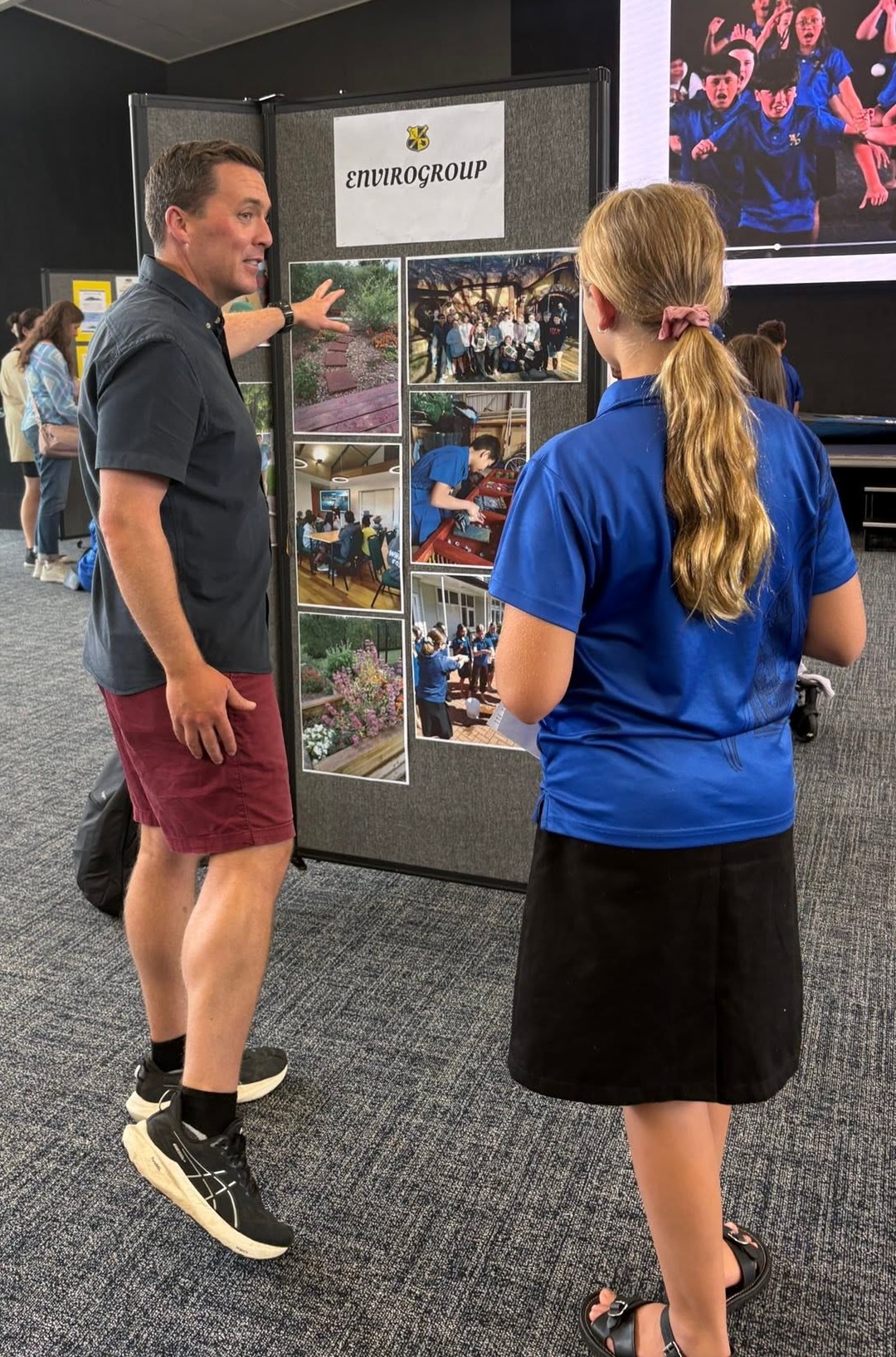
The Envirogroup on show at the school Opportunities Expo
Feedback after camp was incredibly positive and the experience provided a solid foundation for further learning back at school, rather than feeling like a one-off event. Importantly, a strong Envirogroup is developing, with students showing a clear desire to take environmental action based on what they experienced and learned.
Takeaways
Camps can offer more than a change of scenery. When learning is scaffolded before the trip, made flexible and responsive in the field, and then nurtured at school with student-led action, camp can become part of a longer learning story. The positive outcomes came from thoughtful preparation, hands-on resources, and a willingness to adapt activities when needed. We look forward to seeing where Matamata Intermediate takes their camping experience next year.
A lot of preparation and organisation went on to ensure students got an incredible camp experience and we would like to acknowledge the mahi of Andrew Skipworth, Kim Lawrence and Emma Lockett who work with us, and the amazing Matamata staff and students for sharing their learning with us.
 Print
Print