Enviroschools were grateful for the 20 collaborators who joined the Student Energiser Day in Ōwhiro on 12 August to create a meaningful day for every tamariki attending.
One parent shared how valuable it was:
“It was a year’s learning fitted into a day.”
A thankful kaiako expressed:
“On behalf of our kura, I wanted to send a huge thank you to you and your team for the massive amount of thought, work and connections that you put in place to make this an engaging, successful and joyful event! Our tamariki got so much from this day, as did our parents, student teacher, Venise and I. What an utter treat and delight…”
Creativity Along the Awa
Another kaiako appreciated the flow of the day and the creative opportunities it offered:
“Thanks for a most enjoyable and stimulating day on Wednesday. The children loved it and two of them went to sleep on the bus on the way home! Their response at the end of the day was that they loved the creative activities: making soundscapes by the awa, painting and printmaking and writing poetry.”
For many participants, the day sparked new ideas and strengthened local connections. One ECE kaiako reflected that the experience had inspired new learning pathways, closer relationships with neighbouring schools and centres, and plans to create more spaces that support insects, wētā and mokomoko within their own setting.
The day demonstrated how environmental learning can be woven together with creativity, storytelling and community action.
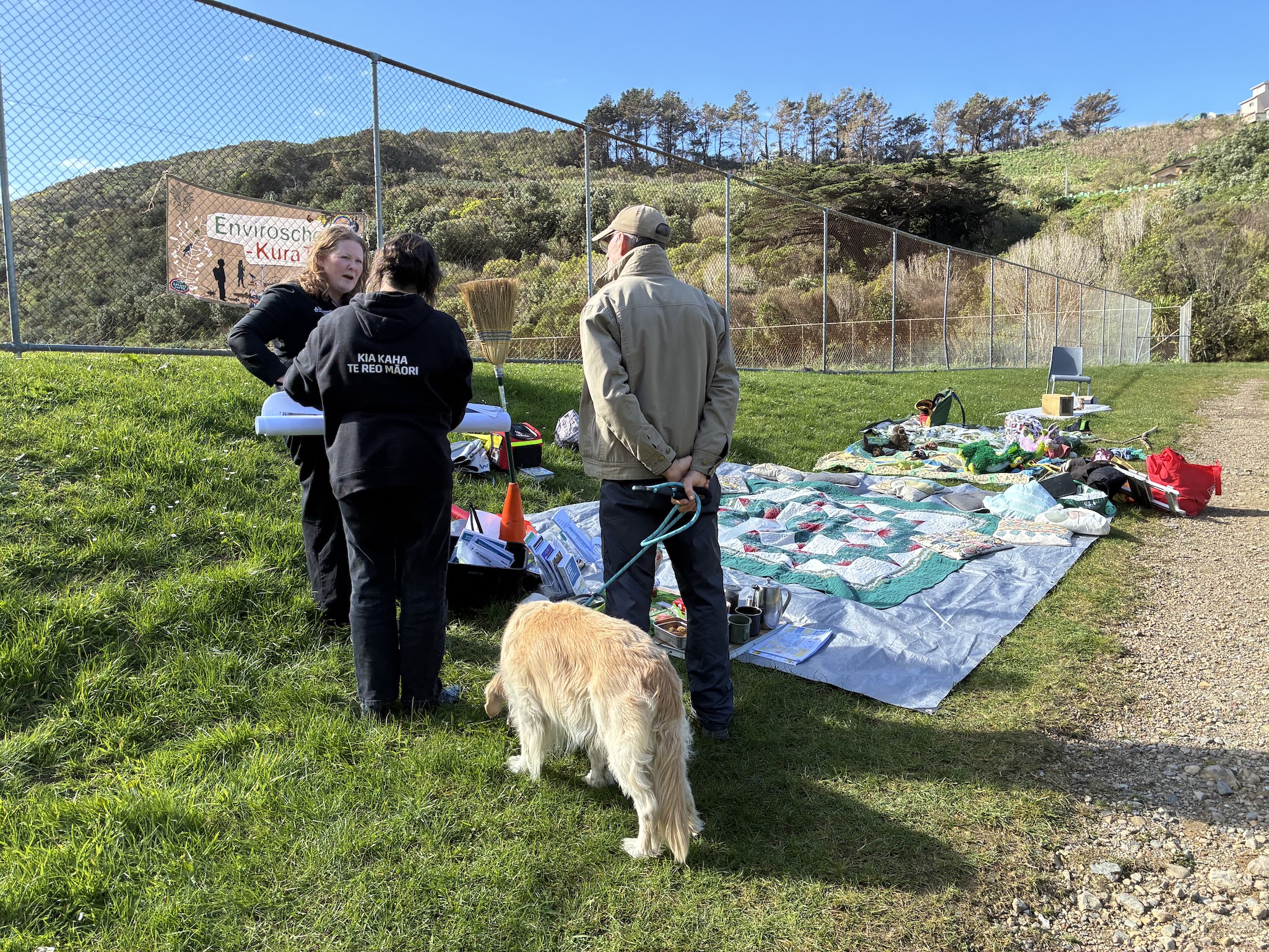
Community Day WREMO korerō with Elisabeth of Miramar North School and Grant Corbishley.
Walking the Talk
Enviroschools were able to role model running a zero-waste event with support from WCC Tip Shop, Kaibosh, Newtown Wash Against Waste kits and schools and centres bringing kai as a way to thank collaborators.
The ECE bug hotel activity facilitated by Chandra included repurposed doll houses and natural objects such as pinecones, sticks and rolled cardboard.
At Ōwhiro Bay, the doll house used was purchased from a whānau who had originally received it from Ngaio Toy Library after many years of community use. It was later installed near the Ōwhiro School fenceline for ongoing engagement.

Five-star accommodation, doll-sized living.
One collaborator, Places for Penguins, had been trying to engage with schools for the previous five years and was grateful for the connections that emerged through the project. They also managed to utlise the Kororā hotels for signage to get the messages out around the coast for public to ‘keep dogs on leads’, ‘undertake penguin aversion training’ and to ‘drive slowly around the coast when penguins might be crossing’.

Penguin Hotel with messages of how to care for kororā.
Imagining 2050
A powerful ending to the day was led by Cam Taylor of Whale Whare, who invited ākonga to imagine the year 2050 with the awa thriving.
Students considered what they might see, feel, smell, taste and hear, recording their thoughts in nature journals made from good-on-one-side paper, recycled cardboard covers and rubber bands.
Students were also guided by Milly Hampton of The New Zealand Portrait Gallery Te Pūkenga Whakaata, using stencils and fabric pens to capture their learnings and messages from the day.
A significant learning across many activities was how to plant and why planting matters. Sally Gray of Earth Sciences Te Whatu Ao joined local restoration groups and Conservation Volunteers Wellington, bringing a carbon measuring device that demonstrated the impact planting can have on carbon absorption.
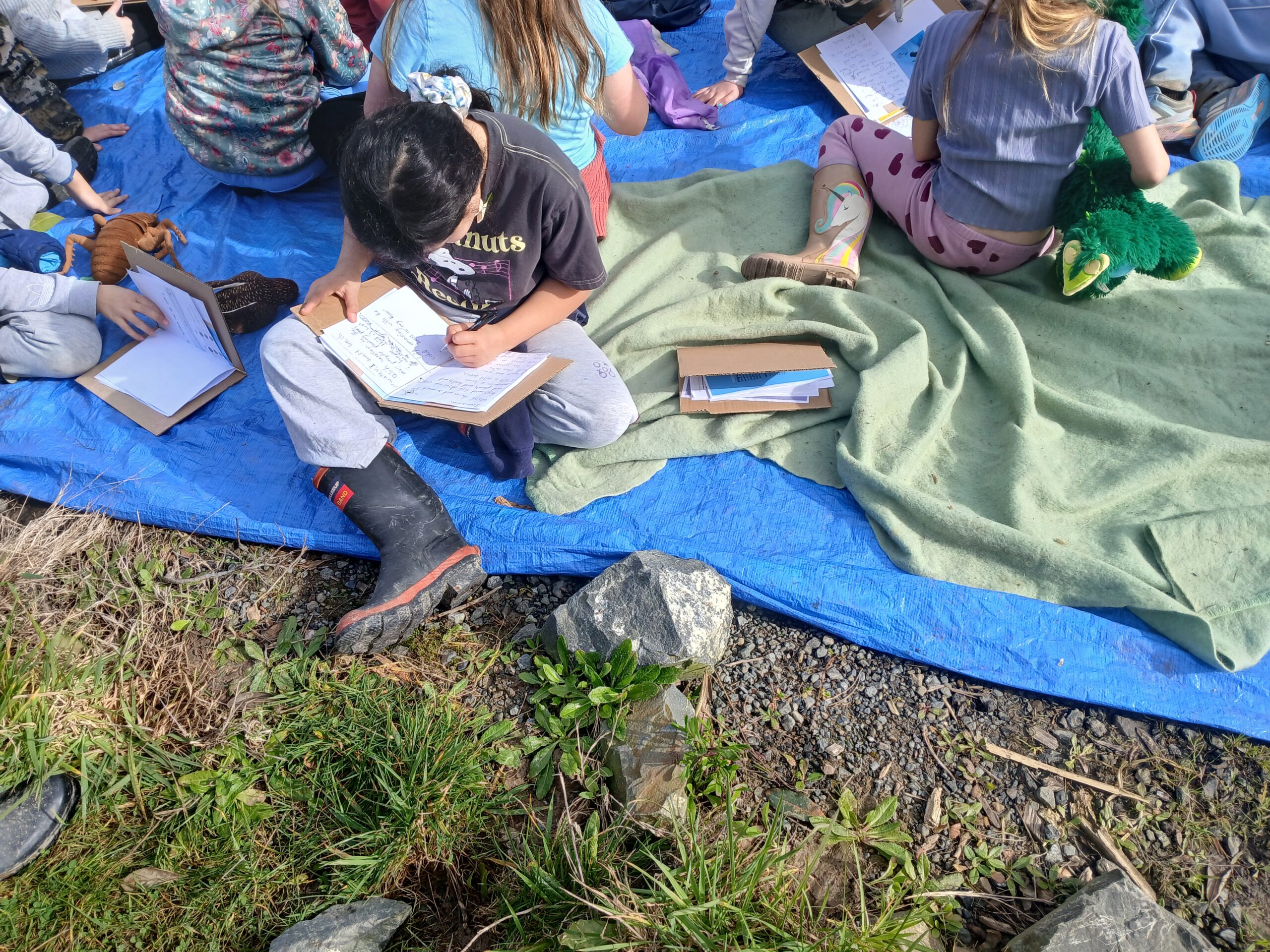
Ākonga capturing the messages of the day through poetry.
Giving Aroha to the Awa
The original intention had been to celebrate Ōwhiro Awa as one of the few visible city streams and the nourishment that comes from connection. Following the floods, it also became an opportunity to give aroha to the stream and all who call the catchment home.
That spirit carried through to the Community Day that followed the Student Energiser Day. The Stream Team were overwhelmed by the number of plants still needing to be tucked into stream banks and appreciated this becoming the focus of the community event.
Together, volunteers successfully got all the plants in the ground while strengthening connections with one another, the local community and the wider catchment.

Ōwhiro Community Day planting with WCC and GW Counsellors Grant Corbishley and Sally Gray.
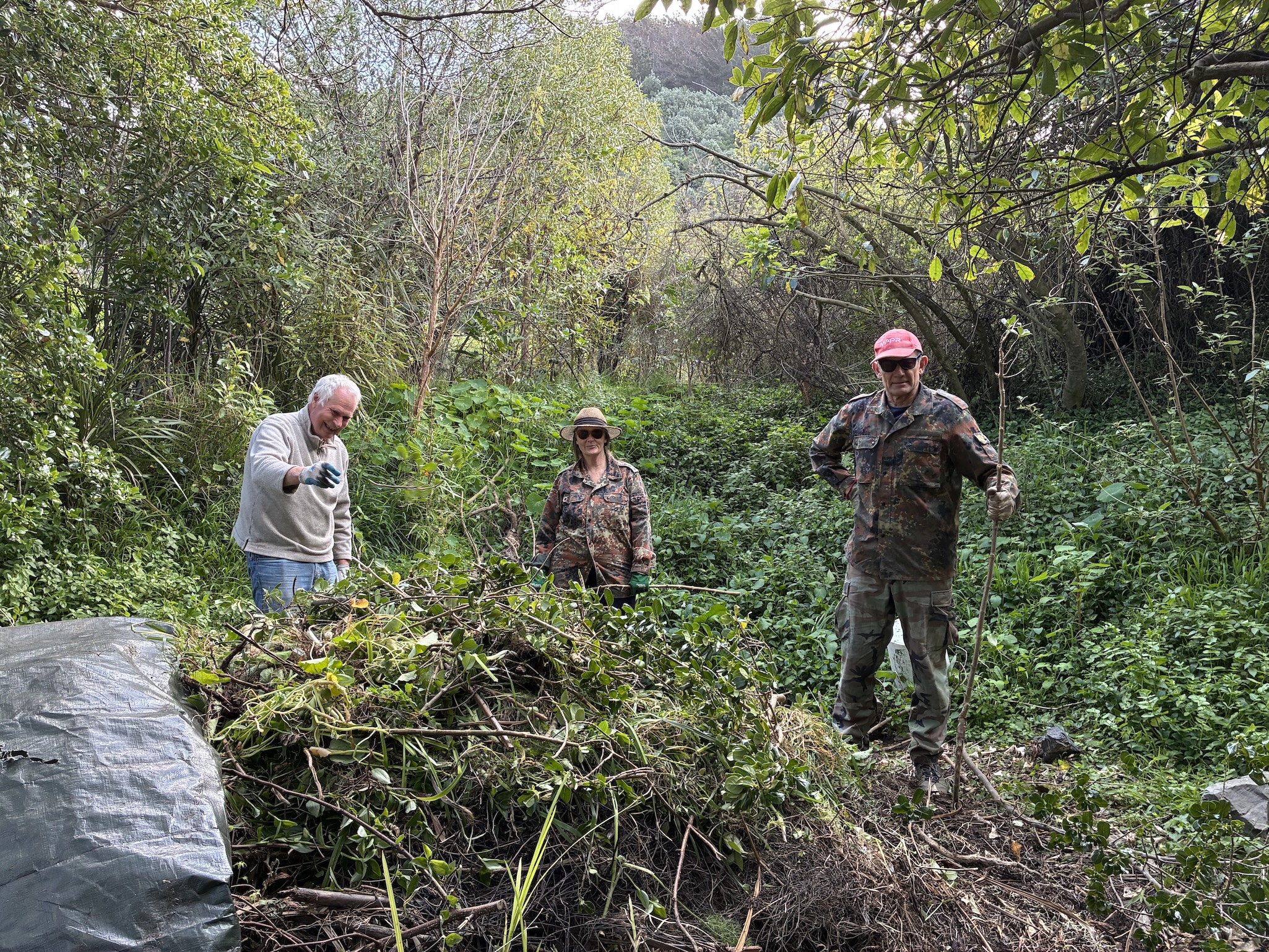
Community Day planting with FOOS and Stream Team volunteers Martin and Jude.
The day also featured stencil artwork and poems exhibited beside the stream, bug hotel building, sign painting, and conversations with WREMO and Enviroschools about how communities can work together on flood mitigation and community education.
The project became an opportunity to give aroha to the stream and all who call the catchment home.
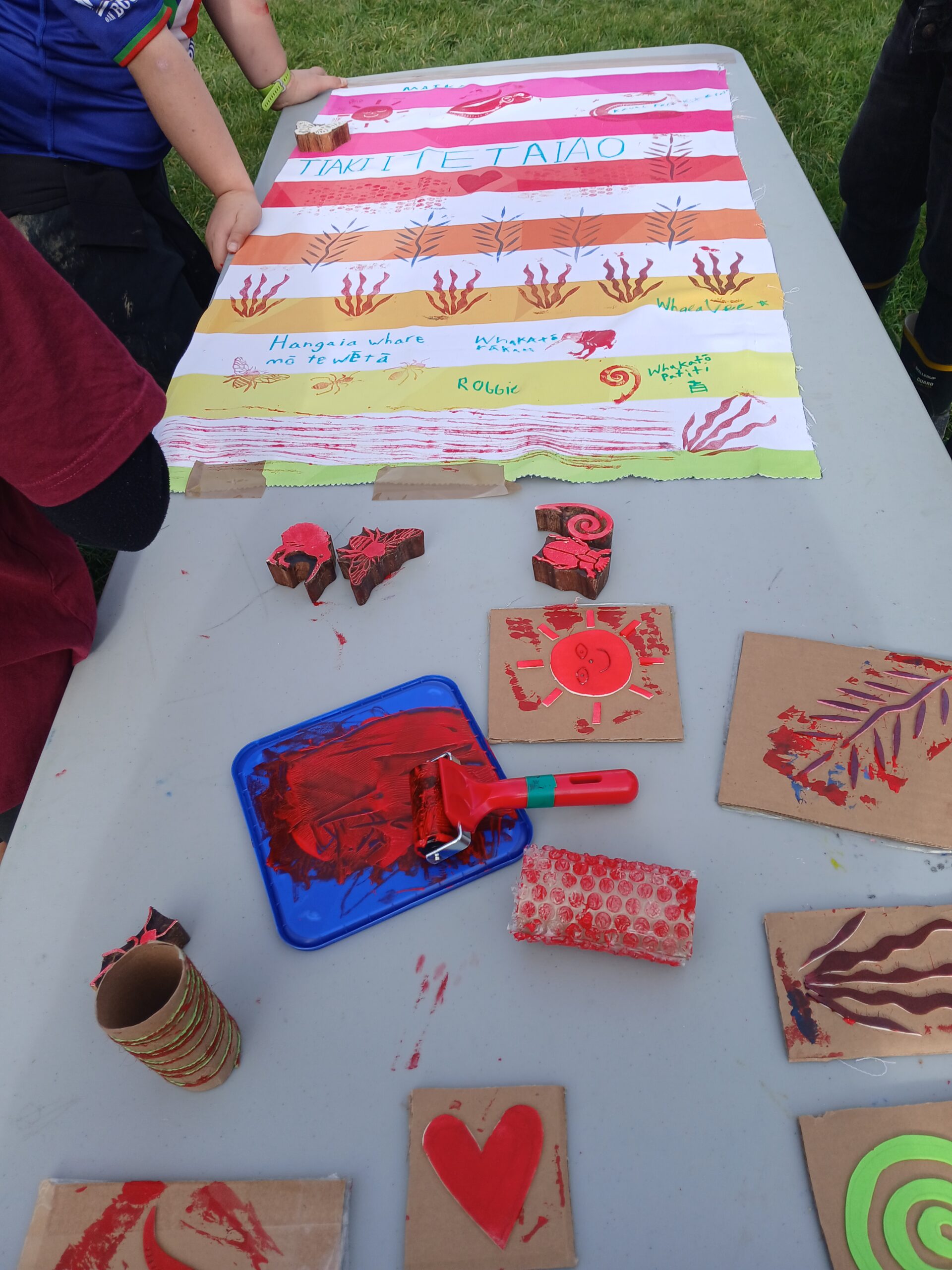
Expressions of creativity and aroha through mahi toi.
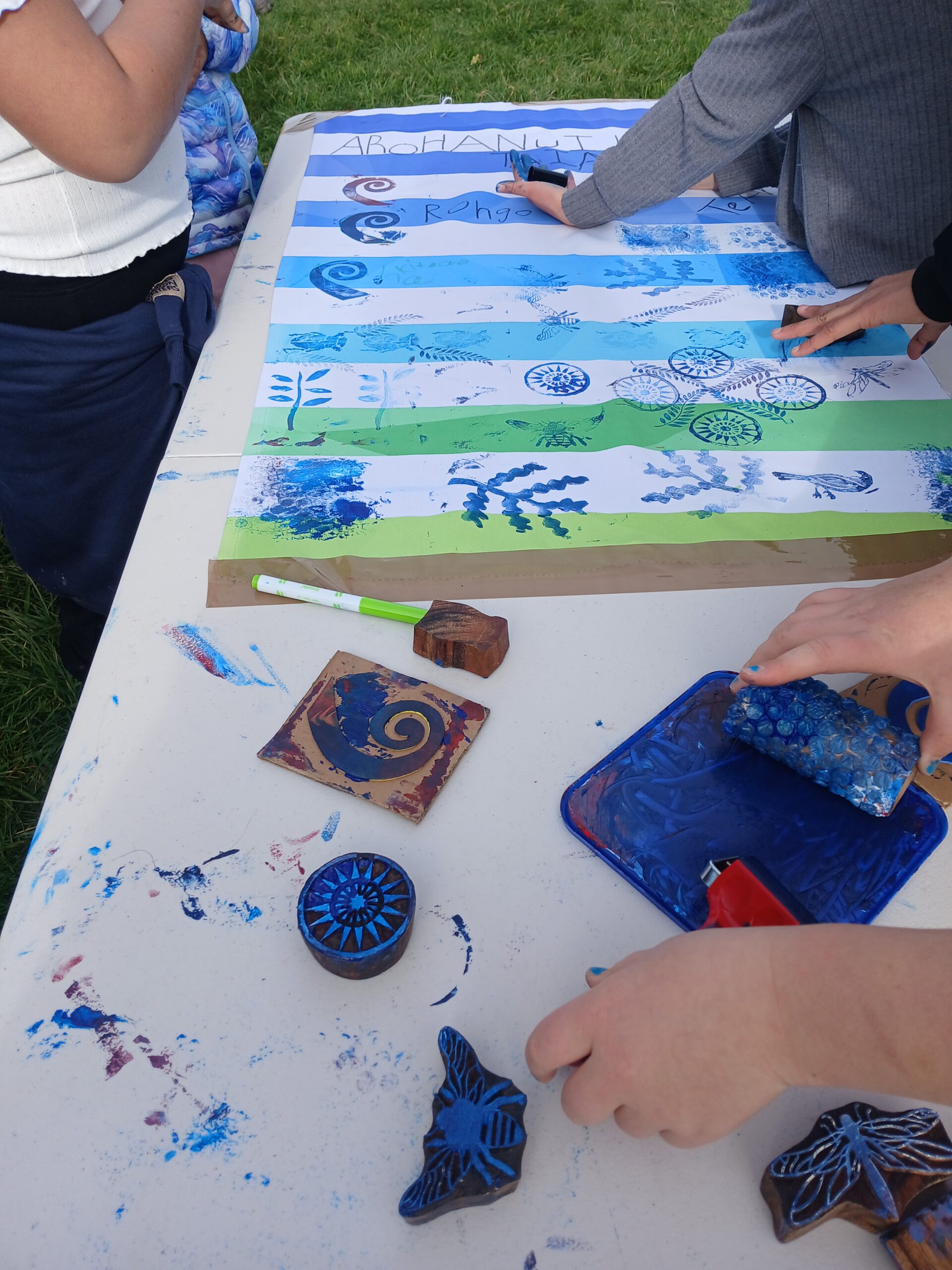
The result was more than a day of learning. It strengthened relationships between people, place and waterways, while helping tamariki and communities imagine and contribute to a thriving future together.
The project was presented at a recent NZAEE Conference and has inspired educators connecting with the Waikato awa.
Acknowledgements
Mihi nui ki a koutou to all our collaborators including Wellington City Council’s ranger, garden educators and waste minimisation team, Greater Wellington Regional Council, WREMO, Places for Penguins, Ray Ahipene-Mercer, Predator Free Wellington, Wellington Zoo, Conservation Volunteers Wellington, FOOS (Friends of Ōwhiro Stream), The STREAM team, SEA (Southern Environmental Association), Earth Sciences Te Whatu Ao, The New Zealand Portrait Gallery Te Pūkenga, Whale Whare, Kumutoto Restoration Trust, Micheline Evans, Jill Holmstead, Grant Corbishley, Kaibosh, Newtown Community Centre, Tū Mātau Ora and Mother Earth and Jeremy Desmond.
Appreciation goes out to our Enviroschools kaiako and whānau support who made the Student energiser day possible and furthered the learning locally – Ōwhiro Bay School, Ōwhiro Bay Kindergarten, Te Kura o Tawatawa/Ridgway School, Island Bay School, Island Bay Kindergarten, Berhampore School, The Park Early Learning, Te Kura o Ngā Puna Waiora, Capital Kids Co Op, Clifton Terrace Model School, Houghton Valley School, and Peninsula Early Learning.
 Print