A project connecting tamariki with local waterways, restoration groups and community experts has sparked predator control, kororā habitat creation, awa restoration, bug hotels and deeper catchment connections across schools and early learning centres.
Nine Te Whanganui-a-Tara primary schools and six ECE centres engaged in an Enviroschools whaitua connection project that led to valuable action taking for the local community.
These localised actions were a hoped outcome when Enviroschools facilitators Chloe and Chandra applied for the WCC Natural Environment Fund to focus on two catchments, Ōwhiro and Karori. They founded the project in mana whenua aspirations to restore local waterways through Te Mahere Wai o Te Kāhui Taiao and the mana whenua fish ladder trial and built on previous experiences offered to Enviroschools at Ōtari.
The project included pre learning sessions across whole schools and centres, Student Energiser Days where representatives from participating schools and centres came together for a day of action, a follow-up community day for whānau and wider community engagement, and support for localised action taking in each school and centre.
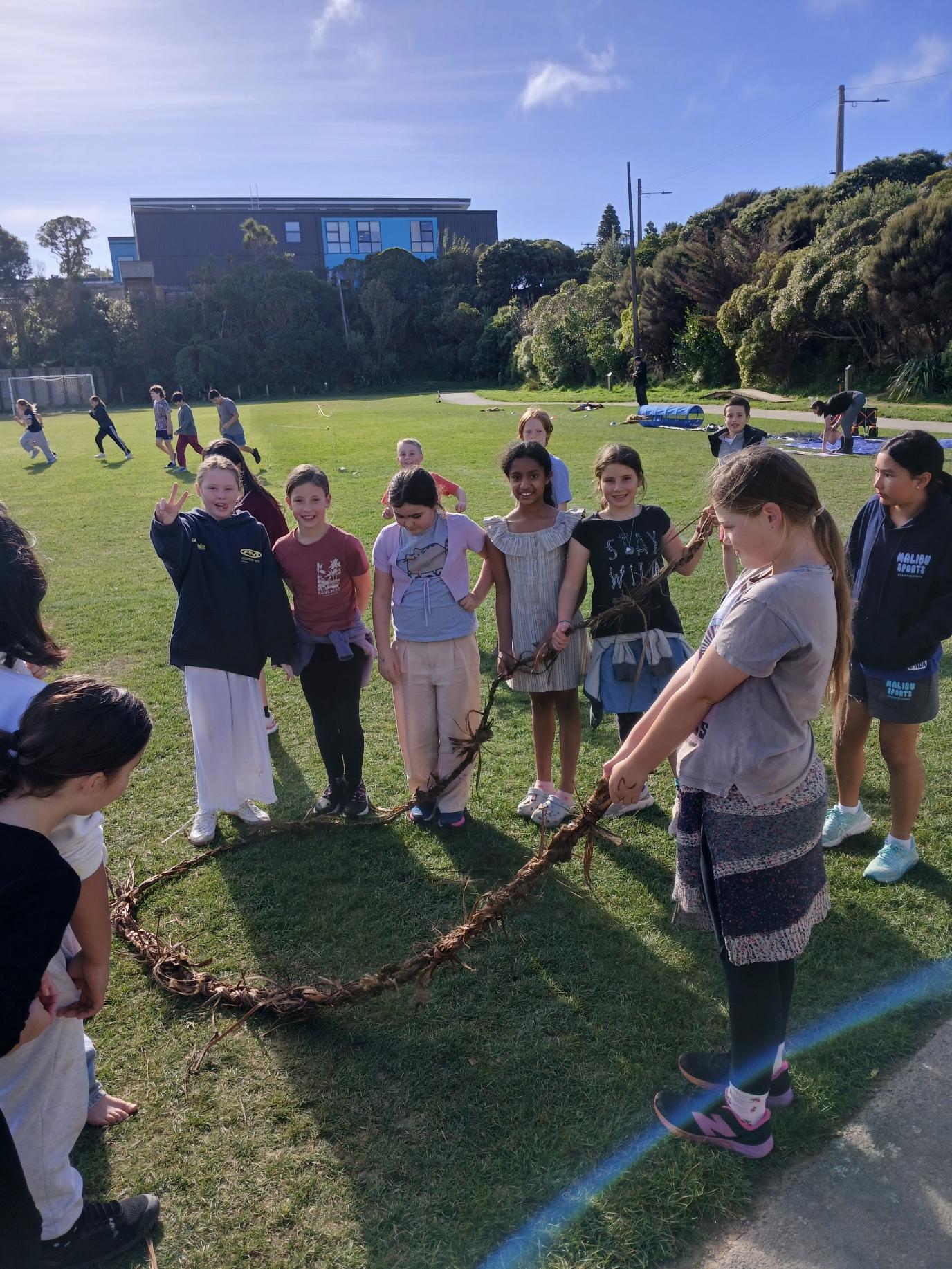
Te Kura o Tawatawa ākonga weaving ikawai taura during whole-school pre-learning before event at Owhiro
From Learning to Action
For the Ōwhiro Stream project, Te Kura o Haewai/Houghton Valley School students were so inspired by the mokomoko tracking session they requested their Principal reach out to Predator Free Wellington and have organised a visit to their school. They will be installing 19 traps after four had been stolen from the school’s māra kai and vegetables eaten by rats.
Te Kura o Tawatawa/Ridgeway School responded to a collaborator’s need for 300 penguin hotels around the south coast, with their ākonga utilising the new tech block to build and install 30 kororā hotels. This contribution was acknowledged by RNZ’s Checkpoint and celebrated in the Education Gazette.
“Ridgeway School responded to a need for 300 penguin hotels around the south coast, with ākonga building and installing 30 kororā hotels.”
Berhampore School ākonga shared their learnings in assembly, including the Whaitua Soundscape which had the poems they wrote woven in. One class has reached out to Ray Ahipene-Mercier after meeting him at the Student Energiser Day and asked him to share more about how changes at the Moa Point wastewater treatment plant will help prevent pollution reaching the moana.
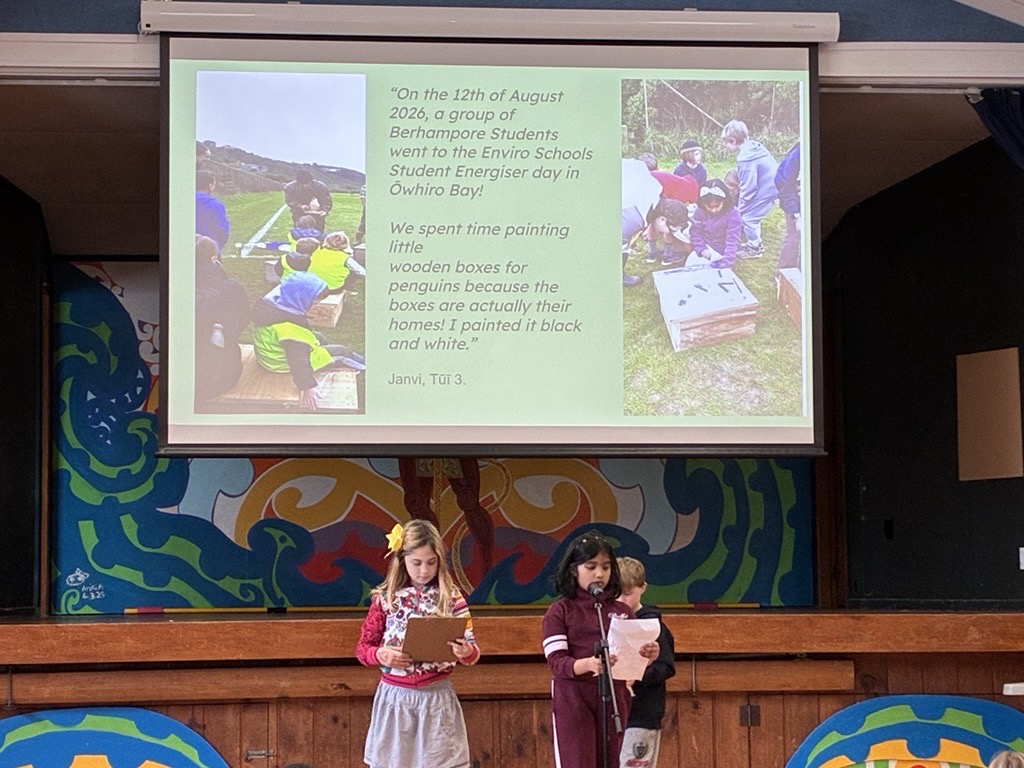
Berhampore ākonga sharing learning in assembly.
Clifton Terrace Model School took the learning from their visit to Ōwhiro awa and deepened their engagement with Kumutoto awa, including requesting the Kumutoto Restoration Project lead to run the Whaitua Soundscape session beside Kumutoto.
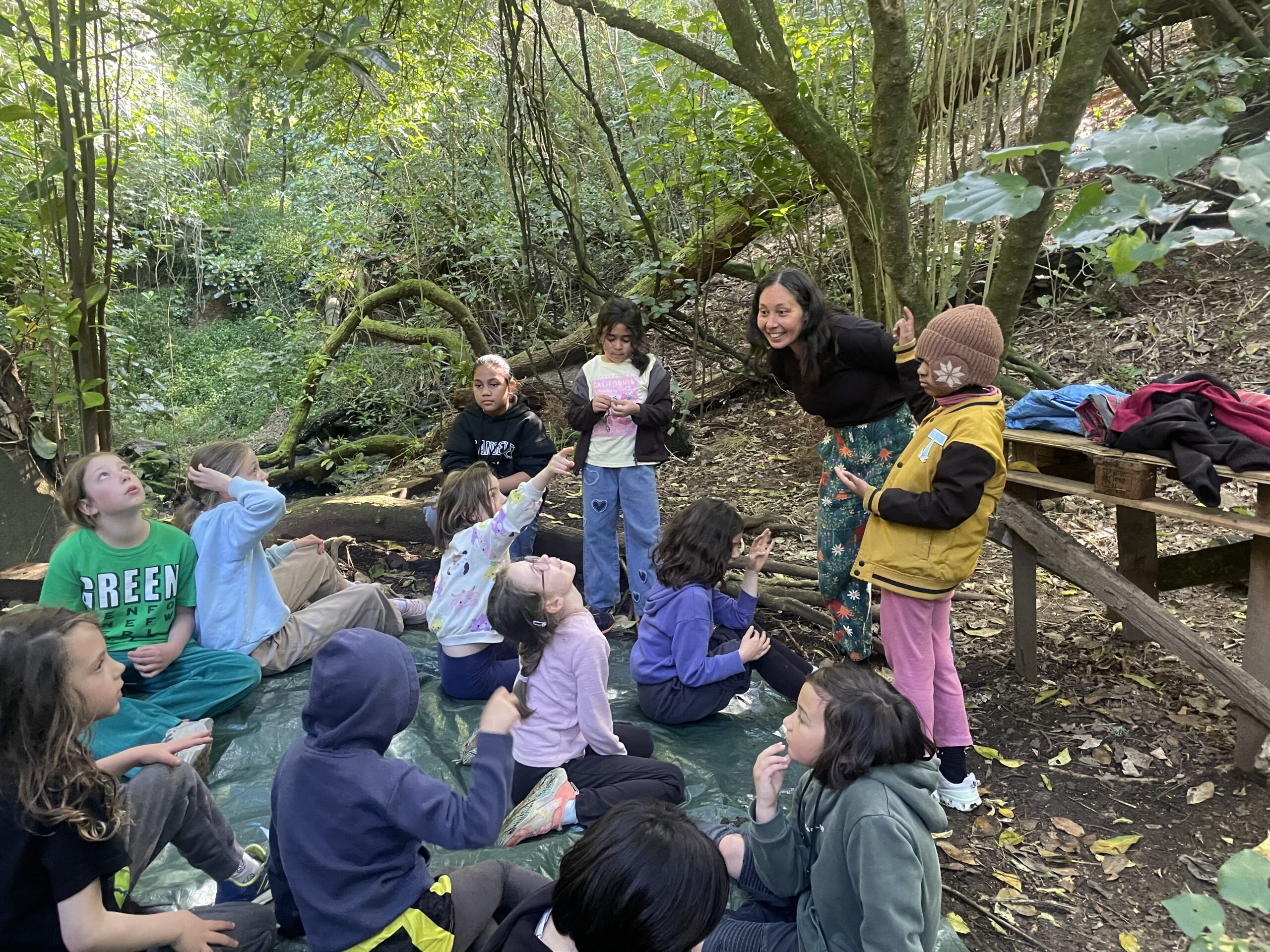
Clifton Terrace Model School ākonga creatively connecting with local awa guided by Kumutoto Restoration Trust co led Micheline Evans
Strengthening Connections to Place
Te Kura o Ngā Puna Waiora/Newtown School made whare wētā at kura and installed them amongst native rākau. They are also deepening their connection to Waitangi Awa, which flows in pipes beneath their kura, by engaging with artist and Haewai restoration lead Grant Corbishley to paint the flow of the awa across their court and out to the carpark.
They are looking to install Litta Traps and run waste audits before and after the drain art as part of the Enviroschools Drains are for Rain initiative.
Both Capital Kids Co-op and The Park Early Learning hope to be part of this localised engagement with Waitangi Awa as they too are part of the Waitangi Awa catchment.
Peninsula Early Learning used the opportunity to connect learners with their ‘why’ they care for te taiao, which is embedded in everyday practices in their centre. They were accompanied by a parent who led the building of their ECE’s māra mokomoko and had crafted wētā hotels as gifts for Enviroschools ECE across Te Whanganui-a-Tara from off cuts in his arborist mahi.
Ōwhiro Kindy expanded the kaupapa of bug hotels across the Ōwhiro catchment, inviting whānau to build, install and add to a map of bug hotels for the community to explore and visit.
What emerged across both catchments was more than a series of learning experiences.
Learning Through Real-World Challenges
During the project, the April floods directly impacted the communities these projects focused on. The engagement felt stronger with the realisation of the importance of educating communities to understand how water flows in , the impacts of land use, and what climate adaptation actions tamariki can take to feel empowered, hope-filled and valued members of their communities.
As part of the learning, New Zealand Geographic magazines were lent in turn to each school. The Bogans of the Sky edition covered Happy Valley Landfill, This Baby Eel is a Migration Machine showcased methods mana whenua use throughout the country to support tuna migration and manage fish barriers, and Hope at Last featured Tapu te Ranga Marine Reserve based at the mouth of Ōwhiro Stream.

NZ Geographics lent to each kura
What emerged across both catchments was more than a series of learning experiences. Tamariki built stronger connections with local waterways, community experts and restoration groups, translating learning into meaningful action that continues well beyond the project itself. Click here to read about their connections along the awa.
 Print