Purpose
 The purpose of this event was to bring together teachers and student Envirogroups from across the eastern Coromandel to explore waste minimisation, share ideas, and be inspired to take action in their own schools. We wanted participants to gain a deeper understanding of waste — where it ends up, the impact it has on the environment, and what a shift towards more circular systems could look like.
The event was also designed to upskill teachers and encourage the use of Enviroschools Zero Waste resources. These resources were woven throughout the day to support experiential learning, with opportunities for both pre- and post-event activities that could deepen understanding and extend learning into meaningful action.
Most importantly, the intention was for schools to leave with practical ideas, increased motivation, and clear next steps they could take back and implement in their own contexts.
The Event
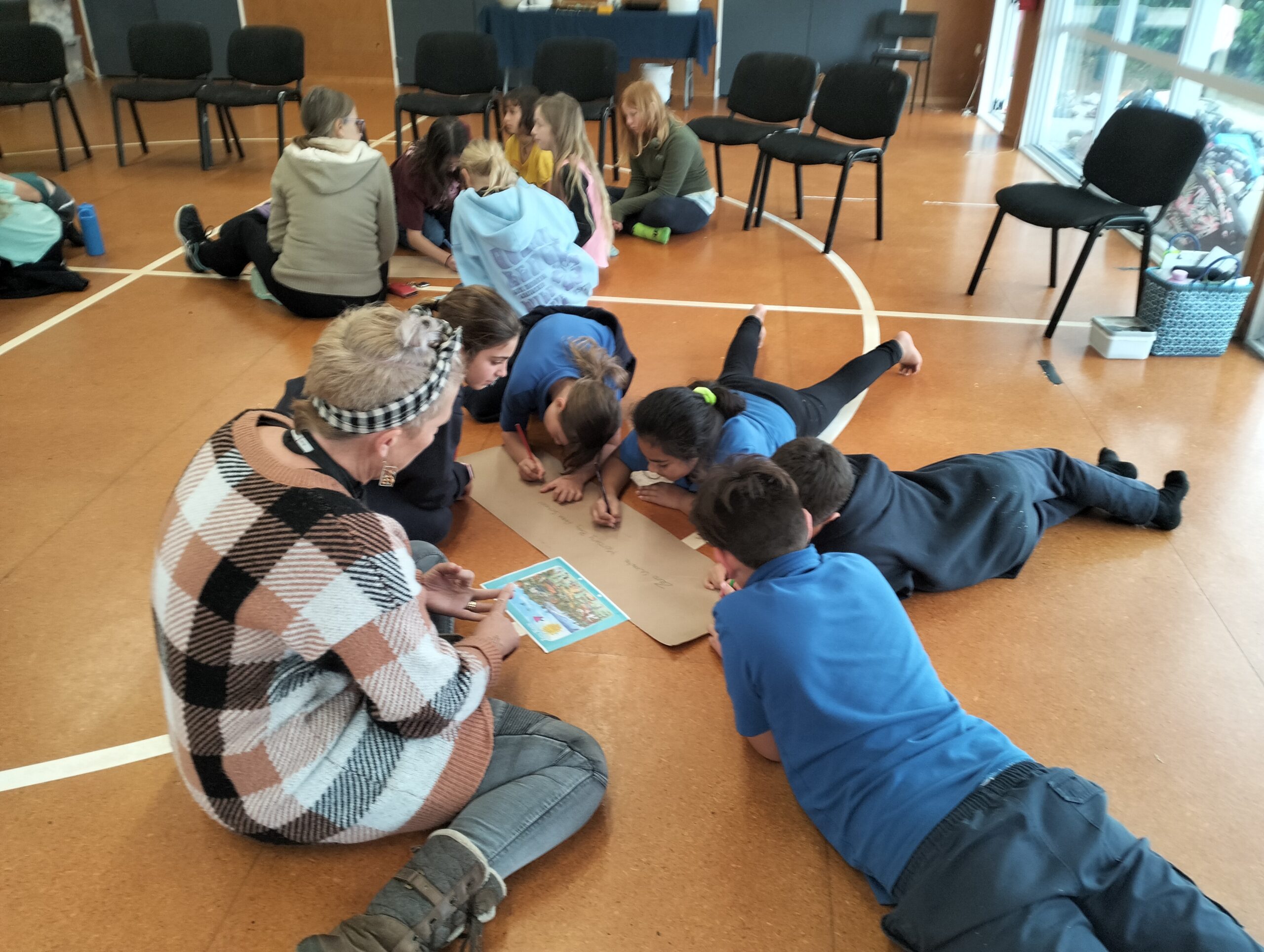
Delving into the Enviroschools Zero Waste resources
A happy hum could be heard as students mingled and gathered together for a day of hands-on learning and action.
At the beginning of the day, we introduced through a Power Point presentation the impact that waste has on our environment globally and locally and why we need to care, then also introduced the concepts of biodegradable and non-biodegradable materials. This became a key thread throughout the day and was revisited across all activities. It helped students begin to understand that different materials behave very differently in the environment, and that waste does not simply “go away” once it is discarded.
Our host school, Whenuakite School, then shared a powerful learning experience that had been taking place in their garden. Several weeks earlier, students had buried a range of school waste items as part of an investigation into decomposition, using the Bury it and Dig it up activity. They had recorded what was buried, when it was buried, and how deep it was placed (see banner image).
As part of the day, Whenuakite students dug up some of these items and shared their findings. Seeing the materials after spending time underground created a strong visual comparison between biodegradable and non-biodegradable items. Some materials had broken down significantly, while others showed very little change. This experience helped ground the learning in reality and immediately set the tone for the rest of the day.
We then expanded this understanding through a decomposition timeline activity on the school field, where students explored how long common household items take to break down. This reinforced the idea that waste persists in the environment far longer than many people realise.
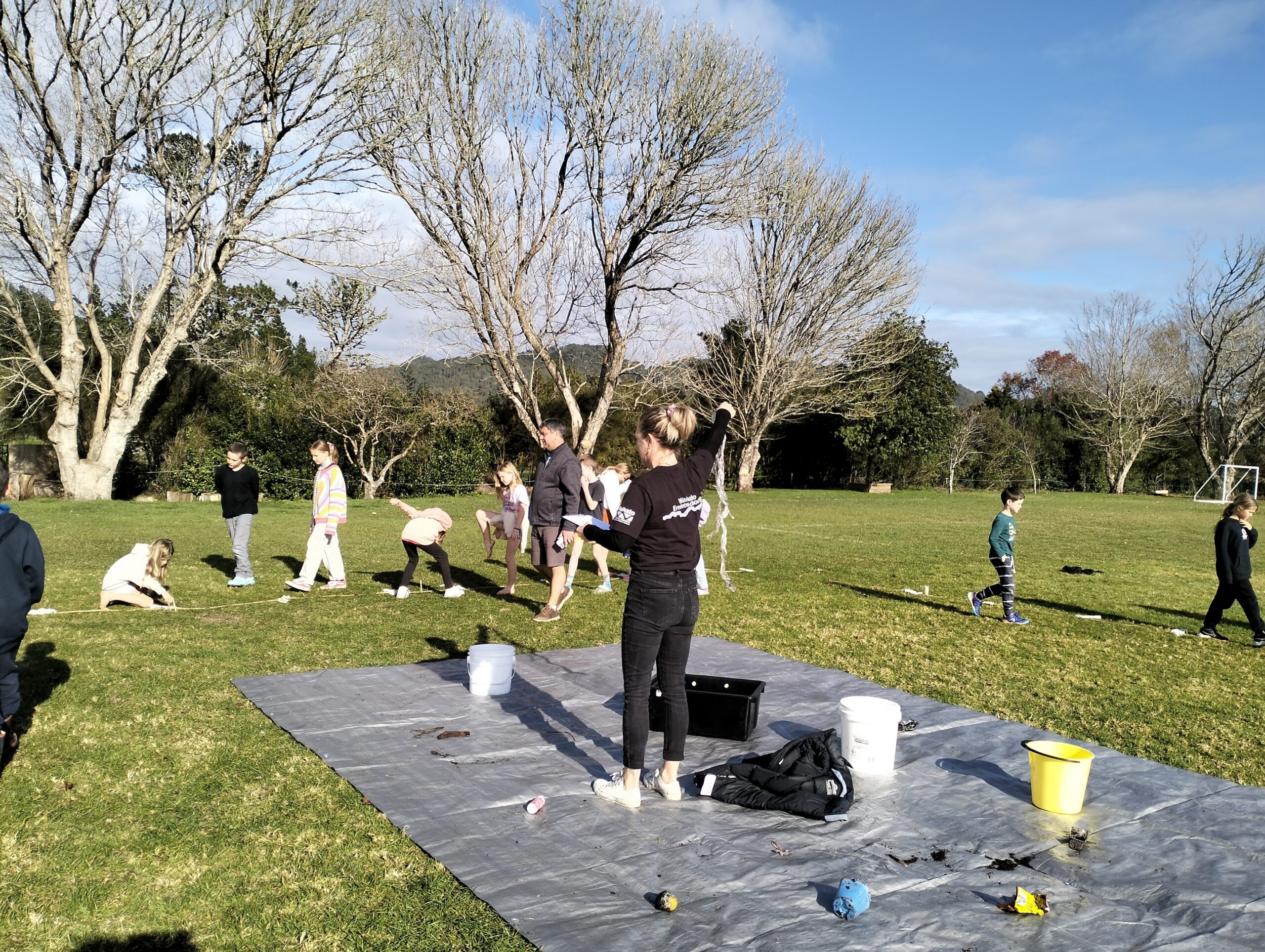
Decomposition timeline activity
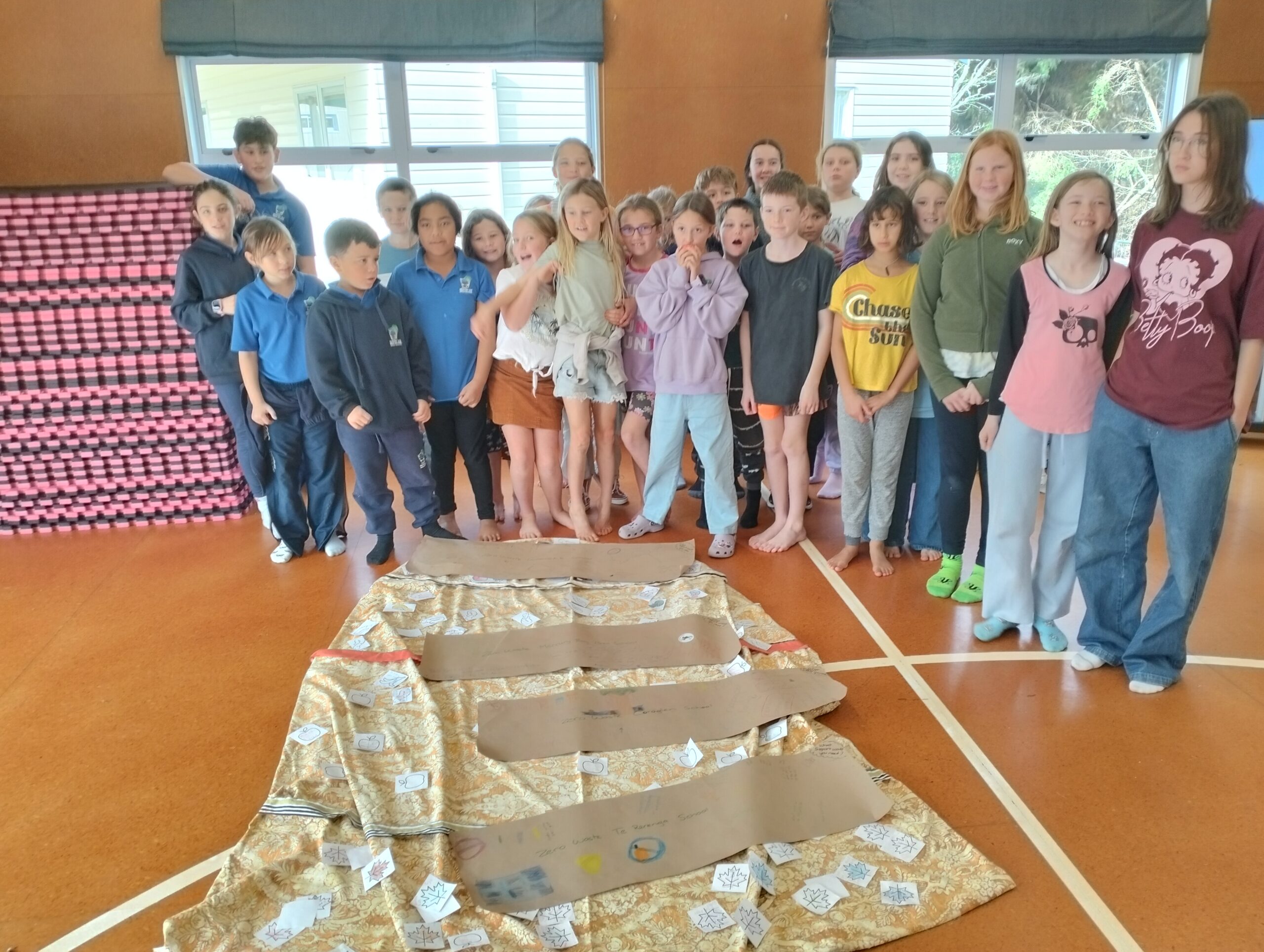
A ‘compost of knowledge’ grew throughout the day as they moved through different experiences.
Throughout the day, we built a shared “Pool of Knowledge” called a “compost of knowledge,” continually adding to our understanding as we moved through different experiences.
Students then rotated through workshops led by local waste minimisation practitioners:
- Lucci Hennah (Seagull Centre) supported students to correctly sort waste and question what truly belongs in each bin.
- Lenny Lindsay (Zero Waste) introduced worm farming, with students fascinated by tiger worms and their unique characteristics and role in composting.
- Megan Edmeades and John Adams (Waahi Tukurua/ Mercury Bay Resource Recovery Centre) explored e-waste, explaining that anything with a cord or battery is considered e-waste and highlighting the recovery of valuable materials such as copper and gold.
- I also facilitated a rotation workshop focused on the Zero Waste “Transformers” activity, where students followed the journey of everyday products from raw material extraction through to production, use, and disposal. This helped students recognise that waste is not just the end point of a product, but something that is created across its entire lifecycle. It sparked important conversations about redesigning, reducing, and reusing products before they become waste.
- Anna Stevens (Thames-Coromandel District Council) shared a video resource, which we used in a follow up email for teachers to share back at school, explaining what happens to waste locally and how much currently ends up in landfill.
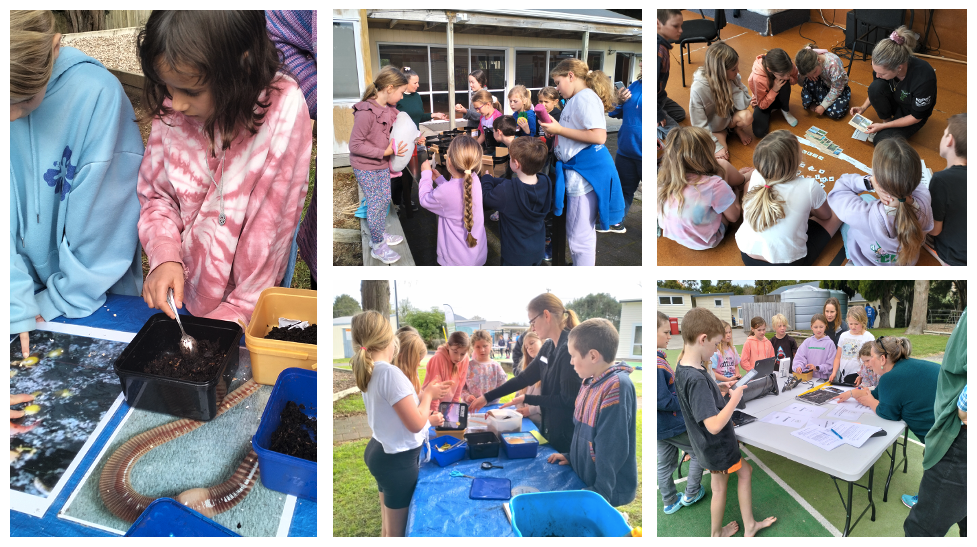
Students rotated through workshops led by local waste minimisation practitioners
As the day progressed, students began connecting global waste issues to their own school environments. Conversations shifted naturally towards questions such as:
What are we throwing away at school?
What could we do differently?
What change could we lead?
By the end of the day, each school group had identified potential actions to take back to their school. These ranged from simple, achievable steps through to more ambitious initiatives. The key outcome was that students had ownership of their ideas and could see a pathway from learning to action.
The energy at the end of the day was positive and hopeful. Students left with new knowledge, new connections, and a strong sense that even small changes can contribute to something bigger.
Following the Learning Back to School
For this Deep Dive, I followed up with participating schools to explore whether attending the event created momentum for action once they returned to their own environments.
Since the event, I stayed in regular contact with schools to support them in developing and implementing their ideas. This ongoing facilitation has been an important part of sustaining momentum and helping turn inspiration into action.
Te Rerenga School
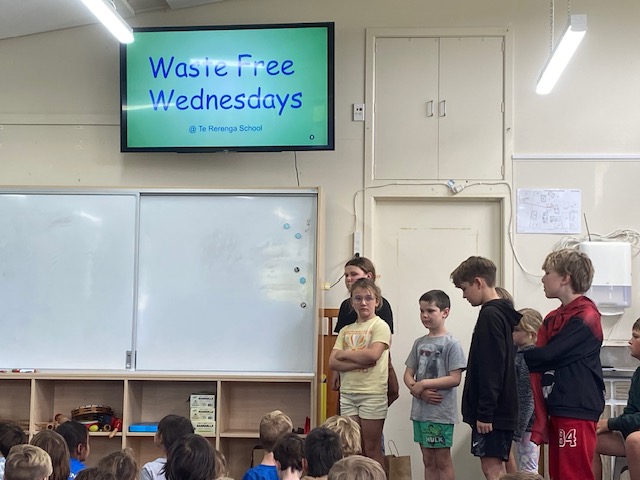
Waste-free Wednesdays initiative launched
One of the strongest outcomes from Te Rerenga School was the development of a weekly waste-free lunchbox initiative.
I met with the Enviro Group several times to support them in shaping their idea into an achievable plan. Together, we discussed their goals, what success might look like, and how they could build momentum across the school. A simple timeline helped them clarify next steps and responsibilities.
The students then shared their learning at a whole-school assembly, presenting what they had learned from the Waste Minimisation Event and introducing their waste-free lunchbox idea using a PowerPoint presentation.
The initiative began the following week. Envirogroup students took responsibility for monitoring lunchboxes, encouraging participation, and celebrating success. They also introduced small rewards and positive reinforcement, which helped build enthusiasm and engagement across the school.
Whenuakite School
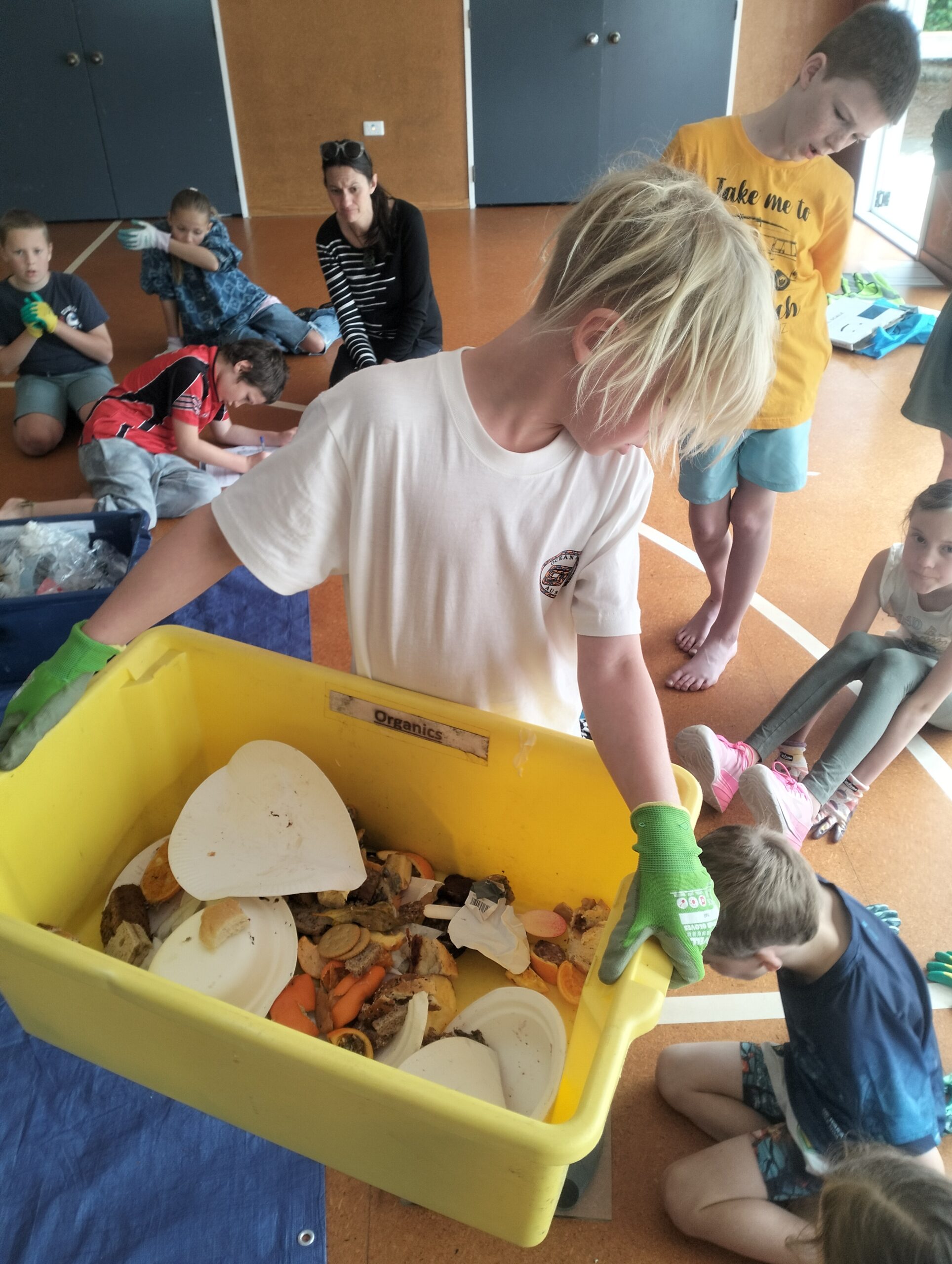
Clearly labelled organics bin
At Whenuakite School, a key outcome that emerged from their follow-up work was a focus on improving bin labelling across the school. Following the waste audit process, students identified that clearer signage and more consistent labelling would help the whole school sort waste more accurately and confidently.
Their goal was to make it easier for everyone to know what goes where, reducing contamination and ultimately sending less waste to landfill. This practical, student-led solution reflected their desire to make small but meaningful changes that could have a wider impact on the school’s waste system.
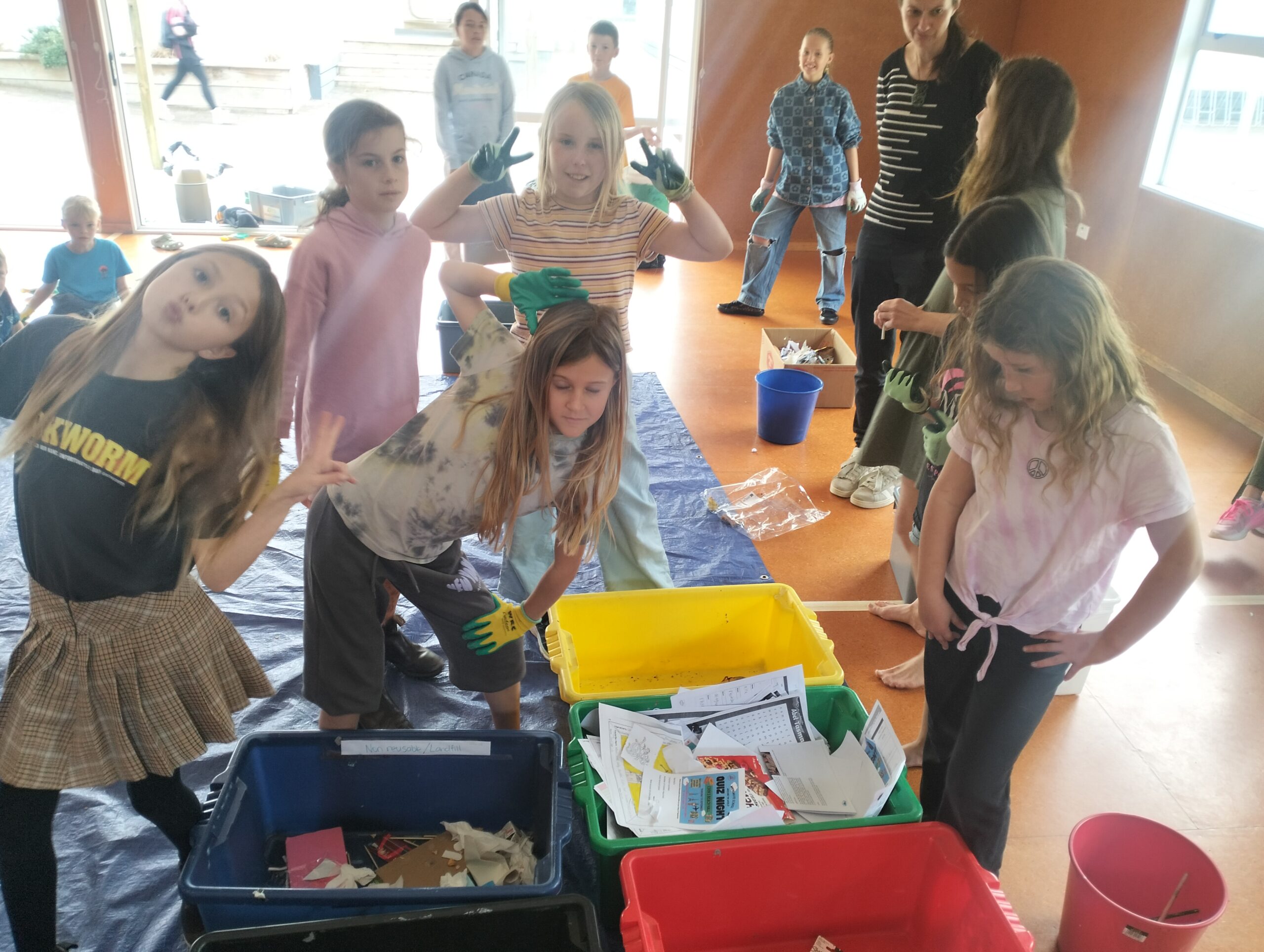
Everyone is involved in the waste audit
Mercury Bay Area School
Mercury Bay Area School also completed a waste audit following the event. At the time of writing, the results are still being explored, but the process has already sparked important discussions and thinking around waste within the school.
Coroglen School
At Coroglen School, students identified an opportunity to revive and strengthen their existing worm farm and composting systems. As a result of their learning and follow-up discussions, they have now reactivated these systems and are actively using them again as part of their school waste management.
Alongside this, students have taken responsibility for improving bin labelling and sharing knowledge with the wider school community. They have worked to ensure that clearer signage is in place and have been educating their peers about what goes into each bin and why it matters. This combination of practical system improvements and student-led teaching has helped build stronger understanding across the school and supported more consistent waste sorting practices.
Wider Impact
Beyond individual initiatives, the event also helped strengthen a culture of environmental awareness across schools. As students developed and implemented their ideas, they shared their learning with the wider school community through assemblies, classroom discussions, and informal conversations.
This sharing helped spread understanding beyond Envirogroups and supported a broader shift towards waste consciousness. Students not only explained what changes they were making, but also why those changes mattered.
Reflection
Overall, this Waste Minimisation Learning Day demonstrated that when inspiration is paired with follow-up support, it can lead to meaningful action in schools.
The event successfully planted seeds of understanding about waste and its environmental impact. However, the most significant outcomes emerged afterwards, when students returned to their schools and began applying their learning in real contexts.
What stood out most was the way students took ownership of their ideas. Whether through waste-free lunchbox initiatives, waste audits, or composting systems, they showed that they could lead change within their own communities.
This experience reinforced the importance of not only creating engaging, hands-on learning opportunities, but also maintaining ongoing relationships with schools to support implementation. It is in this space—between inspiration and action—that real and lasting change begins to take place.
Key Learnings for Facilitators
One of the strongest learnings from this process was the importance of combining inspiration with clear pathways for action. The event itself generated excitement and engagement, but it was the follow-up support that helped translate ideas into real change.
Hands-on, experiential learning proved essential in helping students understand abstract concepts. Activities such as the decomposition investigation, transformer activity, and field timeline created memorable learning moments that anchored understanding.
A shared language around biodegradable and non-biodegradable materials helped unify learning across the day and reinforced the message that waste persists in the environment in different ways and timeframes.
Local expertise played a key role in making learning relevant and grounded. Community partners helped students see that waste minimisation is already happening in their own region and is something they can contribute to.
Ongoing facilitation after the event was critical in maintaining momentum. Regular contact, planning sessions, and support with implementation helped ensure that ideas moved beyond discussion into action.
Finally, student leadership and sharing within schools significantly increased impact. When students communicated their learning to their wider school communities, it helped embed waste consciousness beyond Envirogroups and into everyday school culture.
 Print
Print