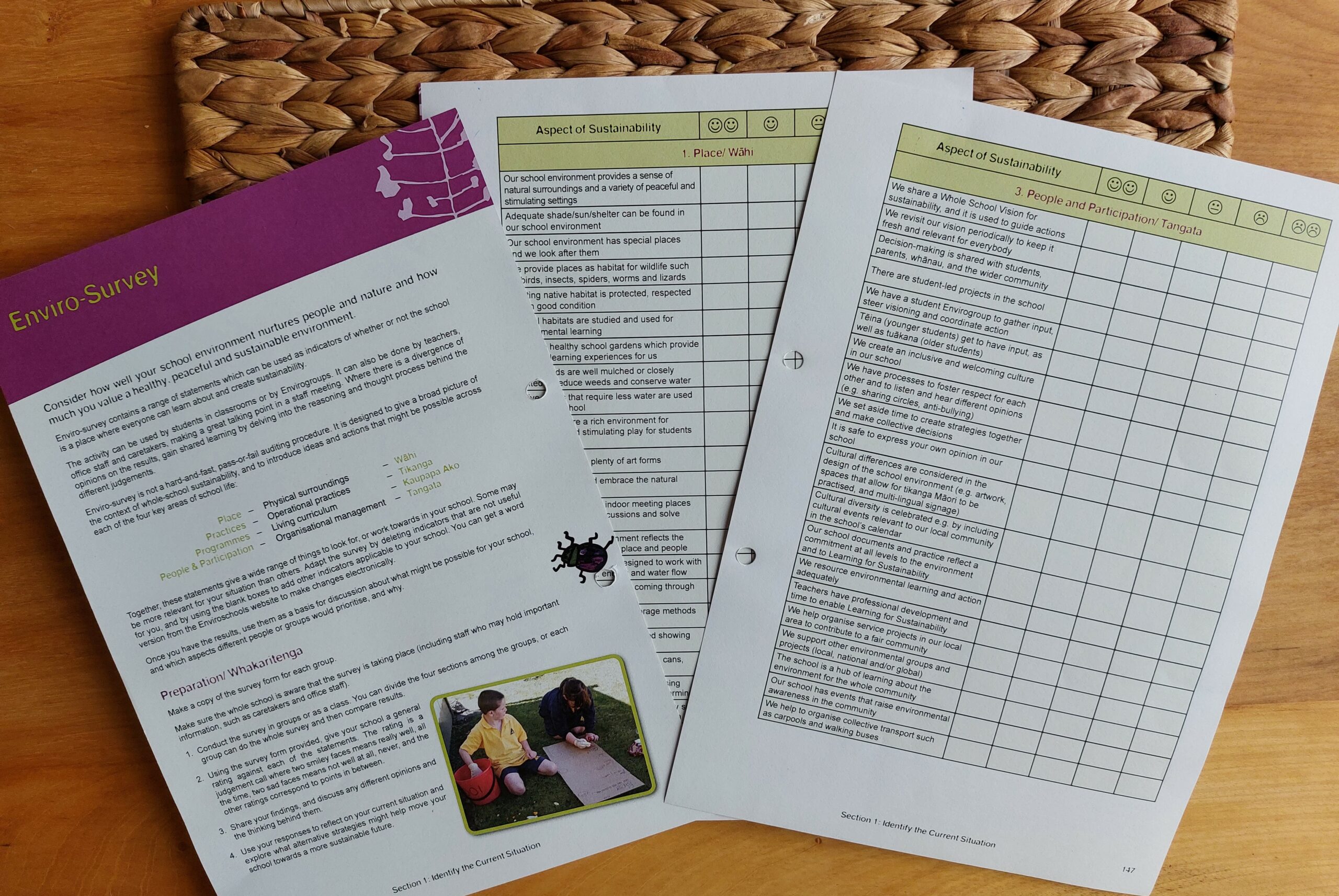
Me in My Environment has many great activities for identifying the current situation
In late 2024 on one of my first meetings with Rebecca Edwards the Enviroschools lead, and primary science year 3-4 teacher at Mercury Bay Area School, we sat together to explore the Enviroschools resources. Because the school was re‑engaging with the programme, I suggested beginning with Me in My Environment (MiME) to help teachers and children slow down, notice their surroundings, and build a deeper sense of connection with their place. This also created a natural starting point for developing a vision map that captured where the school community wanted their sustainability journey to go.
In an early 2025 staff meeting Rebecca also shared the purpose of Me in My Environment and the associated activities with the rest of the junior teachers, to build momentum and an understanding of the kaupapa.
Identifying the current situation
Over the following term, as the students and teachers worked through MiME activities and spent more time outside, they began to see their school grounds with fresh eyes. They found that while the school grounds were lively and engaging, there were very few quiet spaces for students who needed a break from the noise and activity. At the same time, there was a growing awareness of the increasing number of students with diverse sensory needs. It became clear that the school needed a space where all children could feel calm, safe, and supported—a space designed with intention. And so, the idea of a sensory garden was born.
The project didn’t start with adults making all the decisions—it started with the students. The Envirogroup was the first to ask important questions:
What is missing from our school?
What do we need?
Their conversations sparked momentum, and soon the entire primary school was involved through a design competition. Students eagerly shared their ideas, and their creativity became the foundation of the garden. Many of their suggestions have already been brought to life, with even more planned for future stages.
Exploring Alternatives
Rebecca was successful in securing grant funding through the Waikato Regional Council Enviroschools funding opportunity, and soon realised that turning ideas into reality required thoughtful planning. Inspiration was gathered from other sensory gardens, along with research into suitable plants and materials. The space was carefully measured, experts were consulted, and detailed working plans were drawn up. It was a process that balanced imagination with practicality, always keeping students’ needs at the centre.
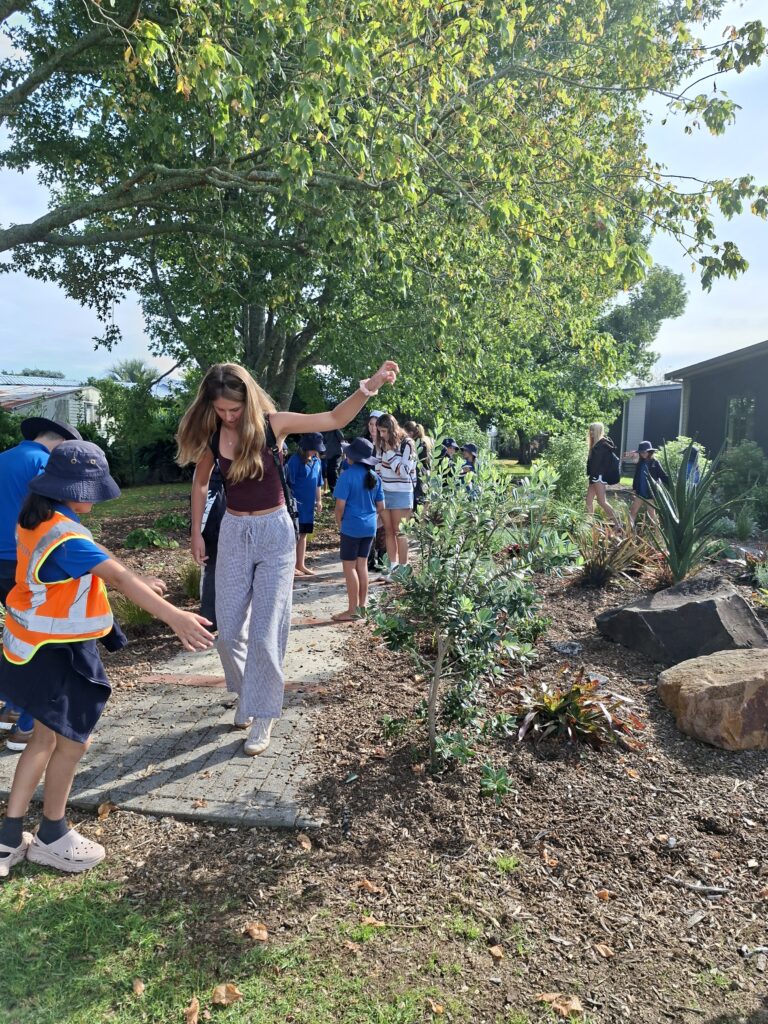
The wider school community quickly got behind the project. The Senior Leadership Team offered full support, while older students, classes, and local community members contributed their time, energy, and resources. Volunteers stepped forward, and donations helped bring the vision to life. It became a shared effort—something the whole community could feel proud of.
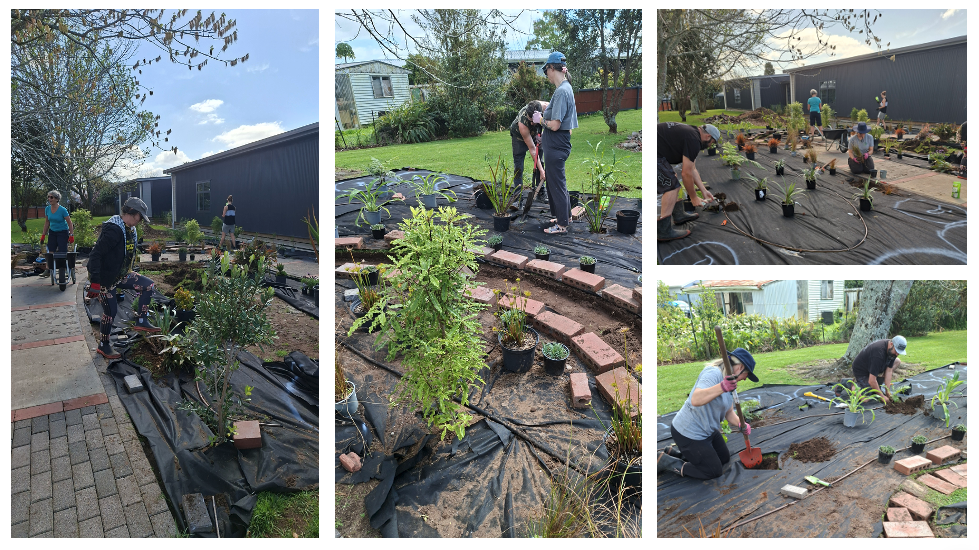
The wider school community contributed their time, energy, and resources
Taking Action
Like any meaningful project, there were challenges along the way. The weather delayed the initial stages, testing patience and timelines. Securing donations also proved difficult at times;
“It can feel uncomfortable to keep asking for support, especially when people are already giving generously. But persistence paid off, and each small step forward helped build momentum” explained Rebecca Edwards, lead teacher
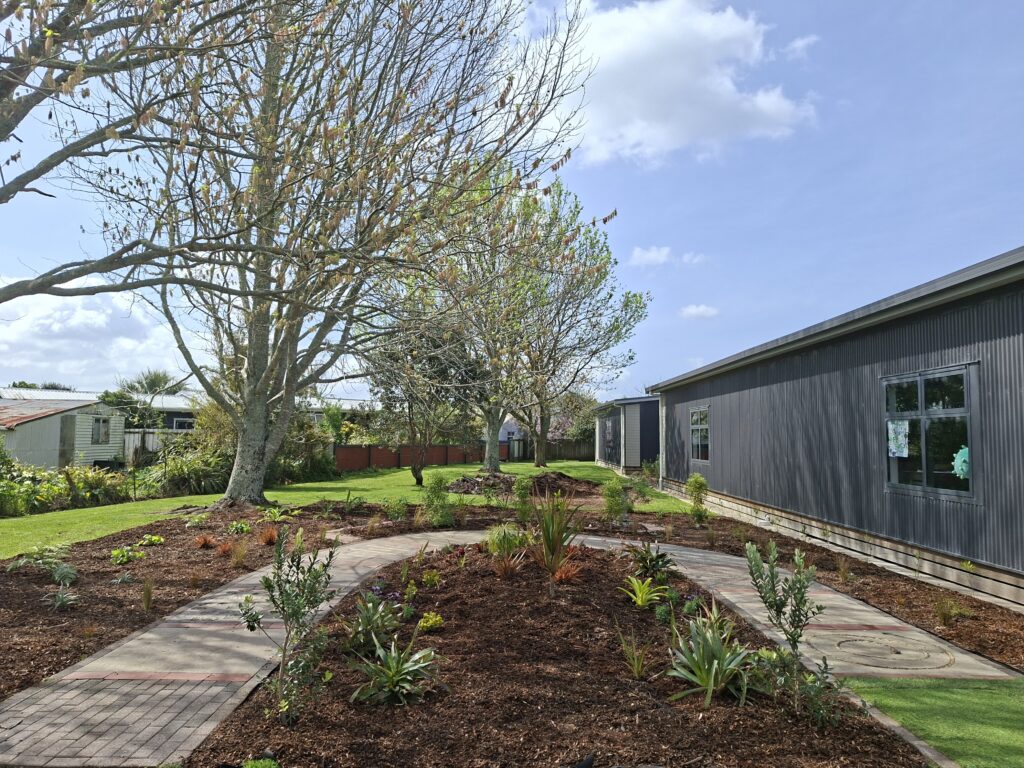
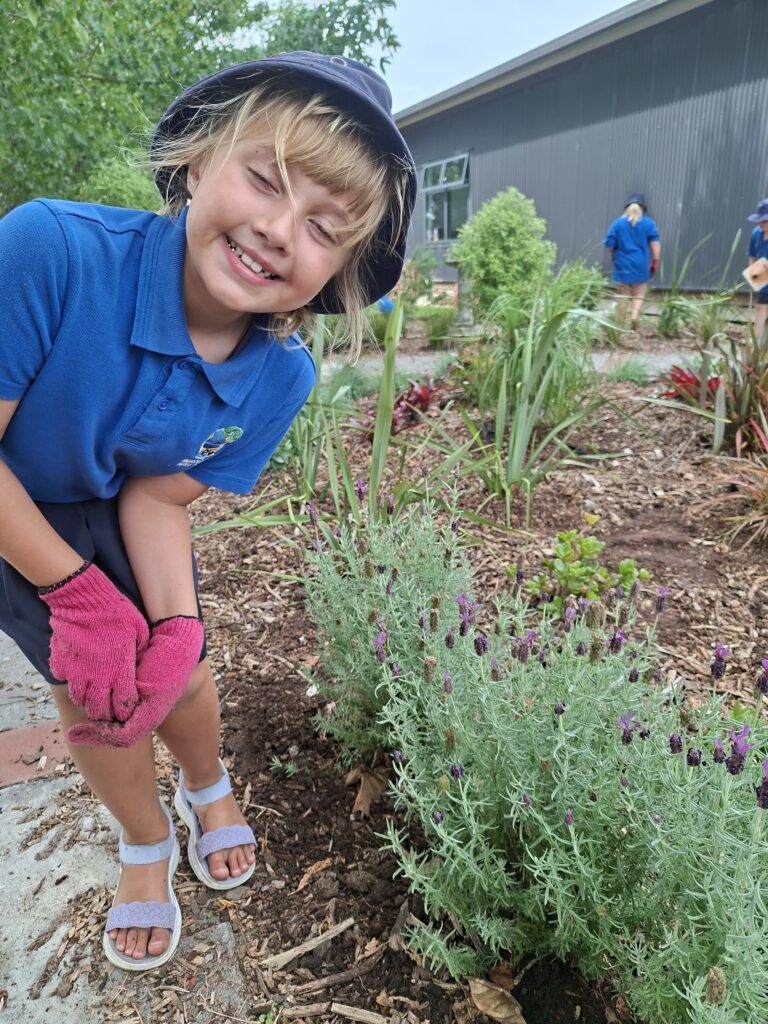
Now, with the garden in use, its impact is clear. Students naturally gravitate towards the space — exploring, walking, talking quietly, or simply sitting. Teachers have embraced it as a valuable extension of the classroom, using it for brain breaks, silent reading, mindfulness, and creative activities like drawing. Students not only use the space, but care for it too, with Envirogroup members taking pride in its maintenance. It has even inspired learning opportunities, such as photography projects and ideas for improving other garden spaces around the school.
Perhaps the greatest success is seeing how naturally the garden is used—and how respectfully students interact within it. It is doing exactly what it was intended to do: providing a calm, inclusive environment where students can regulate, connect, and recharge.
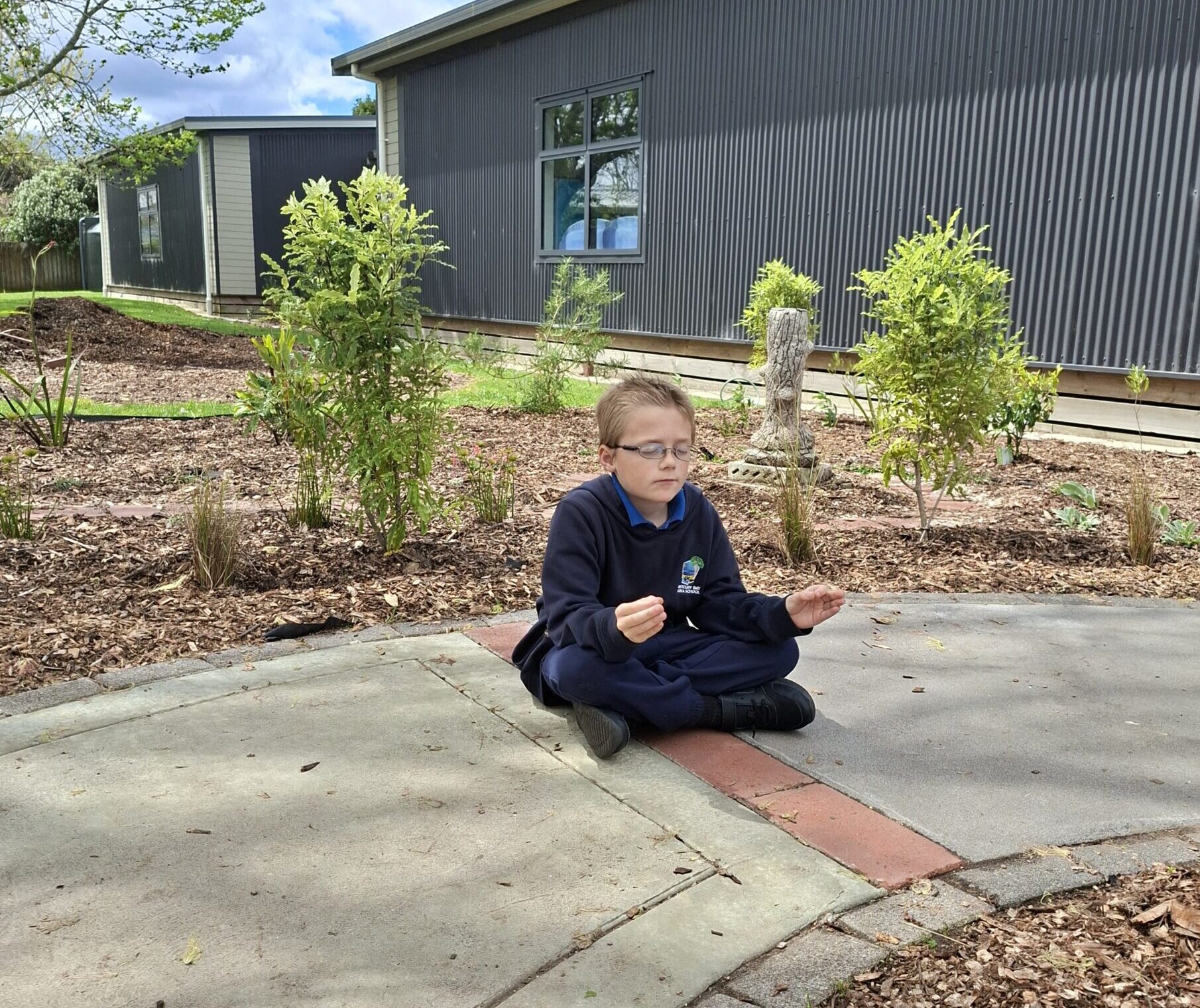
A peaceful place for students to recharge
Next Steps
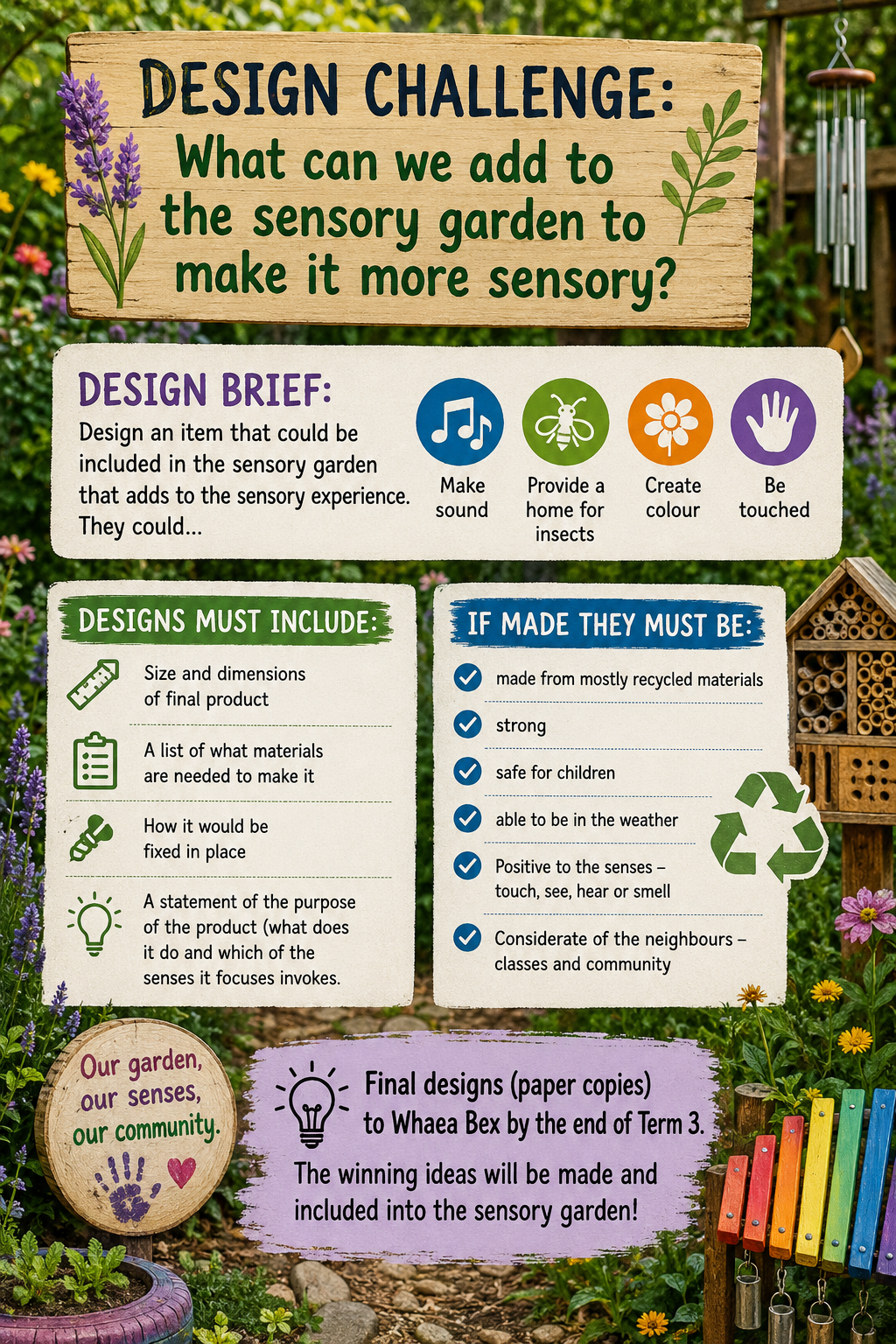
Sensory Garden Design Challenge
And the journey isn’t over. There are exciting plans ahead, including a technology design challenge where students will create new sensory features like wind chimes, bug hotels, and tactile panels. There are ideas for collaborative mosaic art, informative signage, and a special celebration to mark the garden’s growth and success.
This sensory garden is more than just a physical space. It has been a years’ worth of student-led learning. Everyone involved has helped with identifying the current situation, gathering ideas and alternatives, taking action and then reaping the benefits.
It is also a reminder of what can happen when schools listen to their students, involve their community, and commit to creating environments where every child can thrive.
 Print
Print