Across the Tūpuna Maunga (ancestral mountains) of Tāmaki Makaurau, a powerful story of environmental restoration, cultural connection, environmental stewardship and learning has been unfolding.
Over the past year, kura, iwi, environmental organisations and community partners have come together through a shared vision: connecting more ākonga from Kōhanga Reo and Kura Kaupapa Māori to their local Tūpuna Maunga while strengthening biodiversity and nurturing the next generation of kaitiaki.
Thanks to support from Toimata Foundation, made possible through its partnership with the Ministry for the Environment, Te Aho Tū Roa and the Tūpuna Maunga Authority have been able to create meaningful opportunities for ākonga to learn in, about and for te taiao while deepening connections to their ancestral landscapes.
What emerged was much more than a series of environmental events.
It became a journey of reconnection, where ākonga learned not only about the natural world around them, but also about their relationships with whenua, tūpuna, language and place.
Learning In, About and For te Taiao
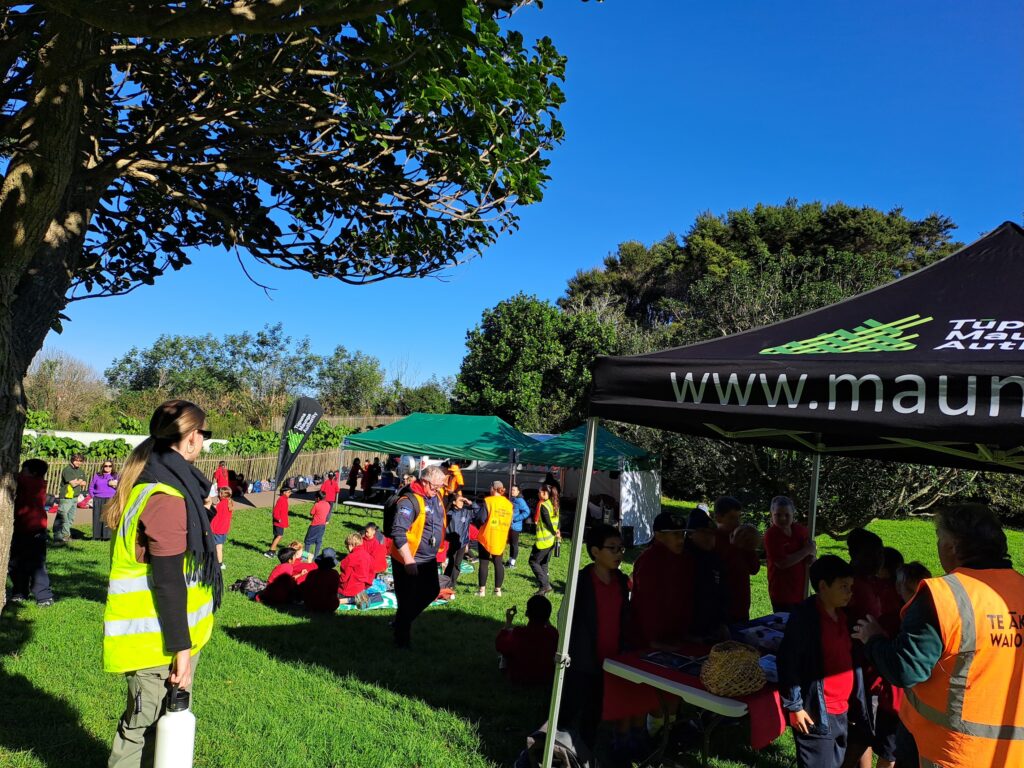
A highlight of the kaupapa was the inaugural Te Tauwhaiwhai-a-Tāwhaki, the first bilingual Sustainability Adventure Race of its kind in Aotearoa, designed specifically for Māori-medium and bilingual schools. Held beneath Te Pane o Mataoho, Te Ara Pueru, Maangere Mountain at Ambury Farm Park, the event brought together 120 ākonga from eight kura across Tāmaki Makaurau.
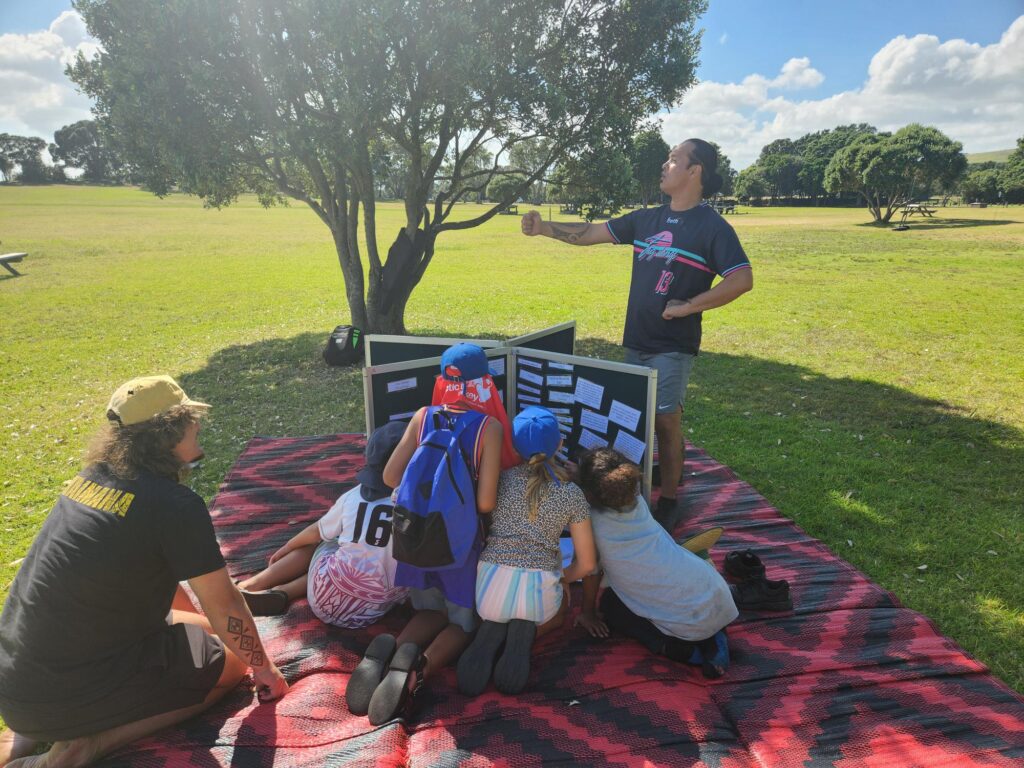
Under blue skies and filled with laughter, energy and determination, teams of ākonga navigated 24 environmental challenge stations, learning directly from environmental specialists through the medium of te reo Māori.
Along the way they explored:
- Ngā tangi a ngā manu – birdsong identification
- Ngā atua Māori
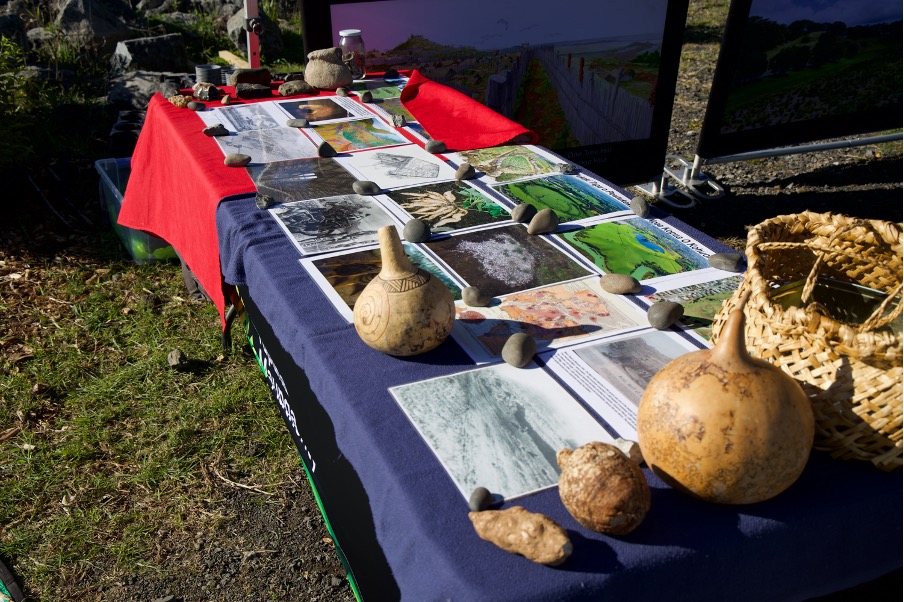
- Toka puia – Volcanic rocks
- Ngā kararehe e noho ana i te taiao. Te māramatanga ki te huringa kai me te pūnaha hauropi – Understanding animal diets and their roles in the local ecosystem.
- Tapuwae Kararehe – Who is walking this land? Learn to track both friends and foes. Differentiating between native species and invasive pets to protect biodiversity.
- Taonga puoro
- Taonga tākaro
The event celebrated the mana and mauri of te reo Māori while strengthening kaitiakitanga through meaningful, place-based learning. Environmental knowledge was shared through a Māori worldview, creating a rich and empowering learning experience for ākonga.
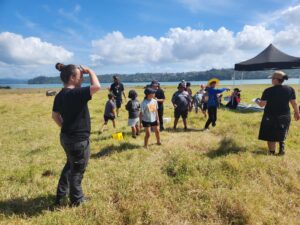
Te Tauwhaiwhai-a-Tāwhaki Bilingual Sustainability Adventure Race at Ambury Farm on the Manukau Harbour
Putting Down Roots
The learning did not stop at Te Tauwhaiwhai-a-Tāwhaki.
Across Te Kōpuke, Te Tātua a Riukiuta and Matukutūruru, ākonga rolled up their sleeves and took direct environmental action, planting nearly 2,000 native trees. These planting days were more than opportunities to restore biodiversity. They were opportunities for ākonga to experience kaitiakitanga in action.
At each site, ākonga learned from those entrusted with caring for the maunga. They explored the stories, ecology, history of these ancestral landscapes while contributing to their future wellbeing. With every tree planted, they become part of the ongoing restoration of places that have sustained communities for generations.
As hands pressed seedlings into the soil, ākonga learned about the rich history of the maunga beneath their feet. Mana Whenua shared stories of ancient pā sites, māra kai and thriving settlements that once stood upon these peaks. A guided hīkoi helped bring these stories to life, allowing ākonga to envision the generations who had lived, worked and flourished there before them.
The experience connected classroom learning with the living landscape around them. Volcanoes, ecology, biodiversity, local history and mātauranga Māori were no longer topics in a lesson. They were tangible, visible and alive beneath their feet.
What ākonga planted was more than trees.
They planted memories.
They planted connections.
They planted a sense of belonging.
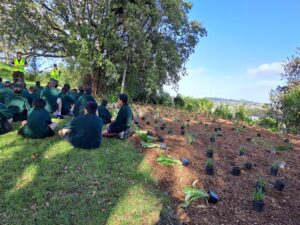
Dilworth kura ākonga at Te Kōpuke
Reconnecting with Ancestors
One of the most significant milestones occurred at Matukutūruru, where Te Wharekura o Tāmaki ki te Tonga became the first kura Māori to participate in a Tūpuna Maunga Authority restoration project on the maunga. Working alongside Te Ākitai Waiohua, Te Pu-a-nga Maara (Rangatahi Taiao Innovators) and community partner E Tū Rākau, ākonga planted more than 500 native rākau as part of the Authority’s ongoing restoration programme to restore indigenous ecosystems and cultural landscapes of the Tūpuna Maunga.
The planting carried deep cultural significance. The native rākau were sourced through the Makaurau Marae nursery, honouring the whakapapa connection between seed, whenua and iwi. From propagation to planting, the relationship between people and place remained at the centre of the kaupapa.
Following the planting, ākonga shared waiata, haka and kōrero before joining a guided hīkoi led by Te Ākitai Waiohua. Together they explored the stories of the maunga and strengthened their understanding of the responsibility of kaitiakitanga carried by each generation.
Reflecting on the day, Tūpuna Maunga Authority Conservation Advisor Niwa van Leeuwen described witnessing ākonga standing on their maunga and singing alongside Matua David Wilson of Te Ākitai Waiohua as a moment that would stay with them forever.
“Standing on the maunga with Matua David of Te Ākitai Waiohua and witnessing the tamariki sing to their Maunga is something that will continue to stay with me.”
Niwa’s reflection captures the heart of this entire kaupapa:
“It was much more than a planting day. It was a day of healing and reconnection, recloaking our Tūpuna Maunga.”
Those words speak not only to what happened at Matukutūruru, but to the wider journey that unfolded across all four events. Through environmental action, ākonga were reconnecting with whenua, whakapapa and the stories held within these ancestral landscapes.
Partnerships that Strengthen Place
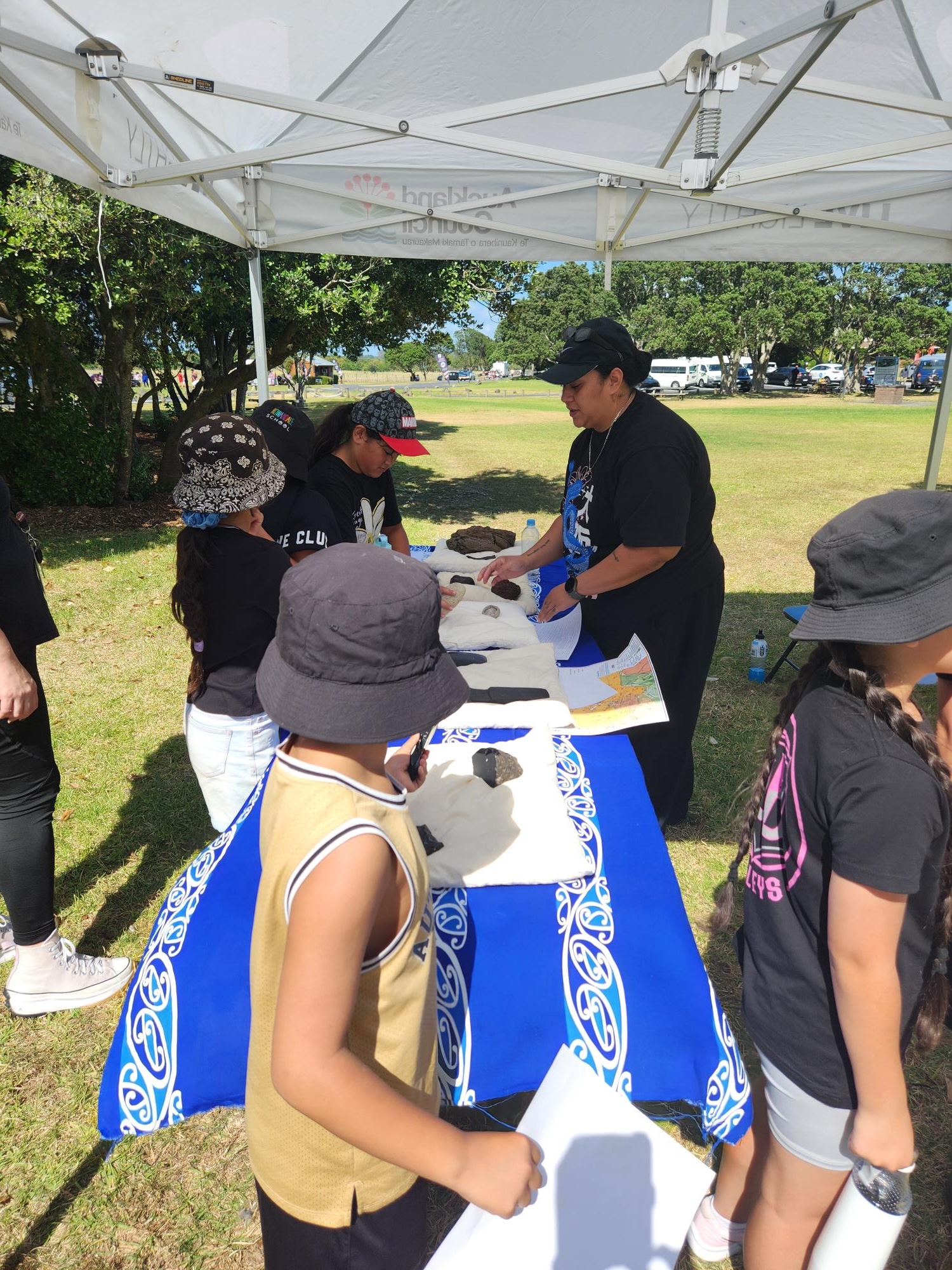
Tamariki learn about toka puia with Kaiako from Tāmaki Paenga Hira Auckland War Memorial Museum
The success of the kaupapa was made possible through strong partnerships involving Te Waka Ārai, Tūpuna Maunga Authority, Te Ākitai Waiohua, Auckland Council teams, Mātātahi Taiao, Marae Resilience, Auckland Emergency Management, Te Pu-a-nga Maara Taiao Rangers, E Tū Rākau, Lactic Turkey Events Ltd, Tāmaki Paenga Hira-Auckland War Museum, and Auckland Zoo. Together they created opportunities for ākonga to learn directly from those caring for the whenua today.
The kaupapa also honoured the unique significance of the Tūpuna Maunga to the thirteen iwi and hapū of Ngā Mana Whenua o Tāmaki Makaurau, whose cultural, ancestral and spiritual connections to these landscapes stretch back through generations.
Across all four events, 258 students, 34 teachers and 18 partner organisation kaimahi took part in learning and environmental action, demonstrating the strength that comes from working collectively towards a shared vision.
The Enviroschools Difference
At the heart of this work sits the Enviroschools Kaupapa. Learning and taking action together guided every stage of the project, from partnering with mana whenua and community organisations to creating opportunities for ākonga to learn through hands-on environmental action.
Te Tauwhaiwhai-a-Tāwhaiki was a vibrant expression of this approach. Described as one of the most uplifting and powerful celebrations of te ao Māori imaginable, the event demonstrated how sustainability learning flourishes when grounded in language, culture and community. Te reo Māori was the dominant language of the day, creating a strong sense of mana, identity and belonging.
On the Tūpuna Maunga, ākonga learned directly from kaitiaki, connecting classroom learning with the stories, ecology and history of the whenua. Through planting native rākau and restoring ancestral landscapes, they experience what it means to care for the environment and for the places that shape who they are.
By connecting kura, teachers, whānau and communities to their local Tūpuna Maunga, this kaupapa has helped grow a new generation of kaitiaki. The trees planted through these events will continue to grow for generations.
So too will the connections and sense of belonging that have taken root in the hearts of the ākonga who planted them.
Kohikohi ngā kākano, whakaritea te pārekereke, kia puāwai ngā hua.
Gather the seeds, prepare the seedbed carefully, and you will be gifted with abundance.
 Print
Print