Kaiako and ākonga from across Karori started on a journey this year, connecting with their local Waipāhihi Karori Stream. Karori Normal School, Karori West School, Karori Kids and Campbell Kindergarten were all part of an Enviroschools led whaitua connection kaupapa that led to valuable action taking in their local community.
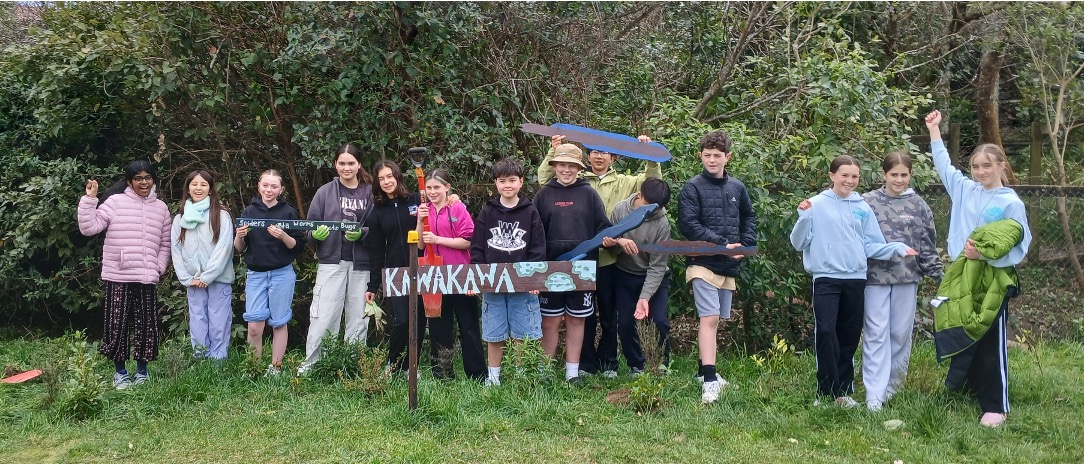
Year 7 -8 ākonga from Karori Normal School at their local Waipāhihi Karori Stream site.
To kickstart this journey Enviroschools visited schools and centres to share learning about what a catchment is and how it works, what a whaitua is, how awa flow and what happens to our urban awa with changes in landuse, wetland removal as well as the strong link between awa and te moana. Ākonga also got to experience being a tuna in our tuna lifecycle kēmu, complete with nets, culverts, fish passage barriers and their haerenga back to Te Moana nui a Kiwa (the Pacific Ocean) to breed. Click here to read story about this.
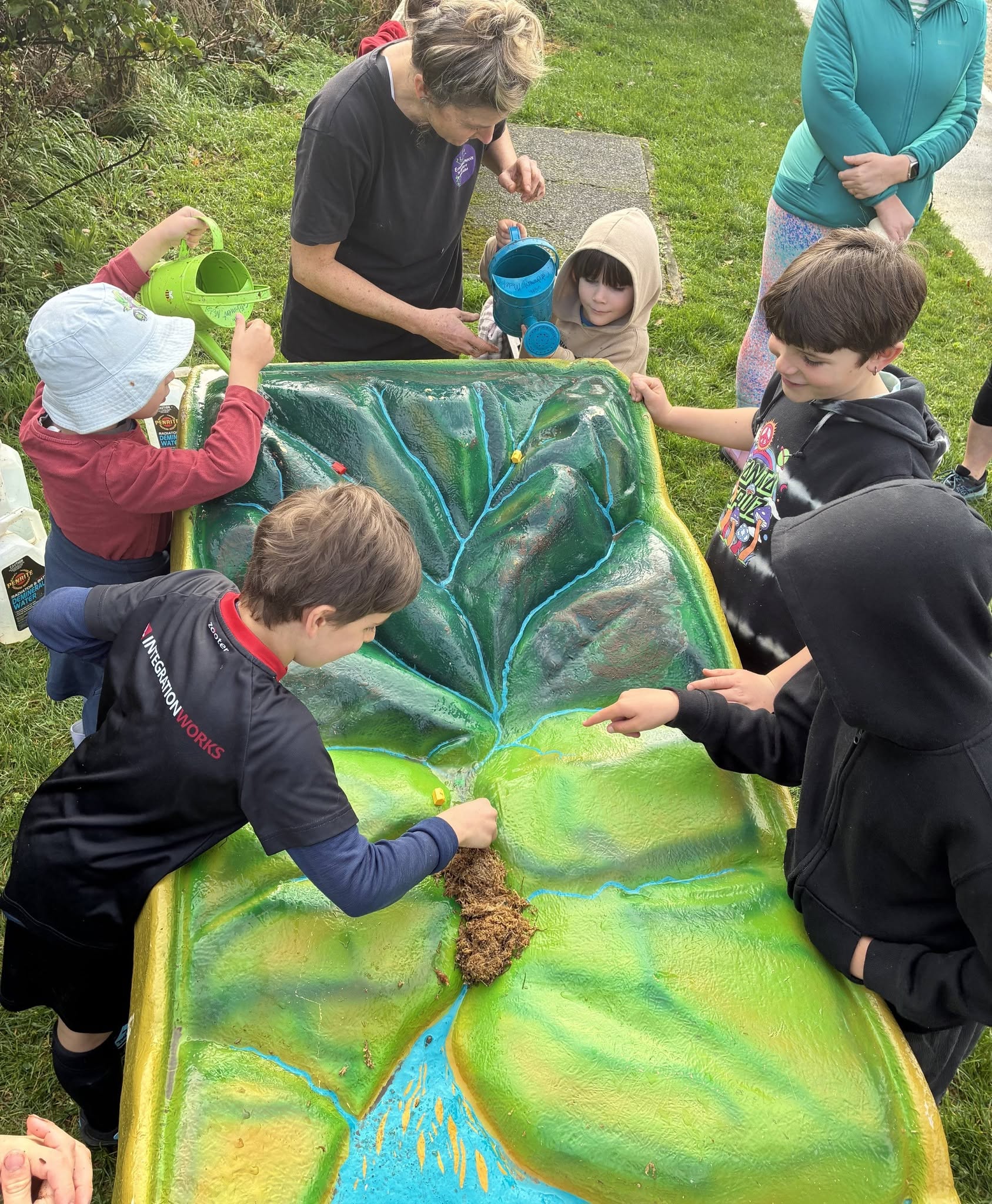
The catchment model is a hands on learning experience for ākonga, kaiako and whānau.
We built on this learning with a nature connection day at a small, often overlooked local space, but where tamariki and whānau want to make a difference. Led by Enviroschools with support from Mountains to Sea Wellington and local WCC Ranger, kaiako, ākonga and whānau were able to understand what currently lives here, what could live here and how they can help. Over 100 tamariki planted native rākau, explored the abundant insect life in leaf litter and collectively wove an ikawai taura (fish ladder) from tī kouka leaves, to support habitat for macro invertebrates in the awa. This special kaupapa has been shared by Te Ātiawa ki Whakarongotai iwi Enviroschools | Hands on learning and action in urban streams in Te Whanganui a Tara
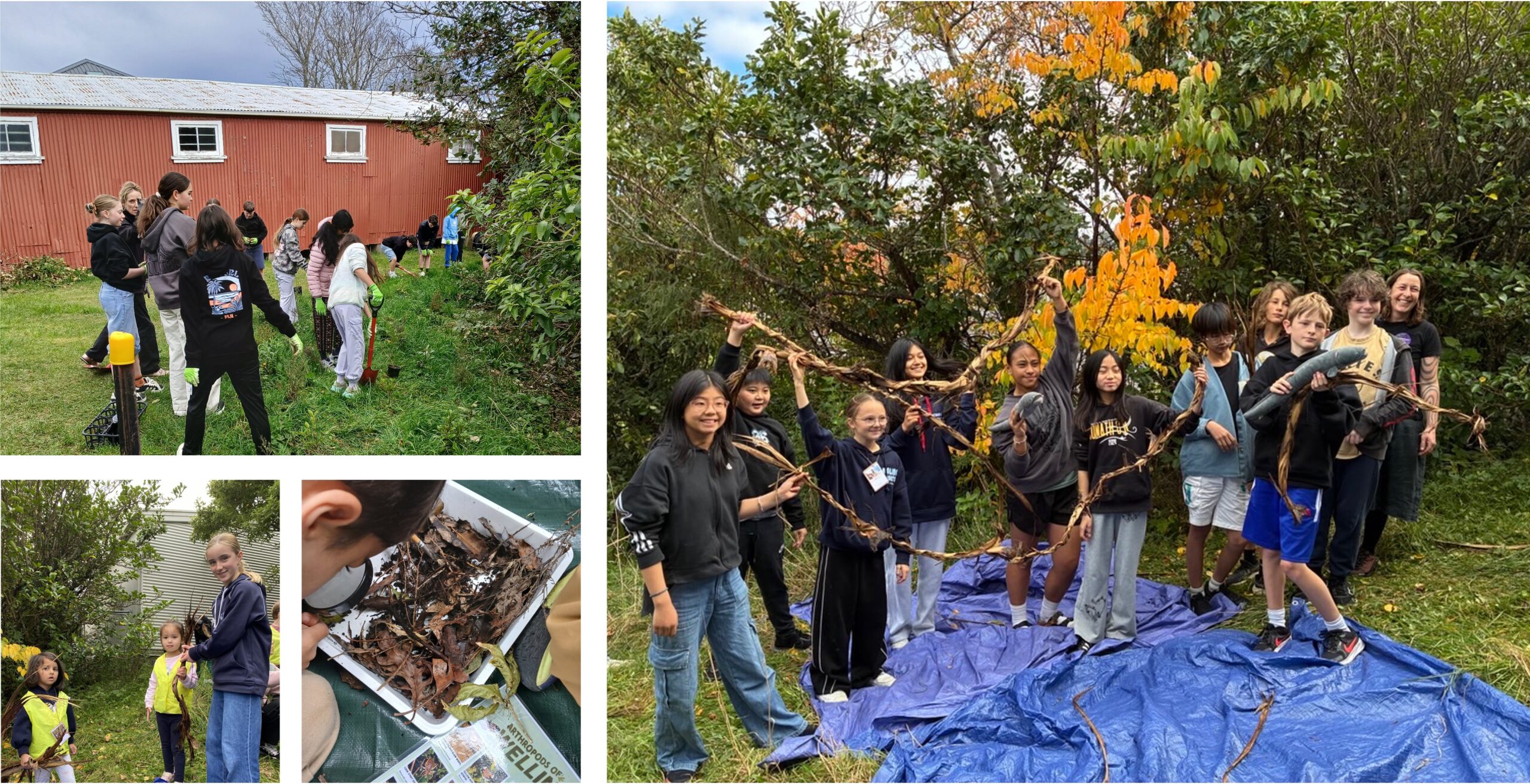
Whaitua connection day activities.
The learning continued throughout the following terms. ECE tamariki created homes for the smallest taonga who live in their local ngahere, ngā mū (insects). Working together they used sticks, leaves and pinecones to create safe havens for their friends in the insect world. These bug hotels were installed in the small ngahere area alongside the awa. They also painted signs so that visitors would know where to find them.
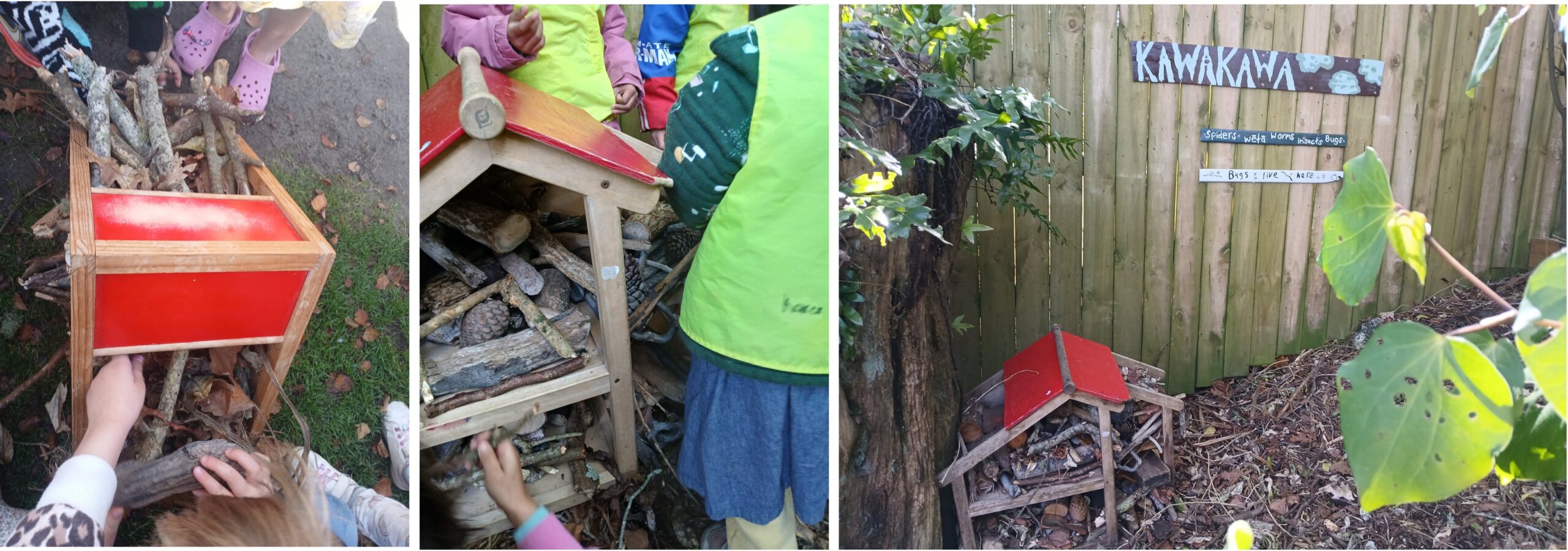
We repurposed old dollhouses for the bug hotels.
This learning is special as it connects to the local Waipāhihi Karori awa and is a place tamariki can revisit and share with their whānau and the local community. This area is now thriving with young native trees thanks to the weeding efforts of the Friends of Waipāhihi karori Stream (F.O.W.K.S). The native seedlings planted in May such as kawakawa, kohekohe, taupata and kōwhai are growing stronger and recently, a series of signs and writing were installed across the bridge. These signs have been designed and created by the year 8 ākonga at Karori Normal School to share their thoughts and feelings about their local awa and their aspirations to create a community that cares for it.
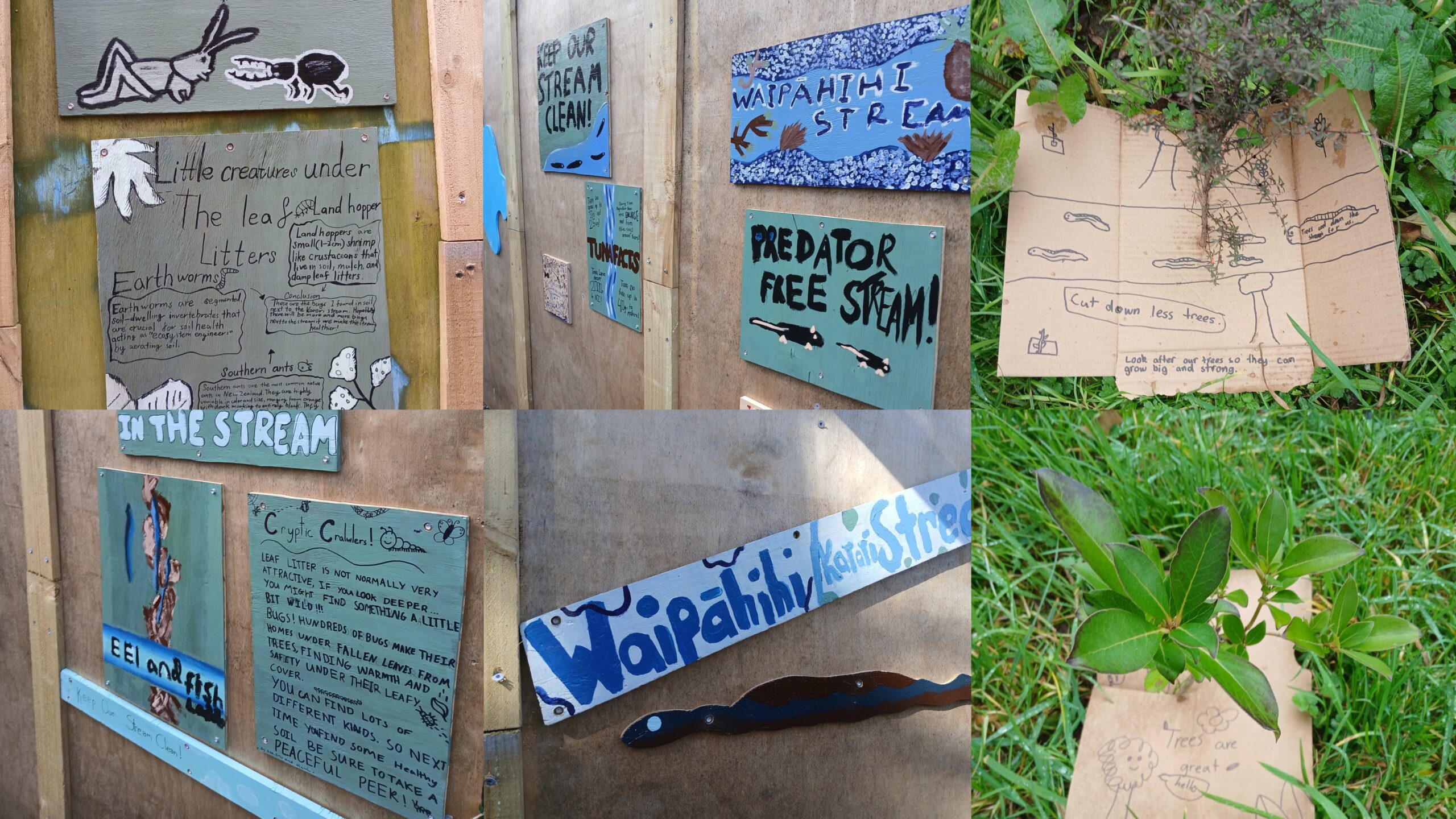
Ākonga are able to share their aspirations for te taiao through creative writing and art installed alongside the walkway.
There is a life size tuna kūwharuwharu you can measure yourself against, calls to action for keeping rubbish out of the awa and information sharing why this place is so special.
“Why even care about the stream? Well let me tell you why! That stream is a home, but not too many creatures are living there now unfortunately. So that is why we have to look after it as a community; we are making signs to tell people that we are turning that sad little stream into a beautiful happy home thriving with life.”
“We hope one day, our stream will become clean enough for a lot more native species to move in.”
“Our goal is to make the stream clean again, with tuna kūwharuwharu (longfin eel) flowing though and to clean up the space around it to turn it into a little picnic area. If we work together now and help tidy up places like this it will help to make our community thrive.”
As part of their continued connection to the awa, tuakana led the tuna migration kēmu with teina from the school and each year group has the opportunity to visit the awa throughout the term. Sometimes they weave more ikawai taura, do a spot of weeding or fix plant guards, other days they just sit in the ngahere and listen to te taiao.
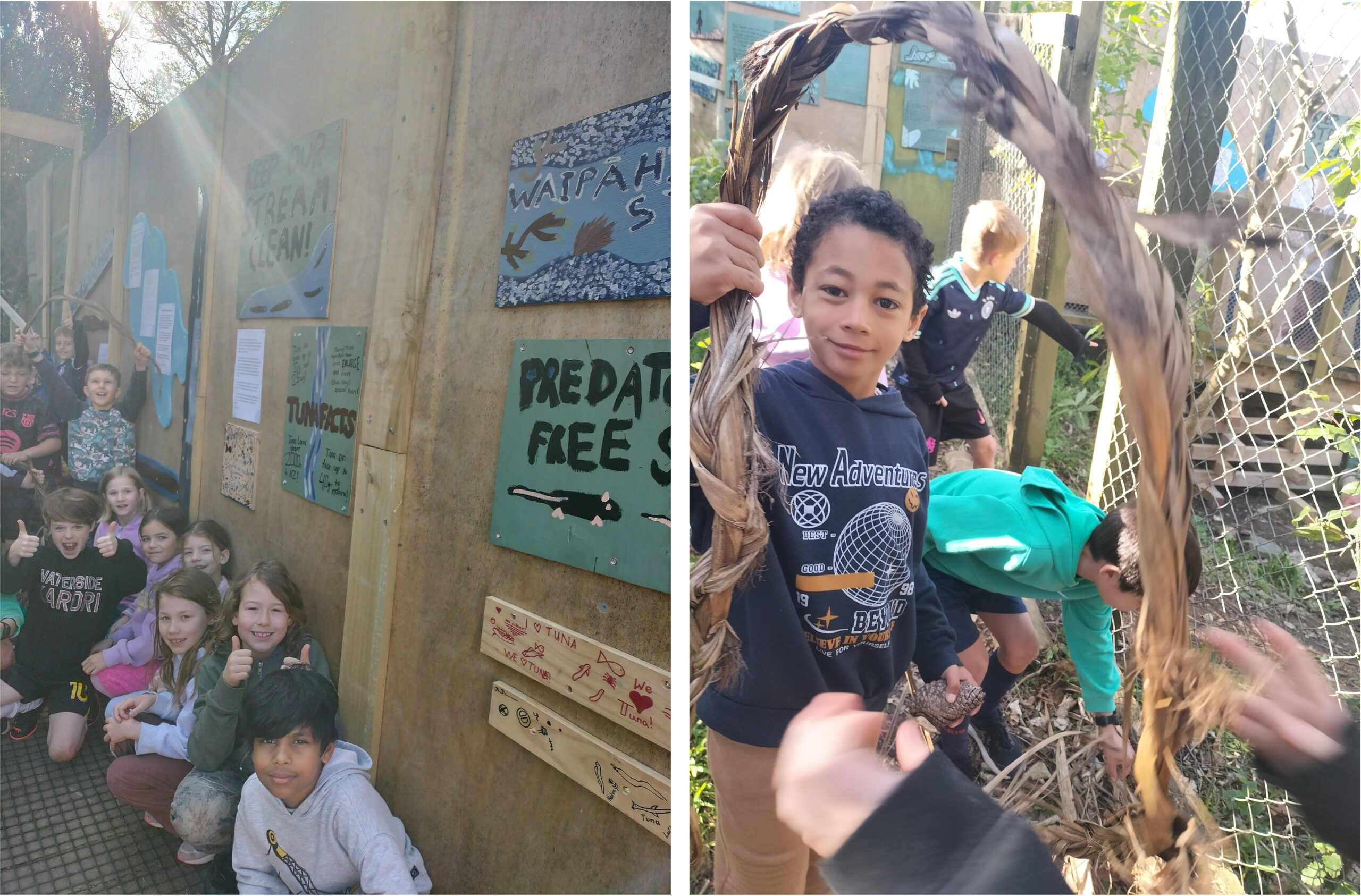
Year 3 ākonga check out the new the new signs, Tamariki visit Waipāhihi Karori Awa during lunchtime and practice weaving ikawai taura.
Enviro Science teacher Fiona Alcock has led this local awa connection with ākonga from Year 1 through to Year 8. This connection will continue with regular awa connection visit, planning a ‘drains are for rain’ inquiry and new art installations to share information the local community.
“It has been great for ākonga to be able to come down and witness a tiny part of Waipāhihi stream right next to our kura. This part of our stream could definitely do with some aroha as it is mostly piped and is also in very close proximity to a large construction zone next door”.
“All the children that I bring down here seem to feel a huge sense of kaitiakitanga for our stream and the life within and surrounding it. Ākonga have been particularly intrigued to learn about the Tuna Kūwharuwharu (NZ Long-Finned Eel) that live in our streams and their incredible life cycle.”
Ākonga and kaiako at Te Kura o Waipāhihi – Karori West School are lucky enough to have the awa running alongside their school which made the reconnection really special. They now have plans to build a native plant nursery to help with local restoration projects along the stream banks.
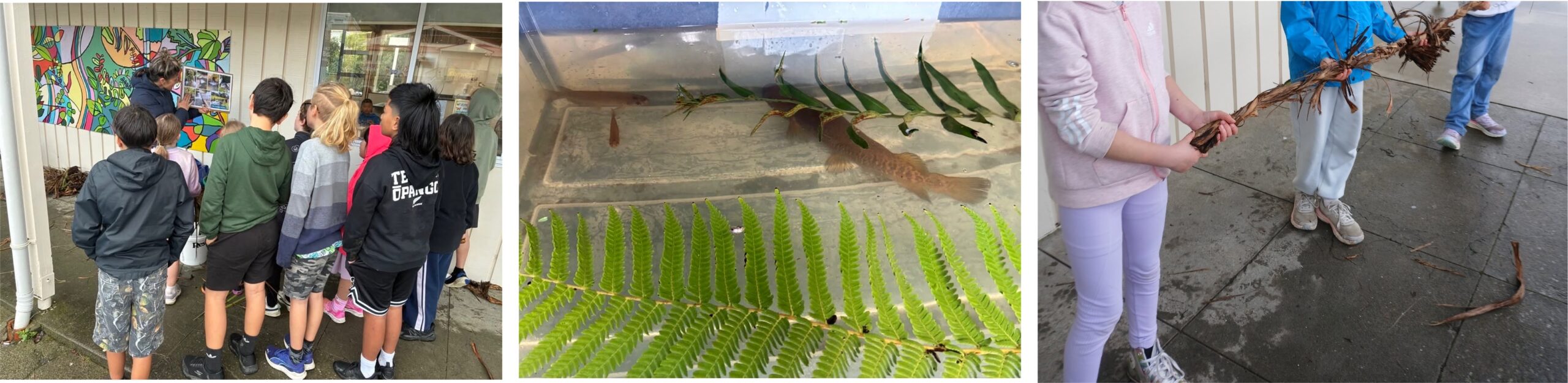
Ākonga learnt about barriers to fish passage and how ikawai taura can suppors this. They were also lucky to observe our native taonga banded kōkopu close up.
“the students gained so much from the experience, and there was a real buzz around the school afterwards, which was great to see”.
Enthusiastic kaiako, ākonga and whānau then joined us to celebrate Waipāhihi Karori stream at our community day. Our friends at Mountains to Sea Wellington once again shared the amazing macroinvertebrates that call this awa home, local whānau were excited to try weaving ikawai taura together as well as learn more about their local stream networks using our Enviroschools catchment model. The local Friends of Waipāhihi Karori Stream group also joined us to share their mahi and future plans. The amazing efforts of this local restoration group are what inspired us to lead this project.
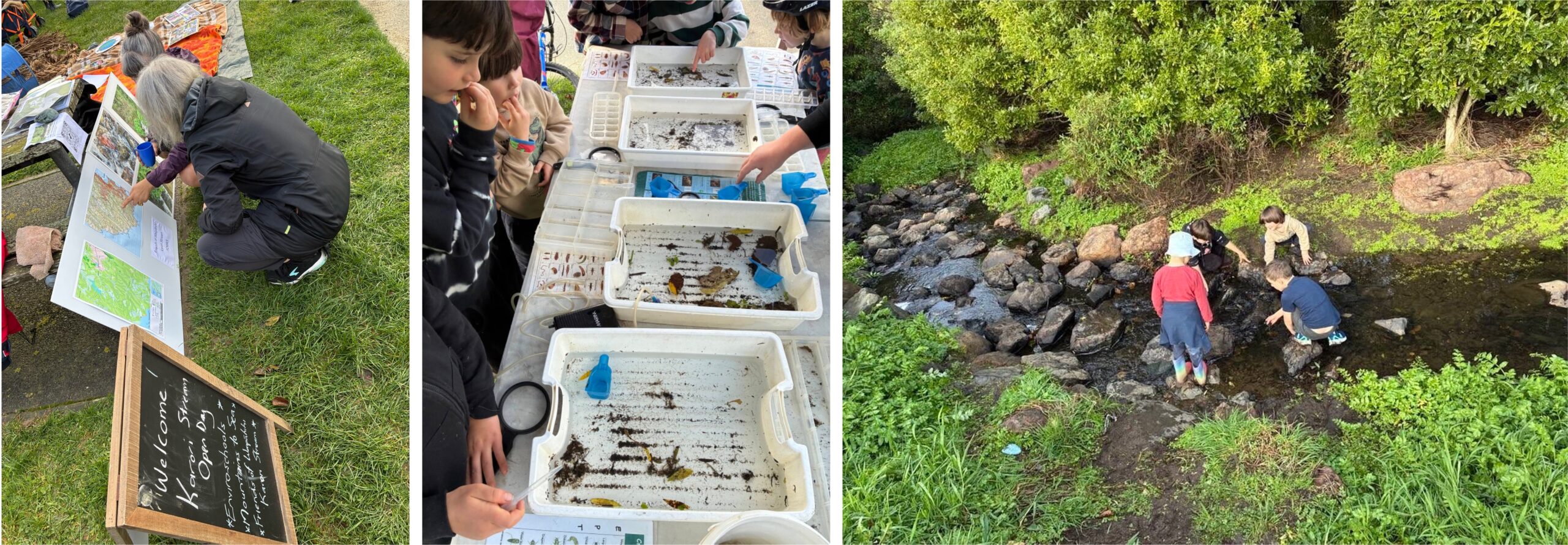
Tamariki enjoyed exploring life in and out of te awa. Local restoration group (F.O.W.K.S) share their mahi and aspirations with the community.
Waipāhihi Karori awa now has two ikawai taura installed in two different locations- woven by ākonga from Karori West Normal School, Karori Normal School, Karori Kids ECE centre and Campbell Kindergarten. These will support habitat for macro invertebrates and shelter for migrating native ika and tuna. Ākonga can check on them when they visit the awa and monitor their progress. Ngā mihi nunui ki Ātiawa ki Whakarongotai for generously sharing this matauranga with us and to our incredible Fish Passage expert Amy for installing these precious taura.
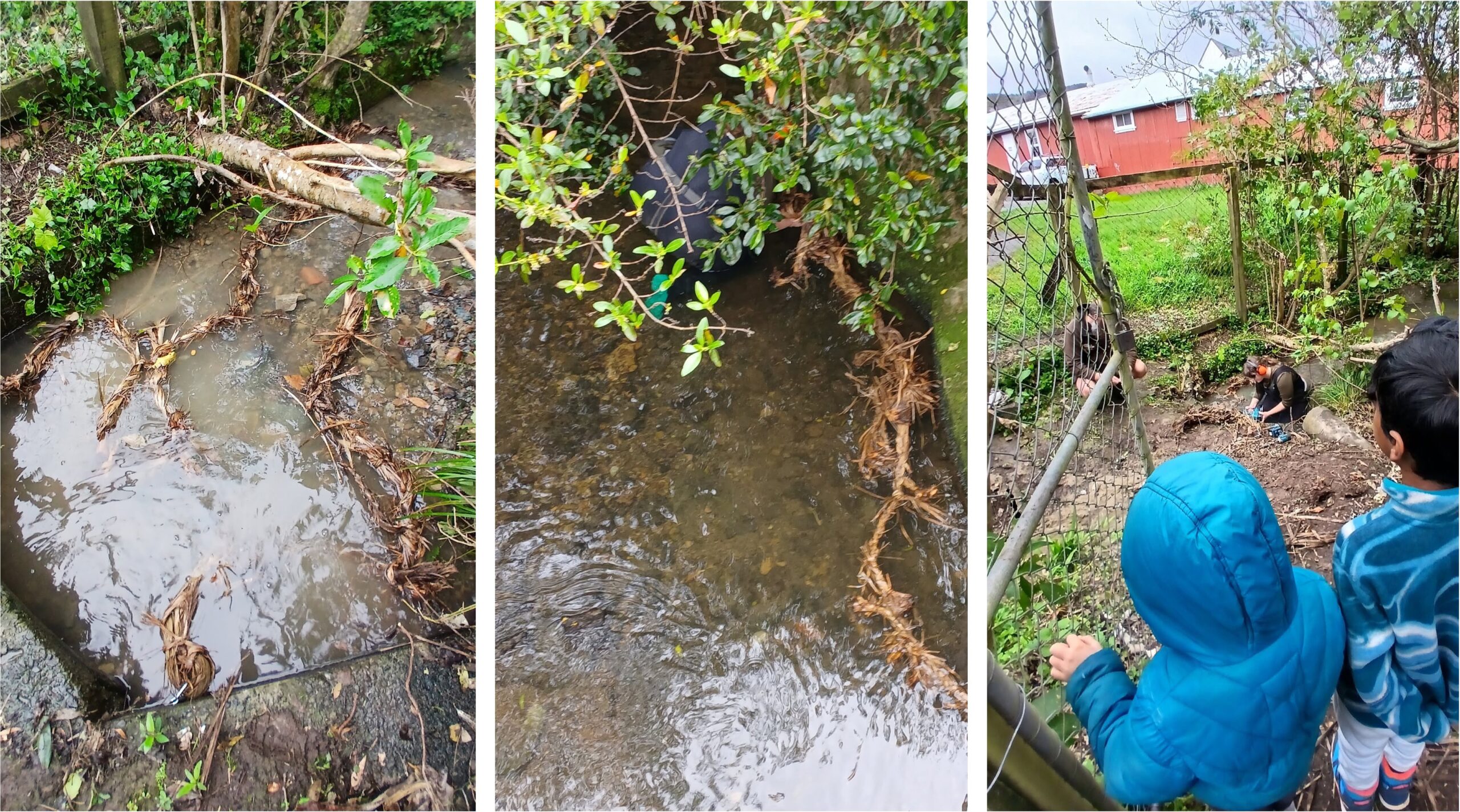
Tamariki enjoyed watching their ikawai taura being installed and regularly check on them.
Enviroschools facilitators Chloe and Chandra applied for the WCC Natural Environment Fund to focus on two catchments, Ōwhiro and Karori. They grounded the project in mana whenua aspirations to restore local waterways Te Mahere Wai o Te Kāhui Taiao and built on previous experiences offered to Enviroschools held at Ōtari.
Looking after our local awa and urban streams is such important mahi – we have so many taonga species living in them. We appreciate everyone who has contributed to this special kaupapa. Te Mana o te Wai.
 Print