Dedicated time and and support for this Envirogroup have been key to empowering these tamariki to create a new habitat over twelve months.
In Term 2, 2025, Silverstream School/Te Kura o Māwai Hakona in Te Awakairangi ki Uta/Upper Hutt restarted their Envirogroup. Deputy Principal Corey White decided a new approach was needed to enable the tamariki to have time to take action for te taiao. With guidance from keen groundsperson/learning assistant Andy Dunn and Enviroschools, a group of Year 5 and 6 students met every Wednesday after lunch.
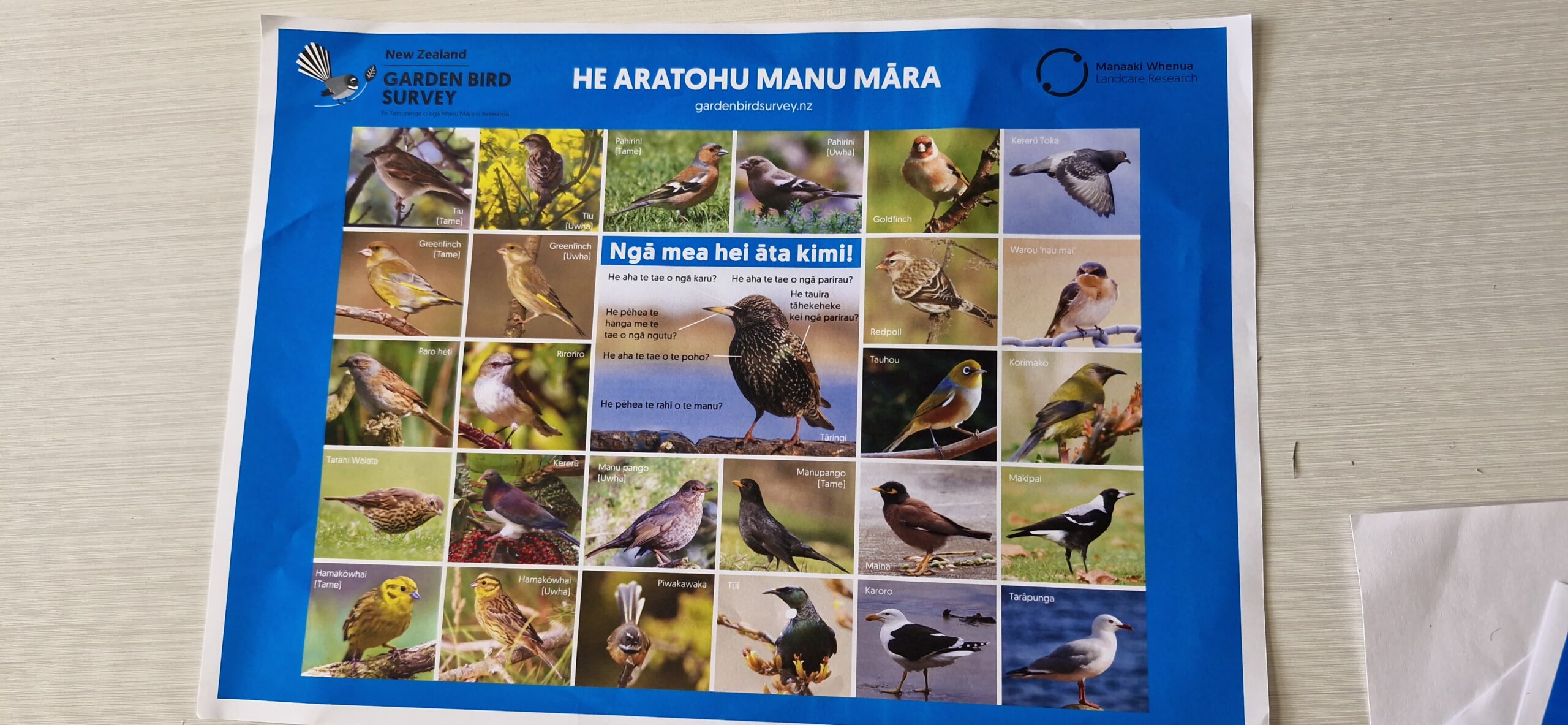
He aratohu manu māra/The bird identification sheet for the Garden Bird Survey.
The Garden Bird Survey resources offered a beautiful invitation to look and listen to the manu they could find at school. It sparked the question: how could we invite more manu into our grounds? Could we create a protected space for them – “a sanctuary” as one of the students suggested? The school had an unused area behind some classrooms: could this be the space?
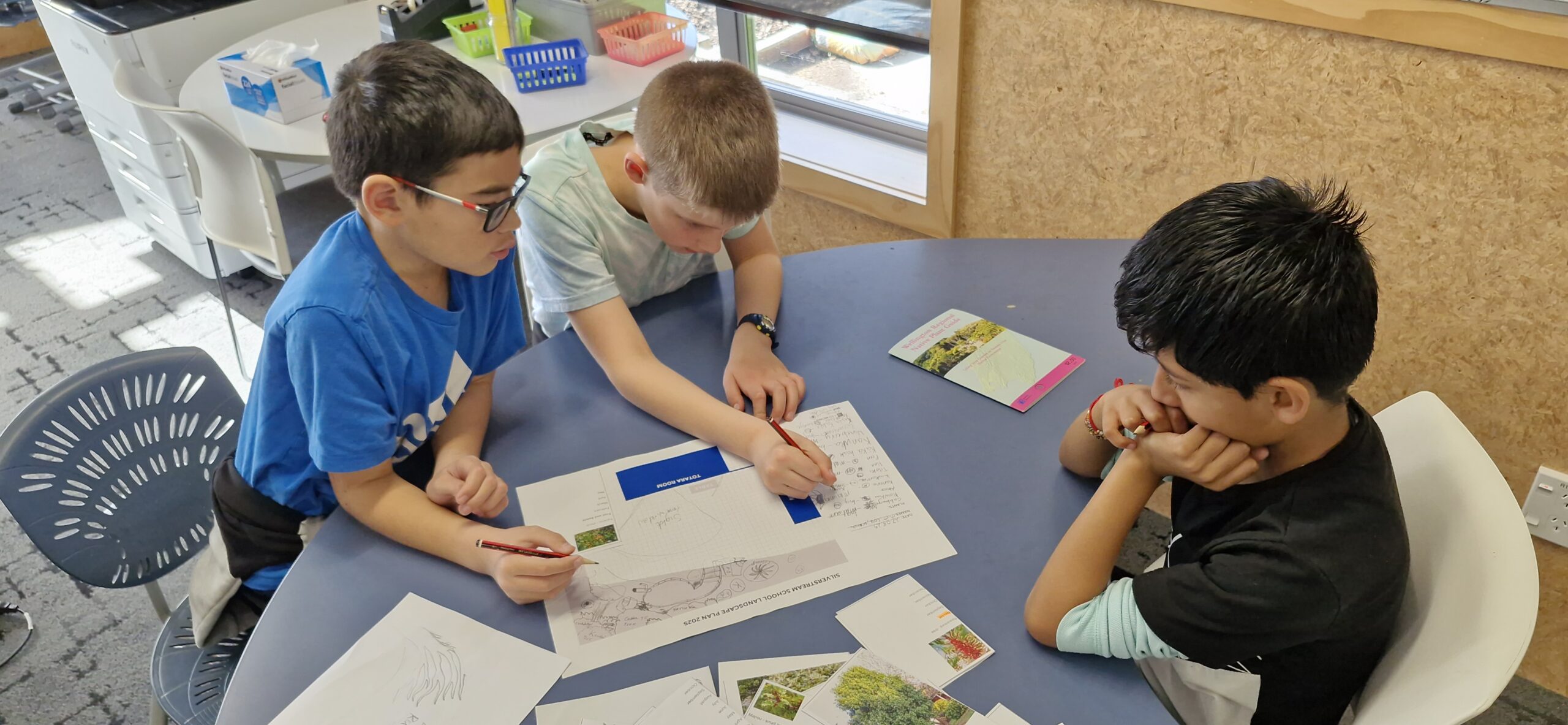
The EcoRangers work on plans.
The EcoRangers went to work. They learned about forest layers and how different manu like different parts of the ngahere. They looked at bird beaks, and how some manu like nectar, some like seeds, and others insects – and started to identify the kinds of plants that would provide for their needs. They had great fun listening to the songs of the birds and trying to identify them!
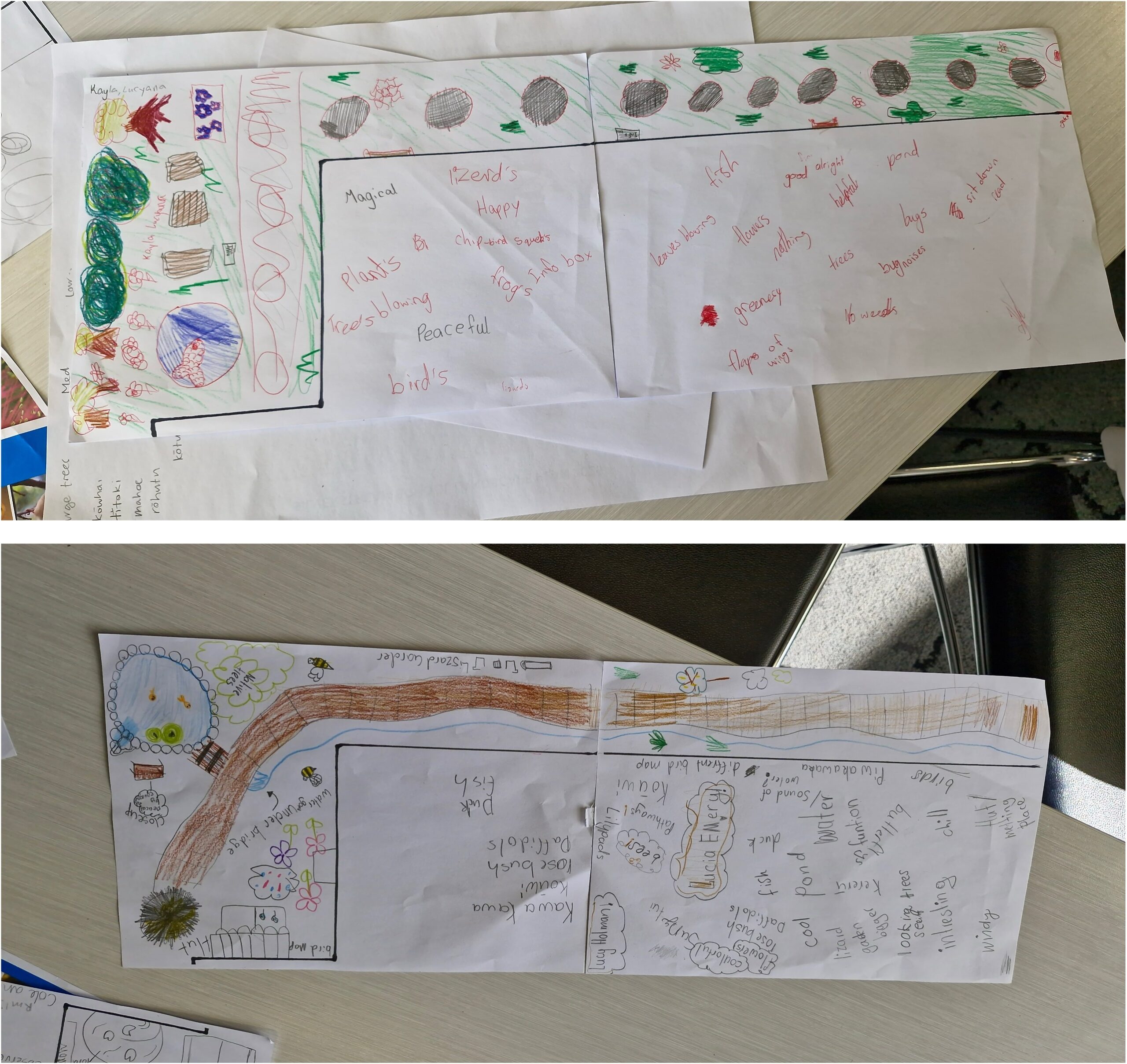
Some of the student plans.
The planning and dreaming began. They created maps of how this space could look, sound and feel.
It would be…
“colourful, green, with interesting pathways, places to make observations, ponds, waterways, a space to grow trees”
We would hear…
“rustling, buzzing, water trickling, flaps of wings”
and it would feel…
“wild, peaceful, calm, quiet, magical, alive and happy”.
It would be…
“A space for birds, bugs, lizards”
and…
“A space for us to learn in and enjoy.”
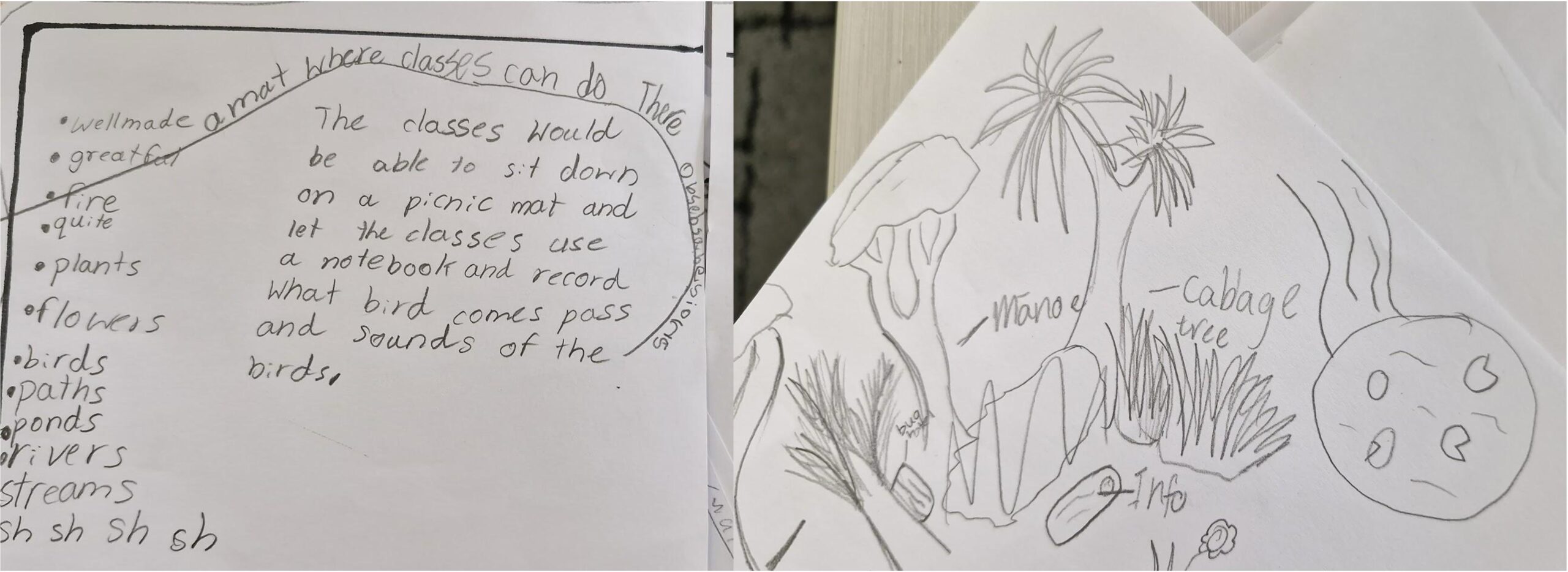
Details from the student designs.
They invited a parent who was also a landscape designer to offer feedback and ideas about good plants to choose – and Katie Bailey also donated some rengarenga to contribute to the sanctuary.
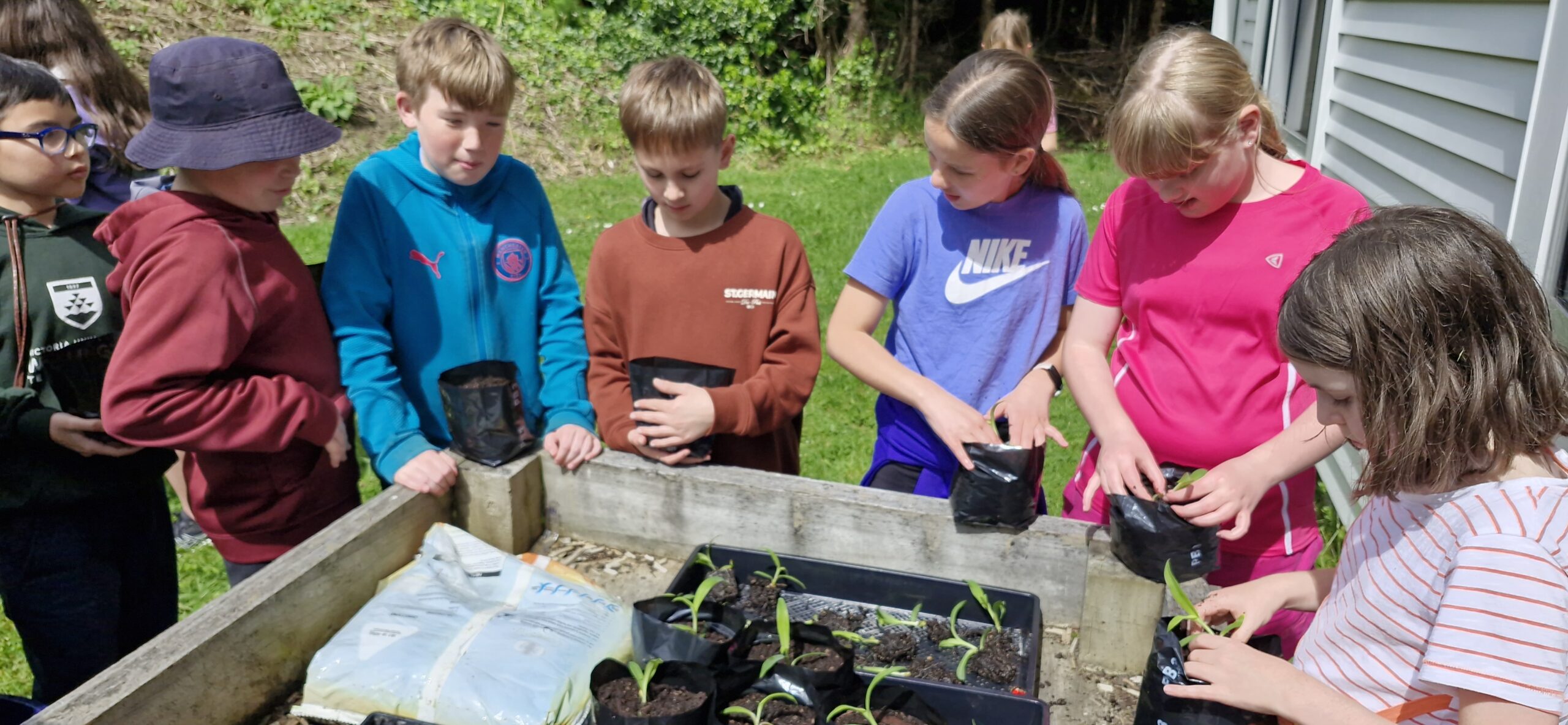
Repotting the rengarenga lilies gifted to the EcoRangers.
The timing meant any plans for planting would have to happen in 2026. The EcoRangers explored different ways of encouraging manu and other living creatures: they made bug hotels, nectar feeders and put up a wētā hotel. They grew pumpkins over summer in the space they intended for the ngahere.
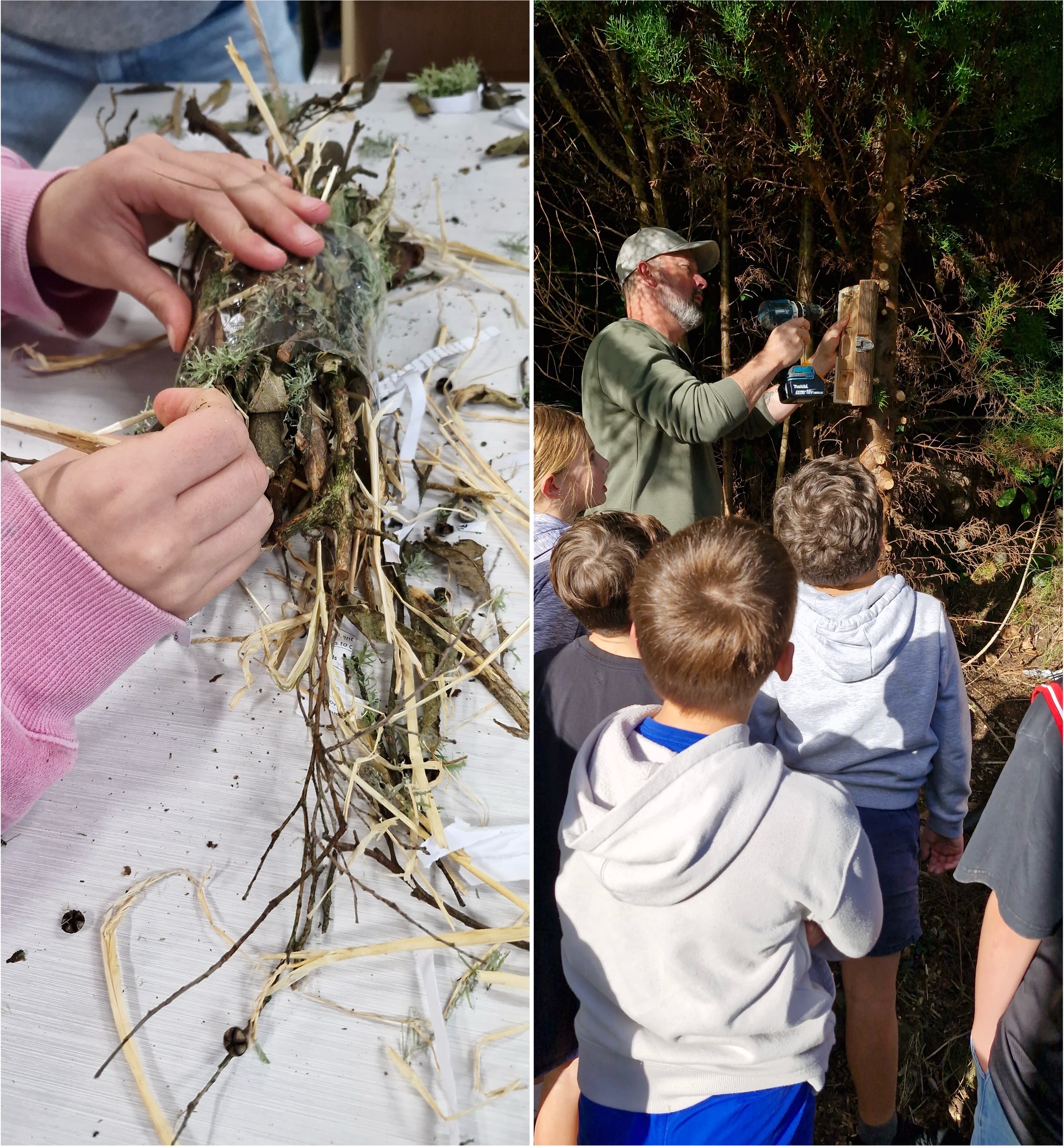
Making a bug hotel, Installing the wētā hotel.
However, this would mean all the Year 6 students would miss out on seeing their plans come to fruition as they moved to Intermediate. As a way of honouring their mahi, the Y6s chose a name for this future space: The Garden of Pure Imagination.
In 2026, staff changes meant a farewell to Mr Dunn, and the EcoRangers restarted in Term 2 with learning assistant Sarah Skinner. Beginning their sessions with the mihi to living landscapes, the EcoRangers brainstormed things they would like to do this year, reconnected with the plans for the sanctuary – and got stuck in.
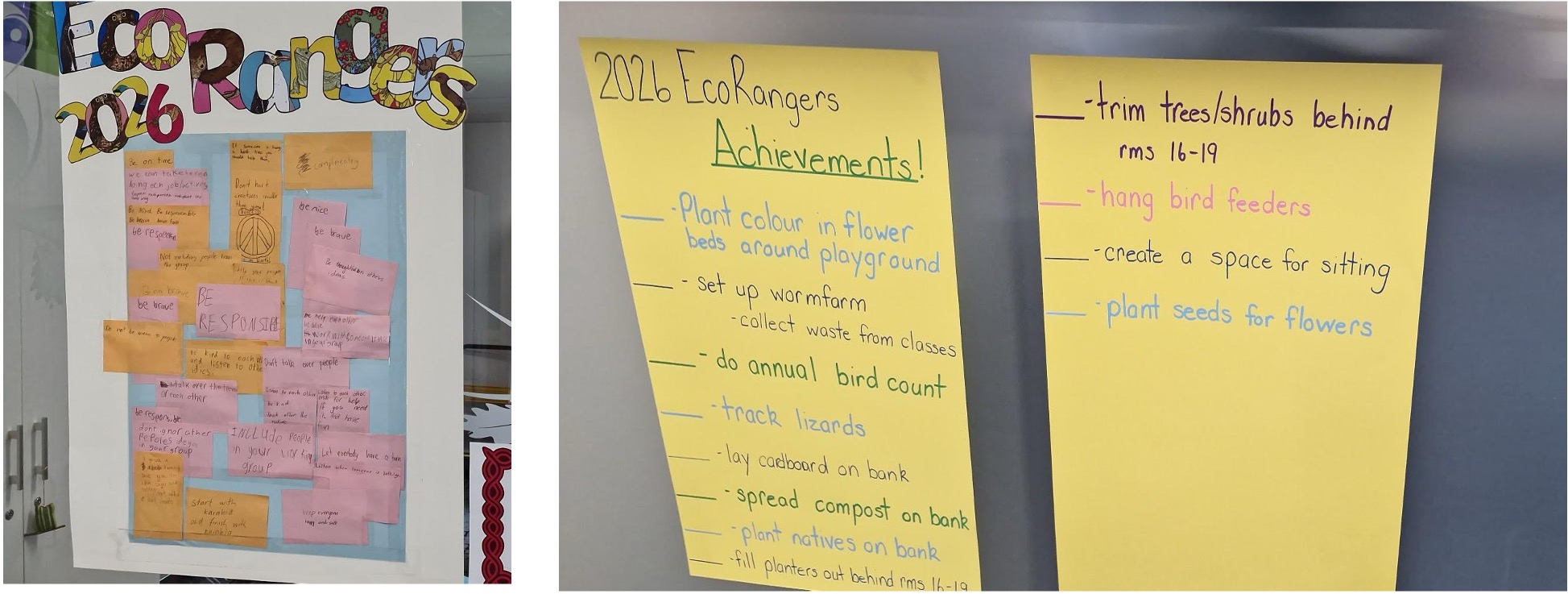
EcoRangers 2026 agreement and ideas for 2026.
Amongst lots of other activity, there were letters sent out to garden centres to ask for support – huge mihi to Upper Hutt Produce – and a grant application to the Student Action Project Fund from Greater Wellington Regional Council. This grant supports schools and early childhood centres to carry out projects that support native plants and wildlife. Sarah and family had a huge working bee to clear the space for planting – and with the successful grant, was able to get a very generous selection of plants from Ashton Norwood nursery and support from Leacroft Nurseries.
There have been unexpected gifts along the way: During the working bee, EcoRanger Mitchell discovered a lizard: they wondered if it was a native or a plague skink? This led to a visit by Greater Wellington Biosecurity Officer for Pest Animals Steve Thompson, who shared information about how to tell the difference. This led to an exploration of the space for skinks and geckos – and hope the new ngahere will lead to this being a good space for them.
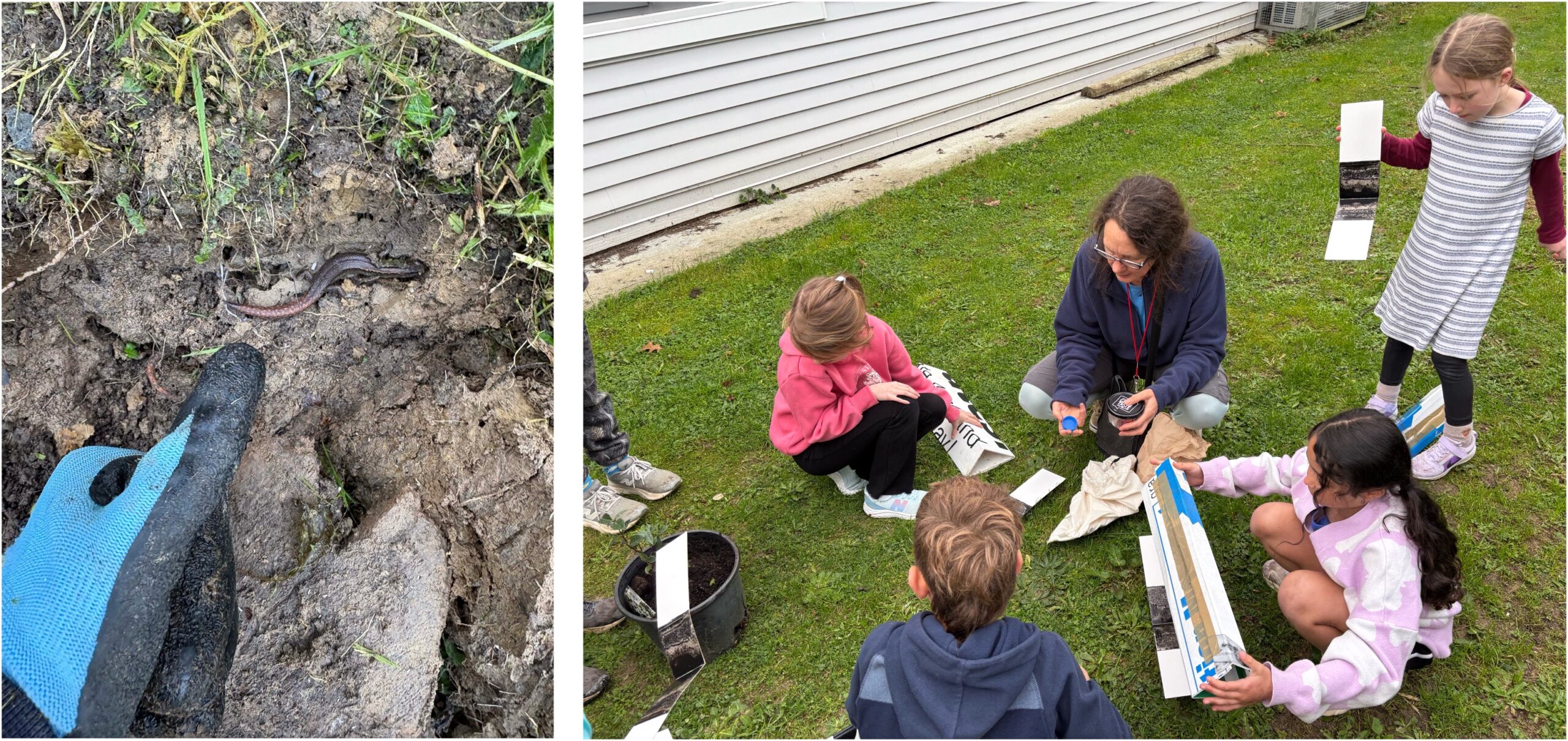
Lizard spotted when preparing the site, making tracking tunnels.
Part way through Term 3 2026, the project started to become real, even as the school navigated the challenges of wet weather, and staff and student illness. The plants arrived and the mahitahi began. Tamariki spent many sessions digging holes, planting and mulching – right to 3pm on the last day of term. Except for the support of Sarah and Enviroschools facilitator Michelle Ducat – the students did it all: there has been enormous learning.
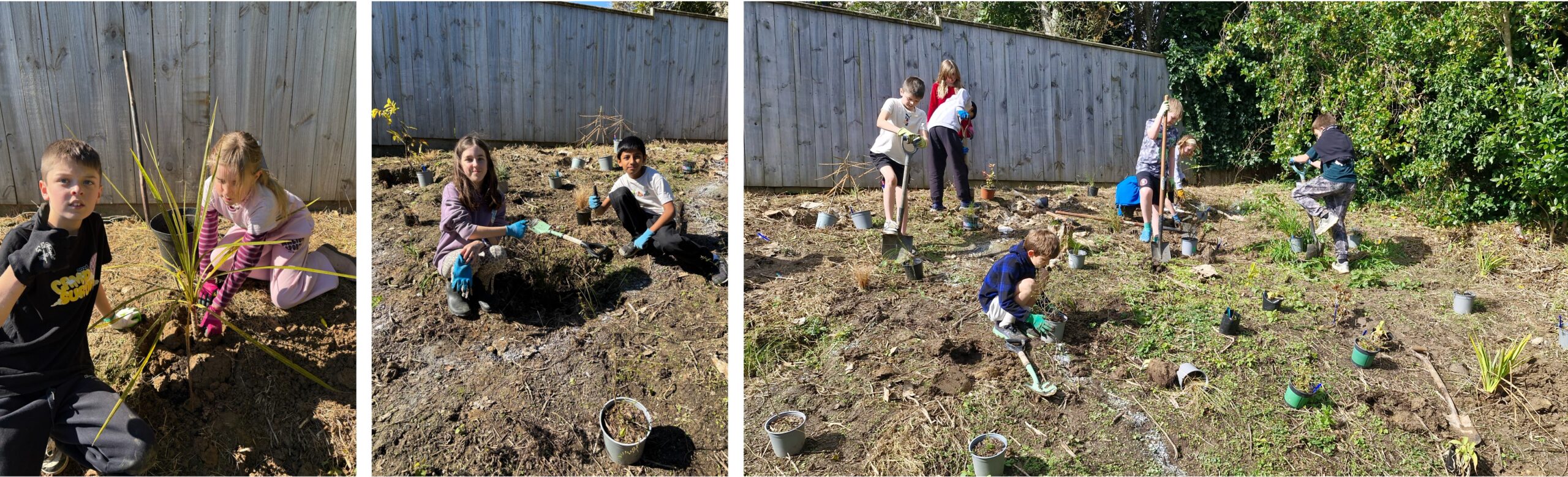
Doing the hard work of digging and planting.
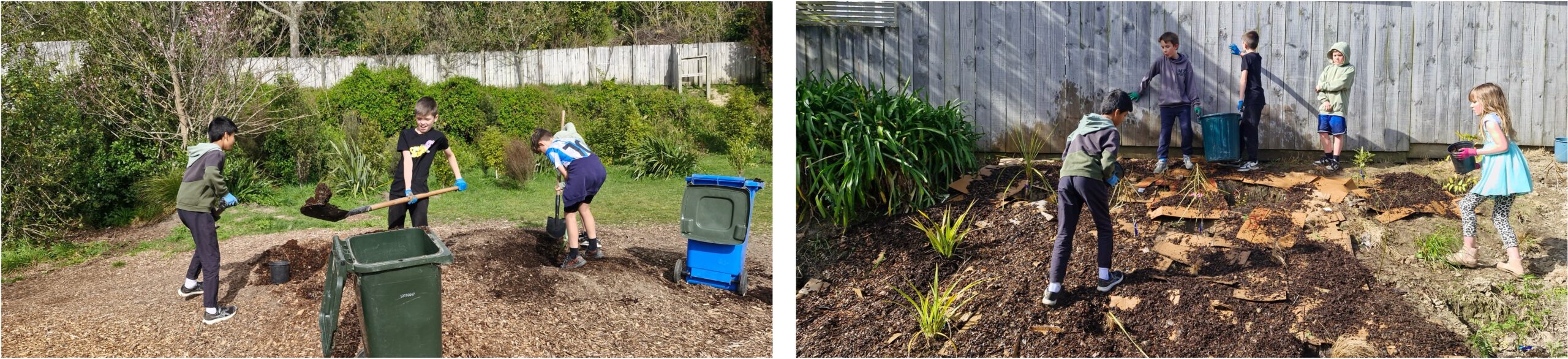
Collecting and spreading the mulch.
They called in a couple of extra Year 6s on the last day to help with the heavy task of transporting mulch. New to the space, these helpers quickly understood its potential: “This could be an outdoor classroom!” “This could be a great chill out space!”
And other kaiako are keen to explore the potential too: how could we grow this space for all the tamariki in the school to learn in and from te taiao?
Stage 1 is almost complete. It was made possible with dedicated in-class time each week, planning time, a huge commitment by the learning assistant in her own time – and support from Enviroschools along the way. Time to celebrate!
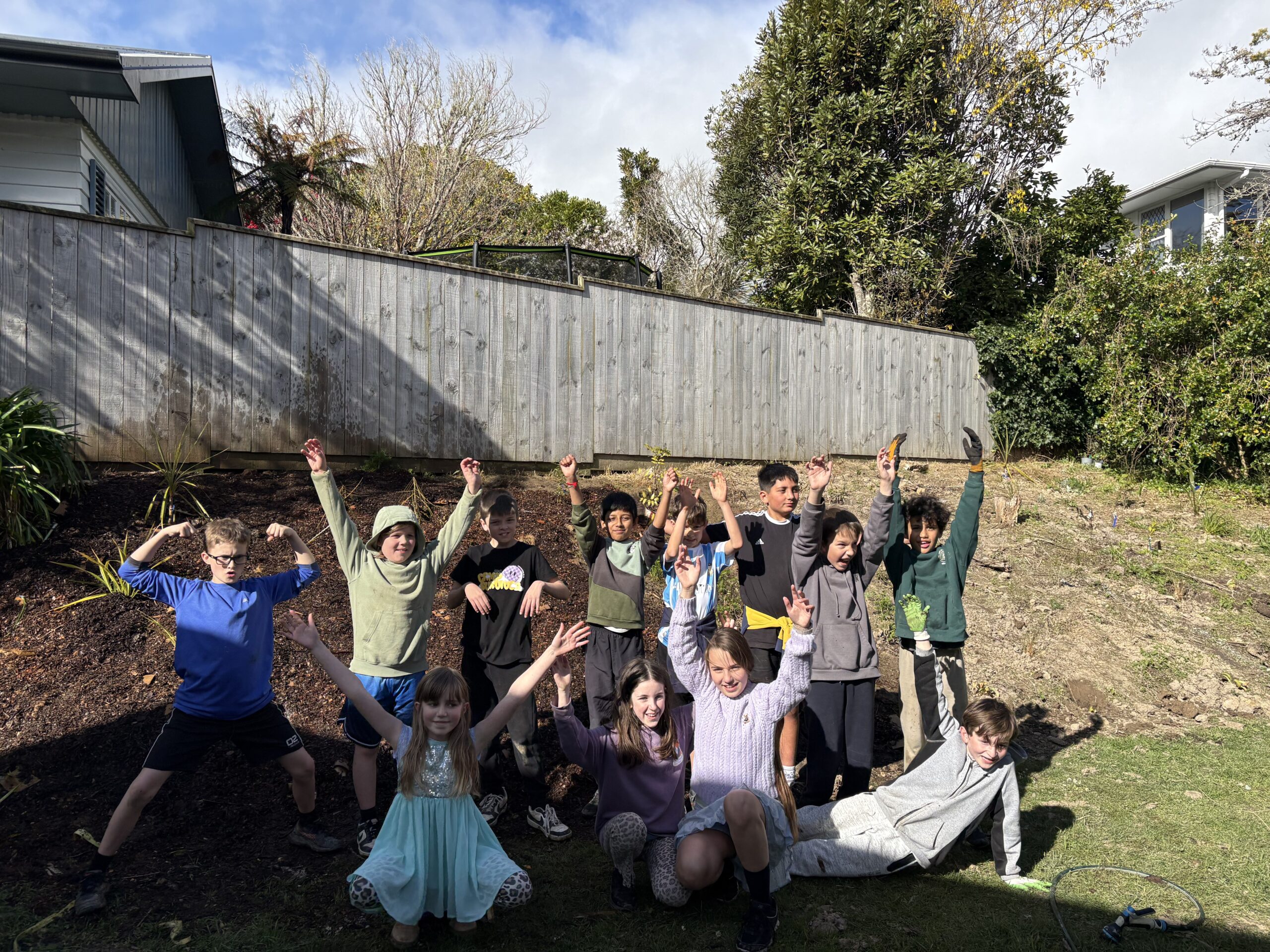
A satisfying afternoon’s work!
 Print